

♥ Wishlist
Compare 52 verified Makita Sanding Belts products in United Kingdom. Reviews, ratings, pros, cons and buying advice updated for October 2026.


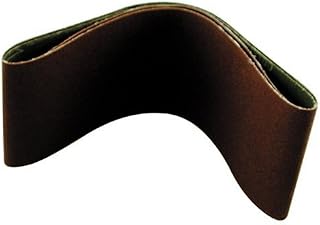


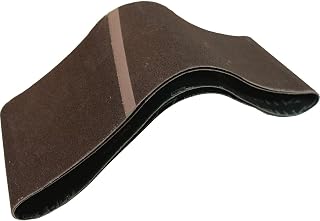


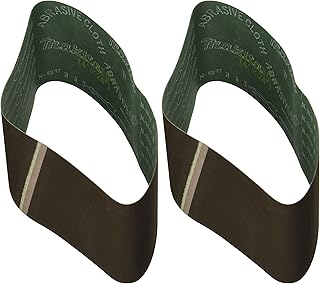



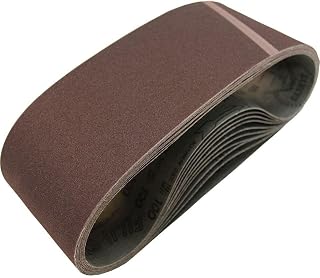

Choosing a sanding belt is not simply a matter of selecting the lowest price or the highest customer rating. The correct belt has to match the sander, belt dimensions, abrasive grade, material being worked and the finish you want to achieve. A belt that is excellent for rapid stock removal on timber may be completely unsuitable for delicate finishing work, while a belt intended for a narrow filing sander cannot be substituted for a wider belt simply because the length appears similar.
For an informed comparison, treat compatibility as the first filter, abrasive specification as the second and intended application as the third. Only after those points have been established should factors such as pack size, brand, price and customer feedback influence the decision.
The safest way to identify a replacement belt is to check the model number printed on the tool and then confirm the required belt dimensions against the manufacturer's specifications or the documentation supplied with the machine. Makita belt sanders use several different formats, including narrow filing-sander belts and wider conventional belt-sander belts.
Common Makita belt dimensions include 9 x 533 mm for the 9032, 30 x 533 mm for the 9031, 76 x 457 mm for the 9910/9911 family, 76 x 533 mm for several 3-inch belt sanders, 76 x 610 mm for models such as the 9920 and 9924DB, and 100 x 610 mm for the 9401, 9402, 9403 and 9404 families. These dimensions illustrate why the model number matters just as much as the grit specification.
Do not assume that a belt will fit because its width is correct. The belt must also have the correct loop length and be suitable for the machine's tracking and tensioning arrangement.
Dimensions should always be checked against the exact tool because model families, regional variants and replacement-accessory ranges can change. Current and historical catalogues can also differ, so the machine's own documentation remains the most useful starting point.
Grit is one of the most important specifications when comparing sanding belts. In general, lower grit numbers indicate a more aggressive abrasive suited to faster material removal, while higher grit numbers produce a finer sanding action. The right progression depends on the material, starting surface and desired finish.
Coarse belts are useful when the priority is removing material rather than producing a finished surface. They can be appropriate for levelling uneven timber, removing old finishes or tackling substantial surface imperfections, provided the workpiece and machine are suitable for the task.
Very coarse abrasives can remove material surprisingly quickly. That makes controlled pressure particularly important. Leaning heavily on the sander can create grooves, uneven areas and unnecessary belt wear rather than simply making the job faster.
Medium grits are often the most versatile choice for general workshop work. They provide a useful compromise between stock removal and surface refinement and can form the middle stage of a multi-belt sanding sequence.
For timber projects, medium abrasive grades can be useful after coarse levelling and before a finer finishing stage. The exact progression should be determined by the condition of the surface rather than following a rigid grit sequence.
Fine belts are intended for reducing the visible scratch pattern left by coarser abrasives and preparing a surface for subsequent finishing. They are generally more appropriate when preserving the shape and appearance of the workpiece matters more than rapid stock removal.
Using an excessively fine belt too early can be inefficient because it may take considerably longer to remove the scratches, ridges or machining marks left by a coarser stage. Conversely, using an unnecessarily coarse belt at the finishing stage can create scratches that require additional work to remove.
The abrasive grain is another important distinction between sanding belts. Aluminium oxide is a widely used abrasive for general-purpose sanding and is available across numerous belt formats and grit grades. Makita's accessory ranges include aluminium-oxide abrasive belts for applications involving materials such as wood and regular steel.
Ceramic and other engineered abrasive grains can offer different cutting characteristics, particularly in demanding metalworking applications, but the specification alone should not be treated as a guarantee of longer belt life or better results in every situation. The backing, bond, grain distribution, machine speed and workpiece material all influence practical performance.
Aluminium oxide is a sensible general-purpose option when a versatile belt is required for common woodworking and suitable metalworking tasks. It is available in a broad selection of grit grades and belt dimensions.
Ceramic abrasives are commonly considered for demanding material-removal work, especially where a high-performance abrasive is justified by the workload. They can make more sense in professional or repeated-use applications than for occasional household sanding.
The abrasive grain is only one part of a sanding belt. The backing material supports the abrasive and has to tolerate the flexing and tension created by the belt sander. A belt intended for a flexible narrow sanding arm may therefore have different construction priorities from a heavy-duty belt intended for a large 100 mm machine.
Woodworking is one of the most common applications for belt sanders. When sanding timber, the best belt depends on whether the objective is removing substantial material, flattening a surface, preparing an existing finish for further work or refining the scratch pattern before finishing.
Timber species can behave very differently during sanding. Softwoods may load an abrasive with resin or sanding debris, while harder timbers can place greater demands on the abrasive. A belt that works well on one species should therefore not automatically be assumed to be optimal for another.
For valuable hardwoods, controlled sanding is particularly important because aggressive stock removal can alter edges, flatten intended contours or create visible sanding marks that are difficult to disguise with a subsequent finish.
Metalworking requires more careful belt selection than many basic woodworking applications. Consider the metal type, the amount of material to be removed, the required finish, heat generation and whether the belt manufacturer specifically identifies the abrasive as suitable for the intended material.
Makita accessory information includes belts specified for regular steel as well as wood, while other Makita abrasive ranges cover different grades and applications. Always check the stated application rather than assuming that every sanding belt is suitable for every metal.
Heat is an important consideration when sanding metal. Excessive friction can affect the workpiece and accelerate abrasive wear. The correct belt, appropriate machine speed and sensible contact pressure are therefore more useful than simply choosing the most aggressive available grit.
A sanding belt can be useful for certain rust-removal and surface-preparation tasks, but the abrasive should be selected according to the underlying material and the finish required afterwards. Removing surface corrosion is a different job from reshaping metal, deburring an edge or preparing a surface for coating.
Genuine Makita belts are an obvious option when straightforward compatibility and matching manufacturer specifications are priorities. However, third-party abrasive manufacturers also produce belts in many standard dimensions. The important distinction is whether the alternative belt genuinely matches the required dimensions and provides an abrasive specification appropriate for the job.
Brand recognition alone does not determine sanding performance. When comparing an OEM belt with an alternative, examine the belt size, grit, abrasive grain, backing, intended material, pack quantity and stated compatibility before comparing price.
Part numbers can make accessory selection considerably easier. For example, Makita accessory listings identify individual belts by part number alongside their dimensions and grit. This is particularly useful when several belts share a similar size but differ in abrasive grade or intended application.
As an example of the level of detail buyers should look for, Makita's abrasive-belt range lists specific part numbers against dimensions and grit grades, including 9 x 533 mm belts for the 9032 and 100 x 610 mm belts for several 9400-series machines.
When shopping, search by the complete specification rather than relying solely on a generic phrase such as “Makita sanding belt”. A useful comparison record should contain the model compatibility, belt dimensions, grit, abrasive type and quantity.
A sanding belt is a continuous loop joined at a seam. The joint has to pass repeatedly around the machine's rollers while remaining secure under tension. A belt can therefore appear to have plenty of abrasive remaining while still being unsuitable if the joint has become damaged.
Inspect the belt before fitting it. Look for torn edges, separation around the joint, creasing, damaged backing or other obvious defects. Do not fit a visibly damaged belt simply because it is new or has unused abrasive.
Some sanding belts have a directional marking or an orientation indicated by the joint construction. If the manufacturer provides a direction arrow, install the belt accordingly. Incorrect orientation can affect how the joint passes over the rollers and may increase the risk of premature damage.
Pack quantity can make two apparently similar products difficult to compare. One product may have a lower shelf price but contain fewer belts, while another may cost more initially but provide a larger pack.
For a meaningful comparison, calculate the effective cost per belt rather than comparing the pack price alone. Also consider whether a cheaper belt has the abrasive specification you actually need. A belt that costs less but wears rapidly or is poorly matched to the job may represent poor value.
A 75 mm, 76 mm or 100 mm width does not tell you the complete specification. The belt length is equally important, and small dimensional differences can prevent correct fitting.
Makita's belt-sander range contains machines with similar names but different belt dimensions. For example, the 9911 is associated with a 76 x 457 mm belt, whereas the 9902 and 9903 use a 76 x 533 mm format.
A very coarse belt is not automatically the fastest choice for every task. Excessive aggression can lead to unwanted grooves, rounded edges or unnecessary material removal.
Fine abrasives can be useful for surface refinement but are inefficient when a substantial amount of material still needs to be removed.
Wood, steel, painted surfaces and other materials impose different demands on the abrasive. Always confirm the belt's stated application.
Ratings can be useful, but they do not replace technical compatibility. A belt may receive positive feedback from users with a completely different sander, material or workload from yours.
Customer reviews are most valuable when they contain specific information rather than a simple star rating. Look for comments that identify the exact Makita model, belt size, material being sanded and type of work performed.
Repeated reports about incorrect dimensions, belt tracking, premature joint failure, excessive loading or poor performance on a particular material deserve more attention than isolated comments. Equally, a positive review is more informative when the reviewer explains the application and abrasive grade used.
Be cautious when reviews for several sizes or variants are grouped together. A review attached to a product family may refer to a different grit or belt size from the one you are considering.
Professional users should place greater emphasis on consistency, availability of the required specification and predictable abrasive behaviour. A belt that performs acceptably for occasional DIY work may not offer the same value when a sander is used repeatedly throughout the working week.
For higher workloads, compare the total cost of ownership rather than the purchase price alone. Useful factors include belt life, material removal rate, downtime caused by belt changes, pack quantity and whether the required grit is consistently available through established UK retailers.
For occasional users, versatility and ease of selection may be more important than specialist abrasive technology. A sensible approach is to identify the exact belt dimensions first and then select a small range of appropriate grits for the materials and projects you actually undertake.
Buying a very large quantity of an abrasive you rarely use can tie up money in accessories that may degrade or simply remain unused. On the other hand, keeping commonly used sizes and grades available can be worthwhile when sanding is part of regular workshop maintenance or renovation work.
Belt sanders remove material quickly, which is both their greatest advantage and one of the main reasons they require care. Begin with controlled passes and avoid forcing the machine into the material.
Sanding produces fine dust, and effective dust management is an important part of responsible workshop practice. Some Makita belt sanders are designed with dust bags or dust-extraction facilities, while Makita also documents extraction accessories and connections for several belt-sander models.
Use the extraction arrangement specified for the particular machine where possible and follow the manufacturer's safety instructions. Appropriate respiratory protection and general workshop ventilation may also be necessary depending on the material being sanded and the working environment.
Maintenance begins with storage. Keep unused belts dry, clean and protected from conditions that could deform the backing. Avoid crushing belts beneath heavy tools or storing them in a way that places sharp folds into the abrasive loop.
Before fitting a used belt again, inspect its edges and joint. A belt with a damaged edge can track poorly, while a worn or compromised joint should not be treated as safe simply because abrasive remains on the surface.
The cheapest belt is not necessarily the lowest-cost option over the life of a project. Value depends on how effectively the abrasive removes material, how consistently it performs, how long it remains useful and how well its specification matches the task.
A practical value comparison should therefore consider:
If you own a Makita 9032, concentrate on 9 x 533 mm belts rather than conventional 3-inch sanding belts. If you use a 9031, look for the 30 x 533 mm format. For the 9910/9911 family, check the 76 x 457 mm specification, while several 9900-series machines use 76 x 533 mm belts. The larger 9400-series machines use the 100 x 610 mm format.
This model-first approach is considerably more reliable than searching for a generic “Makita sanding belt” and selecting the first visually similar product.
When comparing products in a buying guide, the most useful specifications are those that directly affect compatibility and performance. A meaningful comparison should show the belt dimensions, grit, abrasive type, pack quantity and stated application wherever those details are available.
No. The belt must have the correct dimensions and be suitable for the machine. Makita uses several belt sizes across its range, so confirm the exact model and specification before buying.
The Makita 9032 uses a 9 x 533 mm sanding belt. Makita's accessory information lists multiple grit options for this size, while UK accessory listings also identify 9 x 533 mm belts specifically for the 9032.
The Makita 9031 uses a 30 x 533 mm belt. The narrow format is different from the conventional 3-inch belt-sander sizes used by several other Makita models.
The 9911 is associated with a 76 x 457 mm belt specification. Always verify the exact machine variant before purchasing replacement accessories.
The Makita 9403 uses a 100 x 610 mm sanding belt. The same general belt dimension is also used by several other 9400-series machines, so the exact model should still be confirmed.
Some are. Suitability depends on the particular abrasive and its stated application. Makita's accessory information includes abrasive belts specified for regular steel, but buyers should check the product specification rather than assume every sanding belt is suitable for metal.
Not necessarily. Higher grit generally means a finer abrasive action, which is useful for refining a surface but may be inefficient when significant material still needs to be removed. The best grit depends on the stage of the job.
If your projects involve both material removal and finishing, having more than one grit can be useful. A coarse belt can handle substantial removal, a medium grade can refine the surface and a fine grade can reduce the remaining scratch pattern.
No. Price alone cannot establish performance. Compare the abrasive specification, belt construction, compatibility, intended application, pack quantity and customer feedback before deciding whether a premium-priced belt represents good value.
Compare equivalent specifications rather than brand names alone. Check that the competing belt has the same dimensions, a comparable grit, suitable abrasive grain and an appropriate application rating. Brands such as 3M, Mirka, Norton and Klingspor can also appear in abrasive comparisons, but the relevant technical specification should remain the primary selection criterion.
The best Makita sanding belt is the one that correctly matches the machine and performs the particular sanding task without compromising control or finish quality. Start with the exact model and belt dimensions, then select the abrasive grade according to the material and desired result.
For general comparison, look beyond headline ratings and price. Check the technical specification, abrasive type, grit, pack quantity and application guidance. When comparing genuine Makita accessories with compatible alternatives, make sure the comparison is based on equivalent specifications rather than branding alone.
Before purchasing, verify the current product specification with the manufacturer or a reputable UK retailer, particularly if the tool is an older Makita model or if several closely related belt sizes appear in search results. Product ranges, part numbers, packaging and retailer availability can change over time.