

♥ Wishlist
Compare 58 verified Sanding Belts products in United Kingdom. Reviews, ratings, pros, cons and buying advice updated for October 2026.


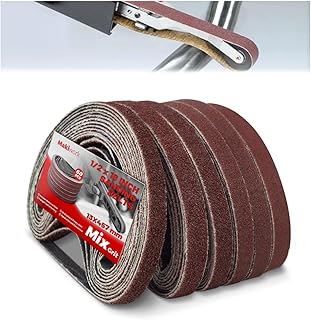


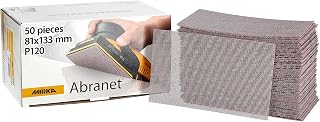


The best sanding belt is not necessarily the one with the highest grit rating, longest advertised lifespan or lowest price per pack. Performance depends on how the abrasive grain, grit size, backing material, belt dimensions and machine interact with the material being worked.
A belt that performs well on timber may be a poor choice for stainless steel, while a heavy-duty ceramic belt can be unnecessary for occasional DIY wood sanding. The most useful way to compare sanding belts is therefore to start with the job, then select the abrasive construction that matches it.
Material should be the first consideration because different surfaces place very different demands on an abrasive. Wood, painted surfaces, plastics and soft metals generally require a different balance of cutting speed, durability and finish from hardened or stainless steel.
Aluminium oxide, zirconia and ceramic are not interchangeable simply because they are sold in the same nominal grit. Abrasive grain has a substantial influence on cutting behaviour, wear and suitability for different materials.
Grit describes the abrasive grade, but it should not be treated as a simple measure of how powerful a belt is. Coarser grades remove material more quickly and leave deeper scratches, whereas finer grades remove less material per pass and are normally used to refine an existing surface.
Coarse belts are useful when the priority is removing significant material rather than achieving a final cosmetic finish. They can be appropriate for shaping timber, removing old coatings, levelling uneven surfaces and carrying out heavy stock removal on suitable metals.
Very coarse abrasives demand particular care because excessive pressure can remove material faster than intended. On a finished component, starting too aggressively can create deep scratches that require several subsequent sanding stages to eliminate.
Medium grades are often the practical middle ground for workshop and DIY tasks. They can be used to refine surfaces after coarse sanding, prepare timber before finer finishing and remove visible sanding marks without being excessively slow.
Fine sanding belts are intended for reducing visible scratches and preparing a surface for a final finish. They are generally less suitable for heavy stock removal because using a fine belt to perform a coarse operation can increase working time and encourage unnecessary pressure.
Not necessarily. Buying every available grit can create unnecessary expense and leave you with belts that are rarely used. A more useful selection is based on the actual sequence of work you perform.
For example, a project involving substantial shaping may benefit from a coarse belt followed by one or two progressively finer grades. The exact progression depends on the material, machine, desired finish and how much material the previous belt has removed.
Abrasive grain is one of the most important specifications to compare when looking at sanding belts. The three commonly encountered options include aluminium oxide, zirconia and ceramic, each with a different balance of cutting ability, durability and cost.
Aluminium oxide is a versatile abrasive used across many general sanding applications. It is often a sensible starting point for wood and less demanding work where the objective is dependable sanding rather than maximum stock removal.
Its broad usefulness makes aluminium oxide particularly relevant to DIY users who work on a mixture of timber, coatings and general workshop materials. It can also make economic sense when belts are used only occasionally.
Zirconia, often described as zirconia alumina, is commonly selected when a more aggressive and durable abrasive is required. It is particularly relevant to metalworking and applications involving harder materials.
Zirconia can represent a useful step up from conventional aluminium oxide where belt life and cutting performance matter more than obtaining the lowest initial purchase cost. Its suitability still depends on the machine, material and application.
Ceramic abrasives are generally associated with demanding grinding and material-removal applications. They are commonly considered for harder metals and high-pressure work where maintaining cutting performance over demanding operations is important.
A ceramic belt can therefore be an excellent choice for the right application, but it is not automatically the best choice for every user. For light woodworking, paying more for an aggressive metalworking abrasive may provide little practical advantage.
Specialist abrasive suppliers similarly distinguish aluminium oxide, zirconia and ceramic according to application and workload rather than treating one abrasive as universally superior.
The abrasive grain receives most of the attention, but the backing is equally relevant when comparing belts for demanding work. The backing supports the abrasive and affects flexibility, durability and resistance to tearing or deformation.
Paper-backed abrasives can be suitable for lighter sanding applications where flexibility and surface preparation are more important than extreme mechanical strength. They should not automatically be assumed to be inferior, but they need to be matched to the machine and application.
Cloth-backed belts are widely used when greater durability and flexibility are required. Different cloth weights and constructions can be designed for different applications, so the word “cloth” alone does not provide enough information to compare two products.
Polyester-backed belts are commonly available for demanding applications and can provide a robust foundation for aggressive abrasives. Product specifications should be checked carefully because polyester backing can appear across belts intended for substantially different workloads.
Backing weight or construction can help indicate how a belt is intended to behave, but it should not be interpreted in isolation. A heavy backing may be advantageous for aggressive grinding, whereas a more flexible construction can be preferable when sanding contours or profiles.
Commercial sanding-belt specifications commonly identify abrasive type, backing material, grit, belt dimensions and backing weight separately, demonstrating why comparing only grit is insufficient.
Compatibility is non-negotiable. A sanding belt with the wrong width or length will not become suitable simply because its abrasive specification looks attractive.
If possible, identify the dimensions printed on the existing belt or check the machine manufacturer's specification. Belt dimensions are normally expressed by width and circumference or length, with common formats varying significantly between different sanding machines.
Two belts can have comparable dimensions while being designed for very different machines or operating conditions. Backing construction, joint design, abrasive type and intended speed can all affect suitability.
The joint is the point where the abrasive belt is joined into a continuous loop. Its construction can affect smooth running, durability and suitability for a particular machine.
Some belts use joint constructions designed to minimise the impact of the seam during operation, while others prioritise strength for demanding applications. If the manufacturer specifies a particular running direction, that instruction should be followed rather than assuming the belt can be fitted either way.
Inspect the joint before fitting. A visibly damaged, lifted or contaminated joint should not be treated as suitable simply because the rest of the abrasive appears unused.
The distribution of abrasive grains across the belt can influence how quickly material is removed and how readily debris accumulates between abrasive particles.
A more open abrasive structure can be useful for materials that generate significant sanding debris because it may provide more space between abrasive particles. A denser coating can provide greater abrasive coverage where consistent cutting is required.
The correct choice depends on the material and application. Loading is particularly relevant when sanding softer materials, coatings or substances that can soften with heat.
Not every sanding operation is best handled by a conventional coated abrasive belt. Structured abrasives and specialised finishing products can be useful when the objective changes from rapid material removal to predictable surface refinement.
Structured abrasive products use engineered abrasive formations rather than relying solely on a conventional flat distribution of individual grains. They can be particularly relevant to finishing applications where consistency is more important than aggressive stock removal.
For final finishing, surface conditioning or preparing a surface for a subsequent coating, compare the intended finish rather than choosing the highest available grit number.
For general woodworking, aluminium oxide is often a sensible abrasive to consider because it provides a versatile balance for routine sanding. The ideal grit depends on whether you are shaping an edge, levelling a surface, removing an existing finish or preparing timber for paint, stain or another finish.
Specialist abrasive guidance also identifies aluminium oxide cloth belts as a common choice for wood sanding applications.
Metal sanding is more demanding because heat generation, material hardness and stock-removal requirements can quickly expose the limitations of an unsuitable abrasive.
For general metalwork, compare zirconia and ceramic options alongside aluminium oxide rather than assuming that all sanding belts behave similarly. Ceramic is particularly relevant to aggressive grinding and demanding harder-metal applications, while zirconia can provide a useful balance between durability and cutting performance.
When working on metal, also consider machine speed, contact pressure, workpiece geometry and the manufacturer's recommended operating conditions. A belt that is technically compatible in size may still be unsuitable for the intended application.
Sanding performance is determined by more than abrasive grade. Belt speed, contact pressure, machine power and the amount of material being removed all influence the result.
A belt designed for demanding grinding should not be used outside the operating limits specified by its manufacturer. Always check the maximum permitted belt speed and the sanding machine's specifications before use.
Heat is another important consideration. Excessive pressure, prolonged contact or an unsuitable abrasive can increase heat generation and may damage the workpiece, abrasive or machine. For metalworking in particular, controlling pressure and allowing the belt to cut rather than forcing it through the material is important.
When comparing apparently similar products, look beyond the number of belts in the pack. A larger pack is not automatically better value if the abrasive wears quickly or the grit selection does not match your work.
The cheapest belt is not necessarily the lowest-cost option in real use. A belt that wears rapidly may require more frequent replacement and increase the time spent changing abrasives.
Conversely, an expensive professional-grade belt may be poor value for someone who sands a small amount of timber several times a year. The better question is whether the belt's construction is appropriate for the workload.
For occasional DIY work, prioritise correct dimensions, appropriate grit and a suitable general-purpose abrasive. For frequent workshop or professional use, abrasive durability, backing construction, consistency and performance under sustained workload become increasingly important.
A grit number tells you only part of the story. Two belts with the same grit can behave differently because their abrasive grain, backing and coating construction differ.
More aggressive does not mean better in every application. An abrasive designed for heavy metal removal can be unnecessary for routine woodworking and may make it harder to control the rate of material removal.
This is one of the simplest mistakes to avoid. Confirm the machine's required belt size before comparing abrasive specifications.
A broad grit assortment may appear attractive, but unused grades provide little value. Choose the grades that correspond to the sanding stages you actually perform.
More pressure does not necessarily mean faster sanding. It can increase heat, accelerate wear and make it harder to achieve a consistent surface.
Always follow the operating, installation and safety instructions supplied with the belt and sanding machine. Product specifications take precedence over generic advice because machines and abrasive products differ.
Correct technique can make a substantial difference to abrasive consumption. A belt should perform the cutting rather than being forced against the workpiece with excessive pressure.
Abrasive performance naturally changes as a belt is used. Depending on the material and abrasive construction, grains can fracture, wear, become loaded with debris or lose their effective cutting ability.
A belt that appears physically intact is not necessarily performing efficiently. If sanding becomes noticeably slower and pressure has to increase substantially to achieve the same result, it may be time to inspect or replace the belt.
Loading occurs when sanding debris accumulates between abrasive grains and interferes with cutting. This can be particularly problematic with certain softer materials and coatings.
Glazing refers to a belt surface becoming less effective at cutting, often appearing smoother or shinier than expected. The exact cause depends on the abrasive and material, but the practical result can be reduced cutting performance.
Cleaning products or belt-cleaning techniques should only be used when compatible with the specific abrasive and machine. Never improvise a cleaning method that could damage the belt or create a safety hazard.
Unused abrasive belts should be stored in the conditions recommended by the manufacturer. Avoid unnecessary moisture, contamination, crushing and sharp bends that could damage the backing or joint.
Keep different grits clearly separated so that coarse abrasive does not contaminate finer belts. If belts become damp, distorted or visibly damaged, inspect them carefully before considering them suitable for use.
Sanding machines can generate high belt speeds, dust, noise and potentially hot particles. Appropriate personal protective equipment and safe operating procedures are essential.
The ideal belt depends heavily on frequency of use. A DIY user completing occasional household projects may place greater emphasis on versatility and cost, whereas a professional workshop may benefit more from consistent cutting performance and durable construction.
Prioritise the correct dimensions, useful grit selection and an abrasive suited to the materials you commonly work with. A versatile aluminium oxide selection may cover many general woodworking requirements without the need for specialist abrasives.
Compare abrasive grain, backing construction and belt consistency more carefully. If sanding metal regularly, zirconia or ceramic options may be more appropriate depending on the application.
Look closely at the manufacturer's specifications for abrasive type, backing strength and operating conditions. Ceramic belts are particularly relevant to aggressive grinding applications, while zirconia can also be a practical choice for demanding steel work.
Brand can be useful as a starting point, but it should not replace specification-based comparison. Established abrasive manufacturers and tool brands such as 3M, Norton, Bosch, Makita and Mirka offer products across different abrasive constructions and applications. The relevant specification remains more important than the logo on the packaging.
When comparing brands, check the exact product series rather than assuming every sanding belt from the same manufacturer is intended for the same workload. A manufacturer's range can contain general-purpose, professional, metalworking, finishing and specialist abrasives with substantially different characteristics.
Pack quantity can be misleading when comparing deals. A ten-pack is not necessarily better value than a five-pack if the latter contains a more suitable abrasive construction or lasts longer for the intended application.
A product listing can contain several specifications that look similar at first glance. Learning what they mean makes comparison considerably easier.
Commercial product catalogues routinely separate these specifications because each affects selection. Current listings, for example, distinguish grit, abrasive material, backing, belt dimensions and abrasive type rather than treating “sanding belt” as a single specification.
Premium abrasives can make more sense when sanding is frequent, the material is difficult to work or downtime from frequent belt changes matters. In these circumstances, the purchase decision should focus on total usefulness rather than the initial price alone.
For occasional light sanding, however, a premium ceramic or specialised belt may offer little practical benefit over a correctly selected general-purpose abrasive. The right balance is determined by workload, material, machine and desired finish.
Replacement is appropriate when a belt becomes damaged, unsafe, excessively worn or unable to deliver acceptable results under normal operating conditions.
Do not judge belt condition solely by how much abrasive remains visible. A belt may have substantial abrasive material left but perform poorly because of loading, glazing, joint deterioration or other damage.
For general DIY work, the best choice depends on the material and machine. Aluminium oxide is a versatile option for many routine woodworking and general sanding applications, while zirconia or ceramic can be more appropriate for demanding metalwork.
Not universally. Ceramic abrasives are designed for demanding applications and can be advantageous for aggressive material removal, particularly on harder metals. Aluminium oxide remains a practical choice for many general-purpose sanding tasks.
Yes, zirconia abrasives are commonly used for steel and other demanding metalworking applications. They can provide a useful combination of aggressive cutting and durability, although the exact suitability depends on the belt construction and application.
There is no single best grit for every woodworking task. Coarser grades are appropriate for faster material removal, medium grades for general refinement and finer grades for final surface preparation. The ideal progression depends on the starting condition of the wood and the finish required.
Some general-purpose belts may be suitable for more than one material, but it is better to select an abrasive designed for the specific workload. Metalworking can require a more durable abrasive construction than routine woodworking.
Rapid loading can result from the material being sanded, the abrasive construction, excessive pressure, heat or an unsuitable belt. Review the manufacturer's guidance and consider whether the belt is intended for the particular material and operation.
First check that the grit and abrasive type are appropriate for the material. Then verify that the belt is correctly installed, tracking properly and operating within the machine and belt manufacturer's specifications. Incorrect belt dimensions or operating conditions can also cause poor performance.
There is no reliable universal lifespan. Belt life varies with abrasive type, grit, material, contact pressure, machine speed, belt construction and workload. A professional ceramic belt used for aggressive metal removal cannot reasonably be compared with a general-purpose belt used occasionally on timber.
A suitable sanding belt can be used for some paint and coating removal tasks, but the abrasive should be selected to minimise loading and match the underlying material. Care is required because aggressive sanding can remove or damage the substrate beneath the coating.
Bulk buying can make sense when you regularly use a particular belt specification, but only after confirming that the dimensions, grit and abrasive construction are suitable. Buying large quantities of an unsuitable belt is false economy.
Brands such as 3M, Norton, Bosch, Makita and Mirka are useful starting points when researching abrasive products, but the exact product specification matters more than brand recognition alone. Compare the individual belt's abrasive, grit, backing, dimensions and intended application.
Confirm the exact dimensions, abrasive type, grit, backing, pack quantity and machine compatibility. Also check the manufacturer's current specifications and compare verified customer feedback where available. Product listings can contain several similar-looking variants, so the exact model or specification should be checked before purchase.
The strongest sanding-belt buying decision starts with compatibility and application rather than price. Identify the machine dimensions, material and sanding task first. Then compare grit, abrasive grain, backing construction and belt quality.
For general woodworking, aluminium oxide can provide a practical and versatile starting point. For more demanding steel work, zirconia is worth considering, while ceramic abrasives become particularly relevant to aggressive and heavy-duty applications. These distinctions are reflected in specialist abrasive guidance and product specifications.
Before purchasing, compare the exact specification rather than relying on a product title alone. Check current manufacturer information, confirm the belt dimensions against your machine, consider the material you will actually sand and read verified customer feedback where available. A carefully matched belt is generally a better investment than simply choosing the coarsest, most expensive or largest-pack option.