

♥ Wishlist
Compare 50 verified Makita Batteries and Chargers products in United Kingdom. Reviews, ratings, pros, cons and buying advice updated for October 2026.


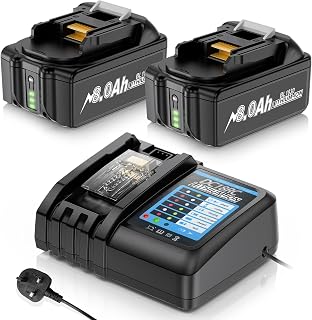


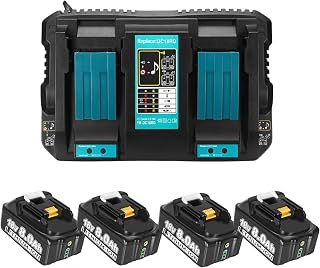


Choosing a Makita battery is not simply a matter of selecting the highest Ah rating. The correct battery depends first on the voltage platform used by your tools, then on the balance between capacity, weight, charging speed, power demand and the way you work. For UK buyers, the two most important cordless platforms to distinguish are Makita LXT 18V and Makita XGT 40V Max. Makita also produces CXT 12V Max batteries, so checking the platform printed on your existing tool is an essential first step.
The most important rule is straightforward: do not buy a battery based only on the Ah number. A 6.0Ah LXT battery and a 4.0Ah XGT battery are not interchangeable simply because both are lithium-ion batteries. Voltage platform, physical battery interface and tool compatibility all matter.
Makita LXT 18V is one of the company's established cordless platforms and is used across a broad range of professional and DIY tools. Common LXT batteries include the BL1830B 3.0Ah, BL1840B 4.0Ah, BL1850B 5.0Ah and BL1860B 6.0Ah.
Makita XGT 40V Max is a separate higher-voltage platform designed around higher power requirements. Current Makita UK documentation lists batteries including the BL4025F 2.5Ah, BL4040F 4.0Ah, BL4050F 5.0Ah and BL4080F 8.0Ah.
Amp-hours describe electrical capacity, but they do not tell the whole story about a cordless battery. Voltage and capacity together provide a more useful indication of stored energy. For example, Makita specifies the BL1860B as an 18V, 6.0Ah LXT battery with a stated energy capacity of 108Wh. Makita specifies the BL1850B as an 18V, 5.0Ah battery with 90Wh of energy capacity.
This is why comparing batteries purely by Ah can be misleading when you are comparing different voltage platforms. A higher Ah figure does not automatically mean a battery will deliver more useful performance in every tool.
Battery capacity should be selected according to the tool and workload rather than simply choosing the largest available pack. A larger battery can provide more stored energy, but it can also add weight and bulk. On tools that are frequently held above shoulder height, used at arm's length or carried throughout a working day, the difference can be noticeable.
Lower-capacity packs can make sense when portability and reduced weight are more important than maximum runtime. They can be particularly useful for lighter-duty applications, intermittent use and tools where a compact battery helps maintain balance.
Makita's XGT range includes the 2.5Ah BL4025F, while the LXT range includes the 3.0Ah BL1830B. These should not be treated as direct equivalents because they belong to different voltage platforms.
A 4.0Ah battery can be a useful middle ground when you want more capacity without moving to the largest battery available. Makita UK documentation lists both LXT 4.0Ah and XGT 4.0Ah options, but again these are platform-specific products rather than interchangeable alternatives.
For many LXT users, 5.0Ah batteries offer a practical balance between capacity and everyday usability. The BL1850B is an 18V 5.0Ah LXT battery, and Makita's UK documentation also lists power source kits pairing BL1850B batteries with the DC18RC rapid charger.
Makita specifies the BL1850B at 90Wh. The actual working runtime still depends on the tool, load, operating conditions and how continuously the tool is used.
The BL1860B is a 6.0Ah LXT battery with a stated energy capacity of 108Wh. Makita describes it as a general-use LXT battery and identifies it as suitable for tools with higher power consumption.
The larger capacity can be attractive when reducing battery changes is important, but the extra capacity should be weighed against the additional battery weight. For a drill or impact driver used overhead for long periods, the lightest suitable battery may be preferable to the largest one.
The BL4080F is an 8.0Ah XGT battery. Its capacity makes it relevant for demanding XGT applications where extended operation between battery changes is valuable. However, it belongs specifically to the XGT platform and should not be treated as a high-capacity alternative for an LXT tool.
Battery runtime is often presented as though it can be predicted from Ah alone. In practice, runtime varies substantially according to the tool and workload.
For this reason, avoid treating a published or estimated runtime as a guarantee for your particular application. The most useful comparison is normally between batteries used with the same tool under comparable conditions.
The charger deserves almost as much attention as the battery. A suitable rapid charger can reduce downtime when you rely on cordless tools throughout the working day, while a multi-port charger can be more convenient for users operating several batteries.
The DC18RC is a 240V rapid charger for compatible LXT batteries. Makita's UK product documentation states that its 18V LXT 5.0Ah BL1850B power source kit can charge a battery in approximately 55 minutes using the DC18RC.
Makita's UK catalogue also lists approximately 55 minutes for the BL1860B on the DC18RC. Charging times vary according to the battery and charger combination, so the correct way to compare chargers is to check the manufacturer's published charging table for your exact battery.
The DC18RD is a twin-port LXT charger designed for charging two compatible batteries. It can be particularly useful for users who routinely operate with multiple battery packs because it can simplify the charging routine compared with relying on a single-port charger.
Makita UK documentation lists the DC18RD alongside LXT batteries including the BL1860B, BL1850B, BL1840B and BL1830B.
The DC40RA is a fast charger for compatible XGT batteries. Makita UK documentation lists charging times for several XGT capacities, including approximately 28 minutes for a 2.5Ah pack, 45 minutes for a 4.0Ah pack, 50 minutes for a 5.0Ah pack and 72 minutes for an 8.0Ah pack.
These figures are manufacturer specifications rather than a promise of identical charging performance in every circumstance. Always check the battery and charger combination before purchase.
The DC40RB is a twin-port XGT charger intended for users who need to charge multiple compatible XGT batteries. It can be a useful choice for professional users managing several high-capacity packs, particularly where keeping batteries available is more important than having the smallest possible charging setup.
One of the easiest mistakes is assuming that all Makita lithium-ion batteries can be charged on any Makita charger. They cannot. Battery platform and charger compatibility must be checked before purchase.
For an existing LXT owner, these four battery capacities are among the most useful points of comparison.
The best choice is therefore application-specific. If a tool is used intermittently and battery weight matters, the biggest battery may be unnecessary. If the tool is used continuously and battery changes interrupt productive work, the additional capacity of a 5.0Ah or 6.0Ah pack can be more attractive.
XGT users have a similar capacity decision, although the batteries belong to a different platform.
Do not compare the XGT and LXT battery ranges solely by the number printed before Ah. The platforms operate at different nominal voltages and have different tool ecosystems.
A battery is part of the overall tool system, so the most powerful battery is not automatically the best battery. Consider how the complete tool feels with the battery attached.
When comparing batteries, think about the entire working cycle rather than battery runtime in isolation: pick up the tool, use it repeatedly, change position, carry it and repeat the process. A battery that is slightly smaller may sometimes be the more practical choice.
Understanding the terminology makes it easier to compare products without being distracted by marketing language.
A battery-and-charger kit can make sense when starting a new cordless platform or expanding a tool collection. Buying separately can be more appropriate if you already own several compatible batteries or already have a suitable charger.
Makita UK documentation includes power source kits containing combinations such as BL1850B batteries, a DC18RC charger and Makpac case for LXT, as well as XGT kits pairing batteries with DC40RA or DC40RB chargers. Compare the contents of the exact kit rather than judging a kit by its headline Ah figure alone.
More capacity can be useful, but it also changes the weight and balance of the tool. Choose the capacity that suits the workload.
LXT 18V and XGT 40V Max are distinct platforms. Check the platform before ordering.
A high-capacity battery is less useful if your charging setup does not match your working routine. Consider charging time, number of batteries and whether a single- or twin-port charger better suits your workflow.
Brand consistency does not mean universal battery compatibility. Makita has several cordless platforms, and the exact battery interface and tool requirements matter.
Ah is not a complete measure of stored energy when voltage changes. Wh provides a more meaningful cross-platform comparison.
When comparing battery offers, verify the exact model number, voltage, capacity, stated specifications and whether the product is intended for the UK market. An unusually low price deserves careful specification checking rather than an automatic purchase.
Battery quality is especially important because a cordless battery is an energy-storage component that communicates with the tool and charger. Buyers considering alternatives should not compare price alone. Check the precise compatibility information, electrical specifications, physical fit, stated capacity and the manufacturer's safety and charging guidance.
For a professional tool collection, standardising on the manufacturer's intended battery platform can also simplify charging, storage and replacement decisions. Where a tool manufacturer specifies particular batteries or chargers, follow those compatibility requirements.
A battery does not necessarily need replacing simply because its runtime has become shorter than when it was new. However, a substantial deterioration in practical runtime can indicate ageing or increased wear.
Never attempt to modify, dismantle or repair a lithium-ion power-tool battery unless you are appropriately qualified and the manufacturer specifically provides an approved procedure.
Good battery care is largely about avoiding unnecessary stress and following the manufacturer's instructions. Store batteries in a suitable dry environment and protect them from conditions that could damage the pack.
DIY users who operate cordless tools occasionally often benefit from a sensible mid-capacity battery rather than buying the largest available pack. If several tools share the same platform, two appropriately sized batteries can be more useful than one very large pack because one can be charging while the other is in use.
Professional users should consider the complete battery system: number of tools, daily operating hours, charging opportunities, number of batteries, battery capacity and charger configuration. Reducing downtime can be more important than saving a small amount of weight.
For demanding tools, concentrate on the battery models recommended for the specific machine and consider higher-capacity options where they provide a meaningful operational advantage. XGT may be relevant where the required tool is part of that platform, but the correct choice should always start with the tool rather than the battery.
Occasional users should avoid paying for capacity they are unlikely to use. A smaller compatible battery can be easier to handle and may be entirely adequate for short tasks. If you already own Makita batteries, platform compatibility and charger availability should guide the purchase.
When comparing two batteries, create a simple specification checklist before looking at price. Record the platform, nominal voltage, Ah capacity, Wh energy capacity where stated, dimensions, weight, charging requirements and compatibility.
If you own several cordless tools, the charger should be considered part of the wider battery-management system. A single charger may be perfectly adequate for occasional DIY use, whereas someone running several tools may benefit from a twin charger and a larger battery pool.
Think about how many batteries you normally have in circulation. If the answer is several, charging capacity can become a practical bottleneck. A charger that can process multiple compatible batteries can help keep the collection ready for use.
Charging time is not determined by Ah alone. Charger output, battery model and the charging system all affect the manufacturer's stated charging period. Makita UK documentation provides model-specific charging figures, so use those specifications when comparing combinations.
For example, Makita documentation lists approximately 55 minutes for a BL1850B 5.0Ah LXT battery with the DC18RC, while its XGT charging tables give different times for different XGT capacities with compatible XGT chargers. This illustrates why a charger should be selected as part of a matched battery system rather than in isolation.
There is no single best Makita battery for every user. The right choice depends on your tool platform, workload, desired runtime, battery weight and charging requirements. For LXT users, capacities such as 5.0Ah and 6.0Ah can be attractive where additional runtime matters, while smaller packs can be preferable when low weight is the priority.
No. LXT 18V and XGT 40V Max are separate Makita battery platforms. Do not assume an LXT battery will operate an XGT tool or vice versa.
Not necessarily. A 6.0Ah battery stores more energy within the same 18V LXT platform, but the additional capacity can come with increased size and weight. If runtime is the priority, the 6.0Ah option can be attractive; if handling and portability matter more, a 5.0Ah or smaller pack may be preferable.
Charging time depends on the exact battery and charger combination. Makita's UK documentation states approximately 55 minutes for the BL1850B 5.0Ah LXT battery with the DC18RC rapid charger.
Makita's UK documentation lists approximately 55 minutes for the BL1860B 6.0Ah LXT battery with the DC18RC rapid charger. Always check the specification for the exact charger being considered.
Do not assume cross-platform charger compatibility. LXT and XGT use different battery systems. Check Makita's compatibility information for the exact battery and charger models.
The DC18RC is a rapid charger for compatible LXT batteries and is particularly relevant to users who want a conventional single-battery LXT charging solution. Whether it is the best choice depends on how many batteries you need to charge and how quickly you need them ready.
A twin charger can be worthwhile if you regularly operate several compatible batteries. It is less important for occasional users who only have one or two batteries and have ample time between jobs for charging.
It depends on the tool and workload. One larger battery can provide more stored energy before a change is needed, while two smaller batteries can offer flexibility and allow one pack to be in use while another is charging. Weight and tool balance should also be considered.
Higher capacity does not simply mean proportionally higher tool power. Ah primarily describes battery capacity. Tool performance also depends on the tool's motor, electronics, load and the battery system's ability to deliver the required electrical power.
No. Makita has multiple battery platforms and tool-specific compatibility requirements. Check the exact platform and battery model recommended for your tool.
A useful independent buying comparison should look beyond star ratings and headline capacity. Battery and charger recommendations are more meaningful when the comparison considers platform compatibility, electrical specifications, charging time, physical characteristics, intended workload and the practical needs of the person using the tool.
Makita's UK documentation provides model-specific information for batteries, chargers and power source kits, including specifications for LXT and XGT systems. Product specifications can change, and retailer pricing and availability can also vary, so check the latest manufacturer information and current retailer details before making a purchase.
The strongest buying decision is therefore not necessarily the battery with the highest capacity or the charger with the fastest headline charging figure. It is the combination that fits your existing Makita platform, matches the demands of your tools, provides sufficient working time and makes sense for the way you actually use your cordless equipment.