

♥ Wishlist
Compare 44 verified Makita Belt Pouch Kit products in United Kingdom. Reviews, ratings, pros, cons and buying advice updated for October 2026.


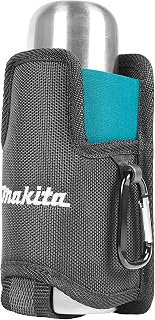


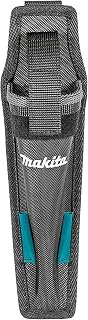


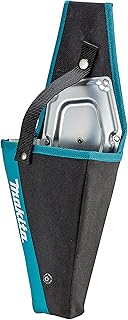


A Makita belt pouch kit can be a useful way to keep frequently used hand tools, fixings and accessories close at hand without repeatedly returning to a toolbox or tool bag. However, the phrase “belt pouch kit” covers several quite different products. Some are compact pouches intended for screws and fixings, while others combine a belt with a drill holster, hammer holder, screwdriver loops or several interchangeable pouches.
The most suitable option therefore depends less on the Makita branding alone and more on how you actually work. A carpenter carrying a drill, driver, screws and a handful of measuring tools has different requirements from an electrician carrying insulated hand tools, a roofer working at height, or a DIY user who only needs somewhere convenient for a few essentials.
Makita’s belt and pouch system includes individual holders as well as larger modular combinations. Current UK listings show products such as the E-05131 two-pocket fixing pouch, E-05147 three-pocket fixing pouch, E-05153 roofer pouch, E-05175 heavyweight belt, E-05181 electricians pouch and various specialist holders.
The easiest buying mistake is choosing a pouch because it appears large or because it is described as heavy duty, then discovering that its layout does not suit the tools you use most often. Before comparing models, make a short list of the tools that normally need to remain on your person.
Once the list is established, consider which items genuinely need belt access. Carrying every tool on your waist can make a belt unnecessarily heavy and may reduce comfort over a long working day. A smaller pouch combined with a nearby tool bag can be a better arrangement than trying to build a complete workshop around your waist.
Not every Makita belt pouch is supplied as a complete belt-and-pouch kit. Some products are individual pouches or holders designed to integrate into a modular belt system. This distinction matters when comparing specifications and prices because a lower-cost listing may represent one pouch rather than a complete working setup.
For example, the Makita E-15207 is described as a three-pocket fixing pouch rather than a complete belt system. Its published specification includes three large pockets, internal elastic holders and construction features intended to improve durability.
By contrast, a complete belt set can include the belt itself plus one or more pouches or holders. The Makita 66-050, for example, is described by UK retailers as a belt-and-pouch set incorporating a quick-release belt, universal drill holster and two-pocket fixing pouch.
Always check the “what is included” section before comparing two apparently similar products. A pouch, belt, holster and complete kit should not be treated as interchangeable descriptions.
One of the strongest reasons to consider a modular Makita belt arrangement is the ability to configure storage around the work rather than buying one fixed layout. The system is commonly presented as a collection of belts, braces, pouches, holders and related storage components, allowing users to add or remove individual components as requirements change.
This can be particularly useful for tradespeople who perform different types of work. A general-purpose setup might use a drill holster and fixing pouch on one day, while another task may call for an electrician-oriented pouch or a dedicated knife, tape-measure or hammer holder.
The modular approach also makes replacement easier in principle because a worn or unsuitable individual component does not necessarily mean replacing every part of the system. Compatibility still needs to be confirmed for the specific belt, pouch and accessory combination you are considering.
Pocket count is a useful starting point, but it is not a complete measure of capacity. Two pouches with three pockets can behave very differently depending on pocket width, depth, opening size and internal organisation.
Large open compartments are useful for screws, nails and assorted fixings because they allow quick access. Smaller dedicated holders are better for tools that need to remain upright and separated. Elastic loops can help prevent smaller tools from moving around, while a dedicated drill or driver holster keeps a bulky power tool outside the main fixing compartment.
Look at the layout in relation to your hand position. A pouch that technically holds everything may still be inconvenient if you have to search through several items to reach the tool you need repeatedly.
Material choice affects durability, weight, flexibility and resistance to everyday wear. Makita's belt and pouch range includes products described with features such as real leather, anti-slip webbing, reinforced stitching, elastic loops and durable rivets.
Leather can provide a substantial feel and can work well for high-contact areas, but material alone does not establish whether a particular pouch is suitable for a demanding environment. Pay attention to the complete construction, particularly seams, attachment points, belt loops, rivets and areas where heavy tools repeatedly enter and leave the pouch.
For practical buying decisions, construction should be assessed as a system rather than by asking whether one material is universally “best”.
Tool pouches experience repeated loading and unloading, particularly around the mouth of pockets and the points where the pouch attaches to the belt. Strong stitching and reinforced attachment points therefore deserve as much attention as the fabric or leather itself.
Industrial stitching and durable riveting are specifically listed among the construction features of several Makita pouch products.
When inspecting product photographs or specifications, look closely at stress points rather than concentrating only on the appearance of the pouch. The most important areas are often the least visually impressive: belt attachment points, corners, pocket bases and tool-holder seams.
An anti-slip belt interface can be valuable because a pouch that gradually moves around the waist becomes less convenient and may repeatedly place tools in the wrong position. Makita's system includes products advertised with anti-slip webbing.
This is especially relevant when a user works while bending, climbing, kneeling or repeatedly changing body position. A pouch does not need to be completely immovable, but it should remain sufficiently stable for the intended task.
Do not assume that every tool pouch will fit every belt simply because both products carry the same brand name. Check the manufacturer's stated compatibility and the dimensions of the belt loop or attachment system.
For example, published information for the Makita E-15285 indicates a belt loop intended for belts up to 50 mm wide.
This illustrates why dimensions matter. If you already own a preferred work belt, measure it and compare that measurement with the pouch's stated requirements before buying additional components.
A quick-release buckle can make a belt system easier to put on and remove, particularly when the belt is configured with several accessories. It can also be useful when the belt needs to be removed without disturbing the arrangement of the pouches.
However, the presence of a quick-release mechanism should not automatically make one kit better than another. Examine the buckle design, adjustment range and overall belt construction alongside the convenience feature.
Once several pouches and power tools are added, the question changes from simple storage capacity to weight management. A heavily loaded belt can become uncomfortable even if every individual pouch is well made.
For users carrying substantial loads for long periods, a belt system with compatible braces or suspenders may distribute some of the load more effectively. Makita's range includes heavyweight belt and brace configurations designed around this type of setup.
Think about the complete load rather than the empty belt. A lightweight pouch can become a surprisingly heavy component once filled with fixings and tools.
Carpenters commonly benefit from a combination of a drill or impact-driver holster, fixing storage, a tape-measure position and dedicated spaces for pencils or marking tools. The ideal arrangement should allow the dominant hand to access the most frequently used tool without excessive movement.
A general fixing pouch can be useful where screws and small consumables need to be available throughout the job. If the work involves substantial drilling or fastening, however, a dedicated holster may be more practical than placing the power tool inside a general-purpose pocket.
Electricians often need a more organised layout than a general fixing pouch provides. Screwdrivers, pliers, cutters, testers and smaller accessories can benefit from individual loops or holders rather than one deep compartment.
Makita offers products specifically described for electrician-oriented storage, including the E-05181 electricians pouch and E-15241 electricians screwdriver pouch within the wider belt and pouch range.
For electrical work, the pouch itself should not be treated as a substitute for appropriate tool insulation, electrical safety procedures or manufacturer instructions. The correct tool specification remains more important than the storage system.
Roofing work places different demands on a belt because access, movement and tool security become particularly important. A roofer-oriented pouch can be preferable to a generic fixing pouch if its layout better matches the tools and consumables used during the job.
Makita's E-05153 is listed as a two-pocket roofer pouch in UK listings, illustrating the availability of trade-specific configurations rather than one universal pouch layout.
DIY users rarely need to maximise carrying capacity. A compact two-pocket pouch or small tool holder may be enough for a weekend project, particularly when the main toolbox remains nearby.
Buying a very large professional belt simply because it appears more durable can add unnecessary cost, bulk and weight. For occasional household work, prioritise easy access to the handful of tools you use most frequently.
When comparing several Makita belt pouch options, use a consistent set of criteria instead of judging products from photographs alone.
A higher number of pockets does not necessarily mean better storage. Excessively small compartments can become awkward when tools vary in shape, while one or two larger pockets may be much more useful for a particular trade.
Consider the size and shape of your tools first. If you carry long screwdrivers, a deep narrow holder is likely to be more useful than a collection of shallow pockets. If you carry many screws or fixings, a wide open compartment may be more valuable.
A pouch designed to carry a large number of tools can encourage overloading. The belt then becomes progressively heavier as every available pocket is filled.
For occasional DIY use this may not matter greatly, but professional users should think about the complete working system. Belt, pouches, power tools, hand tools, fasteners and accessories all contribute to the final load.
Several Makita fixing pouches can appear similar at first glance, so model numbers are important when comparing listings.
The E-05131 is described as a two-pocket fixing pouch with features including anti-slip webbing, leather holders, a D-ring and elastic loops.
The E-05147 is listed as a three-pocket fixing pouch within Makita's belt and pouch system.
The E-15207 is a larger three-pocket fixing pouch with published dimensions of 320 x 145 x 270 mm and a listed weight of 670 g in one UK product specification.
These examples demonstrate why “two pocket” or “three pocket” should never be the only comparison point. Dimensions, weight, internal organisation and the specific generation or model number can materially change how a pouch behaves in everyday use.
Heavy-duty systems make the most sense when the user regularly carries a substantial collection of tools and accessories. Makita's E-05175, for example, is described as a heavyweight tool belt set within its modular belt and pouch collection, with an emphasis on weight distribution, customisation and multiple attachment points.
A heavy-duty belt can be unnecessary for someone who carries only a drill and a few screws. Conversely, a small lightweight pouch may become frustrating for a professional who needs several hand tools immediately accessible throughout the day.
The right question is therefore not “Is the heavy-duty model better?” but “Will I regularly use enough of its capacity and support features to justify carrying the additional bulk?”
Braces can become more relevant as the total load increases. They may help distribute some of the weight away from the waist and can make a heavily configured system feel more balanced.
Makita sells heavyweight belt-and-brace configurations as well as standalone belts and pouches, so users can build a system around their workload rather than assuming one fixed arrangement is suitable for every trade.
Neither material should be considered automatically superior. Construction quality, reinforcement, attachment design and suitability for the work environment are more useful buying criteria than material labels alone.
A pouch may be perfectly suitable while the belt you intend to use with it is not. Check belt width, attachment method and stated compatibility before ordering.
Product titles can contain several terms such as belt, pouch, holder and holster. Read the included-items section carefully. The E-15207, for instance, is listed as a fixing pouch, while the 66-050 is described as a complete belt-and-pouch set.
More capacity can encourage unnecessary carrying. A compact arrangement can be faster to access and easier to wear.
Always consider the weight of the belt or pouch before tools are added. This becomes particularly important with leather, heavyweight and multi-component systems.
A pouch can look professional and still be awkward for your particular trade. Imagine using each pocket repeatedly during a normal working sequence before deciding.
Makita uses numerous model numbers across its belt and pouch range. Similar-looking products can have different layouts, dimensions or intended applications. Search by the complete model number rather than relying solely on a generic phrase such as “Makita tool pouch”.
Customer ratings can be useful evidence, but they should be read alongside the specifications. A product can receive positive feedback from users whose needs differ substantially from yours.
For belt pouches, the most useful reviews tend to contain practical details rather than simple statements about whether the buyer likes the product.
Look for comments concerning:
Give more weight to detailed, verified customer feedback that describes the actual use case than to a review containing only a star rating or a brief comment.
Specifications are most useful when converted into practical questions. If a listing gives the dimensions, ask whether those dimensions provide enough usable space for your tools. If it gives the weight, consider how that weight will interact with the rest of your belt system.
A tool pouch is a storage accessory, not a safety system. Tools should be secured appropriately for the work being performed, and users should follow the instructions supplied with the tools and accessories they carry.
When working at height, consider whether every item is appropriately secured for the environment. Loose tools, fasteners or accessories can create hazards for people below. A pouch designed for general workshop use should not automatically be assumed to be suitable for every work-at-height application.
Power tools should also be handled according to their manufacturer's instructions. A drill holster is intended to assist carrying and access; it does not replace safe handling procedures, appropriate personal protective equipment or site-specific requirements.
Examine stitching, rivets, belt loops, buckles, elastic loops and other attachment points. These areas experience repeated loading and are more important than superficial marks or cosmetic wear.
Remove dust, sawdust, metal fragments, screws and other debris rather than allowing them to accumulate. Small particles can work their way into seams and mechanisms and can make tools harder to retrieve.
Do not use every pocket simply because space is available. Carry the tools and consumables required for the task and move less frequently used equipment to a toolbox or bag.
If the manufacturer supplies care instructions for leather, synthetic materials, buckles or other components, follow those instructions rather than applying a generic cleaning product.
Do not continue relying on a belt or pouch if an important attachment point, buckle, holder or structural component has become unreliable. Where the modular system permits individual components to be replaced, compare the cost and practicality of replacing the affected component rather than continuing to use damaged equipment.
A modular approach can be easier to optimise if you build it in stages.
Prioritise simplicity. A compact pouch with sensible compartments may provide everything needed for household projects. There is little benefit in carrying a large modular belt if most tools remain in a nearby toolbox.
A modular pouch system becomes more attractive when projects involve repeated drilling, fastening and measuring. Look for a practical combination of fixing storage and one or two dedicated holders rather than maximum capacity.
Prioritise durability, organisation, access and weight distribution. A higher initial cost can be reasonable when the system is used frequently, but compare the actual construction and configuration rather than assuming a premium price automatically indicates better performance.
The main advantage of choosing a branded system is often compatibility and consistency rather than the logo itself. If you already use Makita accessories and intend to build a modular setup, staying within a compatible ecosystem can simplify the process of matching belts, pouches and holders.
However, independent buying decisions should not stop at one brand. Reputable alternatives from companies such as Milwaukee, DeWalt, Klein Tools, ToughBuilt, Veto Pro Pac, Stanley and Snickers Workwear can be worth comparing depending on the trade and required configuration.
The most important comparison is therefore functional: pocket design, attachment method, materials, ergonomics, capacity, weight, compatibility and verified user feedback.
There is no single best configuration for every user. The most suitable option is the one that matches the tools you carry, the amount of storage you need, the belt you use and the length and type of work you perform. A compact fixing pouch may be ideal for one user, while a modular belt with several holders and braces may make more sense for another.
Compatibility should be checked for the exact models involved rather than assumed from the brand name. Makita's belt and pouch range is designed around modular components, but individual products can have different attachment requirements. Always verify the manufacturer's stated compatibility and belt dimensions.
It can be, particularly when the pouch layout matches the tools you use frequently. The value of a belt pouch is not simply its storage capacity; it is the combination of accessibility, organisation, durability, compatibility and comfort. Occasional users may prefer a simpler pouch, whereas professionals may benefit more from a configurable system.
Carry only the tools and consumables needed for the current task. Common examples include a tape measure, screwdriver, utility knife, pencil, drill or driver, hammer and a modest quantity of screws or other fixings. The exact combination depends on the trade and job.
No. A larger pouch provides more capacity but can also encourage overloading. For many users, a smaller pouch with dedicated holders is easier to organise and more comfortable to wear.
Leather can be an attractive choice where substantial construction and traditional material are priorities, but material should not be the only deciding factor. Compare stitching, reinforcement, attachment points, pocket layout, weight and intended use as well.
A tool pouch is normally an individual storage component, while a tool belt is the waist-mounted support system to which one or more pouches or holders may be attached. Some products are sold as combined belt-and-pouch kits, so the included components should always be checked.
Yes, the modular nature of Makita's belt and pouch range is intended to allow different holders and pouches to be combined. This can be useful because you can begin with the components you actually need and add specialist storage later, provided the individual products are compatible.
They can be, but they are not automatically the best choice. Heavy-duty systems are most useful when their additional support, capacity or configuration options will actually be used. A lighter arrangement can be more practical for occasional work.
Check the pouch's stated belt compatibility and the dimensions of its belt loop or attachment system. Do not rely solely on product photographs or the fact that both items are made by the same manufacturer.
Braces are worth considering when the complete belt becomes heavily loaded or when additional weight distribution would improve comfort. They are less important for a small pouch carrying only a few lightweight tools.
There is no single specification that matters most. For most buyers, the combination of capacity, pocket layout, dimensions, weight, attachment compatibility, construction and intended use provides a more useful assessment than any single measurement.
A useful buying guide should distinguish between specifications that can be verified and opinions that depend on individual use. Product dimensions, model numbers, stated materials, included components and published features can be compared directly. Comfort, workflow and long-term suitability require more context because users carry different tools and work in different environments.
For that reason, the strongest buying decision combines manufacturer specifications, retailer information, verified customer feedback and a realistic assessment of your own working requirements. Current UK retailer listings demonstrate that the Makita range includes compact individual pouches, specialist trade-oriented holders and larger belt systems, so treating every “Makita belt pouch” as the same type of product can lead to a poor comparison.
Product availability, prices and retailer stock can also change. Treat any price seen during research as a snapshot rather than a permanent indication of value, and check the latest specification and included-items information before purchasing.
The best Makita belt pouch kit for the UK market is ultimately the one that fits your tools, working style and required load without adding unnecessary bulk. Start with your everyday tool list, identify the items that genuinely need belt access, then compare pocket layout, construction, attachment compatibility, weight and included components.
For light DIY work, a compact pouch may be all that is necessary. For carpentry, electrical work, roofing and other trades, a more specialised configuration can make better use of the available space. If the system becomes heavily loaded, a heavyweight belt or brace-supported arrangement may provide a more appropriate foundation.
Above all, compare the exact model rather than the generic product name. Makita's range spans individual holders, fixing pouches, specialist trade pouches and complete belt systems, and the differences between them can be substantial. Current UK product information confirms examples ranging from compact two-pocket designs to larger three-pocket pouches and complete belt-and-holster configurations.
That approach makes it easier to compare genuine like-for-like alternatives, avoid buying unnecessary capacity and select a belt pouch arrangement that is practical for the way you actually work.