

♥ Wishlist
Compare 44 verified Makita Diamond Blades for Precise Cutting products in United Kingdom. Reviews, ratings, pros, cons and buying advice updated for October 2026.


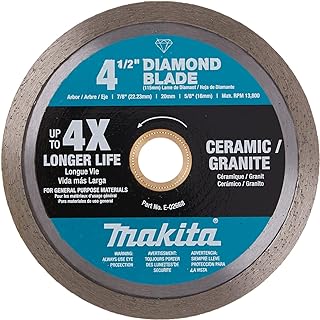


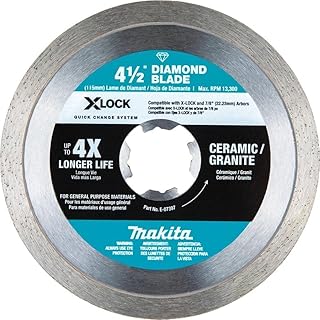


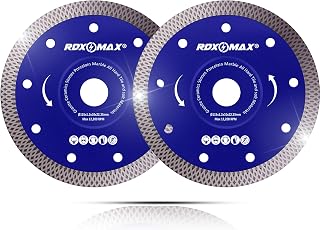


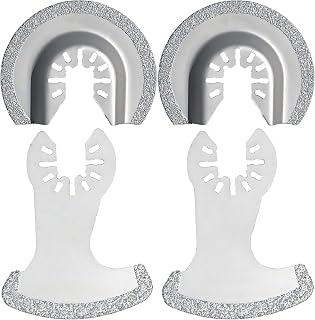


Choosing a diamond blade is not simply a matter of selecting the largest or most expensive option. The right blade depends on the material being cut, the machine being used, the required cut quality, the frequency of use and whether the job is better suited to wet or dry cutting. A blade designed for concrete may behave very differently from one intended for tiles, masonry, brick or reinforced materials.
For buyers comparing Makita diamond blades in the UK, the most useful starting point is to identify the material and cutting method before comparing individual products. Once those two factors are established, specifications such as diameter, bore size, segment design, rim construction and maximum operating speed become much easier to assess.
Diamond blades are engineered around the characteristics of the material they are expected to cut. Hard, dense materials can require a different diamond bond and cutting geometry from softer or more abrasive materials. Using an otherwise high-quality blade for the wrong application can result in slow cutting, excessive wear, poor finish or unnecessary heat.
The cutting edge of a diamond blade is not simply a layer of diamonds. The diamond particles are held within a bond or cutting matrix, and the relationship between diamond concentration, bond characteristics and the material being cut affects how the blade performs.
A useful way to think about blade selection is that the cutting edge needs to expose fresh diamond particles as the blade wears. If the bond is excessively hard for a particular abrasive material, the cutting edge may not release worn diamond particles efficiently. If the bond is too soft for the application, the blade can wear more quickly than expected.
This is one reason why a blade that performs well for one material should not automatically be regarded as the best option for every other material. Application compatibility is more important than a generic claim of versatility.
Segmented blades have individual cutting sections separated by gullets. This construction is commonly associated with demanding construction materials and applications where efficient material removal is important.
The spaces between segments can also help the cutting edge clear debris and manage heat during suitable applications. Buyers should still follow the manufacturer's instructions concerning the intended material, machine and cutting method.
Segmented designs are often worth considering when cutting concrete, masonry and other construction materials, particularly when speed and general cutting efficiency are more important than achieving the finest possible decorative edge.
Continuous-rim blades have a continuous cutting edge rather than separated segments. They are commonly associated with applications where a cleaner cut is more important, including many tile and stone-cutting tasks.
For delicate surfaces, the quality of the finished edge can be more important than raw cutting speed. A buyer comparing blades should therefore consider whether the project requires rapid material removal or a controlled, clean finish.
Turbo-style blades use a textured or serrated cutting rim designed to balance cutting efficiency with edge control. They are available for a range of construction and masonry applications, although suitability depends on the exact blade specification.
Turbo geometry can be attractive to buyers who need a blade for general construction work but should not be treated as a universal solution. The manufacturer's stated application remains the more reliable selection criterion.
Wet cutting introduces water to the cutting process. Depending on the equipment and application, water can help control dust and reduce heat at the cutting edge. Wet cutting can be particularly useful for applications where dust management and blade temperature are significant considerations.
However, wet cutting requires equipment designed for that method and appropriate working practices. Electrical safety, water management and the manufacturer's instructions for the machine and blade should always be considered together.
Dry-cutting blades are designed for applications where water is not used. They can be convenient for smaller jobs, locations where water is impractical, or equipment intended specifically for dry cutting.
Dry cutting can produce substantial airborne dust depending on the material and equipment. Buyers should therefore consider dust extraction, suitable respiratory protection and applicable UK workplace safety requirements rather than treating dry cutting as simply a more convenient alternative to wet cutting.
Diameter must be compatible with the cutting machine and the manufacturer's instructions. A larger blade cannot simply be substituted for a smaller one because it appears to offer greater cutting depth.
Before buying, check the machine's permitted blade diameter and confirm that the selected blade is intended for that equipment. Also consider the actual cutting depth required for the job rather than selecting a size based solely on maximum theoretical capacity.
The bore is the central hole through which the blade mounts to the machine. It must match the arbor arrangement specified by the tool manufacturer, using only approved methods of mounting or reducing the bore where the equipment documentation permits it.
An apparently compatible diameter does not make a blade suitable if the mounting arrangement is incorrect. Bore compatibility should therefore be checked before considering cutting performance.
The maximum permitted operating speed is one of the most important safety-related specifications on a diamond blade. The blade's permitted speed must be compatible with the machine on which it will be used.
Never assume that a blade can safely be operated at the maximum speed of the machine simply because it physically fits. The manufacturer's specifications for both the machine and blade need to be considered.
On segmented blades, segment height and width can provide useful information about the construction of the cutting edge, but these figures should not be viewed in isolation. A larger segment does not automatically mean a better blade.
Segment design works alongside the diamond bond, diamond concentration, blade construction and intended material. Application suitability should remain the primary consideration.
Maximum cutting depth depends on the blade diameter, machine design and the specific cutting setup. Buyers should distinguish between the theoretical depth associated with a blade size and the practical depth achievable with a particular tool.
If a job involves deep cuts, confirm the machine's cutting capacity as well as the blade specification. The two are related but are not interchangeable.
Makita is widely recognised for professional power tools and accessories, but the presence of the Makita name should not remove the need to compare specifications. The most suitable Makita diamond blade is the one whose application, dimensions and operating requirements match the job.
When comparing Makita options, check the stated material applications first. Then compare diameter, bore, cutting construction, wet or dry suitability and permitted operating speed. If two blades appear similar, these details can reveal meaningful differences in intended use.
It is also worth checking whether a blade is intended for a particular class of Makita machine. Compatibility should be established from the manufacturer's specifications rather than inferred from the brand name alone.
A Makita-branded blade is not necessarily restricted to Makita machinery, but compatibility must be established from the blade and machine specifications. Diameter, bore, mounting configuration, operating speed and intended cutting method all matter.
Likewise, another manufacturer's blade may be compatible with a Makita machine if its specifications meet the machine's requirements and the manufacturer permits that configuration. Brands such as Bosch, DeWalt, Norton Clipper, Tyrolit and Evolution also produce cutting accessories, but brand reputation should never substitute for checking technical compatibility.
Blade diameter and cutting depth are closely related, but a larger diameter is not automatically the better choice. The appropriate size is determined by the machine, required cutting depth and intended application.
There is no universal winner between wet and dry cutting. The correct choice depends on the material, machine, location, dust-control requirements and manufacturer's instructions.
Wet cutting creates water-management considerations, while dry cutting creates dust-management considerations. Neither method should be selected purely for convenience without checking the requirements of the material, blade and machine.
Even an appropriate blade can perform poorly if it is used incorrectly. Excessive pressure, unsuitable cutting technique and overheating can all reduce useful blade life.
Applying excessive force is rarely a sensible way to improve cutting speed. Diamond blades are designed to remove material through the interaction between the cutting edge and workpiece. Excessive pressure can increase heat, vibration and wear while making the machine harder to control.
Cutting performance can decline as the cutting edge wears. If the blade becomes noticeably slower, do not automatically compensate by applying more pressure. Check the blade condition, application and manufacturer's guidance first.
The cutting technique should follow the instructions supplied with the machine and blade. Avoid twisting the blade in the cut or applying sideways forces unless the equipment is specifically designed for that operation.
Heat is an important consideration in diamond cutting. The appropriate cutting method, correct blade selection and sensible feed pressure can all contribute to controlled operating conditions. If a blade or machine shows signs of abnormal overheating, stop and investigate rather than continuing to force the cut.
The cheapest blade may not represent the lowest overall cost if it wears rapidly, cuts slowly or produces an unsuitable finish. Conversely, the most expensive option is not automatically the best choice for every application.
A better comparison considers suitability, expected workload, cutting performance requirements, machine compatibility and the consequences of premature wear.
General-purpose blades can be useful, but broad compatibility should not be confused with optimal performance. If a project involves a particularly hard, abrasive, delicate or reinforced material, an application-specific blade may be more appropriate.
A blade that matches the machine's diameter requirement can still be unsuitable if its bore and mounting arrangement are incompatible. Check this specification before purchasing.
Operating speed is not a minor specification. The blade and machine must be compatible with respect to permitted rotational speed. This should be checked before use.
It is tempting to search for a blade based only on the name of the power tool. A better approach is to start with the material and required cut, then narrow the options according to machine compatibility.
Cutting masonry, concrete and other mineral materials can generate significant dust. Buyers should consider the working environment, extraction equipment, appropriate personal protective equipment and the relevant safety guidance for the job.
When several options appear suitable, compare them using a consistent set of criteria rather than relying on a single rating or headline feature.
Prioritise application compatibility, appropriate segment construction, sufficient cutting depth and machine compatibility. If the concrete contains reinforcement, check that the blade is specifically suitable rather than assuming that a standard masonry blade will perform adequately.
Look for a blade intended for masonry and consider whether the job prioritises fast material removal or a cleaner finished edge. The abrasiveness and composition of the masonry can affect blade wear.
Edge quality becomes especially important. A tile-specific continuous-rim design may be preferable where the visual finish matters. Check whether the blade is intended for porcelain rather than assuming ceramic-tile compatibility automatically covers every porcelain application.
Identify the specific stone where possible. Marble, granite, slate and other stones can have very different cutting characteristics. Select a blade according to the manufacturer's stated applications rather than choosing solely on the basis of the word “stone”.
Occasional users should place particular emphasis on compatibility and ease of correct use. A highly specialised blade may not provide meaningful value if the cutting requirement is limited, while a poorly matched general-purpose blade can create avoidable problems.
Professional users should consider total operating value rather than purchase price alone. Cutting rate, consistency, blade life, machine compatibility and the cost of downtime can all influence the practical value of an accessory.
Proper handling can help protect a blade between jobs. Keep blades clean and inspect them before use. Store them in conditions that avoid unnecessary moisture, contamination or physical damage.
Blade replacement should be based on condition and the manufacturer's guidance rather than an arbitrary number of cutting sessions. A blade may need attention if it shows physical damage, abnormal vibration, significant deterioration in cutting performance or other signs that it is no longer operating as intended.
A gradual reduction in cutting speed can occur as a blade wears, but repeatedly forcing a deteriorating blade is not a sensible solution. When performance changes unexpectedly, check the blade, cutting material, machine setup and operating technique before continuing.
Hardness and abrasiveness are related but should not be treated as identical characteristics. A material can be relatively soft yet highly abrasive, causing rapid wear of a cutting edge. Conversely, a very hard material can place different demands on the diamond bond and cutting action.
This distinction explains why manufacturers offer different blade constructions for different applications. A suitable blade balances diamond exposure and bond wear so that the cutting edge remains effective throughout its useful life.
Brand recognition can provide a useful starting point, but experienced buyers should still evaluate the specification. Makita, Bosch, DeWalt, Norton Clipper, Tyrolit and Evolution are established names in tools or cutting accessories, yet the correct choice remains application-dependent.
For commercial buyers, consistency can be particularly important. If a blade is being used repeatedly, compare not only the initial purchase cost but also the suitability of the blade for the material, expected cutting workload, required finish and machine setup.
Diamond cutting involves rapidly rotating machinery and can create dust, noise, fragments and other hazards. Always follow the operating instructions supplied with the machine and blade, and use appropriate protective equipment and dust-control measures for the material and working environment.
Customer reviews can provide useful buying information, but they need to be interpreted in context. A review saying that a blade “didn't last” is difficult to evaluate without knowing what material was cut, which machine was used, whether the blade was used wet or dry and how heavily it was loaded.
When comparing reviews, look for specific observations about the material, cut quality, speed, durability and compatibility. Reviews that describe the actual application are generally more informative than brief comments based solely on first impressions.
It is also useful to distinguish between product quality and incorrect application. A blade can receive a poor review because it was used outside its intended purpose, while a blade can receive positive feedback from a buyer whose material and equipment closely match the manufacturer's intended application.
If two Makita blades appear almost identical, start by comparing their intended materials. Then examine the blade construction, cutting method, dimensions and permitted speed. If the specifications are still similar, consider the nature of the job: occasional cuts may call for a different value proposition from repeated professional cutting.
Do not assume that a higher price, larger segment or more specialised-looking design automatically indicates superior performance. The best option is the one whose specification is most closely aligned with the work you actually need to complete.
There is no single best Makita diamond blade for every job. The right option depends on the material, cutting method, machine compatibility, required cutting depth and desired finish. A blade specifically matched to the material is usually a better starting point than a generic choice based solely on price or popularity.
Makita offers diamond cutting accessories for construction applications, but suitability depends on the individual blade. Check the stated application and confirm that the blade is intended for the particular type of concrete and cutting method involved.
Some diamond blades are designed for porcelain, but not every masonry or general-purpose diamond blade is appropriate. For porcelain tiles, prioritise a blade whose manufacturer specifically identifies porcelain as a suitable application and consider the required edge finish.
It depends on the job. Segmented designs are commonly associated with construction materials where efficient cutting is important, while continuous-rim designs are often selected where a cleaner edge is required, particularly for tile and certain stone applications.
Neither design is universally better. Turbo and segmented blades serve different application requirements, and the correct choice depends on the material, machine and desired cutting characteristics.
Potentially, but only when the blade and machine specifications are compatible. Check diameter, bore, mounting arrangement, permitted operating speed and intended cutting method. Never rely on brand compatibility alone.
There is no reliable universal lifespan. Blade life varies according to the material, abrasiveness, cutting depth, pressure, operating technique, blade specification and workload. Treat stated lifespan claims cautiously unless they are tied to clearly defined test conditions.
Possible causes include normal wear, an unsuitable blade for the material, excessive loading, incorrect cutting technique or operating conditions outside the manufacturer's recommendations. Inspect the blade and check its intended application before attempting to compensate by applying additional pressure.
No. Price alone does not establish suitability. A premium blade can be poor value if it is designed for a different material, while a correctly matched blade at a lower price can be entirely adequate for a particular workload.
Check the material application, blade diameter, bore, cutting method, maximum operating speed, blade construction and compatibility with the machine. Then consider workload, desired finish and overall value.
The strongest buying decision starts with the job rather than the product name. Identify the material, determine whether wet or dry cutting is appropriate, establish the required cutting depth and check the machine's compatibility requirements. Only then compare individual Makita diamond blades on construction, specifications and value.
For buyers comparing several options in 2026, manufacturer specifications should remain the primary reference for compatibility and operating requirements. Independent customer feedback can add useful context, particularly when reviewers describe the material and equipment they used, but it should not replace technical specifications or safe operating guidance.
Ultimately, the best diamond blade is not necessarily the one with the most impressive headline specification. It is the blade that is correctly matched to the material, machine, cutting method and workload, while providing the combination of cutting performance, finish, durability and value required for the particular job.