

♥ Wishlist
Compare 54 verified Bosch Sanding Belts products in United Kingdom. Reviews, ratings, pros, cons and buying advice updated for October 2026.


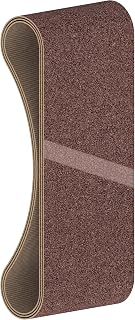


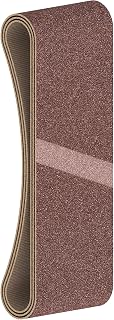


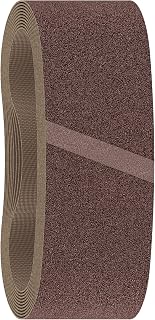



Choosing a sanding belt is not simply a matter of selecting the finest or coarsest abrasive available. The correct choice depends on the sanding machine, belt dimensions, material, condition of the surface, amount of material that needs to be removed and the finish you want to achieve. A belt that is well suited to stripping old paint from a timber surface may be unnecessarily aggressive for final preparation, while a fine belt can be frustratingly slow when substantial material needs to be removed.
For Bosch belt sanders, checking the belt dimensions is particularly important. Bosch's UK information for its belt sanders identifies 75 x 533 mm as a standard belt size for the relevant machines, while the Bosch PBS 75 A is specified for 75 x 533 mm sanding belts.
Before buying replacement belts, therefore, check the exact model of your sander and compare its specified belt width and length with the dimensions printed on the abrasive packaging. Do not assume that every belt sold under the Bosch name will fit every Bosch sanding machine.
The grit number describes the relative coarseness of the abrasive. In general terms, lower grit numbers are more aggressive and remove material more quickly, whereas higher grit numbers remove less material and are better suited to refining a surface.
Bosch's professional UK range lists sanding belts for wood in grit sizes extending from 40 through 320, while its listed metal applications include 60, 80, 120 and 180 grit options. The available grit range therefore varies according to the intended material and abrasive product.
There is no single best grit for every project. A sensible approach is to start with the least aggressive abrasive that can accomplish the job efficiently, then move progressively finer as the surface improves.
The exact progression should be determined by inspecting the workpiece rather than following a rigid grit sequence. If a coarse belt has already produced an acceptably flat surface, moving to a much finer belt may be more efficient than continuing to remove material unnecessarily.
For a compatible Bosch belt sander, the dimensions 75 x 533 mm refer to a belt that is 75 mm wide and 533 mm long. Both measurements matter. A belt with the correct width but a different length is not automatically a suitable replacement.
Bosch specifies 75 x 533 mm belts for the PBS 75 A, and its published technical documentation for the PBS 75 A and PBS 75 AE also identifies 533 mm belt length and 75 mm belt width.
Dimension checking becomes even more important when shopping across brands. Bosch's professional PRO X440 range, for example, includes 75 x 533 mm variants alongside many other widths and lengths. The product family is therefore not one universal belt size.
Compatibility should be established from the machine specification rather than from a seller's product title alone. Before ordering, check the following:
The Bosch PBS 75 A is a 710 W belt sander with a 350 m/min belt speed and a specified 75 x 533 mm belt. Bosch also describes an automatic belt system designed to keep the belt centred during operation.
Bosch's published technical documentation lists the PBS 75 AE at 750 W with a variable no-load belt speed of 200–350 m/min. It also specifies a 75 mm belt width and 533 mm belt length.
These specifications illustrate why the machine model matters when choosing replacement abrasives. The belt dimensions can be shared between machines while other operating characteristics, such as speed control, differ.
Wood is one of the most common applications for a belt sander, but different timber surfaces can place very different demands on an abrasive. Softwood, hardwood, painted timber, reclaimed boards and veneered materials should not all be treated in exactly the same way.
For aggressive work on rough timber, a coarse abrasive can save considerable time. However, excessive pressure or an unnecessarily coarse belt can produce deep scratches and make subsequent sanding more difficult. On softer timber, the abrasive can also remove material faster than expected.
For hardwood, abrasive durability becomes more important because prolonged sanding can quickly expose weaknesses in a low-quality belt. A belt with a robust backing and a well-made joint can be preferable for demanding work.
When sanding veneered boards or thin surface layers, particular caution is required. A belt sander is designed for rapid material removal, so it is possible to remove more material than intended before the operator notices the problem.
Removing old paint or varnish is one of the jobs where abrasive selection has a major effect on productivity. A coarse belt can cut through a finish rapidly, but the correct technique is just as important as the grit.
Paint removal can also load an abrasive rapidly. If the belt becomes clogged, cutting efficiency can fall even though the belt may appear visually intact. This is one reason why belt life should be assessed by actual sanding performance rather than by appearance alone.
Bosch's PRO X440 range is one of the Bosch abrasive families relevant to belt-sanding applications. Bosch describes the X440 as being designed for sanding wood and paint and specifies a tear-resistant X-cloth backing together with a reinforced belt joint for demanding applications.
The UK Bosch Professional catalogue includes a 75 x 533 mm PRO X440 variant in G60, G80 and G100 supplied as a three-piece pack, while individual grit variants are also listed elsewhere in the range.
One useful buying advantage of the PRO X440 range is the breadth of available dimensions and grit choices. However, shoppers should still select the exact variant rather than assuming that all X440 belts share the same dimensions.
Brand matching is not automatically the same thing as performance. A compatible belt from another established abrasive manufacturer can be a legitimate option if its dimensions, construction, grit and intended application are appropriate for the machine and job.
On the other hand, a Bosch-branded belt can simplify the compatibility decision where the exact machine and belt specification are clearly matched. Bosch's professional product information also publishes machine and abrasive specifications that can help buyers cross-check dimensions before purchase.
When comparing Bosch with alternatives from brands such as Makita, DeWalt, Festool, Mirka or Klingspor, compare the actual technical specification rather than the brand name alone. A meaningful comparison should include belt dimensions, grit, abrasive type, backing, joint construction, intended material, pack quantity and cost per usable belt.
The abrasive coating is only one part of a sanding belt. The backing provides the structure needed to withstand tension and repeated flexing around the machine's rollers. The joint joining the two ends of the belt is another important component.
Bosch describes the PRO X440 backing as tear-resistant X-cloth and highlights its reinforced joint for demanding sanding work.
The way abrasive grains are distributed across a belt influences how the belt interacts with the workpiece. Open-coated abrasives leave more space between grains, which can be useful in applications where material and dust need room to clear. A denser abrasive arrangement can provide more cutting points across the working surface.
For practical buying decisions, however, it is better to assess the complete belt specification and intended application than to select a belt solely because of a particular coating terminology. Resin, aluminium oxide, ceramic and other abrasive technologies can behave differently, and the manufacturer's stated application should be considered alongside the grit.
Aluminium oxide is widely used in general-purpose sanding because it provides a useful balance between cutting ability and durability. Ceramic abrasives can be particularly relevant to demanding applications where high cutting performance and abrasive longevity are priorities.
The best abrasive depends on what is being sanded. A belt intended for timber should not automatically be assumed to be the best option for stainless steel or another difficult metal. Bosch separates its professional sanding belt range by material and application, including products for metals and different wood and paint applications.
Buying a large pack can reduce the effective cost per belt, but only if the grits are ones you will actually use. For occasional DIY work, a small selection covering the main stages of sanding may be more sensible than purchasing a large quantity of one grit.
A practical selection for general timber work could include a coarse belt for initial removal, a medium grit for intermediate sanding and a finer belt for surface preparation. The exact combination should be adjusted to the condition of the timber and the final finish.
For regular renovation work, having spare belts is worthwhile because a belt can become clogged, worn or damaged unexpectedly. Keeping different grits available also avoids trying to make one abrasive perform several fundamentally different jobs.
The cheapest pack is not necessarily the most economical purchase. A lower-priced belt that wears rapidly can cost more over the duration of a project than a more durable belt that cuts efficiently for longer.
When comparing products, consider:
Published prices can change, so today's retailer price should always be checked separately from the technical comparison. The objective is to compare value, not simply the lowest initial purchase price.
Two users can obtain very different working lives from nominally similar sanding belts. Material, pressure, machine speed, dust extraction, sanding technique and surface contamination all influence abrasive wear.
Paint, resin and other substances can clog the abrasive surface. Excessive pressure can generate heat and accelerate wear rather than improving the cutting rate. A belt used on rough timber may also wear differently from one used to remove a comparatively thin coating.
Good technique is therefore part of getting value from a belt. Let the abrasive cut rather than forcing the machine into the workpiece, keep the sander moving, and inspect the surface regularly.
Not every belt sander provides variable speed. The Bosch PBS 75 A is specified at 350 m/min, whereas Bosch's PBS 75 AE documentation lists a 200–350 m/min variable range.
Variable speed can be useful when the material or task benefits from greater control. A lower speed may help with more delicate work or reduce the tendency to generate excessive heat, while a higher setting can be useful for efficient removal where the material and abrasive permit it.
The machine manufacturer's instructions should take precedence over generic recommendations. Belt speed, abrasive specification and workpiece material need to be considered together.
Dust management is not merely a cleanliness issue. Fine sanding dust can accumulate around the work area and can also interfere with visibility of the sanding surface. Bosch states that its belt sanders can be connected to a Bosch dust extractor and also identifies a dust bag option for smaller sanding work.
Effective extraction can make it easier to monitor the surface and keep the workspace manageable. Always follow the sander and dust-extraction manufacturer's instructions, particularly when sanding materials that produce hazardous or combustible dust.
Always switch off and isolate the machine according to the manufacturer's instructions before changing a belt. The basic process is to release the existing belt using the machine's belt-release mechanism, remove it, install the replacement in the correct running direction where applicable, and ensure it is seated correctly before operating the sander.
Many modern belt sanders use mechanisms designed to make belt replacement straightforward. Bosch describes the PBS 75 A as having an automatic belt system that keeps the belt centred during operation.
Do not rely solely on an automatic tracking mechanism to correct a badly installed belt. If the belt repeatedly walks sideways, stops tracking correctly or behaves abnormally, stop using the machine and check the belt installation, machine condition and manufacturer's troubleshooting guidance.
A useful comparison should go beyond star ratings or a short product title. Build a simple specification checklist for each candidate belt.
A belt sander is principally a high-removal tool. Trying to achieve the final decorative finish exclusively with a belt sander can be counterproductive, particularly on softer timber or visible surfaces.
Once the major unevenness has been removed, a random orbital sander or another finishing tool may provide greater control. This is particularly relevant where the final surface will be painted, stained, varnished or otherwise finished and a consistent scratch pattern matters.
The right sanding system is therefore often a sequence of tools and abrasives rather than one belt used from start to finish.
Some sanding belts are specifically intended for metalworking, but the abrasive specification must match the material. Bosch's professional range explicitly separates sanding belt applications by material, including metal categories such as steel, aluminium and stainless steel.
Metal sanding can also generate significant heat and debris. Use an abrasive and machine setup intended for the application and follow the manufacturer's safety instructions. Do not assume that a belt marketed primarily for wood and paint is automatically appropriate for every metalworking task.
Bosch uses both DIY and Professional product families, and the distinction is useful when assessing sanding belts and machines. The Bosch PBS 75 A sits within the Bosch DIY range, while machines such as the PRO GBS 750 and PRO GBS18V-75 are part of Bosch Professional.
The PRO GBS 750 is specified with an 850 W motor system and a 533 mm belt, with Bosch listing a 75 mm belt width. The cordless PRO GBS18V-75 likewise uses a 75 x 533 mm belt and provides a variable belt speed of 200–320 m/min.
This illustrates why identifying the complete tool model is more useful than searching only for “Bosch sanding belt”. Different Bosch machine families can share belt dimensions while differing in power, speed, intended workload and other characteristics.
Online sanding belt listings often contain several specifications in a compact title. A listing such as “75 x 533 G80, 3 pack” can be interpreted as a 75 mm wide, 533 mm long belt in 80 grit, supplied as three belts. However, buyers should still verify the manufacturer's specification because marketplace titles can contain shorthand, inconsistent terminology or incomplete compatibility information.
Look for a clearly stated part number where possible. Bosch's professional product pages identify individual belt variants by part number, which can make it easier to distinguish otherwise similar products.
Bulk buying makes the most sense when you use the same grit regularly. It is less compelling when your projects vary widely and leave you with unused belts in unsuitable grades.
For frequent woodworking, a larger supply of the most commonly used grits can be practical. For occasional household projects, a smaller pack can reduce waste and allow you to select a more appropriate abrasive for each job.
Compare the effective cost per belt, but also consider storage. Sanding belts should be kept in suitable conditions so that the backing and abrasive are not unnecessarily exposed to moisture or physical damage.
Abrasive belts are consumables, but sensible storage can help prevent avoidable damage. Keep belts clean, dry and protected from crushing, sharp bends and contamination. Avoid folding a belt sharply because deforming the backing can affect how it runs on the machine.
A belt does not necessarily become unusable at one precise point. Reduced cutting performance, visible wear, damaged edges, deterioration around the joint and persistent tracking problems can all indicate that replacement is appropriate.
A common mistake is continuing to apply more pressure as the belt becomes less effective. This can increase physical effort without restoring the cutting performance of a fresh abrasive. If the belt is no longer removing material efficiently, replacing it can be more sensible than compensating with excessive pressure.
Belt sanders remove material rapidly and should be treated as powerful workshop tools. Follow the operating instructions supplied with the specific machine and use suitable protective equipment for the material being sanded.
For buyers comparing Bosch sanding belts in the UK, the most reliable process is to start with the machine rather than the product listing.
Both matter, but they solve different problems. Grit determines how aggressively the belt cuts and how the resulting scratch pattern develops. Belt construction influences how reliably that abrasive continues working under load.
A premium belt in an inappropriate grit is still the wrong choice. Conversely, a correctly selected grit may perform poorly if the belt is unsuitable for the material, machine or intensity of use. The best buying decision is therefore the combination of compatibility, abrasive grade and construction.
The Bosch PBS 75 A is specified for a 75 x 533 mm sanding belt. Bosch's UK product information also lists a K80 sanding belt in the supplied equipment for the machine.
Matching dimensions are an important compatibility requirement, but they should not be treated as the only consideration. Confirm the specific machine's requirements and the belt's intended application before buying.
There is no universal best grit. Coarse grits such as 40 or 60 are more suitable for substantial removal, while 80 to 120 can be useful for progressively refining prepared timber. Finer grades can be used where the required finish calls for them.
A coarse or medium-coarse belt can be effective for removing substantial paint, but the appropriate grade depends on the coating, substrate and desired result. Once the paint has been removed, moving to a finer belt can help refine the surface.
Some Bosch belts are listed with compatibility across multiple machine brands and models. For example, Bosch's PRO X440 product listings identify compatible applications involving brands including AEG, DeWalt, Festool, Holz-Her, Makita and Skil for particular 75 x 533 mm variants. Compatibility still needs to be checked for the exact machine and belt variant.
They can be considered where the dimensions and application match the machine and project. The Professional range includes belts designed for wood, paint and metal applications, so selecting the correct product remains more important than choosing a product family simply because it is labelled Professional.
There is no reliable universal lifespan. Belt life depends on the abrasive, grit, workpiece, coating, sanding pressure, machine speed, dust extraction and technique. Judge the belt by its cutting performance and condition rather than expecting a fixed number of hours.
Possible causes include incorrect installation, tracking adjustment, belt damage or a machine-related issue. Stop the tool and consult the manufacturer's instructions rather than continuing to operate a belt that is not tracking correctly.
Generally, excessive pressure is unnecessary. The abrasive is designed to cut the material, and forcing the machine can reduce control and accelerate wear. Use controlled passes and let the machine do the work.
Yes. Within the normal abrasive grading system used for sanding belts, a higher grit number represents a finer abrasive. A lower number represents a coarser abrasive.
For a project involving both substantial material removal and surface refinement, several grits are usually more useful. One coarse belt can remove material quickly, but continuing with it when the surface needs refinement can leave a scratch pattern that requires additional work to remove.
Check the exact sander model, belt dimensions, grit, material application, abrasive construction, pack quantity and manufacturer or part number. Then compare current retailer pricing and verified customer feedback.
Product specifications, pack configurations, retailer prices and availability can change. Bosch's current UK product information should be treated as the primary reference for machine dimensions and official specifications, while individual retailers should be checked for today's price and stock position. Bosch's published range confirms that 75 x 533 mm belts are used across several relevant belt-sander applications, but exact compatibility should always be verified against the machine model.
For commercial comparisons, the most useful approach is to evaluate the complete specification rather than selecting a sanding belt solely because it appears prominently in a marketplace search. Grit, dimensions, material suitability, construction, pack quantity and expected working requirements all contribute to whether a particular belt is the right choice.