
♥ Wishlist
Compare 49 verified Makita Case: Tool Boxes, Carry Cases and MakPac Storage products in United Kingdom. Reviews, ratings, pros, cons and buying advice updated for October 2026.





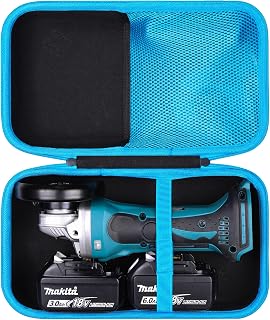


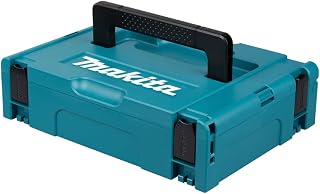

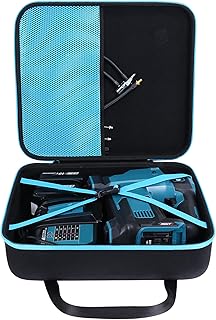
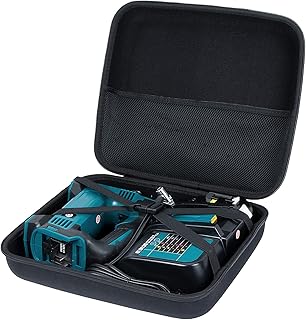


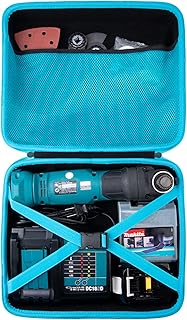


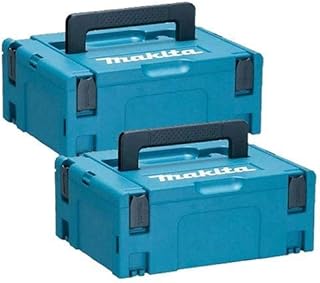

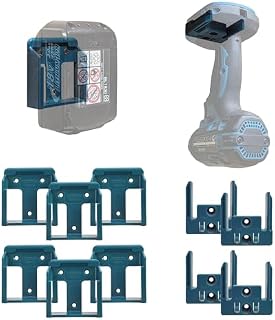

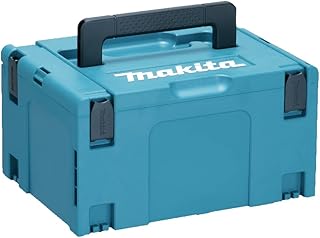


A Makita case is more than a container for a power tool. The right case can make a noticeable difference to how efficiently you organise batteries, chargers, accessories and machines, particularly if equipment is regularly moved between a workshop, vehicle and job site. The important point is that not every case marketed for Makita equipment provides the same combination of capacity, protection, portability and compatibility.
For buyers comparing Makita cases in the UK, the first decision should therefore be based on the equipment being stored rather than the appearance of the case. A compact case may be ideal for a drill and a small collection of accessories, whereas a larger case may be more appropriate for a planer, saw, rotary hammer or a tool kit containing several components.
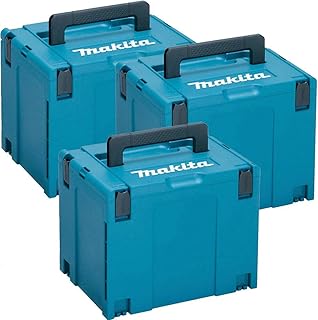
Makita's own MAKPAC system is particularly relevant because the range includes different case heights and dedicated inlays for particular tools. Makita lists Type 1, Type 2, Type 3 and Type 4 cases, with the main difference being their available height and therefore their storage capacity. The published external dimensions are approximately 396 x 296 mm across the footprint, while the height varies between the different types.
One of the most common buying mistakes is comparing only the outside dimensions. The space available inside a tool case can be considerably more important than its headline measurements.
A case needs enough usable internal space for the tool itself, but it may also need room for a battery, charger, side handle, dust extraction attachment, blades, drill bits, driver bits or other accessories. A case that technically accommodates the machine may still be inconvenient if the lid cannot close comfortably once the accessories are installed.
Dedicated inlays can also change the practical capacity. An insert designed around a particular Makita tool can hold the machine securely and use the available space efficiently, while a generic empty case gives greater flexibility but may allow equipment to move around during transport.
For shoppers specifically looking at the MAKPAC system, understanding the different case types is one of the most useful ways to narrow the choice.
Type 1 is the shallowest of the commonly listed MAKPAC connector cases. Makita specifies the Type 1 with a height of around 105 mm. Its relatively low profile makes it better suited to compact tools, accessories and applications where vertical storage space is limited.
The main advantage of a shallow case is portability. A lower case can be easier to carry and store in a vehicle or workshop, provided the tool and required accessories fit without forcing the lid or insert.
Type 1 is worth considering when the contents are relatively compact and there is no need for substantial vertical clearance. It is less suitable when the equipment has a tall battery arrangement, large handle or bulky accessory set.
Type 2 is taller than Type 1, with Makita specifying a height of approximately 157 mm. This additional space makes it a versatile option for many compact and medium-sized tools.
A Type 2 can be a sensible choice for buyers who want a balance between portability and capacity. It can also be useful where an appropriate tool-specific inlay is available, because the insert can provide a more organised fit than simply placing the equipment loose inside the case.
When comparing Type 2 cases, check the exact case part number and the supplied or separately available insert rather than assuming that every Type 2 is configured for the same tool.
Type 3 provides substantially more vertical room, with Makita's published specification putting the height at roughly 210 mm. This makes it a more appropriate starting point for larger equipment or combinations requiring additional clearance.
The greater height can be useful for tools with substantial housings, deeper handles or accessories that cannot be accommodated comfortably in a shallow case. However, extra capacity also means a larger case to carry, so it should not automatically be considered better.
Type 4 is the tallest of the four standard MAKPAC connector case sizes listed by Makita, with a height of approximately 315 mm. Its additional capacity is aimed at applications where smaller cases simply do not provide sufficient vertical space.
For a buyer who mainly owns compact drills and impact drivers, Type 4 can be unnecessarily bulky. For larger equipment or more substantial accessory arrangements, however, the additional volume can be more useful than attempting to force everything into a smaller case.
MAKPAC cases share a broadly consistent footprint across the different case heights, which is one reason the system is attractive to people building a larger collection. Makita documentation identifies the Type 1, Type 2, Type 3 and Type 4 cases as part of its stacking case system.
However, a common misunderstanding is that a standardised footprint means every Makita tool will fit every MAKPAC case. It does not. Physical compatibility depends on the dimensions and shape of the particular machine, the battery configuration, the accessories being carried and whether a suitable insert is available.
When checking compatibility, look at the complete tool configuration rather than the bare tool dimensions. A drill without a battery may fit comfortably, while the same drill with a larger battery, belt hook or side handle could require a different arrangement.
For this reason, the manufacturer's compatibility information should take priority over assumptions based on case size. If a specific tool was originally supplied in a MAKPAC case, identifying the case type and insert associated with that kit is often the safest starting point.
An inlay is the shaped or organised internal component that positions equipment inside a case. It can be one of the most important parts of the purchasing decision because two cases with similar external dimensions can have very different practical usefulness.
A dedicated Makita inlay can provide a defined location for the tool and may also account for batteries, chargers or accessories. This reduces movement inside the case and can make it easier to identify missing components before leaving a workshop or travelling to a job.
Generic inserts provide a different advantage: flexibility. If the case is expected to store several different tools over time, a universal or configurable arrangement may be preferable to an insert designed around one specific machine.
Choose a dedicated inlay when secure positioning and organised storage are more important than flexibility. This is particularly sensible for a frequently transported tool that has a clearly defined accessory set.
Choose an empty or adaptable case when the contents are likely to change. This approach can also make sense for mixed accessories, consumables and small hand tools that do not require a precisely shaped cavity.
Do not assume that an inlay shown in a photograph is automatically included with every listing. Retail listings can describe cases, inserts and complete tool kits separately. Always check exactly what is included in the specification before comparing the overall value of two options.
Most hard tool cases intended for everyday workshop or site use are based around moulded plastic construction. The important issue is not simply whether a case is plastic, but how the construction, hinges, latches, handle and internal arrangement work together.
A useful case should resist normal handling without becoming unnecessarily heavy. The shell should feel appropriate for the intended application, while the closing mechanism should be easy to operate and secure when the case is being carried.
Inspect the thickness and rigidity of the shell where information is available. A case intended for frequent transport needs to tolerate repeated loading and unloading rather than simply looking robust when new.
Also consider how the case will be transported. A case that spends most of its life on a workshop shelf has different requirements from one repeatedly placed into the boot of a van or carried across a construction site.
Latches are small components but can have a major effect on long-term usability. Look for a mechanism that can be opened without excessive force and closes positively.
If the case is part of a stacking system, check how the connector mechanism works and whether the cases remain secure when moved together. Makita's MAKPAC system is designed around connecting and stacking compatible cases, making the latching system an important part of its appeal.
Hinges are another potential weak point because they are repeatedly stressed whenever the lid is opened. A case used several times each day can accumulate far more opening cycles than one used occasionally.
Buyers should therefore consider the expected frequency of use. For professional transport, hinge and latch construction deserves more attention than cosmetic features.
Consider how the case feels when carried with its actual contents inside. A large empty case may appear manageable, but adding a heavy power tool, batteries and accessories can substantially change the carrying experience.
A comfortable handle is particularly valuable when moving equipment over longer distances. If several cases are stacked together, also consider whether the combined load is realistically manageable for one person.
Stackability is one of the strongest reasons to consider a modular case system rather than a collection of unrelated tool boxes. A stackable system can make better use of vertical storage space and reduce the amount of loose equipment around a workshop or vehicle.
Makita's MAKPAC system is designed so compatible cases can be stacked and secured together. This can be particularly useful for tradespeople who organise tools by task, machine type or job.
For example, one case could contain a drilling machine and accessories, another could hold a saw and consumables, and a separate case could be dedicated to batteries and charging equipment. The precise arrangement should depend on the user's tools rather than following a fixed system.
A stack of several cases may be convenient for storage but less convenient to carry. Buyers should distinguish between a case system that is easy to organise and one that is easy to transport.
If equipment regularly travels from a van to several rooms or work areas, smaller individual loads may be preferable. If the cases mainly remain in a workshop or vehicle, a larger stack may be perfectly practical.
Makita offers several cordless tool platforms, and the battery system can affect the space required inside a case. Buyers should therefore avoid choosing a case solely because the tool itself belongs to the Makita range.
Battery dimensions, charger size and the physical configuration of the tool can all influence the most suitable storage arrangement. A case that works well for a compact LXT drill, for example, should not automatically be assumed to provide sufficient clearance for a larger XGT machine and battery combination.
The safest approach is to identify the exact tool model, battery configuration and accessories first, then confirm the manufacturer's recommended case or inlay. This is especially important when purchasing a case separately from the original tool kit.
Makita is not the only manufacturer with a modular storage ecosystem. DeWalt, Milwaukee, Bosch and Festool also offer branded storage systems, and each can be attractive depending on the user's existing tools.
For someone already invested in Makita equipment, staying within the Makita storage ecosystem can simplify tool-specific inlay selection and overall organisation. DeWalt's storage approach may be more relevant to a buyer whose workshop is already centred around DeWalt equipment.
The most useful comparison is therefore not simply which brand makes the strongest-looking case. Compare footprint, capacity, stacking method, handle design, insert availability and compatibility with the tools you actually own.
Milwaukee's modular storage systems are another popular alternative among professional users. A buyer choosing between the two should consider the wider ecosystem rather than a single case.
If most of your power tools are Makita, a compatible Makita storage system can reduce duplication and make it easier to keep machines and accessories organised. If the majority of equipment is Milwaukee, switching storage ecosystems purely for one case may provide little practical benefit.
Bosch offers its own range of professional and consumer-oriented tool storage solutions. The important consideration is compatibility with the tools and accessories you already have, particularly where dedicated inserts are involved.
Festool is well known for integrated tool and storage solutions aimed strongly at professional workshop and site applications. A Festool system can be particularly compelling for someone already using Festool equipment, but it should not be assumed to be the best choice for every Makita owner.
For a mixed-brand workshop, compare the actual dimensions, connectors and storage requirements of the equipment rather than choosing purely by brand reputation.
A case can physically accommodate equipment from another manufacturer if the dimensions work, but physical fit should not be confused with official compatibility.
A third-party tool may fit inside an empty case, but it may not have a dedicated insert. Without suitable internal support, the equipment could move around during transport or occupy space inefficiently.
Buyers considering mixed-brand storage should measure the equipment carefully and check the case's usable internal dimensions. The safest solution is one that keeps the equipment stable without requiring excessive pressure on the lid or case walls.
Drills and impact drivers are among the easiest tools to store, but the accessories can quickly become the deciding factor.
Before choosing a case, list everything you expect to carry together: the bare tool, battery, spare battery, charger, belt hook, side handle where applicable, driver bits, drill bits and any other frequently used accessories.
A shallow case can work well when only the machine and a small accessory set are required. A taller case may be preferable when the charger and multiple batteries need to travel with the tool.
Saws, planers, rotary hammers and other larger machines require more careful planning because their shapes are less compact than a drill or impact driver.
Measure the tool at its widest and tallest points, including components that remain attached during transport. Consider whether the blade, guard, side handle or depth adjustment needs to remain installed.
For irregularly shaped equipment, an apparently large case can still be unsuitable if the internal geometry does not accommodate the tool. This is where a purpose-designed inlay or a carefully selected larger case can provide a significant advantage.
Makita cases can look very similar while having different sizes, configurations or intended uses. Check the manufacturer's part number and specification rather than relying solely on photographs.
A case and an inlay may be sold separately. If the listing does not clearly state that an insert is included, investigate the contents before comparing prices or deciding that one package offers better value.
Measure the complete storage arrangement. Batteries, chargers, handles and accessories can be the difference between a comfortable fit and an unusable one.
More capacity is not automatically better. A large case takes up more storage space and may be less convenient to carry when a compact alternative would accommodate everything required.
If you already have several compatible Makita cases, buying an unrelated storage format can create unnecessary duplication. Check whether the new case can integrate with the equipment you already use.
Customer feedback can highlight practical issues, but it should be considered alongside manufacturer specifications. A review from someone storing a compact drill may have little relevance to someone transporting a large rotary hammer.
Not every tool necessarily has the same case and inlay options. Always verify availability and compatibility for the exact model rather than assuming that an appropriate-looking MAKPAC configuration exists.
A simple compatibility check can prevent most purchasing mistakes.
Case selection becomes easier when storage requirements are separated into three categories: the essential tool, essential operating accessories and optional accessories.
The essential tool is the machine itself. Essential operating accessories are items required to use it, such as batteries, a charger or a necessary side handle. Optional accessories include items that are useful but could remain in a separate accessory organiser.
This distinction can prevent overbuying. Instead of selecting a very large case simply because it has room for every accessory you own, consider whether all those accessories genuinely need to travel with the machine.
Vehicle storage introduces different priorities from workshop storage. A case carried in a van needs to fit available shelves, drawers or floor compartments without creating unnecessary wasted space.
Measure the actual storage area before buying several cases. Pay attention to height, because a case that fits the floor footprint may prevent a shelf or compartment above it from being used.
Stackable cases can make vertical space more useful, but only when the resulting stack is practical to access. If the case at the bottom contains a tool used several times a day, repeatedly unloading the entire stack can become frustrating.
In a workshop, organisation is often more important than minimum weight. A modular system can make it easier to group tools by task and keep accessories with the machine they belong to.
Consider creating dedicated storage groups for drilling, fastening, cutting, sanding and specialist work. This can reduce time spent searching for accessories and makes it easier to identify what needs to be loaded before a job.
Labelling can also help where several identical black cases are stored together. The label should identify the contents without requiring the case to be opened.
Hard cases generally require less maintenance than the tools stored inside them, but regular cleaning can prevent grit and debris from interfering with latches, hinges and connectors.
The most effective way to protect a tool case is to use it within its intended capacity. Excessive weight places additional stress on handles, latches and hinges.
Avoid using the lid as an improvised work surface unless the manufacturer specifically indicates that this is suitable. Likewise, do not stand on a case simply because its shell appears rigid.
When cases are transported loose in a vehicle, prevent them from sliding into other equipment where practical. Repeated impacts can eventually damage handles, latches or corners even when the case appears robust enough for everyday use.
Value is not necessarily the same as the lowest purchase price. A cheaper case may be less useful if it requires a separate insert, does not stack with your existing equipment or lacks sufficient capacity for the tool and accessories you need to carry.
Conversely, paying more for a larger or more specialised case may not represent good value if the additional capacity is rarely used.
When comparing options, consider the complete cost of the storage solution, including any necessary inlay, organiser, accessory tray or additional case required to achieve the setup you actually want.
A professional tradesperson typically places greater emphasis on repeated transport, organisation and compatibility with an existing storage system. A DIY user may prioritise affordability, compact storage and occasional convenience.
Neither approach automatically requires a particular case type. The right choice depends on how often the case is moved, how much equipment it carries and how important modular organisation is to the user.
A hard case is not automatically the best storage solution. A soft tool bag can be more convenient when the user needs to carry irregular accessories, hand tools or several small items together.
Hard cases generally make more sense when protection, stackability and structured organisation are priorities. Soft bags can make sense when flexibility, quick access and low empty weight matter more.
Consider how the equipment is used rather than assuming that a hard case is always an upgrade.
A generic case can be a practical alternative when there is no suitable dedicated Makita inlay or when the user needs to store mixed-brand equipment. The key is to choose a case with appropriate internal dimensions and a secure method of holding the contents.
For expensive tools, avoid a loose arrangement in which the machine can repeatedly move around during transport. Foam, dividers or a suitable insert can improve organisation, provided the chosen material and configuration do not interfere with ventilation, controls or other manufacturer requirements.
A useful comparison should score each candidate against the same criteria. This avoids choosing a case simply because one feature looks impressive in isolation.
Start with compatibility. Eliminate any case that cannot accommodate the tool and required accessories safely. Next, consider capacity, internal organisation and portability. After that, assess stacking and compatibility with your existing storage equipment.
Only once those practical requirements are satisfied should appearance, brand ecosystem and price become deciding factors.
Part numbers are particularly useful when comparing apparently identical listings. For example, Makita identifies its standard MAKPAC connector cases with specific numbers, including 821549-5 for Type 1, 821550-0 for Type 2, 821551-8 for Type 3 and 821552-6 for Type 4.
Using the part number can reduce confusion between cases, inserts and complete tool kits. It is also useful when searching for a replacement case for equipment that was originally supplied without one.
Always verify the part number against the manufacturer's current documentation because accessory ranges and regional listings can change.
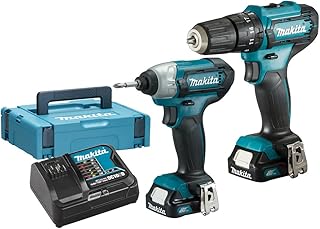
Buying a complete tool kit with a supplied case can be convenient because the case and insert are normally selected around that particular kit. Buying a case separately provides more flexibility when you already own the machine or purchased it as a bare tool.
For a separately purchased case, the main risk is compatibility. Confirm the tool model and required accessories before assuming that the case used for a visually similar kit will also work for your configuration.
Customer reviews can be useful for identifying practical details that specifications do not always communicate clearly. Look for recurring comments concerning latch operation, handle comfort, internal space, stacking convenience and whether the supplied configuration matches the product description.
Do not give equal weight to every review. A comment about a case being too small may reflect a different tool configuration, while a complaint about weight may be irrelevant to someone who mainly stores the case on a workshop shelf.
The most useful review evidence is specific, consistent and relevant to your intended use. Manufacturer specifications should remain the starting point for dimensions and compatibility.
There is no single best Makita case for every buyer. The best option is the one that fits the exact tool, batteries and accessories you need to transport while providing an appropriate balance of capacity, protection, portability and organisation.
Among the standard MAKPAC connector cases, Type 4 is the tallest option listed by Makita. It is approximately 315 mm high, compared with approximately 105 mm for Type 1, 157 mm for Type 2 and 210 mm for Type 3.
Yes. The MAKPAC connector case system is designed around stacking and securing compatible cases together. This is one of its main organisational advantages for users with several compatible cases.
No. Makita offers different case types with different heights, and the internal configuration can also vary depending on the insert. Always check the exact model and dimensions before purchasing.
No. Compatibility depends on the dimensions and shape of the tool, battery configuration, accessories and available inlay. A case with the correct footprint may still be unsuitable if there is insufficient internal clearance.
Some MAKPAC cases are available separately, so it is possible to purchase a case independently of a tool. Check the exact product specification and part number to establish what is included.
It depends on the specific product. Some tool kits include a case with a tool-specific inlay, while standalone cases and individual inserts can be separate products. Never assume that an insert is included unless the listing or manufacturer specification confirms it.
MAKPAC can be particularly useful for Makita owners who want compatible stacking, tool-specific organisation and a consistent storage system. A generic tool box may be preferable when mixed-brand equipment or irregular accessories need to be stored together.
Choose based on the actual space required by your tool and accessories. Type 2 is lower and more compact, while Type 3 provides greater vertical clearance. If both fit comfortably, the smaller option may be easier to store and carry.
They can be, particularly where organised transport and compatibility with a modular storage system are useful. Professional users should pay particular attention to the case's capacity, handling characteristics, stacking arrangement and compatibility with the tools they use most frequently.
Remove loose dust and debris regularly and pay particular attention to latches, hinges and connecting points. Avoid methods or cleaning products that could damage the case material, and follow the manufacturer's care guidance where specific instructions are provided.
No. A larger case provides more capacity but can also take up more storage space and become heavier when loaded. The best size is the one that comfortably accommodates the intended equipment without unnecessary unused volume.
For a UK buyer comparing Makita cases in 2026, the most reliable approach is to treat the case as part of a wider storage system rather than as an isolated accessory. Check the exact model number, case type, dimensions and inlay requirements before considering price.
For existing Makita users, compatibility with the storage equipment already owned can be one of the strongest reasons to choose a particular case. For new buyers, it can be worth considering how the storage system will accommodate future tools as well as the machine being purchased today.
Most importantly, avoid choosing solely on appearance or headline ratings. A case that is technically well made but incompatible with your equipment is poor value, while a suitably sized and well-organised case can remain useful across many years of ordinary workshop and site use.
The strongest buying decision starts with the equipment rather than the case. Identify the exact Makita tool, battery, accessories and transport requirements first. Then select the appropriate case size, inlay and storage configuration.
For compact equipment, a shallow MAKPAC Type 1 or Type 2 may provide a practical balance of capacity and portability. Larger equipment may justify Type 3 or Type 4, particularly where additional vertical clearance is required. The correct choice ultimately depends on the physical dimensions and intended use of the complete setup.
Before purchasing, compare manufacturer specifications, confirm compatibility, check what is included, consider your existing storage system and read relevant customer feedback. That process is more dependable than choosing a case simply because it is labelled as a bestseller or described as the largest option.