

♥ Wishlist
Compare 22 verified Makita Abrasive Cutting Discs for Precise, Reliable Cutting products in United Kingdom. Reviews, ratings, pros, cons and buying advice updated for October 2026.


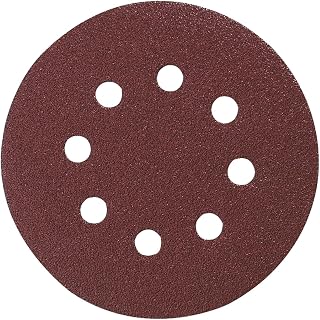

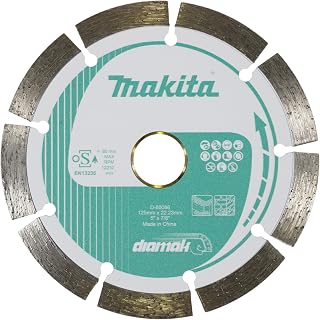
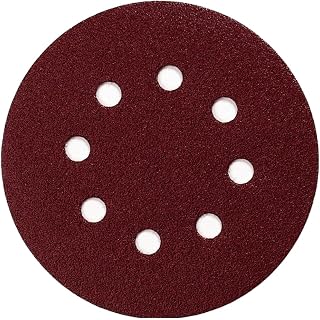


Choosing an abrasive cutting disc is not simply a matter of selecting the right diameter or buying the cheapest pack. The disc has to match the material being cut, the grinder or saw being used, the spindle and bore dimensions, the permitted operating speed, and the type of cutting work involved. A disc that is suitable for thin sheet steel may be a poor choice for heavier structural sections, while a disc designed for stainless steel may have different requirements from a general-purpose metal-cutting wheel.
For buyers comparing Makita abrasive cutting discs in the UK, the most useful approach is to assess the complete specification rather than relying on product names alone. Diameter, thickness, bore size, abrasive construction, intended material, maximum revolutions per minute and machine compatibility all affect whether a disc is appropriate for a particular job.
This guide expands the buying considerations that matter when comparing Makita cutting discs and similar alternatives from established abrasive-tool manufacturers. Product specifications should always be checked against the current manufacturer's packaging or technical documentation before use.
The correct disc depends primarily on three things: what you are cutting, which machine you are using and the type of cut required. Once those factors are established, diameter, thickness and disc construction become much easier to assess.
Different metals place different demands on an abrasive cutting disc. Mild steel, stainless steel and other alloys can behave differently during cutting, particularly in relation to heat, loading of the abrasive surface and the amount of material removed.
Do not assume that a disc labelled for metal is automatically suitable for every metal. Always check the manufacturer's stated applications.
Disc diameter must correspond with the machine for which the wheel is designed. Common angle-grinder disc sizes include 115 mm, 125 mm and 230 mm, although other sizes exist for specialist equipment.
A larger disc is not automatically better. The machine must be designed to accept that diameter, and the disc's maximum permitted rotational speed must be compatible with the machine. Fitting a wheel simply because it physically appears to fit can create a serious safety risk.
When comparing products, look at the actual diameter stated on the disc rather than relying on a retailer's category or product title.
Thickness affects cutting characteristics. Thin discs are often selected where a narrow kerf and relatively quick material removal are desirable. Thicker discs can offer a more substantial abrasive structure but remove more material from the workpiece.
For precision-oriented cutting of sheet or small sections, buyers often look towards thinner wheels. For heavier-duty work, the appropriate thickness depends on the disc design, machine and manufacturer's intended application.
Thinner does not simply mean better. A disc should be selected according to the application and used exactly as specified by the manufacturer.
The bore is the central hole through which the disc mounts to the machine. It must correspond to the spindle and approved mounting arrangement of the tool.
Never modify, enlarge or otherwise alter the bore of an abrasive cutting disc to make it fit a machine. If the bore specification does not match the machine's approved disc configuration, select a correctly sized product instead.
The maximum rotational speed marking is one of the most important specifications on an abrasive cutting disc. The disc must be rated for a rotational speed at least compatible with the machine on which it is being used.
Never exceed the disc's stated maximum speed. A grinder capable of a higher RPM does not make a lower-rated disc suitable for that machine.
When comparing several Makita discs, check the RPM marking on the actual product and packaging rather than assuming two discs with the same diameter have identical speed ratings.
Disc dimensions are commonly presented in a format such as diameter × thickness × bore. Understanding all three measurements is essential because two discs can have the same diameter while differing substantially in thickness or bore.
Abrasive wheels are engineered products rather than simple metal discs. Their cutting behaviour is influenced by the abrasive grain, the bonding system and the construction of the wheel.
The abrasive grain performs the cutting action while the bond holds the abrasive material together. The balance between these elements affects factors such as cutting performance, wheel life, material suitability and how readily fresh abrasive is exposed during use.
For commercial buyers, workshops and frequent users, these construction details can be more useful than judging a disc solely by its advertised pack size.
Many cutting wheels use reinforcement within their construction. Reinforcement can contribute to the structural integrity of the wheel during normal operation, but it does not make a damaged or incorrectly used disc safe.
Users should inspect discs before fitting them and follow the manufacturer's instructions concerning mounting, operation, storage and disposal.
Thin cutting discs are popular for applications where minimising the width of the cut is useful. A narrower kerf can reduce the amount of material removed and may make certain cutting tasks feel faster or cleaner.
However, buyers should not select the thinnest available wheel automatically. Disc thickness is only one part of the specification, and the intended application, machine, material and operating conditions remain important.
For repeated workshop work, it can be sensible to compare both cutting speed and expected disc consumption rather than judging value solely from the purchase price of a pack.
Makita is a familiar name in power tools and accessories, but buyers are not limited to one manufacturer. Depending on the application, established abrasive brands such as Bosch, DEWALT, Norton, PFERD and 3M may also offer relevant cutting products.
The most useful comparison is not simply brand versus brand. Instead, compare the specification of the individual disc.
A competing brand with a lower headline price may not represent better value if its specification is unsuitable for the intended work. Equally, a premium-branded disc is not automatically the correct choice simply because of the manufacturer's reputation.
Pack price can be misleading when comparing abrasive wheels. A larger pack may have a higher purchase price while offering a lower cost per disc, whereas a small pack can be more practical for occasional users.
Calculate the approximate cost per disc by dividing the total purchase price by the number of usable discs in the pack. For frequent users, however, cost per disc is only one part of value.
A more useful commercial comparison considers the complete specification, expected suitability for the job, material compatibility and the amount of cutting required. A disc that is inappropriate for the material is poor value regardless of its price.
The cheapest disc is not necessarily the most economical choice. Cutting discs are consumables, so suitability and consistent performance matter alongside initial cost.
Before purchasing, identify the exact grinder or cutting machine model and confirm which disc dimensions and speed ratings it accepts. A disc should never be selected based solely on its appearance.
A correct diameter does not compensate for an incompatible bore. Check the complete dimensional specification before buying.
Cutting wheels and grinding wheels are designed for different operations. A cutting disc is intended for cutting through material, while a grinding wheel is designed for grinding or material removal. Do not treat them as interchangeable accessories.
A general metal disc should not automatically be assumed to be suitable for stainless steel, aluminium or other specialist materials. Check the manufacturer's application guidance.
Abrasive wheels should be stored according to the manufacturer's instructions. Excessive moisture, unsuitable temperatures, physical damage and poor storage practices can affect abrasive products.
Safety should take priority over cutting speed or convenience. Abrasive wheels operate at high rotational speeds, so incorrect selection, damage or misuse can have serious consequences.
Always read the safety instructions supplied with both the machine and the abrasive product. Workplace users should also follow applicable UK workplace safety requirements and their organisation's risk assessments and operating procedures.
Occasional DIY users may only need a small quantity of general-purpose cutting discs, whereas tradespeople, fabricators and maintenance teams can consume abrasive wheels much more quickly.
For occasional use, compatibility and correct application are usually more important than buying the largest possible pack. A professional user may place greater emphasis on consistent cutting characteristics, availability of the required specification and overall consumable cost.
Neither user should compromise on the fundamental requirements: correct dimensions, correct application, appropriate speed rating and safe use.
A suitable metal-cutting disc should have a clearly defined application and specifications that correspond with the equipment being used. For repeated metalwork, buyers may also want to consider how the wheel behaves during repeated cuts, how much material is removed and whether the disc is suited to the thickness of the workpiece.
For fabrication work, the difference between cutting thin sheet and repeatedly cutting heavier sections can be significant. Selecting a disc based on the actual workload rather than a generic "metal cutting" description produces a more meaningful comparison.
Stainless steel deserves particular attention when selecting abrasive products. The disc should be explicitly identified as suitable for stainless steel where the manufacturer requires a dedicated product.
For applications where contamination is a concern, users should pay close attention to the manufacturer's material-specific guidance. Using unsuitable abrasive products or mixing consumables between different materials can undermine the desired finish or introduce unwanted contamination.
Retailer listings can present technical information in different formats, so buyers should identify the underlying specification rather than relying on marketing descriptions.
If a listing does not provide enough information to establish compatibility, it is better to consult the manufacturer's technical information or choose a listing with a complete specification than to guess.
Makita cutting discs can make sense for users who already operate Makita equipment and want accessories from the same established tool ecosystem, provided the individual disc specification suits the application.
Brand consistency can make product identification easier, but it should never replace technical checking. A Makita-branded disc still needs to be the correct diameter, bore, thickness, application and speed rating for the intended machine.
There is no requirement to use the same brand for every component of a cutting setup. Buyers can compare Makita with manufacturers such as Bosch, DEWALT, Norton, PFERD and 3M when a different specification, pack size or application rating better matches the work.
The key is to compare like for like. A general-purpose cutting wheel should not be directly judged against a specialist stainless-steel product simply because both are marketed for metal.
Good value does not mean forcing a disc to last as long as possible. Using an abrasive wheel beyond its appropriate service condition can create unnecessary risk. Better value comes from selecting the correct disc for the task and operating it according to the manufacturer's instructions.
Users can also reduce waste by selecting an appropriate disc thickness for the job, securing the workpiece correctly and avoiding unnecessary cuts. A stable setup helps the operator maintain controlled cutting rather than placing excessive or uneven loads on the wheel.
For regular workshop purchasing, maintain a record of the disc specifications that work for particular machines and materials. This makes future purchasing more consistent and reduces the likelihood of ordering a visually similar but technically incompatible product.
Abrasive cutting discs are consumable products, but they still require appropriate handling. Keep discs in their original packaging where practical and follow the storage recommendations provided by the manufacturer.
Protect discs from conditions that could damage their structure. Do not use a wheel merely because it has been stored for a long period if its condition is questionable. Inspect products before installation and follow the manufacturer's guidance on storage life and disposal.
Buy the size specified for your particular machine. Common angle-grinder sizes include 115 mm, 125 mm and 230 mm, but the correct choice depends on the tool. Check the machine's instructions and the disc's diameter, bore, thickness and speed rating before purchasing.
Not necessarily. Thin discs can be useful where a narrow kerf and reduced material removal are desirable, but the correct thickness depends on the application, machine and manufacturer's specification.
Brand matching is not normally the deciding factor. The disc must meet the other machine's dimensional, mounting and speed requirements and must be approved for the intended application. Always check both manufacturers' instructions.
A cutting disc should be used only for the operation for which it is designed. Cutting wheels and grinding wheels have different constructions and intended uses. Do not use a cutting disc as a substitute for a grinding wheel.
There is no single specification that applies to every purchase. Material suitability, disc dimensions, bore size and maximum operating speed all need to be considered together. Machine compatibility and correct application should come before price.
Some products may be designed for stainless steel, but suitability depends on the individual disc. Check the manufacturer's stated application rather than assuming every Makita metal-cutting disc is suitable for stainless steel.
Compare equivalent products using the same criteria: intended material, diameter, thickness, bore, maximum RPM, disc construction, pack quantity and manufacturer's instructions. A direct specification comparison is more useful than choosing purely by brand reputation.
Check the grinder's approved disc diameter, bore and thickness requirements, then compare those figures with the disc packaging. Also verify the maximum permitted RPM. Never rely solely on whether the wheel physically appears to fit.
Bulk purchasing can be practical for frequent users, but only when the specification is correct and the discs can be stored appropriately. Occasional users may prefer smaller quantities to avoid unnecessary stock.
There is no universal replacement interval. A disc should be replaced when it reaches the manufacturer's specified limit or when it is damaged, worn or otherwise unsuitable for safe use. Follow the instructions supplied with the specific product.
The best Makita abrasive cutting disc is the one whose specification matches the job rather than simply the one with the highest rating, lowest price or most prominent product listing. Start with the material, then establish the machine requirements and select a compatible diameter, thickness, bore and speed rating.
For commercial investigation, compare equivalent Makita products alongside suitable alternatives from established manufacturers such as Bosch, DEWALT, Norton, PFERD and 3M. Pay particular attention to technical specifications, application ratings and pack economics rather than relying on headline claims.
Before purchasing, verify the current manufacturer's specification and the retailer's product details, particularly where several visually similar discs are available. Product ranges, packaging and specifications can change, so the information printed on the current product should take precedence over an older listing.