

♥ Wishlist
Compare 35 verified Dewalt Sanding Belts products in United Kingdom. Reviews, ratings, pros, cons and buying advice updated for October 2026.


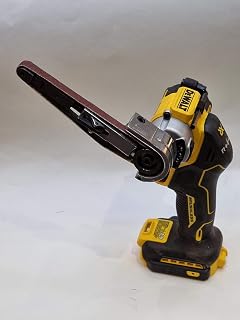


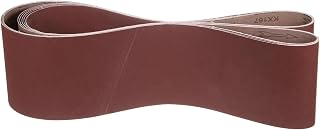


Choosing a sanding belt is less straightforward than simply selecting the grit number printed on the packet. The belt must match the sander's dimensions, while the abrasive grade, backing construction and intended material all influence how quickly it cuts and how controllable the finish will be.
DEWALT offers sanding belts in several dimensions and grit grades, including common sizes such as 75 mm x 533 mm, 100 mm x 560 mm and 100 mm x 610 mm, as well as smaller formats for compact machines. The manufacturer's UK catalogue also separates standard multi-purpose belts from EXTREME variants, so checking the exact product specification remains important rather than assuming that every DEWALT belt is interchangeable.
For buyers comparing the best DEWALT sanding belts in the UK, the most useful approach is to work backwards from the job. Identify the sander, confirm the belt dimensions, decide how much material needs to be removed and then choose the abrasive grade appropriate to the stage of sanding.
Compatibility should always come before price, pack size or grit. A belt that is only slightly different in width or length is not a suitable substitute simply because it looks similar.
DEWALT's own product listings identify the sander type, belt dimensions and grit on individual products. For example, the DT3378-QZ is listed as a 75 mm x 533 mm, 120-grit multi-purpose sanding belt, while the DT3672-QZ is a 100 mm x 610 mm, 80-grit belt.
Grit is one of the most important buying decisions because it determines the character of the sanding action. Coarse abrasives remove material quickly, while finer abrasives remove less material and are better suited to refining a surface.
Very coarse belts are useful when the objective is rapid stock removal rather than producing a finished surface. They can be appropriate for heavily weathered timber, removing substantial surface coatings or flattening uneven areas where a significant amount of material must be taken away.
The trade-off is a more aggressive scratch pattern. A coarse belt should therefore normally be followed by progressively finer abrasives if the finished surface will be visible or painted.
DEWALT's UK range includes 40-grit and 60-grit belt options in several dimensions, including 75 mm x 533 mm and 100 mm x 560 mm formats.
80 grit is often a useful middle ground for general sanding where the surface needs meaningful correction without beginning with the most aggressive abrasive available. It can be considered for preparation work, removal of moderate surface imperfections and initial sanding of suitable timber.
It is not automatically the correct choice for every job. A heavily damaged surface may call for a coarser starting grade, while a surface that is already reasonably smooth may benefit from beginning with something finer.
DEWALT lists 80-grit multi-purpose belts in several sizes, including 75 mm x 457 mm, 75 mm x 533 mm, 100 mm x 560 mm and 100 mm x 610 mm configurations.
Medium-fine belts are useful when the objective shifts from aggressive removal towards producing a more refined surface. They can also be appropriate when only modest material removal is necessary.
The DEWALT DT3378-QZ, for example, is specified as a 75 mm x 533 mm 120-grit multi-purpose belt and is described for applications involving wood, paint, lacquers and metal.
When moving from a coarse belt to a finer grade, do not assume that a single jump will always produce the cleanest result. The ideal progression depends on the depth of the previous scratches and the final appearance required.
Fine abrasives are more appropriate when surface refinement is the priority. They can help prepare a surface for subsequent finishing where deep scratches from a coarse belt would otherwise remain visible.
DEWALT's range includes 150-grit belt products, including 75 mm x 457 mm and 64 mm x 356 mm formats.
Fine grit does not mean that the belt can safely be used to compensate for poor technique. Excessive pressure can still generate heat, accelerate wear and produce an uneven result.
The abrasive grain is another important distinction between sanding belts. DEWALT's multi-purpose belt specifications commonly identify aluminium oxide grain, with the manufacturer describing it as suitable for rapid material removal.
For buyers, the practical point is that abrasive type should be considered alongside grit rather than independently. Two belts with the same nominal grit can behave differently because of differences in grain, backing, bonding and construction.
The intended material still matters. A belt described for wood, paint, lacquer and metal should be evaluated according to the specific job, machine and manufacturer's instructions rather than treating all materials as identical sanding applications.
The abrasive grains are only one part of a sanding belt. The backing provides the physical support for the abrasive, while the bonding system helps keep the abrasive attached during operation.
For power sanding, heat resistance is particularly relevant because friction can generate considerable heat. DEWALT identifies heat-resistant resin bonding on a number of its multi-purpose sanding belts.
A sanding belt is exposed to continuous flexing as it travels around the machine's rollers. It also encounters heat, dust and mechanical loading. A suitable backing therefore needs to tolerate the operating conditions of the intended tool.
For demanding applications, buyers should look beyond the grit number and examine the manufacturer's description of the backing and bonding system. A belt intended for intensive power sanding may have different construction priorities from an abrasive intended for occasional hand sanding.
DEWALT's UK catalogue includes EXTREME sanding belt variants as well as standard multi-purpose belts. The manufacturer states that EXTREME belts up to 120 grit use an anti-static resin bonding system intended to reduce clogging and improve dust extraction efficiency, while also describing heat-resistant resin bonding and aluminium oxide grain on relevant products.
This distinction is particularly relevant for buyers who expect to use a belt sander repeatedly rather than for a single small project.
However, a premium belt is not automatically the best choice. If a belt is being used for a short DIY task, the additional construction may provide less practical benefit than selecting the correct dimensions and grit.
The sensible comparison is not simply “cheap versus expensive”. Consider the total amount of work expected from the belt, the material being sanded, the amount of dust generated and how frequently the tool will be used.
A ten-pack can also change the value calculation. DEWALT currently lists several belt configurations in three- and ten-piece packs, so pack size should be assessed alongside grit and dimensions rather than treated as an independent value indicator.
There is no single “best” belt size because the correct dimension is determined by the machine. The belt should match the specifications of the sander exactly.
This is one of the most prominent formats in DEWALT's UK sanding-belt catalogue, with multiple grit options available. The range includes coarse, medium and finer grades, making this dimension particularly relevant when comparing several belts for a compatible machine.
Do not interpret the popularity of a particular dimension as evidence that it will fit every belt sander. Belt length and width remain machine-specific measurements.
DEWALT also lists 100 mm x 560 mm products across different grit grades. These larger-format belts are intended for compatible equipment and should be selected only after checking the machine specification.
The 100 mm x 610 mm format is another current DEWALT option, including an 80-grit ten-pack in the UK catalogue. The product is described for basic, intermediate and finishing sanding applications involving wood, paints, lacquers and metal.
Smaller sanding machines can use substantially shorter and narrower belts. DEWALT's catalogue includes 64 mm x 356 mm and 45 mm x 715 mm products, demonstrating why dimensions should be checked against the tool rather than selected from a generic list of “DEWALT sanding belts”.
For timber, the best belt depends on whether the job involves flattening, stock removal, coating removal or final surface preparation.
When sanding timber, grain direction and pressure also affect the final appearance. A belt sander removes material rapidly, so allowing the abrasive to do the work is generally preferable to forcing the machine into the surface.
Coated surfaces present a different challenge because abrasive debris can accumulate on the belt. A belt intended for suitable paint and lacquer applications can therefore be more appropriate than choosing purely on the basis of a coarse grit.
DEWALT describes several multi-purpose belts as suitable for wood, paints and lacquers, as well as metal. Some EXTREME products also feature the manufacturer's anti-static resin bonding intended to reduce clogging.
Before sanding an old painted surface, identify the coating and follow appropriate safety precautions. Older coatings can present hazards that are unrelated to the sanding belt itself, and dust should never be treated as harmless simply because the work is being performed indoors.
Some DEWALT multi-purpose belts are specified for use with metal as well as wood, paint and lacquer. That does not mean every belt is equally suitable for every metalworking task.
For metal applications, consider:
Metal sanding can generate heat and sparks, so appropriate protective equipment, dust control and workshop precautions are essential. The belt should be used only for applications permitted by the manufacturer.
When comparing two apparently similar products, use a consistent checklist rather than relying on pack photographs or product names.
A 100-grit belt is not automatically interchangeable with another 100-grit belt. Dimensions, construction and intended application still matter.
Brand compatibility is not enough. DEWALT's current UK catalogue contains belts in multiple dimensions, which illustrates why the precise machine specification must be checked before ordering.
Coarse abrasives can save time during heavy material removal but can create deep scratches and remove more material than necessary. Starting too aggressively can therefore create additional work later.
The opposite mistake can be equally inefficient. A fine belt may polish or refine a surface without removing substantial defects efficiently.
A worn, loaded or damaged belt can perform very differently from a fresh belt of the same specification. Belt condition should therefore be considered when assessing sanding performance.
Dust affects visibility, workshop cleanliness, respiratory exposure and the sanding process itself. Where the tool and belt are designed to work with dust extraction, using an appropriate extraction setup can be an important part of the overall sanding system.
Correct technique can make a meaningful difference to how effectively an abrasive is used.
DEWALT specifically describes anti-static resin bonding on relevant EXTREME belts as a way of reducing clogging and improving dust extraction efficiency.
There is no universal number of hours that determines when a sanding belt should be replaced. Material, pressure, abrasive grade, machine speed and contamination all influence belt life.
Look for practical signs such as:
A belt that is damaged should not be kept in service simply because abrasive remains on part of its surface. Follow the sander and abrasive manufacturer's safety instructions whenever assessing belt condition.
For many woodworking projects, buying a single belt grade is less useful than building a sensible sequence. A coarse belt can establish the shape or remove substantial defects, a medium grade can reduce the resulting scratch pattern, and a finer grade can prepare the surface for the next stage.
The exact progression depends on the material and finish. There is no requirement to use every available grit, and unnecessary intermediate stages can add cost without producing a meaningful improvement.
Suppose a timber surface is uneven and requires substantial correction. A suitable coarse belt may be used initially, followed by a medium grade once the major defects have been removed. A finer belt can then be selected if the surface needs additional refinement before finishing.
The important principle is to change abrasive grade according to the surface condition rather than following a rigid sequence for every project.
DIY users and professional tradespeople can have very different priorities even when they use the same sanding machine.
The answer depends on how frequently the belt is used and what performance characteristics matter to the buyer. A more specialised belt can make more sense for repeated or demanding work, whereas occasional users may obtain better overall value by selecting a correctly sized standard belt in the appropriate grit.
Rather than comparing retail prices alone, consider the effective cost of completing the job. If one belt cuts effectively for longer or reduces clogging under the intended working conditions, its higher initial price may be easier to justify. Conversely, paying for specialist features that are irrelevant to an occasional project may not improve the outcome enough to warrant the extra expense.
DEWALT sells sanding belts in different pack quantities, including three- and ten-piece configurations.
A larger pack is most attractive when the belt is a regular consumable. Before comparing price per belt, however, confirm that every belt in the pack has the required dimensions and grit. A ten-pack of the wrong abrasive is poor value regardless of its unit price.
Belt sanders are high-speed power tools capable of removing material quickly. The abrasive belt should therefore be treated as an active cutting surface rather than a passive sheet of sandpaper.
Product titles can be surprisingly easy to misread. A listing may contain several numbers representing width, length, grit and pack quantity. Before buying, isolate each specification separately.
For instance, DEWALT identifies DT3304-QZ as a 75 mm x 533 mm 100-grit ten-pack, while DT3378-QZ is a 75 mm x 533 mm 120-grit product supplied in a three-pack. The similar dimensions make the grit and pack quantity particularly important when comparing the two.
A strong choice is not necessarily the belt with the highest grit, largest pack or most advanced product name. The best option is the one whose specification aligns with the machine and job.
The current UK DEWALT catalogue contains a broad selection of sanding belts rather than a single universal belt. Its catalogue currently shows dozens of belt products spanning different dimensions, grit grades and pack quantities, including standard multi-purpose and EXTREME products.
This matters when interpreting “best” lists. A belt that is excellent for one compatible machine may be completely unsuitable for another. Product rankings should therefore be treated as a starting point for comparison, while dimensions and machine compatibility remain non-negotiable.
For an independent buying decision, compare the exact product code, dimensions, grit, pack quantity, intended application and construction features. Then check current retailer information and verified customer reviews before committing to a purchase.
There is no single best DEWALT sanding belt for every project. The best choice depends on the sander's required dimensions, the material being sanded, the amount of material that needs to be removed and the desired finish.
Choose the grit according to the condition of the timber. Coarser grades are appropriate when substantial material needs removing, medium grades are useful for general preparation and finer grades are better suited to surface refinement. Avoid choosing a grit solely because it is described as suitable for wood.
Some DEWALT multi-purpose sanding belts are specified for metal as well as wood, paint and lacquer. Always check the exact product's stated applications and the operating instructions for the sander before using a belt on metal.
DEWALT's EXTREME belt range includes additional construction features on relevant products. The manufacturer states that EXTREME belts up to 120 grit use anti-static resin bonding intended to reduce clogging and improve dust extraction efficiency.
Matching dimensions are necessary but should not be treated as the only compatibility check. Confirm the belt specification against the particular sander's manual or manufacturer's documentation before use.
Neither is universally better. An 80-grit belt removes material more aggressively, whereas 120 grit is more suited to refining a surface. The right choice depends on the current condition of the timber and the finish required.
It can remove material quickly, but it normally leaves a more pronounced scratch pattern than a finer abrasive. If appearance matters, a suitable progression towards finer grades is generally more appropriate.
There is no reliable universal lifespan. Belt life varies according to material, grit, pressure, machine conditions, dust, contamination and the belt's construction. Replace the belt when it becomes worn, damaged or ineffective rather than relying on a fixed number of hours.
They can, particularly for regular users, but only when the belt dimensions and grit are appropriate for the work. Compare the effective cost per usable belt and consider expected consumption rather than choosing solely on pack size.
Clogging can occur when sanding materials that load the abrasive, particularly some coatings and softer materials. Excessive pressure and unsuitable abrasive selection can also reduce effective cutting. DEWALT states that anti-static resin bonding on relevant EXTREME belts is designed to reduce clogging.
If you regularly work on different surfaces or need to progress from material removal to finishing, having more than one grit can be considerably more useful than relying on a single grade. Select the combination around the jobs you actually undertake.
Check the machine's specified belt width and length, then match those dimensions to the exact DEWALT product listing. Product codes are useful when several belts have similar names or dimensions.
The most reliable way to choose a DEWALT sanding belt is to ignore the temptation to select purely on brand, price or grit. Start with compatibility, then choose the abrasive grade according to the amount of material that needs removing. After that, consider abrasive construction, backing, bonding, dust behaviour, expected belt life and pack quantity.
For occasional DIY sanding, a correctly sized multi-purpose belt in an appropriate grit may be all that is necessary. For repeated or demanding work, the additional construction characteristics of a suitable EXTREME belt may deserve closer consideration. DEWALT's current UK catalogue provides multiple dimensions, grit grades and pack configurations, so comparing the exact specification is more useful than relying on a generic “best sanding belt” label.
Before purchasing, verify the exact product code against your sander, compare today's retailer prices, read verified customer reviews for that specific belt and check the manufacturer's latest specifications. That final compatibility check is the simplest way to avoid buying a belt that looks right but does not match the machine or the job.