

♥ Wishlist
Compare 25 verified Festool Diamond Disc for Precision Cutting & Grinding products in United Kingdom. Reviews, ratings, pros, cons and buying advice updated for October 2026.

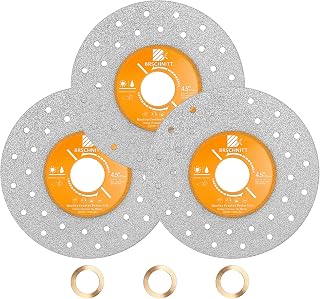


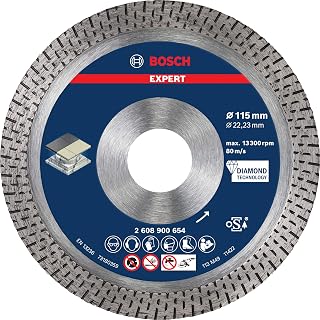


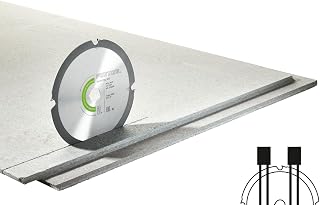


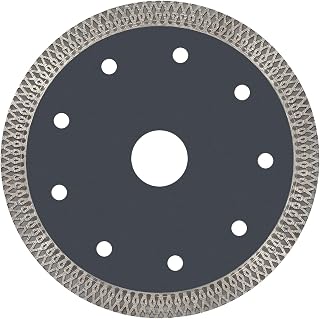
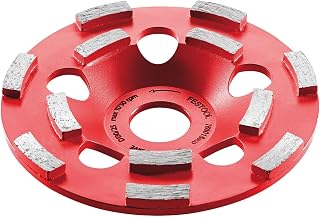
Choosing a Festool diamond disc is less about finding the disc with the most impressive specification and more about matching the disc to the material, machine and type of work being carried out. A disc designed for concrete cutting is not automatically the best choice for roof tiles, natural stone, abrasive screed or the removal of coatings. Festool's range includes both diamond cutting discs and specialist diamond discs intended for grinding or milling, so identifying the correct product family is the first step.
For UK buyers, compatibility should be checked against the exact machine model rather than relying on disc diameter alone. Festool lists its ALL-D 125, C-D 125 and TL-D 125 diamond cutting discs for specific machines including the AGC 18, DSC-AGC 18 FH, DSC-AG 125 and DSC-AG 125 FH. The current ALL-D 125 specification is 125 mm diameter, a 22.23 mm bore, 2.00 mm cutting width and 10 mm segment height.
The material being cut or removed should determine the disc category. Concrete, reinforced concrete, concrete products, natural stone, roof tiles, screed, sand-based substrates, old coatings and extremely hard concrete can place very different demands on a diamond disc.
This distinction matters because diamond tooling is engineered around how a material behaves during cutting or material removal. A disc that performs well in one application may be unnecessarily aggressive, inefficient or simply unsuitable in another.
One of the easiest buying mistakes is treating every Festool diamond disc as the same type of accessory. The word “diamond” describes the abrasive technology, not the application.
Diamond cutting discs are designed to make a cut through a material. The Festool ALL-D 125, C-D 125 and TL-D 125 sit within this category. Their purpose is fundamentally different from a disc intended to remove a surface coating or grind down a concrete substrate. The cutting width, segment configuration, machine compatibility and intended material all need to be considered together.
The Festool ALL-D 125 is positioned as a universal diamond cutting disc and is specified for very hard through to abrasive materials. Festool states that it can be used without cooling-down periods and lists a 125 mm diameter, 22.23 mm bore, 2 mm cutting width and 10 mm segment height.
Grinding and milling discs are selected when the objective is to remove material from a surface rather than simply create a narrow cut. Festool's DIA range illustrates how specialised these products can be.
For example, the DIA HARD-D130 is intended for hard substrates and is specified for applications including old solid concrete and the removal of epoxy resin, coatings and paint from concrete. Festool lists a 130 mm diameter and a 7 mm segment height for its premium version.
The DIA STONE-D130 is designed for very hard materials and hard concrete, with Festool identifying applications harder than B35. Its premium specification includes a 130 mm diameter and 7 mm segment height.
Meanwhile, the DIA ABRASIVE-D130 is aimed at abrasive, sand-based materials. Festool lists applications including screed, fresh concrete, adhesive on screed, sand-lime brick, tiling adhesive and cellular concrete.
Product descriptions can contain several measurements that look similar at first glance. Understanding what they mean makes comparing discs considerably easier.
Diameter is the overall size of the disc. It must correspond to the machine and guard configuration for which the accessory is specified.
A 125 mm cutting disc should not be assumed to be interchangeable with a 130 mm grinding disc simply because the numerical difference appears small. The disc's intended machine, guard, mounting arrangement and operating parameters remain decisive.
The bore is the central opening that interfaces with the machine's spindle or mounting system. Festool's 125 mm diamond cutting discs discussed here use a 22.23 mm hole diameter. Several 130 mm grinding discs are listed with a 25/22.2 mm inner diameter.
Never select a disc solely because the outside diameter appears correct. The mounting specification must match the exact machine.
Cutting width describes the approximate width of the cut produced by a cutting disc. A narrower specification can be useful where minimising material removal is important, but cutting width should always be considered alongside the disc's intended application and machine requirements.
Festool lists a 2.00 mm cutting width for the ALL-D 125, compared with 2.20 mm for the C-D 125 and 1.20 mm for the TL-D 125. These differences help demonstrate why discs with the same nominal diameter should not be treated as identical accessories.
Segment height is another useful specification when comparing diamond tooling, particularly in grinding and milling applications. It should not be interpreted as a simple “higher is always better” ranking. The appropriate segment design depends on the application, substrate and intended rate of material removal.
For example, Festool lists a 10 mm segment height for the ALL-D 125 and C-D 125 cutting discs, while the TL-D 125 also has a 10 mm segment height. Its specialist D130 grinding and milling products use different segment heights according to their intended application.
The Festool ALL-D 125 is the obvious starting point when a user needs a broadly applicable cutting disc within its specified Festool machine ecosystem. Festool describes it as having a universal range of applications covering very hard through to abrasive materials and specifies a long service life.
That does not make it the correct choice for every job. A specialist disc may be preferable when the material is clearly defined and the application demands a dedicated cutting geometry.
The Festool C-D 125 is specifically aimed at concrete applications, including concrete paving, reinforced concrete, concrete tiles and concrete parts. This makes it a more targeted choice than a universal disc when concrete is the dominant material being processed.
The Festool TL-D 125 is designed for concrete and natural stone tiles and is also specified for floor tiles, roof tiles and concrete roofing tiles. Its 125 mm diameter and 1.20 mm cutting width distinguish it from the wider C-D 125 specification.
For surface preparation rather than straightforward cutting, Festool's DIA STONE and DIA HARD options deserve consideration. DIA STONE-D130 is positioned for very hard materials and hard concrete, while DIA HARD-D130 is aimed at hard substrates such as old solid concrete and specified coating-removal applications.
Highly abrasive materials can behave differently from dense, hard concrete. Festool's DIA ABRASIVE-D130 is specifically intended for sand-based materials and applications including screed, fresh concrete, sand-lime brick, cellular concrete and tiling adhesive.
The DIA THERMO-D130 is designed for thermoelastic materials that can smear when sanded. Festool states that its diamond arrangement scrapes the material rather than relying on conventional sanding, helping prevent the disc from becoming clogged. Listed applications include parquet adhesive, adhesive residues, bitumen and coatings on concrete and screed.
The DIA PAINT-D130 is a specialist option for extensive removal of paint and clear coat from specified surfaces including floorboards, chipboard, wooden cladding and wooden doors. It should therefore be regarded as a dedicated surface-removal accessory rather than a general concrete cutting disc.
Diamond discs should be selected as part of a machine-accessory system. The machine determines the permitted disc size, mounting arrangement, guard configuration, operating speed and intended application.
Festool's DSC-AG 125 diamond cutting system, for example, uses a 125 mm disc and is specified with a cutting depth of up to 27 mm without a guide rail and 23 mm with the guide rail. The system is rated at 1,400 W with an idle speed range of 3,500 to 11,000 rpm and incorporates dust extraction features.
This is a useful illustration of why an accessory should never be judged independently from the tool. The same diameter may appear on multiple products while the machine, guard, disc type and application are completely different.
Dust management is particularly important when working with mineral materials. Festool's DSC-AG 125 system is designed around dust extraction and includes a dust-extraction attachment. Festool states that the system is intended for quick, dust-reduced cutting of mineral materials and can be used with Festool guide rails for precision work.
For buyers, this means the disc should not be considered in isolation. The quality of the overall cutting setup can depend on the machine, extraction attachment, dust extractor, guide system and correct accessory working together.
Dust extraction also affects visibility. A clear view of the cutting line can make accurate work easier, while uncontrolled dust can obscure the workpiece and surrounding area. Festool specifically highlights the viewing window and extraction system of its DSC-AG 125 cutting system.
A common mistake is searching for “125 mm diamond disc” and selecting the first product that fits the numerical description. Diameter is only one part of compatibility. The bore, machine model, disc type and application must also match.
Concrete is not a single cutting condition. Reinforced concrete, concrete paving, concrete tiles and abrasive mineral substrates can place different demands on tooling. A universal disc can be useful, but a specialist accessory may make more sense when the material and application are known in advance.
A cutting disc is designed to create a cut. A grinding or milling disc is intended to remove material from a surface. Selecting the wrong category can lead to poor results and may create an unsuitable operating setup.
Do not assume that a Festool-branded diamond disc is automatically compatible with every Festool grinder or cutting system. Festool's own product listings identify compatible machine families for individual accessories, which is why the exact tool model should be checked before purchase.
Purchase price is only one part of value. For occasional work, a suitable general-purpose disc may be enough. For repeated professional work, service life, application suitability, cutting speed, material removal characteristics and the cost of interruptions can matter more than the initial price.
Premium tooling is not automatically the best option for every task. The best accessory is the one whose design matches the material and machine. Paying more for a highly specialised disc does not necessarily improve a job for which that specialisation provides no advantage.
A useful comparison should look beyond product names. Build a shortlist using the following criteria.
The following comparison is intended as an application guide rather than a ranking based on independent testing.
It is tempting to treat 125 mm and 130 mm as near-equivalent sizes, particularly because both are common dimensions in Festool's diamond tooling ecosystem. They should not, however, be treated as interchangeable accessories.
The 125 mm products discussed above are cutting discs used with specified cutting systems and angle-grinder platforms. The 130 mm DIA products are primarily specialist grinding or milling discs for machines including the RG 130 ECI, RG 130, RGP 130 and AGP 125, according to Festool's product listings.
The practical lesson is simple: match the accessory to the machine's published specification instead of attempting to make a near-size fit work.
The right disc can look different depending on workload. Someone cutting a small number of tiles during a one-off project may prioritise straightforward compatibility and application suitability. A tradesperson using diamond tooling regularly may place greater emphasis on consistent performance, service life, reduced downtime and compatibility with an established dust-extraction system.
For professional users, it is often sensible to keep more than one disc type available when the work regularly covers different substrates. A universal cutting disc can cover mixed applications, while dedicated concrete, tile or surface-preparation tooling can be reserved for jobs where its specialist characteristics are relevant.
For occasional users, avoiding unnecessary specialisation can simplify the purchase. If the work genuinely involves only one well-defined material, however, a specialist disc may still be the more logical choice.
Diamond tooling works by exposing diamond abrasive within a bonded segment or working surface. The engineering balance involves factors such as the substrate, abrasive behaviour, material removal requirements and expected service life.
That is why Festool's range separates hard-substrate, stone, abrasive and thermoelastic applications rather than attempting to make one disc specification perform every type of surface-preparation task equally well. The DIA HARD, DIA STONE, DIA ABRASIVE and DIA THERMO products are examples of application-specific design.
For buyers, this is more useful than focusing on a single headline specification. The relevant question is not simply “How much diamond does the disc have?” but “Is the disc engineered for the material and removal method I actually need?”
Diamond discs are consumable accessories, but sensible inspection can help identify problems before work begins.
Maintenance requirements vary according to the machine and accessory. The manufacturer's instructions should take precedence over generic advice, particularly for mounting, permitted operating speeds and inspection requirements.
There is no universal replacement interval that applies to every diamond disc. Wear depends on the accessory design, substrate, frequency of use, operating conditions and workload.
A disc should not be judged solely by how long it has been owned. Its condition and performance are more meaningful indicators. If the accessory is damaged, worn beyond the manufacturer's specified limits or otherwise unsuitable for safe operation, it should not be used.
For professional users, recording which disc was used for particular applications can also make future purchasing decisions more informed. This creates a practical comparison based on actual workload rather than relying entirely on the headline specification.
Where the cutting system supports a guide rail, the rail can become an important part of the overall setup rather than an optional convenience. Festool states that the DSC-AG 125 can be used with a Festool guide rail for precision cutting, with a specified cutting depth of 23 mm when used with the rail compared with 27 mm without it.
This highlights a wider buying principle: accessories should be assessed as part of a system. A disc may be technically suitable, but the most effective setup can depend on the cutting guide, extraction attachment and machine configuration as well.
Diamond cutting and grinding can generate significant dust, noise and debris, particularly when processing mineral materials. The correct accessory, machine, guard and dust-extraction arrangement should therefore be considered together.
Festool specifically incorporates dust extraction into its DSC-AG 125 cutting system and describes the system as intended to reduce dust during mineral-material cutting.
DIY buyers can simplify the decision by answering five questions before ordering:
If the answers point towards occasional general-purpose cutting, a suitable universal cutting disc may be the simplest route. If the project involves a clearly defined material such as concrete or roof tiles, a dedicated cutting disc may be more appropriate. Surface preparation requires a separate look at Festool's DIA grinding and milling families.
Tradespeople should place greater emphasis on repeatability and application matching. A disc that is slightly more expensive but better suited to the material can potentially make more sense than repeatedly using a general-purpose accessory in conditions for which it was not designed.
It can also be worthwhile to standardise around a small set of accessories covering the materials most frequently encountered. For example, a contractor working regularly with concrete and another working predominantly with roofing materials may need very different diamond-disc selections despite using machines from the same Festool ecosystem.
Customer reviews can be useful, but they should supplement rather than replace technical specifications. Reviews are most helpful when they describe the actual application, machine used and material processed.
When reading verified customer feedback, look for comments that identify:
A review saying that a disc “lasted ages” is difficult to interpret without knowing what material was processed and for how many hours. A more useful review explains the working conditions.
Festool is not the only established manufacturer producing professional cutting and grinding accessories. Buyers may also encounter diamond tooling from brands such as Bosch, Makita and DeWalt. The important comparison is not simply which logo is most familiar.
For an existing Festool owner, the first consideration should be compatibility with the particular Festool machine and the intended application. A competing brand may produce a technically capable diamond disc, but compatibility, mounting dimensions, operating limits and manufacturer guidance still need to be checked carefully.
Brand comparison is therefore most useful after the machine and application have been defined. Start with the technical requirement, then compare reputable manufacturers that provide an appropriate accessory for that requirement.
Value should be considered as the relationship between suitability, service life and workload rather than simply the lowest purchase price.
A low-cost disc that is poorly matched to the material can be false economy if it wears quickly or produces unsatisfactory results. Conversely, a highly specialised premium accessory may not represent good value if it is being used only occasionally for a straightforward task.
A practical value assessment should consider:
If the task is to make a cut through a material, start with Festool's diamond cutting-disc range. If the task is surface removal, levelling, coating removal or grinding, investigate the appropriate DIA grinding or milling disc instead.
No. A universal disc can be useful for varied work, but specialist discs can be better suited to specific materials. Festool's C-D 125 and TL-D 125 demonstrate this distinction within its cutting range.
No. Diameter alone does not establish compatibility. Check the exact machine model, bore, accessory type, guard and manufacturer's specification before use.
The ALL-D 125 is positioned as a universal disc for very hard through to abrasive materials, while the C-D 125 is specifically intended for concrete applications including reinforced concrete, concrete paving, concrete tiles and concrete parts.
Festool lists it for concrete and natural stone tiles, including floor tiles, roof tiles and concrete roofing tiles.
The DIA range covers specialist surface-preparation applications. Depending on the model, products are intended for hard concrete, very hard substrates, abrasive materials, thermoelastic coatings or paint and clear-coat removal.
They should not be assumed to be interchangeable. The 125 mm cutting products and 130 mm surface-preparation products belong to different accessory categories and are specified for particular machines. Always follow the manufacturer's compatibility information.
There is no single lifespan that applies to every application. Wear depends on the material, workload, accessory type and operating conditions. Manufacturer specifications and the condition of the disc should be used instead of a fixed number of hours.
Festool offers a broad ecosystem of compatible cutting and surface-preparation equipment, including application-specific diamond accessories. Whether a particular disc is the right professional choice depends on the machine, substrate and workload rather than the brand name alone.
There is no single Festool diamond disc that is objectively best for every UK buyer. The strongest choice depends on the material, machine and task.
For broad cutting requirements, the ALL-D 125 is the universal-oriented option in Festool's current 125 mm diamond cutting range. For concrete-focused work, the C-D 125 is the more application-specific choice. For floor, roof and concrete tile work, the TL-D 125 is designed around that category of material.
For surface preparation, the decision moves into the DIA range. DIA HARD is aimed at hard substrates, DIA STONE at very hard materials and hard concrete, DIA ABRASIVE at abrasive mineral substrates, DIA THERMO at thermoelastic materials and DIA PAINT at extensive paint and clear-coat removal.
The most reliable buying method is therefore straightforward: identify the job first, match the accessory to the material, confirm exact machine compatibility, then compare service-life positioning, specifications and current retailer information. That approach is more dependable than choosing solely by price, review score or disc diameter.
For cutting concrete, the Festool C-D 125 is the dedicated option among the 125 mm cutting discs covered here, with Festool specifying concrete paving, reinforced concrete, concrete tiles and concrete parts as its main applications. For surface grinding or milling of hard concrete, the DIA HARD or DIA STONE families may be more appropriate depending on the substrate.
For concrete and natural stone tiles, including floor and roof tile applications, the Festool TL-D 125 is the specialist cutting option identified by the manufacturer.
Yes, Festool positions the ALL-D 125 as a universal diamond cutting disc for applications ranging from very hard to abrasive materials. That broad positioning makes it useful where material conditions vary, provided the disc is compatible with the machine and appropriate for the specific job.
The ALL-D 125 has a 125 mm diameter, 22.23 mm hole diameter, 2.00 mm cutting width and 10 mm segment height according to Festool's current UK product information.
The DIA HARD-D130, DIA STONE-D130 and DIA ABRASIVE-D130 products discussed here have a 130 mm diameter. Their segment heights differ according to their intended applications, demonstrating why the product family and application should be checked rather than treating all D130 discs as equivalent.
The Festool ALL-D 125 product information states that it can be used without cooling-down periods. This should not be interpreted as a universal instruction for every diamond disc or every operating condition. The instructions and specifications for the exact accessory and machine should always be followed.
Dust-control requirements depend on the machine and application, but Festool places strong emphasis on dust extraction within its DSC-AG 125 cutting system. The system includes a dust-extraction attachment and is designed for cleaner cutting of mineral materials.
Use the manufacturer's current product information for compatibility, dimensions and intended applications, then compare current retailer information for availability and pricing. Product specifications and retailer listings can change, so information should be checked close to the time of purchase.
The best Festool diamond disc is not necessarily the most expensive, the most versatile or the highest-rated accessory. It is the disc whose specification most closely matches the material and task while remaining fully compatible with the machine.
For 125 mm cutting applications, the main decision is between broad-purpose and specialist tooling such as ALL-D 125, C-D 125 and TL-D 125. For surface preparation, Festool's D130 families provide a more specialised selection for hard, very hard, abrasive, thermoelastic and coating-removal applications.
Before buying, verify the exact machine model, disc dimensions, mounting specification, intended material and manufacturer's instructions. Then compare current retailer prices and verified customer feedback. This approach gives UK DIY users and professional tradespeople a much stronger basis for choosing the right Festool diamond disc for the job.