
♥ Wishlist
Compare 48 verified Festool Guide Rails for Precise, Straight Cuts products in United Kingdom. Reviews, ratings, pros, cons and buying advice updated for October 2026.







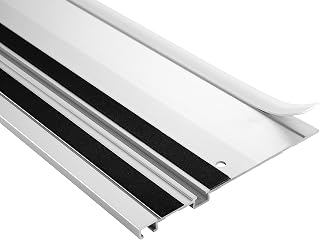


Choosing a Festool guide rail is less about finding the longest or most expensive option and more about matching the rail to the type of work, cutting method, material and workshop setup. Festool's guide rail system is designed as a wider ecosystem rather than a collection of unrelated rails, so the most useful comparison is between rail lengths, specialist formats and the accessories you expect to use with them.
For general sawing and routing, the standard FS/2 family is the most versatile starting point. For situations where clamping is inconvenient or impossible, the FS/2-KP version adds adhesive pads for securing the rail to suitable work surfaces. For cabinetmaking and system furniture work, the FS/2-LR 32 introduces a 32 mm hole pattern for repeatable hole-line routing. For short, controlled cross-cuts, the FSK family is a different proposition altogether.
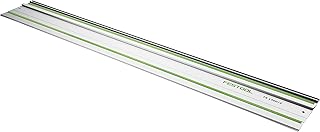
The classic FS/2 guide rail is intended for straight and accurate guidance of compatible Festool power tools, including plunge-cut saws, portable circular saws and routers with the appropriate accessories. The current UK range is offered in several lengths, from compact 800 mm rails through to substantially longer 5000 mm versions.
The standard rail incorporates a splinter guard positioned along the cutting reference, a slideway lining to help the machine move smoothly, and grooves that accept compatible clamps and accessories. The underside also provides grip against the workpiece, helping the rail remain correctly positioned when used in appropriate conditions.
The FS/2-KP is designed for applications where conventional clamping is awkward. Its adhesive-pad system allows the rail to be secured to suitable surfaces for horizontal work and certain wall applications. Festool currently lists the FS/2-KP in 1400 mm and 1900 mm lengths.
This makes the KP format particularly interesting for kitchen fitting, worktop preparation, on-site installation and other jobs where the workpiece or working position makes traditional clamps inconvenient. The adhesive pads should not be treated as a universal substitute for mechanical clamping: the surface, cleanliness, positioning and working conditions all matter.
The FS/2-LR 32 should not be viewed simply as a standard guide rail with a different name. Its defining feature is the integrated 32 mm hole spacing, making it particularly useful for furniture manufacturing and applications involving repeated hole lines.
Festool currently lists LR 32 rails in 1400 mm and 2424 mm lengths. The system is designed to work with suitable hole-line accessories, allowing repeatable drilling or routing patterns while retaining the normal guide-rail functions for compatible tools.
Festool's FSK family serves a different purpose from the long FS/2 guide rails. These cross-cutting rails are designed for controlled cross-cutting applications and are available with cutting lengths of 250 mm, 420 mm and 670 mm.
They are particularly relevant when the task involves repeatable cross-cuts rather than long rip cuts. Festool states that the connectable cross-cutting guide rail system is intended for use with compatible circular and plunge-cut saws, including specified HK and TS/TSV models.
Rail length is one of the most important buying decisions because a rail that is too short may require repositioning, while an unnecessarily long rail can become awkward to transport and store.
An 800 mm rail is suited to compact work and applications where portability is particularly important. It can be convenient for smaller components, short cuts and workshop tasks where a long rail would provide little practical benefit.
The 1080 mm size sits between compact and full-size workshop rails. It can be a sensible choice where a shorter rail is desirable but 800 mm does not provide sufficient working length.
The 1400 mm format is one of the most useful all-round sizes in the Festool system. It is long enough for many common sheet-material and workshop cuts without becoming as cumbersome as the longer rails. It is also available in specialist versions, including the FS/2-KP and FS/2-LR 32.
A 1900 mm rail provides substantially more reach for larger sheet goods and longer cuts. It is available in both the standard FS/2 configuration and the FS/2-KP adhesive-pad format.
Long rails become increasingly useful when working with full-size boards, doors, large panels and long timber components. Festool's standard FS/2 family extends through 2400 mm, 2700 mm, 3000 mm and 5000 mm options.
Before buying a very long rail, consider transport and storage as carefully as cutting capacity. A rail that technically covers a workpiece but is difficult to carry, protect and store can be less convenient in day-to-day use.
A common buying mistake is assuming that maximum length automatically means maximum usefulness. In practice, guide rail length should correspond to the cuts you make most often.
For example, a 1400 mm rail may be easier to handle repeatedly in a small workshop than a 2400 mm rail. Conversely, repeatedly joining shorter rails for long cuts may add preparation time and create another opportunity for alignment errors.
Consider these questions before choosing:
One of the advantages of the Festool guide rail system is that compatible rails can be joined using dedicated connectors. This makes it possible to create longer guidance arrangements without buying the longest possible rail for every application.
Festool's current FS/2 system uses connecting components designed to help align joined rails. The FS 1400/2-KP set, for example, includes two 1400 mm adhesive-pad rails and a connecting piece, providing a combined long-rail arrangement when required.
When joining rails, alignment is more important than simply achieving the required overall length. The connection should be fully seated, the rails should be correctly aligned and the assembly should be checked before the saw or router is moved onto the joint.
Compatibility should be checked before purchasing a rail, particularly if you already own several Festool tools. Do not assume that every Festool guide accessory is suitable for every machine simply because the products belong to the same guide-rail system.
Check the specific power-tool model, the required adapter where applicable, the intended rail type and the accessory instructions. Festool identifies compatible tools on individual product pages, and specialist rails can have more specific application requirements than standard FS/2 rails.
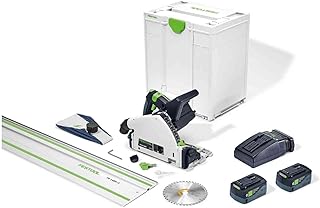
Festool plunge-cut saws are a natural match for the FS/2 guide rail system. The rail provides a defined cutting path while the saw's guide interface is adjusted to provide controlled, low-play movement.
Compatible Festool circular saws can also be guided using the appropriate rail system. This is particularly useful when a conventional hand-held circular saw would otherwise require a temporary straightedge or more manual marking.
Guide rails can also be used for routing applications when the correct guide stop or adapter arrangement is used. This can turn the rail from a cutting accessory into a precision routing aid, although router compatibility should always be checked for the specific machine and accessory combination.
Festool states that guide rails can also be used with certain jigsaws, insulation saws and other compatible tools, generally with the appropriate adapter or accessory. The important distinction is that rail compatibility is a system question rather than simply a matter of whether the machine can physically sit on the aluminium extrusion.
The splinter guard is one of the defining features of the Festool guide rail concept. It sits directly at the cutting reference and is intended to support cleaner cuts by helping to reduce breakout at the material edge.
For users concerned with visible edges, veneered boards, laminates and other materials where breakout can be particularly noticeable, the splinter guard is more than a cosmetic accessory. However, cutting performance still depends on the saw blade, blade condition, material, cutting direction, machine settings and technique.
A guide rail cannot compensate indefinitely for a blunt or unsuitable blade. If cut quality deteriorates, inspect the blade and workpiece as well as the guide rail itself.
The rail's slideway lining is designed to help the machine travel smoothly along the rail. Smooth movement matters because inconsistent resistance can affect handling and make controlled cuts more difficult.
Keep the guide surface clean and inspect the lining periodically. Sawdust, resin, adhesive residue and workshop debris can interfere with smooth movement. A rail that looks structurally perfect can still perform poorly if its contact surfaces have become contaminated.
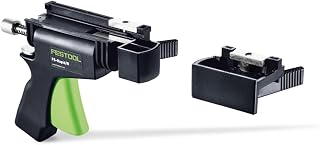
Clamps are useful when the workpiece and application permit them. Festool's guide rail system includes compatible fastening solutions that engage with the rail rather than requiring a conventional clamp to sit directly across the top surface.
Position the rail carefully before tightening. The objective is not simply to make the rail immovable; it is to secure it without shifting the cutting reference during setup.
The FS/2-KP system is particularly useful because it addresses situations in which clamps are inconvenient. This does not make adhesive pads universally superior to mechanical clamping. Each method solves a different setup problem.
Always follow the manufacturer's instructions for the relevant adhesive pads and surface conditions. Surface contamination, dust and unsuitable finishes can affect adhesion.
The rail itself is designed around a lightweight but robust aluminium construction, but the material being cut and the surface supporting the rail remain important variables.
Smooth sheet materials, painted surfaces, veneered boards, solid timber and construction materials can behave differently. Before relying on the underside grip or adhesive system, consider whether the surface is clean, stable and suitable for the chosen securing method.
Particular caution is sensible with delicate finishes. Even where the guide rail is designed to protect the workpiece surface, dirt trapped underneath the rail can create a risk of marking. Clean contact surfaces before positioning the guide.
A very long rail can be excellent for large workpieces but unnecessarily cumbersome for smaller jobs. Choose according to typical work rather than maximum theoretical capacity.
The FS/2-LR 32 is highly relevant to furniture work involving 32 mm hole patterns, but its specialist function is of limited value if your work consists primarily of ordinary straight cuts.
Long rails require suitable storage and protection. A damaged or bent guide rail can undermine the accuracy you bought it to provide.
Guide-rail accessories should be matched to the relevant system and tool. Check compatibility rather than relying on appearance.
The rail is only one component of a precision-guidance setup. Depending on the application, you may also need clamps, connectors, adapters, angle stops, bags or other accessories. Compare the cost and usefulness of the complete system rather than judging a rail in isolation.
Ratings can be useful for identifying recurring ownership concerns, but they do not replace specification checking. A highly rated 800 mm rail may be the wrong purchase for someone routinely cutting 2400 mm boards.
Choose FS/2 if versatility is your priority. It is the conventional general-purpose guide rail and is available in the broadest range of lengths.
Choose FS/2-KP if securing the rail is your recurring problem. The integrated adhesive-pad concept is particularly useful for horizontal and wall applications where clamps are inconvenient.
Choose FS/2-LR 32 if furniture-system drilling or routing is central to your work. The 32 mm hole pattern gives this rail a specialist capability that a standard FS/2 does not provide.
Choose FSK if cross-cutting is the primary requirement. Its compact cross-cutting format is fundamentally different from the long FS/2 rails used for ripping and general guidance.
For many users, buying one rail is only the beginning. A practical setup should be built around the jobs performed most frequently.
A standard FS/2 rail in a practical mid-range length can provide the foundation. Add compatible clamps if your work routinely requires positive mechanical fixing.
A 1400 mm rail is relatively versatile for transport, while a longer rail can be added for larger workpieces. A suitable guide-rail bag can make transport and storage considerably easier.
Users frequently working with large boards should consider a longer FS/2 rail or a system of compatible connected rails. The correct choice depends on how often long cuts are made and whether the additional transport burden is acceptable.
An FS/2-KP configuration can be particularly relevant when worktops and other large components need to be cut in positions where conventional clamps are inconvenient. Accessories such as suitable angle stops can further improve repeatability for common cutting tasks.
Where 32 mm system-hole work is routine, an FS/2-LR 32 rail can complement rather than replace a conventional FS/2 rail. This illustrates an important point: the best Festool setup may consist of several specialised accessories rather than one universal rail.
Guide rails are precision accessories, so maintenance is primarily about preventing contamination and physical damage rather than performing complicated servicing.
The splinter guard is a working reference, so avoid unnecessary damage during storage and transport. If it becomes badly worn or damaged, cutting performance and the usefulness of the visual reference can be affected.
Aluminium guide rails are designed to be robust, but they are not immune to abuse. Do not use a rail as a general-purpose lever, step or support. Store longer rails where they cannot be dropped or subjected to concentrated loads.
A guide rail improves control and repeatability, but it does not remove the normal risks associated with powered saws and routers. The machine manufacturer's safety instructions remain applicable.
A useful comparison should go beyond price. Record the specifications that actually affect your work and compare like-for-like.
For general-purpose cutting and routing, the standard FS/2 family is the natural starting point because it combines broad application coverage with multiple available lengths. The best individual size depends on the workpieces you normally handle.
A 1400 mm rail can be a very practical general-purpose option because it provides useful cutting length without the transport and storage demands of substantially longer rails. However, users working mainly with large boards may benefit from a longer rail.
The FS/2-KP adds an adhesive-pad securing system designed for situations where the rail needs to be held in position on suitable surfaces and conventional clamping is inconvenient. The standard FS/2 remains the more straightforward general-purpose format.
The FS/2-LR 32 is designed for applications requiring a 32 mm hole pattern, particularly furniture manufacturing and cabinetmaking. It can also perform normal guide-rail functions with compatible tools.
Festool's current UK information lists standard FS/2 rails in 800 mm, 1080 mm, 1400 mm, 1900 mm, 2400 mm, 2700 mm, 3000 mm and 5000 mm lengths. FS/2-KP rails are listed at 1400 mm and 1900 mm, while FS/2-LR 32 rails are available at 1400 mm and 2424 mm. FSK cross-cutting rails are offered in 250 mm, 420 mm and 670 mm cutting lengths.
Yes. Compatible Festool guide rails can be connected using dedicated connectors. Joining rails is useful when you need greater cutting length occasionally or prefer the portability of shorter individual rails.
Festool guide rails can be used for routing applications with compatible routers and the appropriate guide accessories. Always check compatibility for the exact router and accessory combination before purchasing.
Compatible Festool portable circular saws and plunge-cut saws can be guided on the appropriate Festool rails. The exact combination should be verified against the machine and rail specifications.
That depends on how frequently you need controlled, repeatable cuts and whether you already own compatible Festool tools. For occasional DIY cutting, a specialist premium rail system may offer more capability than necessary. For professional woodworking, installation and furniture work, the value can come from repeatability, accessory integration and reduced setup time rather than the rail alone.
Buy one long rail if long cuts are a routine part of your work and quick setup is important. Choose shorter rails that can be connected when portability, storage and flexibility matter more. The decision should be based on your actual workflow rather than the maximum cut you might make once or twice a year.
Check the exact model number, rail length, guide-rail family, intended tool compatibility, included accessories and whether the listed specification is for a rail alone or a complete set. Also compare the current manufacturer's specification because product configurations and availability can change.
The most effective Festool guide rail is the one that fits the way you actually work. A shorter FS/2 rail can be more useful than a 3000 mm model if most of your jobs involve small components. Conversely, repeatedly repositioning a short rail on large sheet material can make a longer model the more efficient choice.
Specialist rails deserve the same treatment. The FS/2-KP earns its place when securing the guide is the problem; the FS/2-LR 32 earns its place when repeatable 32 mm hole positioning matters; and the FSK earns its place when compact cross-cutting is the priority.
For buyers comparing the best Festool guide rails in the UK, the strongest decision is therefore not simply to select the highest-rated or most expensive model. Compare the rail family, length, securing method, compatible tools, accessory requirements, storage needs and the specific jobs you perform. That approach produces a much more useful buying decision and reduces the risk of paying for features that will rarely be used.
Product ranges, configurations and retailer availability can change, so check the current specification immediately before purchase. In particular, verify the exact model number, length, included accessories and compatibility information rather than relying solely on an older comparison table or product photograph.
For an independent buying decision, compare the manufacturer's current specifications with verified customer feedback and current retailer listings. Check today's price separately because guide-rail pricing can vary by model, length, set configuration and retailer.
Most importantly, distinguish between a rail supplied on its own and a complete set. A guide-rail set may include connectors, clamps, a storage bag or other components that substantially change its practical value compared with the bare rail.