

♥ Wishlist
Compare 59 verified Diamond Grinding Wheels for Precision Grinding products in United Kingdom. Reviews, ratings, pros, cons and buying advice updated for October 2026.
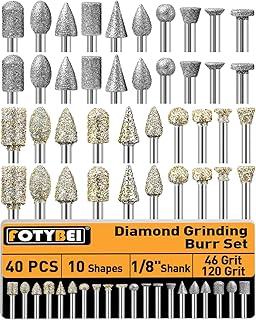


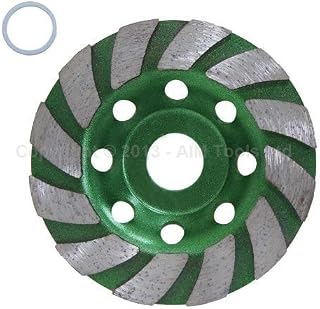


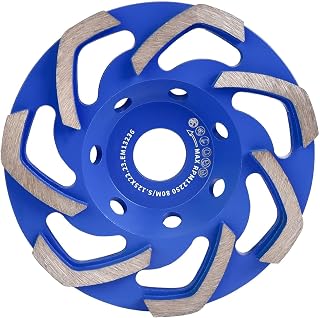

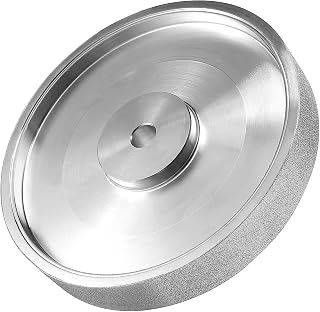


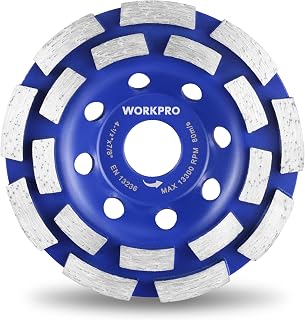


A diamond grinding wheel is not automatically the right choice simply because it is described as heavy-duty or professional. The best option depends on the material being worked, the amount of stock you need to remove, the finish required, the grinder or machine being used, the wheel diameter, the bore size, the permitted operating speed and the wheel's segment or abrasive design.
For UK buyers, the most useful approach is to treat compatibility and application as the starting point rather than price. A wheel designed for rapid concrete removal can behave very differently from one intended for finishing stone, removing coatings or preparing a surface for flooring. Bosch Professional, Makita, Norton and TYROLIT are among the established names worth comparing, but the brand name alone should never replace checking the individual product specification.
The material is one of the most important factors in diamond-tool selection. Concrete, reinforced concrete, brick, mortar, natural stone, engineered stone, terrazzo, masonry and old coatings can all require different approaches.
TYROLIT, for example, lists diamond cup wheels for concrete, natural stone and general building materials, while offering different segment configurations for different removal and service-life priorities.
The phrase “diamond grinding wheel” covers several different designs. Understanding the construction is more useful than choosing purely by advertised grit or headline description.
Single-row designs place the diamond-bearing segments in one principal ring. They can prioritise aggressive stock removal and are worth considering when the objective is to remove material quickly rather than produce a highly refined surface.
One current TYROLIT DGU configuration is described as a single-row diamond grinding cup for 100 mm angle grinders, with a reduction ring supplied for compatible interfaces. The manufacturer's stated application includes concrete, natural stone and general building materials.
Double-row wheels use two rows of diamond segments. This construction can offer a useful compromise between removal rate, control and working life, although the exact behaviour depends on the segment formulation, bond, diamond concentration and material being ground.
TYROLIT describes its double-row DGU design as intended for medium stock removal and long service life, with applications including concrete, natural stone and general building materials.
Turbo-style segment arrangements are designed to provide a more continuous working pattern while retaining spaces between segments. They can be attractive when you want a balance between material removal and a comparatively controlled grinding action.
Do not assume that “turbo” means better for every job. A coarse, aggressive segmented wheel may be more productive for removing substantial material, while a different segment arrangement may leave a more suitable surface for subsequent finishing.
Polycrystalline diamond, commonly abbreviated to PCD, is used in specialist tooling where the primary task is removing coatings, adhesive residues or other difficult surface layers. These wheels are not simply a premium version of a conventional concrete cup wheel.
If the surface contains epoxy, paint, glue or another coating, check whether the manufacturer specifically recommends a coating-removal wheel. Bosch Professional, for example, distinguishes its concrete grinding products from tooling intended for protective-coating removal.
Two wheels of the same diameter can perform very differently because the diamond segments are not necessarily identical. Segment geometry, diamond characteristics, concentration, bond formulation, segment height and the number and arrangement of segments all influence how the tool interacts with the workpiece.
Segment height is one specification worth checking when comparing otherwise similar products. It can provide useful information about the amount of diamond-bearing material available before the wheel reaches the end of its usable life, but it should not be treated as a direct guarantee of durability.
For example, Bosch lists a 5 mm segment height on one Standard for Concrete diamond cup wheel specification. That figure is product-specific rather than a universal standard for all diamond grinding wheels.
Segment shape affects the contact pattern between the wheel and the material. Wider or more numerous segments can provide a different balance of stability and removal compared with a more open design.
Grit is important, but it is often misunderstood. A higher grit number generally indicates a finer abrasive grade, while a lower grit number generally indicates a coarser grade. However, grit alone cannot tell you how aggressively a particular diamond wheel will remove concrete or stone.
The wheel's bond, diamond concentration, segment design, machine speed, pressure and workpiece all affect the result.
Coarser diamond grades are normally considered when rapid stock removal is the priority. They are useful when the surface has substantial high spots or when the first grinding stage needs to remove material efficiently.
Medium grades can sit between aggressive preparation and finer finishing. They may be useful when you need to flatten a surface without moving immediately to polishing equipment.
Finer grades are generally more appropriate when the objective shifts towards surface refinement rather than rapid material removal. They should not be confused with dedicated polishing systems, which use their own tooling sequence and specifications.
For professional users, bond selection can be more important than simply buying the most expensive wheel. The bond controls how readily the diamond abrasive is released as the tool wears and fresh cutting edges become exposed.
A wheel that is too aggressive for the material can wear unnecessarily quickly. Conversely, a wheel that is poorly matched to the workpiece can appear to lose cutting performance because the abrasive is not exposing fresh diamond effectively.
This is one reason professional diamond tooling is often specified according to both the workpiece and the required application rather than simply being labelled “hard-wearing”. When comparing products, look for manufacturer guidance covering the intended material and application instead of assuming that the hardest or most expensive option is automatically the longest-lasting.
Never choose a diamond grinding wheel on diameter alone. The wheel must be compatible with the machine for which it is specified.
Bosch explicitly notes that diamond cup wheels are developed for particular diameters and suitable machines, rather than being universally interchangeable between power tools. Its UK specification also lists a 22.23 mm bore for one concrete cup-wheel configuration.
Maximum rotational speed is a critical specification, not a minor detail. A wheel should never be selected on the assumption that any disc of the correct diameter will be safe on a grinder simply because it physically fits.
Before installation, compare the machine's rated speed with the wheel's permitted operating speed and follow the wheel and tool manufacturers' instructions. Also check whether the accessory is approved for the particular machine class and intended application.
Do not modify a wheel, enlarge its bore, remove segments, improvise mounting arrangements or use an adapter unless the manufacturer specifically provides for that configuration.
One of the biggest buying decisions is the machine itself. A small diamond cup wheel can be useful for localised work, edges, repairs and smaller preparation jobs, while larger floor-grinding equipment can be more appropriate for extensive areas.
The best purchase therefore depends on the scale of the work, not merely the advertised power of the wheel.
Dry grinding is convenient and widely used with handheld equipment, but it can create significant airborne dust. Wet grinding can reduce airborne dust in appropriate applications, but it introduces water-management requirements and is not suitable for every tool, wheel or electrical setup.
Never assume that a wheel is suitable for wet use simply because diamond tooling is commonly used with water. Follow the specific wheel and machine manufacturer's instructions.
For concrete, mortar, brick, sandstone and many other mineral materials, dust control should be considered before the wheel is purchased rather than after the job begins.
The UK Health and Safety Executive warns that grinding concrete and similar construction materials can generate very high levels of silica-containing dust. Its guidance recommends appropriate on-tool extraction and suitable respiratory protective equipment for high-risk grinding work.
This means a good diamond wheel is only part of a suitable grinding setup. The extraction system, shroud, hose connections, filters, work method and respiratory protection can all affect exposure.
HSE guidance also makes clear that extraction does not necessarily remove all silica exposure, so respiratory protection can remain an important backup control for high-risk work.
Grinding wheels operate at high speed and can create flying particles, noise, vibration and substantial dust. Product selection and safe operation therefore need to be considered together.
HSE identifies grinding as a task capable of producing high levels of respirable crystalline silica when silica-containing materials are involved.
When comparing two apparently similar diamond cup wheels, consider what the segment configuration is intended to achieve.
TYROLIT's current range illustrates this distinction: its DGU family includes single-row, double-row, turbo and PCD variants aimed at different applications and removal requirements.
Brand comparison is useful, but the individual product specification matters more than the logo on the packaging.
Bosch Professional offers diamond cup-wheel options for concrete and publishes detailed specifications for individual products, including diameter, bore and segment height. Its product information also distinguishes concrete grinding from specialist protective-coating removal.
Makita is another established power-tool brand worth considering when you already use Makita equipment and want accessory compatibility to be straightforward. The key point is still to compare the specific wheel's machine compatibility, dimensions, speed rating and intended material rather than assuming that every Makita diamond accessory serves the same purpose.
Norton Abrasives is a recognised abrasive-tool manufacturer and is worth including when comparing professional grinding accessories. Look at the individual product data for the material, machine, wheel construction and intended application rather than judging suitability from the Norton name alone.
TYROLIT provides particularly useful examples of how diamond cup wheels can be differentiated by segment arrangement and application. Its DGU range includes designs for universal building materials, with options described for high removal, medium stock removal, longer service life and specialist coating removal.
The cheapest wheel is not necessarily the lowest-cost option over the complete job. A low purchase price may be attractive for occasional DIY work, but professionals should consider productivity, working life, consistency, vibration, compatibility and the cost of replacing tooling.
A better commercial comparison is the estimated cost of completing the job. Consider the purchase price alongside the amount of material removed, expected usable life, speed of work, replacement frequency and the finish achieved.
For professional users, a wheel that costs more but reduces interruptions may offer better overall value. For an occasional DIY user, however, paying substantially more for performance that will never be used may not be worthwhile.
A diamond cutting disc and a diamond grinding cup wheel are not interchangeable simply because both contain diamond abrasive. Cutting and grinding place different demands on the accessory.
A 115 mm or 125 mm wheel is not automatically compatible with every grinder that accepts a disc of a similar size. Check the complete machine and accessory specification.
The central mounting dimension matters. A physically similar-looking wheel with the wrong interface should not be improvised into service.
Always compare the accessory's permitted operating speed with the machine's specifications before use.
Diamond is the abrasive, not a complete application specification. Segment design, bond and wheel construction determine suitability.
Glue, epoxy, paint and other coatings may require specialist tooling. Bosch, for example, specifically separates concrete grinding products from protective-coating removal solutions.
Concrete and masonry grinding can create respirable crystalline silica. Dust extraction and appropriate respiratory protection need to be considered as part of the job setup.
Maximum removal is not always the objective. If the next stage requires a controlled or relatively smooth surface, an unnecessarily aggressive first-stage wheel can create additional finishing work.
More downward force does not automatically mean faster grinding. Excessive pressure can alter the way the abrasive works, increase heat and vibration and make the tool more difficult to control.
Bulk purchasing can look economical, but only if the specification genuinely matches your work. A large quantity of unsuitable wheels is poor value regardless of the unit price.
Prioritise a concrete-compatible diamond grinding wheel designed for material removal. A segmented or otherwise aggressive configuration may be appropriate for the first stage, provided it is approved for the machine and material.
Consider whether you need aggressive grinding or a progressive preparation system. Starting with the most aggressive wheel available is not necessarily the quickest route to the final surface.
Identify the existing surface and coating first. If adhesive, epoxy or another residue is present, a dedicated coating-removal tool may be more appropriate than a standard concrete cup wheel.
Choose tooling whose manufacturer specifically identifies the stone or material category. Natural stone varies considerably, so “diamond” alone is not enough information to establish suitability.
Look for a design specifically intended for edge or wall-adjacent grinding. TYROLIT identifies certain double-row DGU configurations as suitable for grinding along walls.
Professional surface preparation is often a sequence rather than a single operation. The first tool may remove lips, ridges, laitance, old material or coatings, while subsequent tooling refines the surface.
The correct sequence depends on the substrate and the intended final finish. A diamond cup wheel should therefore be judged partly by what it leaves behind, not simply by how quickly it removes material.
Diamond wheels do not necessarily fail in the same way as conventional abrasive discs. Wear can be observed through changes in cutting or grinding behaviour, but the correct replacement point is determined by the manufacturer's instructions and the condition of the accessory.
Do not attempt to extend the life of a damaged wheel by grinding away structural components, modifying segments or otherwise altering the accessory.
Diamond grinding wheels generally require less traditional sharpening maintenance than conventional grinding abrasives, but they still benefit from sensible inspection and storage.
Creating a short specification checklist prevents many avoidable purchasing mistakes. Before comparing products, record:
When several products appear similar, rank the specifications according to the job rather than giving every feature equal importance.
Customer reviews can reveal useful information about packaging, perceived durability, compatibility and general user satisfaction, but they need context. A reviewer grinding a few small patches of soft masonry is not necessarily testing the same product under the same conditions as a contractor preparing a large concrete floor.
When reading reviews, look for comments that identify:
Specific, detailed feedback is generally more informative for commercial investigation than a short five-star or one-star rating with no description of the application.
A good listing should make it possible to establish what the accessory is actually designed to do. Be cautious when important specifications are missing.
There is no single best wheel for every concrete job. The appropriate choice depends on how much material must be removed, the required finish, the grinder or floor machine being used, the wheel dimensions and the manufacturer's application guidance. A high-removal single-row wheel may suit aggressive preparation, while a different configuration may be preferable where service life or a more controlled grinding action is more important.
Some diamond cup wheels are specifically designed for compatible angle grinders, but not every diamond grinding wheel is suitable for every angle grinder. Check the accessory diameter, bore, maximum speed, guard arrangement and manufacturer's machine compatibility before use. Bosch explicitly warns that diamond cup wheels are developed for specified diameters and suitable machines.
Buy the size approved for your machine rather than choosing the largest or smallest option available. Diameter, bore and maximum operating speed must all be considered together.
Not universally. Single-row designs can prioritise aggressive material removal, whereas double-row designs may offer a different balance of removal rate and working life. TYROLIT describes its single-row DGU as a high-removal design and its double-row version as intended for medium stock removal and longer service life.
PCD tooling is commonly used for specialist removal of coatings and residues such as adhesives or protective coatings. It should not be treated as a universal replacement for a standard concrete grinding wheel. Always follow the manufacturer's stated application.
Some diamond grinding wheels are specifically designed for natural stone. The important point is to check the manufacturer's material compatibility because different stones can behave differently during grinding.
Some are designed for dry grinding, but you must follow the individual accessory and machine instructions. Dry grinding mineral materials can produce substantial dust, so dust control is a major consideration.
Not necessarily. Whether water is appropriate depends on the particular wheel, machine and application. Never introduce water to an electrical grinding setup unless the equipment and working method are specifically designed for it.
There is no meaningful universal lifespan figure. Wear depends on the material, hardness, surface condition, pressure, machine, wheel design, diamond concentration, bond and amount of grinding performed. Manufacturer specifications and actual application are more useful than a generic number of hours.
Possible causes include an unsuitable wheel for the material, an inappropriate bond, glazing, incorrect machine conditions, excessive or insufficient pressure, contamination, or normal wear. Check the manufacturer's troubleshooting guidance rather than immediately assuming the wheel is defective.
It depends on the wheel. Some manufacturers offer specialist coating-removal tooling specifically for glue and similar residues. Bosch, for example, directs users towards a protective-coating wheel for glue removal rather than treating its standard concrete wheel as the universal solution.
They can be, particularly for frequent professional use where productivity and service life matter. For occasional DIY work, however, the best value may be a correctly specified mid-range accessory rather than the most expensive professional product.
Look for clear material compatibility, accurate machine specifications, appropriate segment design, a suitable bond, reliable construction and manufacturer documentation. For demanding work, also consider extraction compatibility, productivity and the total cost of completing the job.
Any high-speed grinding operation requires appropriate precautions. Mineral-material grinding can also create respirable crystalline silica, which presents a serious health risk. HSE identifies concrete grinding and similar activities as high-risk dust-generating work and recommends effective control measures including suitable extraction and respiratory protection where required.
The exact PPE depends on the risk assessment and working conditions, but eye protection, hearing protection and suitable respiratory protection can be important. HSE guidance for high-risk silica-generating grinding identifies FFP3 or suitable P3-filter respiratory protection in the relevant circumstances, alongside effective dust controls.
Choose according to the stage of the project. Grinding wheels are intended for material removal and preparation, whereas polishing systems are designed for progressively refining the surface. If the final objective is a polished finish, the grinding stage may be only one part of the complete process.
The strongest way to choose a diamond grinding wheel is to work backwards from the finished result. Identify the material, decide how much material needs to be removed, establish the required surface condition, identify the machine, then narrow the products using diameter, bore, speed rating, segment design and manufacturer application guidance.
For concrete and masonry, do not separate the wheel purchase from dust-control planning. HSE guidance makes clear that grinding can generate very high levels of silica-containing dust, so extraction and respiratory protection need to form part of the overall working method rather than being treated as optional accessories.
For commercial buyers, compare total job cost rather than sticker price. For occasional DIY users, prioritise correct compatibility and sensible value. For frequent professional users, pay closer attention to productivity, wheel life, consistency and application-specific design.
Most importantly, do not assume that the wheel with the highest price, largest diameter, thickest segment or most aggressive marketing description is automatically the best option. The right diamond grinding wheel is the one whose specification matches the material, machine, working method and required result.