

♥ Wishlist
Compare 58 verified Abrasive Accessories for Sanding, Grinding & Polishing products in United Kingdom. Reviews, ratings, pros, cons and buying advice updated for October 2026.





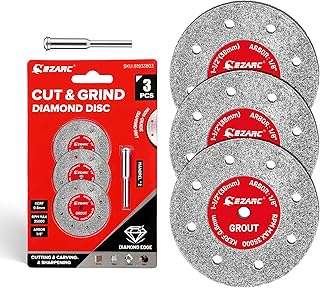


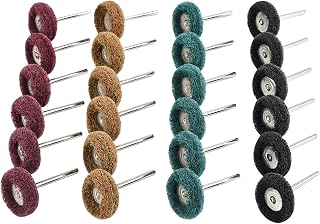


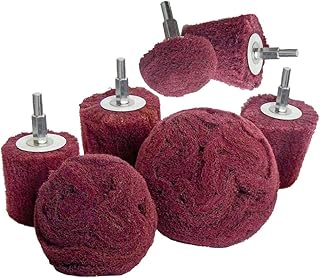
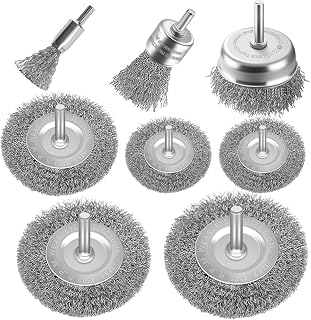


Choosing an abrasive accessory is about more than selecting the right diameter or buying a familiar brand. The accessory has to match the machine, workpiece material, intended operation and desired finish. A cutting disc, grinding disc, flap disc, sanding disc and wire brush may all fit an angle grinder, but they are designed to perform very different jobs.
For commercial buying decisions, start with the task rather than the product. Decide whether you need to cut, grind, deburr, remove coatings, prepare a surface, blend welds, polish, clean rust or produce a particular finish. Once the operation is clear, narrow the choice by material, abrasive type, grit, disc dimensions, bore, machine compatibility and maximum operating speed.
This approach is particularly useful when comparing products from established manufacturers such as Bosch Professional, Norton, 3M, Makita and DeWalt. Brand recognition can help narrow a shortlist, but the technical specification remains more important than the name printed on the package.
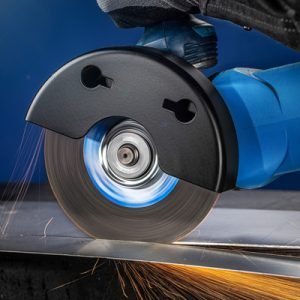
Cutting discs and grinding discs are not interchangeable simply because they may be used on the same angle grinder. A cutting disc is intended to make a cut through material, whereas a grinding disc is designed to remove material through its face. Their construction, thickness and intended method of contact differ.
A cutting disc is normally relatively thin because the objective is to create a narrow kerf and minimise the amount of material removed. It is used with a controlled cutting action rather than as a general-purpose grinding wheel.
A grinding disc is substantially different in purpose. It is intended for material removal, edge preparation, weld dressing and other grinding operations where the abrasive face is used against the workpiece. Attempting to use a thin cutting disc for side grinding can create dangerous loading that the accessory was not designed to withstand.
When comparing abrasive accessories, therefore, do not treat disc thickness as a simple measure of quality. A thicker disc is not automatically better, and a thinner disc is not automatically inferior. Thickness is part of the accessory's intended application.
Grit is one of the most important specifications when buying sanding and finishing abrasives. In broad terms, coarse abrasives remove material quickly and leave a more pronounced surface pattern, while finer abrasives remove less material per pass and are better suited to smoothing and finishing.
The correct grit depends on what you are trying to achieve. Someone removing old coating from a robust steel component has a different requirement from someone preparing stainless steel for a fine cosmetic finish. Choosing an excessively coarse abrasive for delicate finishing can create unnecessary scratches, while an excessively fine abrasive can make material removal frustratingly slow.
Coarse grades are generally selected when rapid stock removal is more important than the final surface appearance. They can be useful for removing material, shaping edges, preparing heavily affected surfaces and carrying out initial stages of restoration.
Medium grades are useful when the job requires a balance between material removal and surface refinement. They can be suitable for blending, general preparation and moving from aggressive preparation towards a cleaner finish.
Fine grades are generally more appropriate for final smoothing, surface refinement and preparation before subsequent finishing operations. They are not normally the first choice when a large amount of material has to be removed.
When comparing grit specifications, avoid assuming that a higher numerical grit automatically means a better abrasive. Grit is an indication of abrasive coarseness, not an overall quality rating.
The abrasive grain itself can have a major effect on cutting behaviour, stock removal, durability and finishing characteristics. Different abrasive materials are suited to different workpieces and applications.
Aluminium oxide is a widely used abrasive grain and is found across many general-purpose sanding and grinding products. It can be a practical choice for a broad range of metalworking and woodworking applications, depending on the product construction and manufacturer's intended use.
Its versatility makes aluminium oxide useful when the buying priority is a dependable general-purpose abrasive rather than a specialist solution.
Zirconia abrasives are commonly associated with demanding stock-removal applications. They can be particularly attractive when working with metal and when the user needs an abrasive that remains effective during heavier grinding or sanding.
Zirconia flap discs are often considered when the application requires a combination of relatively aggressive material removal and useful working life.
Ceramic abrasive grains are used in products designed for demanding applications where cutting efficiency and sustained abrasive performance are important. They can make sense for professional users who place greater emphasis on productivity and controlled stock removal than on the lowest initial purchase price.
The specification of the complete abrasive still matters. Ceramic grain alone does not guarantee that one product will outperform another in every application.
Silicon carbide is used for applications where its particular cutting and finishing characteristics are advantageous, including certain non-ferrous materials, stone, masonry and other compatible surfaces. Always check the manufacturer's material recommendations rather than choosing solely by abrasive name.
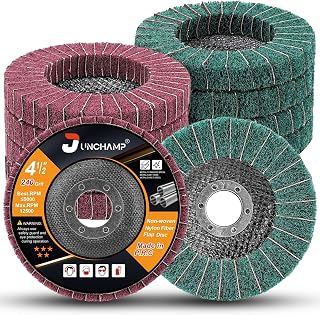
Flap discs combine multiple overlapping abrasive flaps on a backing plate. Their design allows the abrasive to remove material while also providing a comparatively controlled finishing action.
For many fabrication and maintenance tasks, a flap disc can reduce the need to change between a heavy grinding operation and a separate finishing stage. However, that does not mean every flap disc is a replacement for every grinding wheel.
Flap discs are particularly useful for blending welds, smoothing transitions, deburring edges, preparing metal surfaces and carrying out controlled stock removal. They can also be useful where the final appearance matters more than maximum material removal speed.
The shape of the flap disc influences how it contacts the workpiece. A conical or angled profile can be useful for edge work and more aggressive stock removal, while a flatter configuration can be more appropriate for surface work and controlled finishing.
When comparing similar flap discs, look beyond the grit. Consider the backing material, abrasive grain, flap density, profile and intended application.
Backing construction affects rigidity, durability and the way the abrasive behaves under load. Common constructions include fibreglass and other engineered backing materials, while some products use reinforced cloth-based abrasive structures.
A rigid backing can provide stability during demanding work, whereas a more flexible abrasive construction may be preferable when following contours or achieving a particular surface finish.
Not every sanding operation should be performed with a flap disc. Fibre discs, sanding discs and other coated abrasives provide different combinations of flexibility, cutting action and finishing capability.
Fibre discs are commonly used with backing pads and can be effective for metal grinding and surface preparation. They can provide a relatively consistent abrasive surface and are available in different grain types and grit grades.
Hook-and-loop sanding discs are particularly convenient when frequent abrasive changes are required. The attachment system can make it easier to move between grit grades without replacing an entire backing arrangement.
When comparing sanding discs, check the attachment method, diameter, hole pattern where applicable, grit, abrasive grain and intended machine. A disc that looks physically similar may not be compatible with the backing pad or sander being used.
Wire brushes are useful for cleaning, rust removal, surface preparation and removing certain unwanted deposits. They work differently from conventional abrasive discs because the working action is produced by the individual wire filaments rather than a continuous abrasive surface.
Wire brushes are available in different shapes and configurations, including cup brushes and wheel brushes. The choice depends on access, surface shape and the machine being used.
Wire type also matters. Carbon steel wire, stainless steel wire and other constructions have different applications. Stainless steel workpieces deserve particular attention because unsuitable wire can contaminate the surface with particles from another metal.
Crimped wire generally provides a more flexible brushing action and can be useful for cleaning and surface preparation. Knotted wire configurations can provide a more aggressive action for demanding cleaning tasks.
Do not select a brush solely because it looks more aggressive. The correct brush depends on the material, contamination, required finish and machine speed.
Diamond accessories occupy a different part of the abrasive market from conventional resin-bonded cutting wheels and coated abrasives. They are commonly considered for hard mineral-based materials and other applications where diamond is an appropriate cutting medium.
Diamond cutting discs can be designed for materials such as brick, masonry and concrete, but the correct disc depends on the exact material and machine. Some products are specialised for particular applications, while others are designed as broader multi-material solutions.
Segment design, segment height, bond characteristics, disc diameter, bore and machine compatibility can all influence suitability. A diamond disc should therefore be assessed as a complete system rather than by the word “diamond” alone.
Diameter is not merely a matter of preference. The accessory must be compatible with the machine for which it is intended, including the tool's permitted accessory size and operating speed.
The bore is equally important. A disc with an incompatible centre hole should not simply be treated as a universal accessory. Some systems use dedicated interfaces, while conventional angle grinders commonly use a threaded spindle and locking arrangement.
Modern accessory systems can also use rapid-change interfaces. Bosch Professional's X-LOCK system is one example of a dedicated interface designed to simplify accessory changes, but compatibility must still be checked for the particular tool and accessory.
Maximum operating speed is one of the most important specifications on a rotating abrasive accessory. The accessory must be suitable for the rotational speed of the machine on which it is fitted.
Never assume that two discs with the same diameter can be used interchangeably simply because they physically fit. Their maximum permitted speeds and intended applications can differ.
Before using an abrasive accessory, compare the marked maximum speed with the machine's operating characteristics and follow the manufacturer's instructions. If the required information is missing, unclear or illegible, replacing the accessory is the safer approach than guessing.
Disc thickness influences the way an abrasive behaves, but it should always be interpreted in the context of its purpose.
For cutting accessories, thickness can affect kerf width, cutting feel and the amount of material removed. A thinner cutting wheel can be attractive when a narrow cut is desirable, while a different construction may be selected where robustness or a particular application demands it.
For grinding products, thickness and construction are linked to the intended grinding operation. The important question is not whether a product is thick or thin but whether it is designed for the operation being performed.
Stainless steel requires careful abrasive selection because the surface finish can be important and contamination can cause problems. Products intended specifically for stainless steel or inox applications can be preferable where the manufacturer identifies them as suitable.
Heat management also matters. Excessive pressure or inappropriate abrasive selection can generate unnecessary heat and affect the appearance of the workpiece.
When buying abrasives for stainless steel, consider the abrasive grain, grit, backing, intended finish and whether the product is specifically recommended for stainless steel.
Aluminium behaves differently from many ferrous metals and can load an abrasive if the product is not suited to the application. When selecting a sanding or grinding accessory, check whether the manufacturer lists aluminium or non-ferrous metals among the recommended materials.
A product designed primarily for aggressive steel grinding should not automatically be assumed to be the best option for aluminium. Material compatibility is one of the most useful filters when comparing abrasive accessories.
Woodworking abrasives are often selected by grit and sanding system, but the machine and accessory construction remain important. Random orbital sanders, belt sanders, detail sanders and angle grinders use different accessory formats.
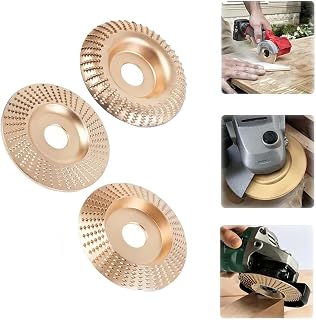
Where an angle grinder is being considered for a woodworking application, only accessories explicitly designed and approved for that use should be considered. A conventional metal cutting or grinding disc is not a substitute for a woodworking accessory.
For general woodworking, the most useful buying decision often involves choosing the correct grit progression rather than simply buying the most aggressive abrasive available.
Removing paint or rust is different from removing solid structural material. The ideal abrasive should remove the unwanted layer without unnecessarily damaging the substrate.
Wire brushes can be useful for some cleaning operations, while flap discs and surface-conditioning products may be better for other forms of preparation. The correct choice depends on coating thickness, substrate material and the desired final condition of the surface.
For delicate or visible surfaces, an overly aggressive abrasive can create scratches or alter the profile of the material. Start with the least aggressive suitable option and increase aggressiveness only when necessary.
Two abrasives can remove a similar amount of material while producing noticeably different surfaces. This is why surface finish should be treated as a primary buying criterion rather than an afterthought.
If the workpiece will subsequently be painted, plated, welded or polished, consider what surface condition the next process requires. A coarse abrasive may be ideal for the first stage but unsuitable for the final stage.
Abrasive selection can therefore be planned as a sequence. One product may perform the initial removal, a second may blend the surface and a finer abrasive may prepare it for finishing.
The cheapest pack price is rarely enough to determine the best value. Abrasive accessories are consumables, so the useful comparison is the amount of productive work obtained from each accessory rather than the initial purchase price alone.
When specifications and reliable usage information are available, consider the relationship between purchase cost, usable working life, removal rate, finish quality and the number of accessory changes required.
A more expensive abrasive can make sense if its construction is better suited to the task, but a premium product is not automatically better value when the application is light or occasional.
Budget products can be perfectly reasonable for occasional light-duty applications when their specifications match the task. Professional users with frequent abrasive consumption may place greater emphasis on consistency, cutting performance, working life and predictable results.
The correct comparison is therefore application-specific. Paying more for a specialist abrasive makes less sense when a general-purpose product already meets the requirement. Conversely, repeatedly buying the cheapest compatible accessory may be a false economy if poor performance causes frequent changes or additional finishing work.
Look for measurable specification differences rather than relying on marketing language. Abrasive grain, backing construction, dimensions, application range and speed rating are more useful comparison points than vague claims about being “professional” or “premium”.
A matching diameter does not establish compatibility. Bore, interface, machine specification, maximum speed and intended operation all need to be checked.
A cutting disc should not be treated as a general-purpose grinding wheel. Use an accessory designed for the operation required.
Maximum aggressiveness is not always the fastest route to a finished job. An abrasive that is too coarse can create unnecessary surface damage and increase the amount of subsequent finishing.
Steel, stainless steel, aluminium, wood, masonry and coated surfaces can require different abrasive solutions. Material compatibility should be one of the first filters in a buying decision.
Large multipacks can appear economical, but they may be poor value if the accessories are used infrequently or stored for long periods. Buy quantities that make sense for the expected workload and storage conditions.
Abrasive products should be stored according to the manufacturer's instructions. Keep accessories protected from conditions that could compromise their construction, and avoid using products that are damaged, degraded or otherwise unsuitable.
The markings on an abrasive accessory can contain considerably more useful information than the product title shown on a retailer's page. Before buying, look for the accessory type, dimensions, abrasive specification, intended material, operating speed and relevant safety markings or instructions.
For cutting and grinding products, the label can help distinguish the intended application from superficially similar products. For coated abrasives, the grit and backing information are especially important.
If a retailer listing omits a specification that matters to your application, check the manufacturer's technical documentation before purchasing rather than assuming the missing information.
Rotating abrasives should be treated as safety-critical accessories. The correct product, correct machine setup and correct operating technique are all important.
Storage is often overlooked when comparing consumables. Abrasives should be kept in appropriate conditions and protected from damage, moisture and other environmental factors specified by the manufacturer.
Resin-bonded abrasive products should not be treated as permanent workshop stock. Check the manufacturer's guidance concerning storage and product life, particularly if accessories have been stored for a long period.
Good stock rotation is useful for workshops that purchase abrasives in quantity. Rather than accumulating large quantities simply because the unit cost looks attractive, maintain sensible inventory levels and inspect older stock before use.
DIY buyers often need versatility more than specialist performance. A sensible starter selection may include accessories matched to the actual projects being undertaken rather than a large assortment of unrelated products.
For occasional metalwork, prioritise compatibility, clear application guidance and sensible pack quantities. For repeated sanding, a selection of useful grit grades may provide more value than a large number of different abrasive types.
DIY users should be particularly cautious about assuming that an accessory is universal. If the manufacturer specifies a particular material, machine or operation, treat that limitation as part of the product specification.
Professional users should consider workflow as well as individual accessory performance. The best abrasive for a workshop may be the one that produces consistent results, fits the existing machines, reduces unnecessary changeovers and gives the operator the finish required by the next manufacturing stage.
Standardising a small number of proven abrasive specifications can also simplify purchasing and stock control, provided those products genuinely cover the workshop's applications.
Where multiple operators use the same equipment, consistent product selection can make training and process control easier because the expected behaviour of the abrasive is more predictable.
Established manufacturers such as Bosch Professional, Norton, 3M, Makita and DeWalt offer broad ranges covering different abrasive technologies and machine systems. Comparing brands is most useful when the products are matched by application and specification.
Do not compare a specialist ceramic abrasive from one manufacturer with a general-purpose aluminium oxide product from another and conclude that the brand itself caused the performance difference. The abrasive construction and intended application need to be equivalent before a meaningful comparison can be made.
Manufacturer documentation is particularly valuable when choosing between similar products because it can clarify compatible materials, machine types, grit options, dimensions and intended operations.
A useful buying process can be reduced to a sequence of decisions. First identify the operation. Then identify the workpiece material. Next establish the machine and compatible accessory dimensions. After that, select the abrasive type and grit according to the required removal rate and finish.
For general metalwork, begin by identifying whether the job is cutting, grinding, weld dressing, deburring or finishing. Then determine whether the workpiece is mild steel, stainless steel, aluminium or another metal.
For cutting, select a cutting accessory specifically rated for the material and machine. For aggressive grinding, compare grinding wheels and flap discs according to the amount of material that must be removed. For finishing, move towards suitable finer-grit or surface-conditioning products.
The “best” abrasive accessory is therefore the one that provides the right combination of cutting action, durability, compatibility and finish for the specific metalworking task.
Weld preparation often involves several stages rather than one abrasive. Initial dressing may require a more aggressive product, while blending and final preparation may benefit from a flap disc or finer abrasive.
Do not remove more parent material than necessary. The objective should be controlled preparation of the weld area while maintaining the desired geometry of the component.
For visible fabrication work, finish quality may be just as important as stock-removal speed, making the abrasive grain, grit and disc profile important purchasing considerations.
Rust removal can range from light surface cleaning to substantial corrosion removal. Wire brushes and surface-conditioning abrasives can be appropriate for lighter cleaning, while more aggressive abrasives may be required for heavier material removal.
The substrate matters. If the underlying metal is thin or delicate, excessive abrasion can remove sound material along with the corrosion. Use the least aggressive suitable accessory and increase the level of abrasion only when necessary.
Retailer pages can make abrasive products look similar, particularly when dozens of discs share the same diameter and colour. Look past the product photograph and compare the technical information.
The manufacturer part number can be particularly useful when checking that different retailer listings actually refer to the same specification.
A good abrasive accessory is not necessarily the most expensive, the most aggressive or the one with the highest number of positive reviews. It is the product whose specification matches the job closely enough to deliver the required result safely and efficiently.
For cutting products, compatibility, intended material, dimensions, thickness and operating speed are fundamental. For grinding products, abrasive grain, disc construction and intended operation become particularly important. For sanding and finishing products, grit, grain, backing and desired surface finish deserve greater attention.
Independent buyers should also distinguish between objective product information and subjective customer feedback. Reviews can provide useful clues about packaging, compatibility or user satisfaction, but technical suitability should be established from manufacturer specifications.
Abrasive accessories are used for operations including cutting, grinding, sanding, deburring, weld dressing, rust removal, cleaning, surface preparation and finishing. Different accessories are designed for different operations, materials and machines.
There is no single best disc for every type of metalwork. The right choice depends on whether you are cutting, grinding, deburring or finishing, as well as the metal being worked and the specifications of the machine.
Neither is universally better. Grinding discs can be appropriate for substantial material removal, while flap discs can provide a useful combination of stock removal and surface finishing. Choose according to the operation and required finish.
No. Higher grit generally indicates a finer abrasive, not a higher quality product. Coarser grades are normally selected for faster material removal, while finer grades are used for smoothing and finishing.
Some multi-material accessories are specifically designed for more than one material, but a conventional disc should not be assumed to be universal. Always check the manufacturer's material recommendations.
Check the machine manufacturer's permitted accessory diameter and then select an accessory that matches the machine. The bore or mounting interface and maximum operating speed must also be compatible.
A cutting disc should be used for cutting rather than treated as a grinding wheel. Select an accessory specifically designed for grinding when the operation requires grinding.
The best choice depends on whether you are cutting, grinding, blending or finishing. Products specifically identified by the manufacturer as suitable for stainless steel can be a sensible starting point.
Choose an abrasive specifically recommended for aluminium or non-ferrous metals. Aluminium can behave differently from steel during abrasion, so material-specific guidance is valuable.
They can be, particularly for frequent or demanding work where cutting efficiency, consistency and working life matter. For occasional light-duty use, a correctly specified general-purpose product may offer better value.
Brand reputation can be useful when creating a shortlist, but the technical specification remains decisive. Compare equivalent products by abrasive type, grit, dimensions, intended material, machine compatibility and operating speed.
Only if the quantity matches your expected usage and storage conditions. A lower cost per accessory is not useful if products remain unused for long periods or are stored improperly.
The strongest buying decision starts with the application. Identify what needs to be cut, removed, cleaned or finished, then match the abrasive to the material and machine. From there, compare the technical details that actually affect performance: abrasive grain, grit, construction, dimensions, mounting system, operating speed and intended use.
For buyers comparing abrasive accessories in 2026, established names such as Bosch Professional, Norton, 3M, Makita and DeWalt can provide useful starting points for a shortlist, but no brand should replace careful specification checking. The most suitable product is the one that meets the application's requirements rather than simply the one with the strongest marketing claim.
Before making a purchase, compare current specifications, pack quantities and verified customer feedback from reputable retailers, then check the manufacturer's information for compatibility and safe use. This is the most reliable way to balance performance, durability, finish quality and overall value when choosing abrasive accessories for DIY, maintenance, fabrication or professional workshop use.