

♥ Wishlist
Compare 24 verified Drill Bit Sets for Wood, Metal, Masonry & DIY products in United Kingdom. Reviews, ratings, pros, cons and buying advice updated for October 2026.
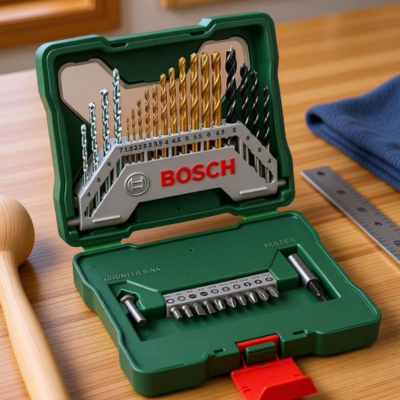
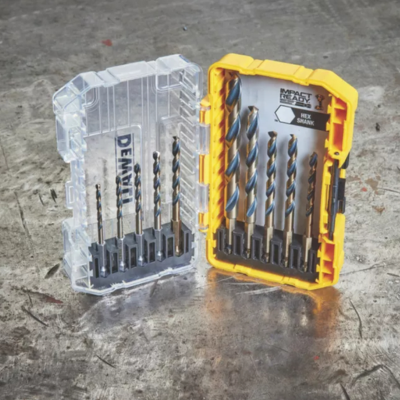
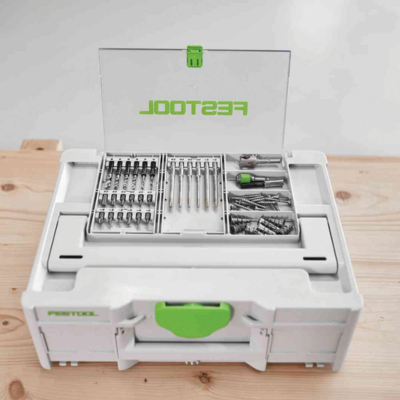
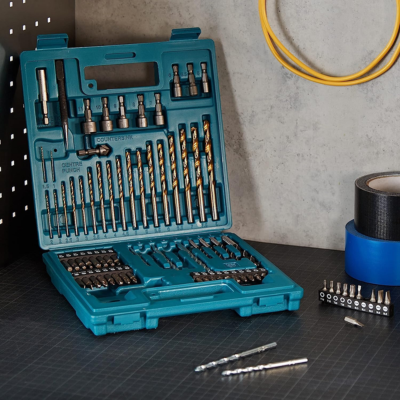
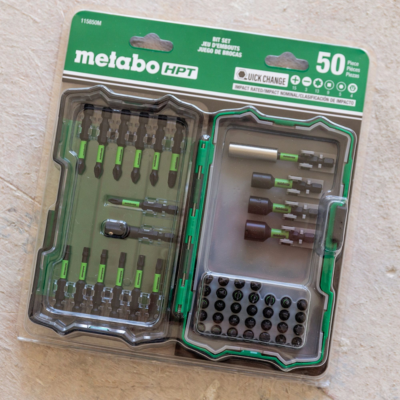
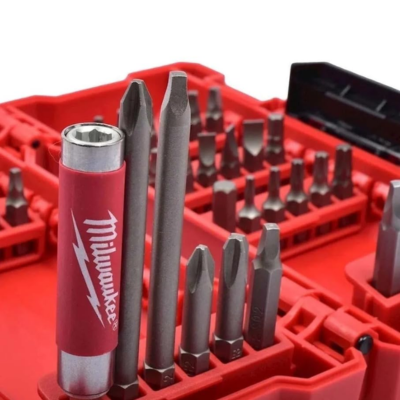


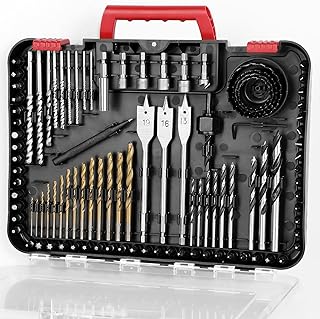


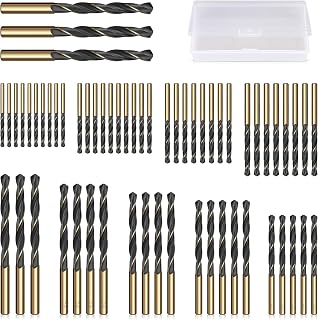


A drill bit set is only as useful as the bits it contains and the materials they are designed to drill. A large set is not automatically a better choice than a smaller, more specialised collection. For occasional DIY, a compact set covering common metric sizes may be more useful than a large professional assortment containing sizes you rarely use. Conversely, regular maintenance, renovation or trade work can justify a broader set with stronger materials, more specialised geometries and better storage.
When comparing drill bit sets, look beyond the number printed on the box. The important questions are what each bit is made from, which materials it is intended for, how accurately it is manufactured, what shank it uses, which sizes are included and whether the case keeps the bits organised and protected.
Brands such as Bosch, DeWalt, Makita, Milwaukee, Irwin, Draper and Faithfull are commonly encountered when comparing drill bits in the UK market. However, brand recognition should not replace checking the specifications of the particular set. Different ranges from the same manufacturer can be designed for very different applications.
The material used to manufacture a drill bit has a direct effect on hardness, heat resistance, cutting behaviour and suitability for different workpieces. Understanding the basic material categories makes it considerably easier to compare otherwise similar-looking sets.
HSS bits are widely used for drilling metals and can also be suitable for some plastics and other materials when used with the correct technique. They are a practical choice for general-purpose metal drilling because they combine useful hardness with reasonable resistance to heat.
Not all HSS bits are manufactured or finished in exactly the same way. When comparing sets, look for the manufacturer's stated specification rather than assuming every HSS set will perform identically.
HSS-R generally refers to rolled HSS drill bits. They are commonly positioned as general-purpose metal-drilling bits and can be a sensible option for routine workshop and DIY tasks.
Their geometry and manufacturing process can differ from ground HSS designs, so shoppers should consider the complete specification rather than judging performance from the HSS designation alone.
HSS-G normally indicates ground HSS construction. Ground cutting edges and more accurately formed geometries can make these bits attractive when cleaner drilling and dimensional consistency are important.
For anyone drilling metal regularly, an HSS-G set can be worth considering alongside the size range and coating. The specification should still be matched to the material being drilled and the recommended drilling conditions.
Cobalt-alloy HSS bits are intended for demanding metal-drilling applications where greater heat resistance is useful. They are particularly relevant when working with harder metals and stainless steel, provided the correct drilling speed, pressure and lubrication are used.
Cobalt bits are not simply a universal upgrade for every DIY task. Their value is greatest when their additional heat resistance and material characteristics are actually needed.
Carbide is extremely hard and is used in specialised drill bits for applications where ordinary HSS is unsuitable. Carbide-tipped masonry bits, for example, are designed around the demands of brick, block, concrete and related mineral materials.
Carbide does not mean that a bit can be used indiscriminately. The correct bit geometry, drilling mode and tool are still essential, particularly when drilling hard masonry or concrete.
Coatings are often highlighted on packaging, but their significance depends on the underlying bit material and the application. A coating should be viewed as one part of the specification rather than a guarantee of superior performance.
Titanium nitride, commonly abbreviated to TiN, is a hard coating frequently seen on general-purpose drill bits. It can reduce friction and contribute to wear resistance under suitable conditions.
A TiN-coated bit is not automatically suitable for every material. For example, a coated general-purpose bit should not be substituted for a dedicated masonry or glass bit simply because the coating sounds more advanced.
Drill bit ranges can also use other coatings or surface treatments intended to improve wear resistance, reduce friction or manage heat. When comparing these claims, consider the actual base material, flute design and intended application alongside the coating.
Different drilling jobs require different cutting geometries. A comprehensive set can therefore contain several visibly different bit types rather than simply offering more sizes of the same bit.
Twist bits are the familiar general-purpose drill bits with spiral flutes. They are commonly used for metal, plastic and other suitable materials, with different grades and geometries designed for different applications.
For a general-purpose home workshop, a set of metric twist bits can form the core of a useful collection. The important consideration is whether the bits are specified for the materials you expect to encounter.
Masonry bits are designed for mineral-based materials such as brick, block and concrete. Their cutting tips are substantially different from ordinary metal or wood bits because they need to withstand abrasive materials.
Many masonry drilling applications use hammer action, but the correct mode depends on the material, bit and tool manufacturer's instructions. Harder concrete may require a dedicated rotary hammer and SDS-compatible bit rather than a conventional masonry bit in a standard drill chuck.
Brad-point bits are designed specifically for wood. Their central point helps position the bit accurately, while the outer cutting spurs can help produce a cleaner hole than a conventional twist bit when drilling suitable timber.
They are particularly useful for furniture assembly, cabinetry, shelving and other woodworking tasks where hole position and edge quality matter.
Spade bits have a broad, flat cutting head and are intended primarily for making larger holes in wood. They are useful for jobs such as routing cables through timber, fitting hardware and carrying out rougher construction work.
They are generally chosen for speed and convenience rather than the fine finish associated with more specialised woodworking cutters.
Forstner bits are used when woodworking requires controlled, relatively flat-bottomed holes or clean overlapping cuts. They are especially relevant to cabinetmaking and furniture projects.
They can be a valuable addition to a specialist woodworking set, but they are unnecessary if your drilling requirements are limited to basic household tasks.
Glass and ceramic tiles require specialised bits because ordinary twist bits can slip, overheat or damage the surface. Tile and glass bits commonly use specialised carbide cutting tips or other application-specific designs.
Drilling tiles also requires controlled pressure and careful speed selection. Hammer action is generally unsuitable for fragile tiles unless the specific tool and bit instructions explicitly allow it.
Step drills use multiple diameters on a single bit, allowing the user to enlarge holes progressively. They are particularly useful for thin sheet metal and some plastics.
A step drill can reduce the need to change between numerous small sizes, but it does not replace a conventional twist-bit set where accurate drilling across many individual diameters is required.
Hex-shank drill bits are designed for compatible quick-change systems and some impact-driver applications. Their six-sided shank can make bit changes convenient and can reduce slipping in suitable holders.
Compatibility is critical. A hex-shank bit may fit an impact driver or quick-change holder, but that does not mean every drill bit with a hexagonal shank is intended for high-impact use. Always check the manufacturer's stated application.
SDS bits are designed for SDS-compatible rotary hammers and related machines. SDS-plus and other SDS formats should not be confused with conventional round-shank drill bits.
If you already own an SDS machine, check the required chuck system before purchasing a set. A conventional drill-bit set will not provide the same compatibility simply because some of the bits are intended for masonry.
The shank is the part of the bit held by the drill or accessory holder. It is an important buying consideration because the correct cutting end is of little use if the shank is incompatible with your equipment.
Round shanks are common on conventional twist drill bits and are suitable for many keyed and keyless drill chucks. They provide a familiar solution for standard corded and cordless drills.
Larger drill bits can use reduced shanks so that a relatively large cutting diameter can be fitted into a smaller chuck capacity. This can be useful when drilling larger holes with conventional equipment.
Hex shanks are common in quick-change systems and selected drill-driver accessories. They can be particularly convenient when moving rapidly between drilling and screwdriving accessories.
SDS shanks are shaped specifically for SDS-compatible machines. They are not interchangeable with standard drill-chuck systems without the appropriate equipment or adapter.
For most UK household and general DIY applications, metric sizing is the natural starting point. Metric sets typically provide a sequence of diameters measured in millimetres, making it straightforward to select a bit close to the required hole size.
Imperial sizes can still be useful for certain older equipment, imported hardware, woodworking applications and projects specified in inches. A mixed set can be worthwhile if your work regularly involves both measurement systems.
Do not judge a set solely by the number of pieces. A 100-piece set can contain numerous duplicates, accessories or small sizes that you rarely use, whereas a carefully selected 19-piece or 25-piece set may cover the majority of your projects.
For general household DIY, versatility is usually more important than extreme specialist performance. A useful starter collection may include common metric twist bits, masonry bits and wood-drilling options, with the exact contents matched to the work you actually undertake.
If most of your projects involve assembling furniture, installing shelves and making pilot holes, a compact set may be sufficient. If you regularly drill brick walls, metal brackets and timber, a multi-material collection can be more practical.
For occasional use, avoid paying a premium for specialist bits that will spend most of their life unused. Instead, prioritise sensible size coverage, clearly labelled storage and bits designed for your most common materials.
Frequent users should place greater emphasis on consistency, durability, replacement availability, specialised bit types and compatibility with existing tools.
A professional-oriented collection may be better served by several specialised sets than by one enormous general-purpose case. For example, a metalworker may prefer a dedicated HSS or cobalt set, while a carpenter may gain more from a woodworking-focused collection containing brad-point, countersink and larger-diameter options.
Tradespeople should also consider how quickly bits can be identified and replaced. A well-organised case can save time when repeatedly switching between sizes, while clearly marked diameters make it easier to select the correct bit without unnecessary trial and error.
When comparing two apparently similar sets, use the following criteria rather than relying on piece count or packaging claims.
The ideal number depends on the type of work rather than a universal definition of a good set.
A small set can be entirely adequate for occasional household drilling. A medium-sized set offers broader coverage without becoming unnecessarily difficult to organise. Larger sets make more sense for workshops, tradespeople and users who frequently need less common diameters.
Before buying a large kit, look through the size list. If most of the included diameters are unlikely to be used, the apparent value of the larger set may be misleading.
Two bits made from similar materials can behave differently because of their geometry. Point angle, flute design, cutting-edge shape, web thickness and overall profile all influence how the bit enters the workpiece and removes material.
For metal, geometry affects chip formation and heat management. For wood, the cutting profile influences hole cleanliness and breakout. For masonry, the tip must withstand abrasive mineral material and, where applicable, hammer action.
This is why choosing the correct bit type is often more important than simply choosing the hardest-looking bit.
Metal drilling places greater demands on heat control and cutting performance than many basic household applications. HSS is a common starting point, while cobalt-alloy options can be considered for more demanding materials and repeated use.
Use the manufacturer's recommended speed for the material and bit. Excessive speed can generate unnecessary heat, reducing cutting performance and potentially damaging the bit.
For suitable metal-drilling applications, cutting fluid or another appropriate lubricant can help manage heat and friction. The correct approach varies with the metal, bit specification and drilling method.
Wood is relatively forgiving compared with masonry or hard metals, but the right bit can make a substantial difference to the finish.
Brad-point bits are useful where clean, accurately positioned holes are important. Spade bits are convenient for larger holes where speed is more important than a highly finished edge. Forstner bits are appropriate for more specialised woodworking operations.
When drilling through finished timber, controlling breakthrough is particularly important. Supporting the exit side with suitable scrap material can help reduce splintering.
Masonry drilling should always begin by identifying the material. Brick, lightweight block, dense block and concrete can place different demands on the bit and drilling tool.
A masonry bit in a conventional drill may be suitable for some lighter applications, while harder concrete can require an SDS rotary hammer with a compatible masonry bit. The correct combination of bit, machine and drilling mode should be determined from the manufacturer's instructions.
Before drilling into walls, also consider what may be concealed behind the surface. Electrical cables, plumbing and other services can present serious hazards. Use appropriate detection equipment and safe working practices before making a hole.
Tiles need a more controlled approach than ordinary masonry. Select a bit specifically intended for the tile material and avoid assuming that a standard masonry bit is suitable for every ceramic or porcelain surface.
Start carefully to prevent the bit wandering across the glazed surface. Use controlled pressure and follow the bit manufacturer's guidance on speed and cooling.
Hammer action should generally be avoided when working on fragile tile surfaces unless the particular bit and manufacturer's instructions specifically permit it.
Good maintenance can extend the useful life of drill bits and reduce the likelihood of poor-quality holes.
There is no universal replacement interval because service life depends on material, frequency of use, drilling technique, machine settings and bit quality.
Signs that a bit may need replacing or resharpening include noticeably slower cutting, excessive heat, wandering, poor hole quality, visible damage or a cutting edge that no longer produces effective chips.
Do not assume that every worn bit must be discarded. Some professional drill bits can be resharpened where the design and condition make this practical. For inexpensive consumer sets, however, replacement may be more economical than specialist sharpening.
More pieces do not necessarily mean better value. A large set is useful only when the additional sizes and accessories are relevant to your work.
A bit that works well in wood may be unsuitable for steel, while a masonry bit is not a substitute for a tile-drilling bit. Always match the cutting tool to the workpiece.
A visible coating can be useful, but it does not eliminate the importance of the underlying material, geometry, manufacturing accuracy and intended application.
Check the chuck or holder on your drill before buying. SDS, hex and conventional round-shank systems are not interchangeable by default.
Hammer action can be appropriate for masonry but can damage tiles, delicate materials and some workpieces. Use the operating mode specified for the particular bit and material.
More force does not necessarily mean faster drilling. Excessive pressure can increase heat, damage cutting edges and reduce control. The correct technique depends on the bit and workpiece.
A set with excellent bits can become frustrating if sizes are difficult to identify or cutting edges are left loose in a toolbox. Storage is a practical part of the overall specification.
Budget sets can make sense for occasional DIY, particularly when the majority of the work involves softwood, basic household repairs and straightforward drilling. The key is to buy a set that genuinely covers those requirements rather than selecting solely on the lowest price.
Higher-priced sets can become more attractive for frequent use when improved materials, specialised geometries, broader size coverage or better consistency reduce the need for replacement and interruption.
Premium pricing should still be assessed against actual requirements. Paying more for cobalt bits, specialist coatings or advanced woodworking cutters has limited value if your projects rarely require those features.
Brand reputation can be a useful starting point, but the particular product range matters more than the logo on the case.
Bosch, DeWalt, Makita and Milwaukee offer multiple tool-accessory ranges aimed at different applications. Irwin is another established name commonly encountered in drill and cutting accessories, while Draper and Faithfull are familiar options in the UK tool market.
When comparing brands, look at the specifications of the exact set, including bit material, size range, intended applications, shank type and storage. Avoid assuming that every drill bit set from a well-known manufacturer is designed for professional use or that every less expensive range is unsuitable for occasional DIY.
Some features sound impressive but have little practical value for a particular user. A huge number of pieces, specialist sizes that will never be used, decorative storage cases and coatings that do not match your applications should not automatically influence the buying decision.
Likewise, a set described as multi-purpose should be checked carefully. Multi-purpose can mean that it contains several categories of bits, but it does not mean that every individual bit can drill every material.
Cordless drill drivers are widely used for DIY and maintenance, making chuck compatibility particularly important. Check the drill's chuck capacity before selecting large-diameter bits, and make sure the bit's shank can be securely held.
Battery-powered tools can also make heat management and operating speed particularly relevant. Avoid forcing a bit when the tool is struggling; selecting a more appropriate bit or drilling technique can be more effective than simply applying additional pressure.
An impact driver is not simply a smaller version of a drill. Its impact mechanism places different loads on accessories, so only use drill bits explicitly specified as suitable for impact-driver applications.
Hex-shank accessories are commonly associated with impact-driver systems, but compatibility should always be confirmed from the manufacturer's specifications. Do not assume that every hex-shank drill bit is designed for repeated impact loading.
For users who already own a few basic bits, building a collection around specific applications can be more efficient than repeatedly buying mixed sets.
Start with commonly used metric twist bits. Add masonry bits if you frequently install fixings in walls, then add dedicated wood bits if woodworking becomes a regular activity. Specialist metal, tile, step or larger-diameter bits can be purchased when a genuine need arises.
This approach also makes it easier to invest in better-quality bits for the materials you work with most often.
A good storage system should make the correct bit easy to identify while protecting the cutting edges from unnecessary contact.
Look for cases where sizes are clearly labelled and the bits remain securely held when the case is moved. For workshop users, a separate organiser can also make frequently used sizes quicker to access.
Do not leave damp or contaminated bits stored indefinitely. Moisture and debris can contribute to corrosion and make otherwise useful accessories deteriorate more quickly.
Drilling involves rotating machinery, sharp cutting edges, flying particles and, depending on the application, significant heat and dust. Appropriate eye protection is important, particularly when drilling brittle materials or masonry.
Secure the workpiece wherever practical rather than attempting to hold it by hand. Keep loose clothing, jewellery and hair away from rotating equipment, and follow the operating instructions for the drill and accessory.
When drilling walls, floors or other structures, identify concealed electrical cables, pipes and other services before starting. If the work involves an uncertain structure or potentially hazardous installation, obtain appropriate professional advice rather than relying on guesswork.
Accurate drilling starts with marking the centre of the hole carefully. On metal, a centre punch can help prevent the bit wandering at the start of the cut. In wood, a suitable brad-point bit can provide more controlled positioning.
Use a steady feed rate and avoid excessive pressure. For larger holes, drilling a pilot hole can help guide the final bit where appropriate. The recommended technique depends on the bit type and material, so the manufacturer's instructions should take precedence.
There is no single ideal drill speed for every bit. Smaller bits generally tolerate higher rotational speeds than larger bits, while harder materials often require more controlled speeds to manage heat.
Following the manufacturer's recommended operating range is preferable to relying on a generic speed rule. The right setting depends on the bit diameter, material, machine and drilling conditions.
Customer reviews can provide useful information, but they are most valuable when interpreted alongside the manufacturer's specifications. Look for recurring comments rather than relying on a single unusually positive or negative review.
Pay attention to comments concerning broken tips, dulling, missing sizes, case quality, chuck compatibility and performance in the specific material you intend to drill.
Reviews that simply say a set is “good” or “bad” provide limited information without context. A more useful review explains the material drilled, the tool used and the type of work performed.
Instead of dividing the price by the number of pieces, calculate the value based on the useful components. If a 50-piece kit contains ten bit types you will use frequently and forty accessories you are unlikely to touch, its practical value may be lower than a smaller set with the exact sizes you need.
For frequent users, consider expected service life as well as initial cost. A more expensive bit that remains effective through substantially more work can sometimes represent better value than repeatedly replacing cheaper alternatives. That should be assessed against actual specifications and your own usage rather than assumed from the price alone.
For a typical household toolkit, prioritise versatility without excessive duplication. A sensible selection usually focuses on common metric sizes and covers the materials most likely to arise during everyday maintenance.
If you regularly mount shelves, cabinets, brackets or fixtures, masonry and wood-drilling capability may be more useful than a very broad selection of specialist metal sizes. If your household projects involve furniture repairs or metalwork, the balance can change.
Woodworkers should pay particular attention to cutting geometry and hole finish. Brad-point bits are useful for clean, accurately positioned holes, while Forstner bits can provide additional capability for larger or specialised woodworking operations.
Spade bits remain useful for fast drilling of larger holes, especially where the finish is less important. A woodworking-focused set can therefore be more useful than a general-purpose multi-material kit for someone whose projects are predominantly timber-based.
For metalworking, look closely at HSS specifications, ground construction, cobalt content where relevant, size range and recommended operating conditions.
Frequent users should consider a dedicated metal-drilling set rather than relying on a mixed kit containing only a handful of metal-compatible bits. The correct cutting fluid, drilling speed and pressure are also important to bit longevity.
Masonry users should first establish whether they are drilling brick, block, concrete or another mineral material. The required bit and tool can vary considerably.
For occasional light masonry work, conventional masonry bits may be sufficient. For demanding concrete drilling, a dedicated SDS system may be more appropriate. The machine and bit must be considered as a complete system rather than choosing the accessory in isolation.
A mixed DIY collection is most useful when it combines sensible coverage rather than attempting to include every possible accessory. Look for common sizes across the materials you work with and consider purchasing specialist bits separately when required.
This can provide a better balance between convenience, storage and useful coverage than a very large case containing numerous accessories that are rarely needed.
Once you have identified the materials, sizes and tool compatibility you need, narrow the options to sets that satisfy those requirements first. Only then compare secondary factors such as coatings, storage, additional accessories and price.
A useful shortlist should make it possible to explain why each set is included. One may be preferable for general DIY, another for metalworking, another for woodworking and another for users who need a broader multi-material collection.
This approach is more useful than declaring one drill bit set universally “best”, because the right choice changes according to the work, tools and frequency of use.
There is no single best set for every user. For general DIY, prioritise common metric sizes, compatibility with your drill and coverage of the materials you regularly encounter. Users with specialist requirements should consider dedicated metalworking, woodworking, masonry or tile sets.
They can be worthwhile for frequent users when the additional cost corresponds to useful improvements in materials, geometry, durability, consistency or application-specific performance. Occasional DIY users may obtain better value from a smaller set that covers their actual requirements.
Bosch produces multiple drill-bit ranges covering different materials and applications. Rather than judging every Bosch set as one category, compare the specification of the particular range, including material, bit type, size coverage and intended use.
DeWalt offers a range of accessories designed for different applications. Suitability depends on the specific set and the work being undertaken, so check its stated material compatibility, shank design and operating requirements.
Makita offers several accessory ranges, making the individual specification more important than the brand name alone. Compare the exact bit material, geometry, size range and intended application with your requirements.
Milwaukee offers drill and accessory products aimed at different users and applications. A suitable set can be considered for DIY when its specifications match the user's drill and the materials being worked on.
Neither is universally better. Standard HSS can be appropriate for many routine metal-drilling tasks, while cobalt-alloy HSS can offer advantages in more demanding applications where heat resistance is important. Choose according to the material, frequency of use and manufacturer's recommendations.
Stainless steel can generate substantial heat during drilling, so suitable HSS or cobalt-alloy bits may be appropriate depending on the specific application. Correct speed, pressure and lubrication are important, and the bit manufacturer's instructions should be followed.
A masonry bit is not the preferred choice for clean woodworking. Dedicated wood bits such as brad-point or suitable general-purpose wood-drilling accessories are normally better suited to producing controlled holes in timber.
A conventional twist drill can physically cut some wood, but it is not necessarily the best choice for clean or accurately positioned woodworking. A dedicated wood bit can provide more appropriate cutting geometry for the task.
It depends on the tile and bit, but ordinary general-purpose bits should not automatically be treated as suitable for tiles. Use a bit specifically intended for the tile material and follow the recommended drilling technique.
No. Compatibility depends on the drill's chuck capacity and the bit's shank. Standard round-shank bits, hex-shank accessories and SDS bits belong to different systems, so always check compatibility before purchasing.
Choose the smallest set that covers the diameters and materials you regularly use. For occasional DIY, a compact metric collection can be sufficient. Larger sets make more sense when you frequently encounter unusual sizes or need several specialist bit types.
Service life varies substantially according to the bit material, workpiece, drilling speed, pressure, cooling, frequency of use and quality of manufacture. There is no reliable universal lifespan measured in months or years.
A set is convenient when you need several sizes and want organised storage. Individual bits can be more economical when you repeatedly use only a few sizes or require specialist materials and diameters not included in general-purpose sets.
Not necessarily. A larger set is better only when its additional sizes and accessories provide useful coverage. For many DIY users, a smaller collection containing frequently used diameters can be the more practical choice.
Consider consistent sizing, suitable bit materials, application-specific geometry, durability, clear markings, practical storage, compatible shanks and the ability to replace frequently used sizes. Match the set to the trade or application rather than choosing purely by piece count.
The best drill bit set is the one that matches the material, tool and type of work you actually perform. Start with application rather than brand, then compare bit material, geometry, diameter range, shank compatibility and storage.
For general DIY, a well-chosen multi-material set can provide excellent versatility. For regular metalworking, woodworking or heavy masonry work, a specialist set can be a more sensible investment. Brands such as Bosch, DeWalt, Makita, Milwaukee, Irwin, Draper and Faithfull provide useful starting points for comparison, but the specification of the individual product should remain the deciding factor.
Before purchasing, compare the exact sizes included, verify compatibility with your drill, check the manufacturer's intended applications and read verified customer feedback for recurring practical issues. Finally, compare today's prices from trusted retailers rather than assuming that the set with the highest piece count offers the best overall value.