

♥ Wishlist
Compare 28 verified Milwaukee Drill Bit Sets products in United Kingdom. Reviews, ratings, pros, cons and buying advice updated for October 2026.


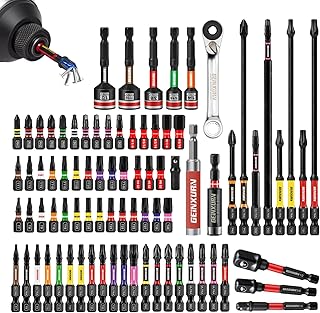


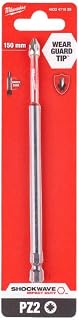
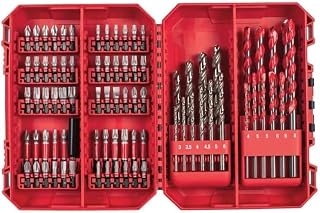


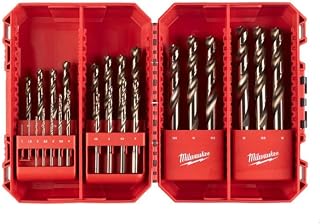


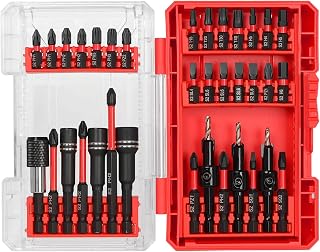
Choosing a Milwaukee drill bit set is less about buying the largest box and more about matching the bit type, shank design, material and diameter range to the work you actually do. A compact set containing the right sizes for timber and general installation can be more useful than a much larger assortment containing specialist bits you rarely need.
Milwaukee's current UK accessory range covers several distinct drilling categories, including HSS metal drill bits, cobalt-alloyed bits, SHOCKWAVE HSS-TiN bits, SDS-Plus and SDS-Max masonry accessories, step drills and other specialist drilling products. These are designed for substantially different applications, so the first decision should always be the material and drilling method rather than the number of pieces in the case.
The phrase “Milwaukee drill bit set” covers a surprisingly broad collection of accessories. Understanding the product families makes it much easier to compare apparently similar sets.
HSS-G refers to ground high-speed steel. Milwaukee describes its HSS-G range as using finely ground sharp edges for precision drilling, with options intended for applications involving materials such as metal, wood and plastic. The range also includes specialised variants rather than treating every HSS bit as interchangeable.
For general metalworking, the quality of the cutting geometry matters just as much as the nominal material. A properly ground cutting edge can help produce a cleaner hole and more predictable cutting action. When comparing two sets, examine the diameter range, flute design, point geometry, shank arrangement and stated application rather than judging solely by the number of pieces.
Milwaukee's RED COBALT range uses 5% cobalt-alloyed high-speed steel and is produced according to DIN 338. The manufacturer specifies these bits for demanding metals, including high-alloy steels and metals with tensile strengths above 1000 N/mm² such as stainless steel. The range also uses a 135-degree split point and four cutting edges, with variable flute geometry intended to improve material evacuation and heat management.
This makes cobalt a category worth considering when your work regularly involves stainless steel or other difficult metals. It does not mean cobalt is automatically the best choice for every hole. For straightforward drilling in softer materials, paying extra for a specialist cobalt set may provide little practical advantage.
Milwaukee's RED HEX SHOCKWAVE HSS-TiN metal drill bits combine precision-ground HSS with a titanium nitride coating. Milwaukee states that the TiN coating is intended to reduce friction and heat build-up and increase durability compared with standard HSS bits. The range is also designed around a 1/4-inch hex shank, making it particularly relevant where compatibility with impact drivers is important.
Do not confuse these metal-drilling accessories with ordinary SHOCKWAVE screwdriver bits. The SHOCKWAVE name is used across several accessory categories, and the application should be checked before purchase.
SDS-Plus is a different system from conventional round-shank twist drills. Milwaukee's UK range includes SDS-Plus M2 and MX4 drill bits, alongside core cutters and dustless drilling accessories. These products are aimed at masonry and concrete applications and are intended for compatible SDS machines.
An SDS-Plus set therefore makes sense for users who regularly drill masonry with an SDS rotary hammer. It is not a general-purpose replacement for a standard drill-bit set.
SDS-Max accessories are intended for heavier-duty compatible machines. Milwaukee's UK drilling range includes SDS-Max MX4 four-cut drill bits, SDS-Max sets and specialist core-cutting accessories.
For most household drilling tasks, an SDS-Max system is excessive. It becomes relevant when the machine and application demand the larger SDS-Max format.
Material and coating terminology can make drill-bit comparisons confusing. The key point is that HSS, cobalt alloy and TiN describe different aspects of a drill bit's construction.
Milwaukee itself separates its metal range into HSS-G Co, HSS-G TiN, HSS-G, HSS-R and step-drill categories, reinforcing the importance of selecting the correct accessory family for the job.
The point is the first part of a twist drill to contact the workpiece, so its geometry affects starting behaviour, cutting efficiency and the amount of pressure required.
A 135-degree split point is particularly useful where accurate starting is important. Milwaukee's RED COBALT and RED HEX ranges use a 135-degree split-point arrangement combined with four cutting edges. Milwaukee states that this geometry is intended to provide a precise starting action and reduce walking, while the cutting-edge arrangement helps produce smaller chips and manage heat.
This is particularly relevant when drilling sheet metal or other surfaces where a conventional point can wander before it begins cutting.
The shank is the part held by the drill's chuck or tool holder. A set can be excellent on paper and still be inconvenient if its shank arrangement does not suit your equipment.
Traditional round-shank drill bits are commonly used with conventional keyed or keyless chucks. They provide broad compatibility with many standard drills and drill presses.
Hex-shank accessories are particularly useful where rapid bit changes and compatibility with hex-drive tools are priorities. Milwaukee's RED HEX SHOCKWAVE HSS-TiN metal drill bits use a 1/4-inch hex shank and are optimised for impact-driver use.
However, a hex shank does not automatically make every drill bit suitable for impact use. The manufacturer's stated compatibility and application should be checked rather than relying on the shape of the shank alone.
SDS-Plus and SDS-Max shanks are dedicated systems for compatible rotary hammers. They should be treated as separate accessory standards when comparing drill-bit sets.
A high piece count is one of the easiest specifications to misunderstand. A 50-piece kit can contain numerous screwdriver bits, holders and duplicate sizes, while a smaller metal-drilling set may provide a much more useful spread of diameters for your particular work.
Before buying, count the actual drilling accessories rather than relying on the headline piece count.
For professional users, a carefully selected range of frequently used diameters can be more valuable than a large mixed kit. For occasional DIY use, a broader general-purpose set may make more sense because it reduces the need to buy individual bits for infrequent jobs.
The storage case is easy to overlook, but it affects how practical the set is on a daily basis.
Case quality does not determine drilling performance, but it can make the difference between a set that is convenient to use and one that becomes disorganised after repeated transport.
Diameter determines the size of the finished hole, but it is not the only dimensional specification worth checking. Total length and working length can be equally important where access is restricted or deep holes are required.
Milwaukee's published accessory specifications distinguish between total length and working length on individual metal drill bits. This is a useful reminder that two bits with the same diameter can still have substantially different practical reach.
When comparing sets, look beyond a simple diameter list and consider whether the included lengths suit your actual work.
One of the most important distinctions is between an ordinary drill and an impact driver. Impact drivers generate a different type of mechanical action and are normally paired with accessories specifically designed for that environment.
Milwaukee's SHOCKWAVE IMPACT DUTY accessory system is specifically designed for impact-driver applications. Its accessories use features such as SHOCK ZONE geometry, heat treatment and a laser-hardened WEAR GUARD TIP on applicable fastening products.
For metal drilling, Milwaukee separately identifies SHOCKWAVE HSS-TiN accessories with 1/4-inch hex shanks as impact-driver-compatible products.
The practical lesson is simple: never choose a drill bit solely because it fits physically into the chuck. Check whether the accessory is designed for the tool and application you intend to use.
DIY users often benefit from versatility rather than specialist performance. If your projects include assembling furniture, installing shelves, drilling timber, making occasional holes in metal and working on general household repairs, a mixed set can be convenient.
Before choosing, consider whether you actually need dedicated masonry, metal and woodworking bits in one case. A mixed set can be useful, but separate specialist sets may provide better coverage if you frequently work with one particular material.
Professional users should generally place greater emphasis on application-specific performance, repeatability and bit availability than on maximum piece count.
A plumber, electrician, joiner, fabricator and builder can have completely different requirements. A set that is ideal for one trade may contain many unnecessary accessories for another.
When two sets look similar, use a consistent comparison method rather than relying on packaging or piece count.
More accessories do not automatically mean better value. If half the contents are unsuitable for your applications, the headline piece count becomes largely irrelevant.
Some Milwaukee SHOCKWAVE sets are fastening sets containing PH, PZ, TX, hex and other screwdriver accessories. Milwaukee's UK SHOCKWAVE set range includes configurations with screwdriver bits, magnetic nut drivers and bit holders.
Such a kit can be extremely useful, but it should not be purchased as a substitute for a set of conventional twist drills unless the required drilling accessories are actually included.
Stainless steel can place significantly greater demands on a drill bit than ordinary mild steel. A specialist cobalt-alloyed HSS option may be more appropriate for demanding stainless-steel work. Milwaukee specifically positions its RED COBALT range for high-alloy steels and demanding metals including stainless steel.
Heat is a major consideration during metal drilling. Excessive heat can accelerate wear and damage cutting edges. Bit geometry, material, coating, drilling speed, pressure and appropriate lubrication all influence the thermal load.
A hexagonal shank only describes the interface. It does not, by itself, establish that an accessory is designed for impact-driver use. Look for explicit impact-rated or impact-compatible specifications.
Concrete and masonry work generally requires an accessory designed for the material and the drilling mechanism. Milwaukee separates its SDS-Plus, SDS-Max and straight-shank masonry categories for this reason.
Even a high-quality drill bit can be damaged by poor technique. Metal drilling requires particular attention to speed, pressure and heat.
The larger the diameter and the harder the material, the more important speed and heat management become. A drill bit that is being forced through metal may generate excessive heat even when its material and coating are appropriate.
Maintenance starts with storage. Bits should be kept clean and dry and returned to their designated positions after use. This reduces the likelihood of cutting edges striking other tools and makes it easier to identify missing or damaged sizes.
There is no universal number of holes that determines when a drill bit must be replaced. Service life varies with material, diameter, drilling speed, pressure, cooling, machine power and the condition of the workpiece.
Instead, look for practical signs of deterioration:
Sharpening may be appropriate for certain conventional twist drills when the user has the equipment and skill to restore the correct geometry. Specialist coated or complex-geometry bits are not necessarily suitable for casual sharpening.
Whether a Milwaukee set represents good value depends on how closely the contents match the work. Brand reputation alone should not determine the purchase.
A worthwhile set should provide the right accessory type, useful sizes, appropriate construction and compatibility with the intended machine. Milwaukee's extensive UK accessory range means there are specialised products for different materials and drilling systems rather than one universal set intended to do everything.
For occasional DIY work, the best choice may be a versatile set containing the sizes you use most. For demanding metalwork, a specialist HSS-G cobalt set may be more logical. For impact-driver drilling, a compatible SHOCKWAVE HSS-TiN option can be more relevant. For concrete and masonry, the appropriate SDS system should take priority.
Brand-to-brand comparisons are most useful when the specifications are genuinely comparable. A Milwaukee cobalt metal set should not be compared with a generic mixed set simply because both contain drill bits.
Compare equivalent characteristics:
Independent buyers should also distinguish manufacturer specifications from customer feedback. Reviews can reveal practical issues such as case usability or recurring complaints, but they should be considered alongside technical specifications rather than treated as a replacement for them.
Product descriptions can contain a considerable amount of technical terminology. The following sequence makes them easier to interpret.
Check that the set contains the exact hole sizes you need. Do not assume a larger maximum diameter means greater usefulness.
This tells you how long the complete accessory is, including the shank.
This is the portion available for drilling into the workpiece. It is particularly important for deeper holes.
Check whether it is round, reduced, three-flat, hex, SDS-Plus or SDS-Max and make sure your machine accepts it.
Look for HSS, HSS-G, HSS-Co or another specified construction appropriate to your application.
Where a coating such as TiN is specified, understand its intended benefit and do not assume that coating alone makes a bit suitable for every material.
Where a manufacturer states a standard such as DIN 338, this can provide useful information about the drill-bit format and dimensional requirements. Milwaukee specifies DIN 338 for its RED COBALT metal drill bits.
There is no single “best” Milwaukee drill bit set for every buyer. The strongest choice changes according to the application.
The most effective way to choose a drill-bit set is to work backwards from your jobs. Make a list of the materials you drill most frequently, the hole diameters you use, the machines you own and the conditions in which you work.
If most of your drilling involves timber and occasional household repairs, there is little reason to prioritise a specialist stainless-steel set. If you regularly fabricate brackets from stainless steel, the opposite is true. If your main machine is an SDS rotary hammer, conventional twist-drill sets should not be the centre of your accessory strategy.
This application-first approach also helps prevent duplicate purchases. Instead of collecting several overlapping general-purpose sets, you can select one versatile foundation set and add specialist accessories only where there is a genuine gap.
The best Milwaukee drill bit set depends on the material, machine and hole sizes involved. HSS-G is suitable for many general metal-drilling applications, cobalt-alloyed HSS is aimed at demanding metals, SHOCKWAVE HSS-TiN is relevant to compatible impact-driver drilling, and SDS accessories are designed for masonry and concrete applications.
Milwaukee's SHOCKWAVE IMPACT DUTY accessories are designed for impact-driver applications. However, the exact accessory should still be checked because the SHOCKWAVE range includes different product types for fastening and drilling.
Milwaukee positions its RED COBALT HSS-G drill bits for high-alloy steels and demanding metals, including stainless steel. The manufacturer specifies 5% cobalt-alloyed high-speed steel and a geometry intended to manage heat and improve cutting performance.
HSS-G refers to ground high-speed steel. Milwaukee describes its HSS-G products as using finely ground sharp edges for cleaner and more precise drilling.
Cobalt drill bits use cobalt-alloyed high-speed steel and are intended for more demanding metal applications where heat resistance is particularly important. Standard HSS is often sufficient for less demanding drilling tasks.
No. Titanium nitride is a coating applied to a drill-bit substrate, whereas cobalt describes an alloyed high-speed-steel construction. Milwaukee's HSS-G TiN and RED COBALT ranges therefore represent different approaches to drill-bit construction.
Compatibility depends on the particular accessory. Conventional round-shank bits can suit standard chucks, hex accessories can suit compatible hex-drive systems, and SDS-Plus or SDS-Max bits require the corresponding tool holder. Always check the manufacturer's stated compatibility before use.
Only accessories specifically designed or rated for that application should be selected. Milwaukee's RED HEX SHOCKWAVE HSS-TiN metal drill bits use a 1/4-inch hex shank and are optimised for impact drivers.
Some Milwaukee SHOCKWAVE sets do. For example, Milwaukee lists SHOCKWAVE configurations containing PH, PZ and TX screwdriver bits as well as magnetic nut drivers and bit holders. Check the complete “set includes” specification rather than judging the product from its total piece count.
For concrete and masonry, look at Milwaukee's SDS-Plus or SDS-Max categories according to the rotary hammer you own and the scale of the work. Milwaukee specifically separates these products from its conventional metal-drilling range.
Only if you will use most of the contents. A smaller application-specific set can offer better practical value when it contains the diameters and bit types you regularly need.
Use the correct bit for the material, select an appropriate drilling speed, avoid excessive pressure, manage heat when drilling metal, clear chips safely and store accessories so that their cutting edges are protected.
There is no fixed replacement interval. Replace or retire a bit when its cutting performance has deteriorated, its cutting edges are damaged, it repeatedly overheats under appropriate conditions or its shank has become unsuitable for safe use.
The strongest Milwaukee drill bit set is the one that matches the work rather than the one with the biggest number printed on the box. Milwaukee's current UK accessory range provides separate solutions for general metal drilling, cobalt-alloyed drilling, TiN-coated impact-compatible metal drilling, masonry, concrete and SDS applications.
For a final buying decision, concentrate on four questions: what material are you drilling, what machine are you using, which diameters do you actually need, and how demanding is the application? Once those are clear, comparing Milwaukee drill bit sets becomes considerably more straightforward and you are far less likely to pay for accessories that do not solve the problems you actually have.