

♥ Wishlist
Compare 39 verified BLACK+DECKER Bit Set for Drilling, Screwdriving & DIY Projects products in United Kingdom. Reviews, ratings, pros, cons and buying advice updated for October 2026.
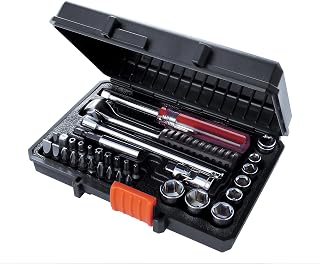


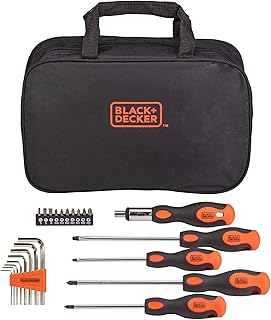


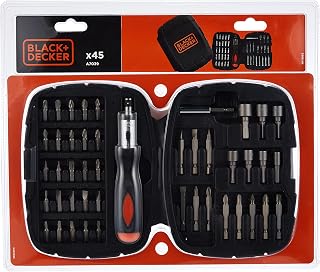




The right BLACK+DECKER bit set is not necessarily the one containing the largest number of pieces. A smaller, well-selected set can be more useful than a large assortment if it contains the drill bit sizes and screwdriver profiles you actually use. Before buying, consider the materials you expect to work with, the type of drill or driver you own, the fasteners you regularly encounter and whether you need a compact kit for occasional DIY or a broader selection for frequent projects.
BLACK+DECKER produces accessory sets ranging from relatively compact drill-bit selections to larger drilling and screwdriving kits. Some sets combine several accessory types in one case, while others concentrate more heavily on drilling or fastening. This distinction matters because a high piece count can include duplicate screwdriver tips or accessories that rarely get used.
For most household DIY, the most useful set is one that gives you sensible coverage of common screw-driving profiles and practical drill sizes without making the case unnecessarily bulky. For more demanding work, material-specific drill bits and impact-rated accessories may be more important than simply having more pieces.
Screwdriver bit sets are primarily intended for driving screws rather than making holes. They commonly include Phillips, Pozidriv, slotted, Torx and hex profiles in different sizes. The correct tip should fit the fastener closely, because a poor match can increase the likelihood of slipping, damaging the screw head or damaging the bit.
A screwdriver-focused kit can be particularly useful if you already own a separate selection of drill bits. It is also a practical choice for flat-pack furniture, shelving, cabinetry, household repairs and general fastening jobs.
A drill bit set is designed around creating holes in specific materials. The important distinction is not simply diameter but bit construction and geometry. A bit intended for timber should not automatically be treated as suitable for masonry or metal.
When comparing drill sets, check whether the kit contains wood, metal and masonry bits or concentrates on one material. A general-purpose set may be convenient for occasional DIY, whereas a specialist set can be preferable when one material accounts for most of your projects.
Combination kits are designed to cover both drilling and fastening in a single case. They can be attractive to homeowners because one purchase can provide a broader range of accessories for everyday jobs.
BLACK+DECKER combination sets can include short screwdriver bits, longer power bits, drill bits and other accessories depending on the particular model. For example, some larger BLACK+DECKER accessory kits combine drilling and screwdriving components rather than simply providing dozens of different screwdriver tips.
The key buying question is therefore not “How many pieces are included?” but “How many of those pieces will I realistically use?”
Phillips and Pozidriv are common screw profiles, but they are not interchangeable in every application. A correctly matched bit should seat securely in the fastener and minimise unnecessary movement under load.
For general UK household DIY, having several commonly used sizes is more useful than having one size repeated excessively. If you frequently work with furniture hardware, construction screws or cabinet fittings, check the profiles and sizes included before buying.
Torx fasteners are increasingly common in furniture, power tools, vehicles, appliances and construction products. A set containing several Torx sizes can therefore be considerably more versatile than one containing only traditional cross-head and slotted profiles.
Look at the actual Torx sizes rather than assuming that the presence of a Torx bit means the kit covers every Torx fastener you are likely to encounter.
Slotted screws are still found in older fittings, electrical hardware, fixtures and general repairs. They are less dominant in many modern applications, but having a few suitable sizes can prevent the need for a separate purchase when an older fastener needs removing or replacing.
Hex accessories can be useful for furniture assembly, machinery, fixings and applications where a hexagonal fastener is used. Some larger accessory sets also include nut drivers, which can extend the usefulness of the kit beyond conventional screws.
Size coverage should be assessed against your projects rather than the headline number of accessories. A set with a sensible progression of common diameters can be more practical than a larger kit containing gaps in the sizes you actually need.
Before purchasing, consider the hole diameters you normally require for wall plugs, pilot holes, timber fixings, metalwork and furniture assembly. If your projects regularly require a specific diameter, confirm that size is actually included.
High-speed steel, commonly abbreviated to HSS, is widely used for drilling metal. HSS bits are designed to tolerate the temperatures and cutting conditions associated with metal drilling better than ordinary general-purpose bits.
However, HSS does not mean that every bit is equally suitable for every metal. Material thickness, hardness, drilling speed, lubrication and cutting geometry all influence performance. Aluminium, mild steel and harder metals can behave differently, so avoid treating a general HSS set as a universal industrial solution.
Woodworking bits are designed around efficient cutting in timber and timber-based materials. Depending on the type, they may use a pointed centre, cutting spurs or a different cutting profile to help produce a cleaner hole.
For furniture, shelving and ordinary home improvement, dedicated wood bits can provide a more appropriate solution than attempting to use one general-purpose bit for every material.
Masonry drilling requires a bit designed for materials such as brick, block and certain types of concrete. Masonry bits typically use a carbide-tipped cutting area rather than the same geometry used by ordinary wood or metal bits.
Do not assume that a drill bit labelled for general DIY is automatically appropriate for hard masonry. If you regularly drill into dense concrete or undertake substantial masonry work, compare the accessory requirements of the drill itself as well as the bit set.
Some drill bits use surface coatings intended to improve wear characteristics or cutting performance. A coating should not, however, be treated as a substitute for appropriate bit geometry or correct use.
When comparing coated bits, look beyond the coating name and check the underlying material, intended application and manufacturer specifications.
Compatibility is often overlooked when people compare bit sets. A bit must physically fit the chuck or holder on your drill, driver or impact tool.
Conventional round-shank drill bits are commonly held by standard drill chucks. The exact chuck capacity still matters, particularly if you are buying larger bits.
Many screwdriver and power bits use a 1/4-inch hex interface. These are commonly used with compatible drill drivers, bit holders and impact drivers.
A 1/4-inch hex screwdriver bit should not be confused with every type of hex-shank drill bit. Check the stated interface before assuming compatibility.
If you intend to use accessories with an impact driver, check that the particular accessory is designed for that application. Ordinary screwdriver bits are not automatically equivalent to impact-rated bits.
This is especially important for high-torque fastening because the accessory can be subjected to substantially different loading than it would experience in a conventional drill driver.
A 130-piece accessory set can look impressive, but piece counts may include duplicates of popular bit types. Duplicates can be useful for frequent users because commonly used tips eventually wear, but they provide less value if you only complete occasional household repairs.
Compare the actual contents rather than relying on the number printed on the packaging.
Storage becomes increasingly important as the number of accessories increases. A well-organised case makes it easier to identify the correct bit and reduces the likelihood of losing small accessories.
Clear lids, labelled positions and removable or pivoting holders can make a large set easier to use. A case that is difficult to close or has poorly arranged compartments can undermine the practical advantage of a large accessory selection.
Clearly marked sizes can save time, particularly when several similar accessories are stored together. This is a small feature, but it becomes more valuable when a set contains numerous sizes and profiles.
Longer screwdriver bits can be helpful when the fastener sits inside a recess or when additional reach is useful. They should not automatically be considered superior to standard-length bits, though. Choose length according to access requirements and the job being performed.
When comparing two BLACK+DECKER bit sets, assess them in the following order rather than choosing solely by price or piece count.
Although this guide focuses on BLACK+DECKER, shoppers may also encounter accessory sets from Bosch, Makita, DeWalt, Ryobi, Wera and other established tool manufacturers. Comparing alternatives can be useful when a particular material, bit profile or impact-rated accessory is more important than staying within one brand.
Drill bits generally do not need to match the brand of the drill itself. What matters is physical compatibility and whether the accessory is suitable for the material and application. A BLACK+DECKER drill can therefore be used with compatible accessories from other manufacturers, subject to the specifications of the tool and accessory.
Brand matching can still be convenient where a manufacturer offers a coordinated accessory-storage system or where you want to standardise the contents of several tool cases. It should not, however, be the only factor in the buying decision.
A larger set can be worthwhile when you frequently work on varied projects. It can reduce the need to buy individual accessories every time a different screw profile or hole size is required.
For occasional use, a smaller set may provide better practical value because there are fewer unused accessories taking up storage space.
A compact set is often sufficient for users who mainly need a drill for occasional repairs, assembling furniture, hanging pictures or carrying out straightforward household maintenance.
Compact kits are also easier to store in a toolbox or drawer. If you already own specialist wood, masonry or metal bits, there may be little reason to duplicate those accessories in a large mixed kit.
The number of accessories is one of the easiest specifications to compare but one of the least useful on its own. A large set can contain many duplicates or accessories that do not match your projects.
Drilling timber, metal and masonry requires different accessory characteristics. Using an unsuitable bit can lead to poor cutting, premature wear or damage to the accessory.
Check the shank type and chuck or holder compatibility before buying. This is particularly important when moving between conventional drills, drill drivers and impact drivers.
A mixed DIY set is convenient, but specialist work can justify a more focused accessory selection. If you regularly drill hard masonry, thick metal or demanding materials, investigate purpose-specific accessories rather than expecting a general household set to cover every situation.
The bits used most often are normally the ones most likely to wear first. If a set contains duplicates of commonly used screwdriver tips, those duplicates may have practical value even if the headline piece count initially appears excessive.
BLACK+DECKER uses different product codes and set configurations. Similar-looking cases can contain different accessory selections. Always compare the exact model number and included contents rather than assuming two similarly named sets are identical.
Select the accessory according to the material being drilled. Do not treat a wood bit, metal bit and masonry bit as interchangeable simply because they have similar diameters.
Drilling speed should be appropriate for the bit, material and tool. Excessive speed can generate unnecessary heat and accelerate wear, particularly when drilling metal.
A pilot hole can improve control and help guide a larger bit in suitable applications. It can also reduce the effort required for some drilling operations.
Effective drilling is not simply a matter of applying maximum pressure. The correct technique depends on the material, bit geometry and drill. Excessive force can reduce control and place unnecessary stress on the accessory and tool.
After use, remove debris and store accessories in their case. Keeping metal bits dry can also help reduce the risk of surface corrosion during long periods of storage.
Replacement is appropriate when an accessory is visibly damaged, excessively worn or no longer cuts or engages the fastener effectively.
Continuing to use a visibly damaged accessory can make the job harder and may increase the risk of poor control. Inspect frequently used bits before starting a project rather than waiting until performance deteriorates significantly.
Good storage is part of getting value from a bit set. Return accessories to their designated positions after use, particularly when a case contains many similar-looking pieces.
Look for a compact combination set containing common screwdriver profiles and a useful selection of everyday drill sizes. There is little benefit in paying for a very large collection if most projects involve furniture assembly, basic repairs and straightforward drilling.
Prioritise screwdriver bit variety, secure fastening and easy access to the most frequently used profiles. Torx, Phillips, Pozidriv and hex coverage can be particularly useful depending on the furniture hardware involved.
A broader combination kit can make sense if you regularly move between drilling and fastening. Storage organisation becomes more important as the number of accessories increases.
Focus on the quality and specifications of the metal-drilling accessories rather than the overall piece count. Look for appropriate HSS construction and a suitable range of diameters for the metalwork you actually perform.
Prioritise suitable masonry bits and check the capabilities of the drill being used. For demanding masonry or concrete work, the correct drill and accessory combination matters more than owning a large mixed-purpose kit.
Check specifically for compatible and appropriately rated accessories. Impact drivers can subject screwdriver bits to higher shock loads, making accessory suitability particularly important.
There is no universal ideal number. A useful set is determined by the variety of work rather than the number printed on the box.
A small set may be enough for occasional household tasks. A medium-sized combination set can be more appropriate for a homeowner who carries out regular maintenance. Larger kits make more sense when you want extensive coverage, duplicate high-use bits or a single case containing several accessory categories.
When comparing sets, make a quick list of the bits you already own. Buying a large set that duplicates most of your existing accessories may offer less value than purchasing a smaller complementary set.
Suitability depends on the specific trade, workload and accessory requirements. A general-purpose accessory kit can be useful for light-duty tasks and routine work, but professionals who drill or fasten continuously may have different priorities from occasional DIY users.
For intensive use, consider accessory durability, replacement availability, material-specific performance, impact compatibility and the frequency with which individual bits are consumed. A tradesperson may also benefit from dedicated specialist sets from brands such as Bosch, Makita, DeWalt or Wera where the application demands a particular accessory specification.
Product specifications can appear straightforward, but individual figures need context. A “piece count” describes the number of components, not necessarily the number of unique drilling sizes. A “1/4-inch” reference may describe a screwdriver bit interface rather than the diameter of a drill bit. Similarly, a material description such as HSS tells you something about construction but does not by itself establish suitability for every type of metal.
For this reason, compare specifications as a group. The most meaningful assessment combines accessory type, size, material, intended application and interface.
The cheapest set is not automatically the best value, and the largest set is not automatically the most economical. Value depends on how much of the included selection is useful to you and how well the set matches your workload.
For occasional DIY, paying extra for a very large assortment can result in unused accessories. For frequent users, duplicates and broader coverage can be worthwhile because frequently used bits may need replacement over time.
A sensible comparison therefore considers the cost of the useful accessories rather than the cost per piece. A 40-piece kit containing the sizes you repeatedly need can represent better value than a 100-piece kit where most accessories remain untouched.
The best BLACK+DECKER bit set for you should be selected around the jobs you actually perform. Start with the materials you drill, the fasteners you drive and the tool you use. Then compare the exact accessory contents, sizes, interfaces and storage arrangement.
For general household DIY, a balanced combination set can provide useful flexibility. For a single specialist task, a dedicated drill-bit or screwdriver-bit set may be the more sensible choice. If you already own several accessories, consider a smaller complementary kit instead of buying another large assortment.
Before purchasing, check the latest manufacturer specifications, confirm compatibility with your equipment, compare equivalent alternatives and read verified customer feedback. Product contents and retailer pricing can change, so the exact model information should always take priority over assumptions based on an older listing or similarly named set.
Compatibility generally depends on the bit shank and the chuck or holder rather than the brand name. Check the interface and size requirements of both the accessory and your drill before purchasing.
No. Compatible accessories from other manufacturers can also be used where their specifications match the drill or driver. Bosch, Makita, DeWalt, Ryobi and other manufacturers produce compatible accessories for many applications.
Not necessarily. A larger set provides greater variety, but a smaller set may offer better value when it contains the sizes and profiles you actually use.
Only use accessories that are specified as suitable for the application. Standard drill or screwdriver bits should not automatically be assumed to be impact-rated.
The most important feature is suitability for the intended job. Material compatibility, correct dimensions, suitable construction and compatibility with your drill or driver are generally more important than the total number of accessories.
If you regularly work with different materials, separate or clearly specified material-specific accessories can be worthwhile. A mixed set is convenient for occasional DIY, but specialist work can benefit from purpose-designed bits.
Keep them organised in their case, remove debris after use and keep metal accessories dry. Replace damaged or excessively worn bits rather than returning them to the main selection.
Prioritise useful everyday drill sizes, common screwdriver profiles, compatible shanks and a practical storage case. A balanced set is usually more useful for home DIY than a very large collection dominated by specialist or duplicate accessories.
They can be. If a particular profile is used repeatedly, spare bits can be useful when the original becomes worn or damaged. For occasional users, however, excessive duplication may simply reduce the proportion of the set that is genuinely useful.
Yes, particularly if you are buying for frequent or specialist use. Compare the actual accessory specifications, intended materials, compatibility, storage and overall selection rather than choosing purely on brand recognition.