
♥ Wishlist
Compare 25 verified Diamond Core Drill Bits for Concrete, Masonry, Stone & Tile products in United Kingdom. Reviews, ratings, pros, cons and buying advice updated for October 2026.
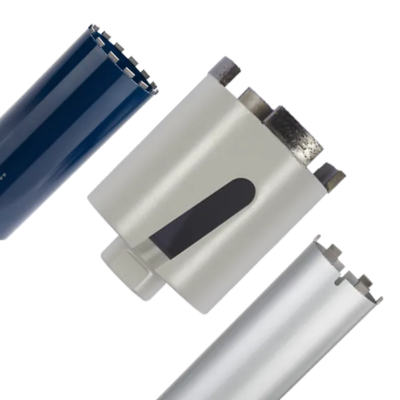
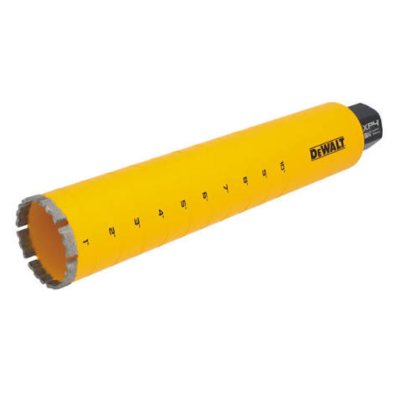
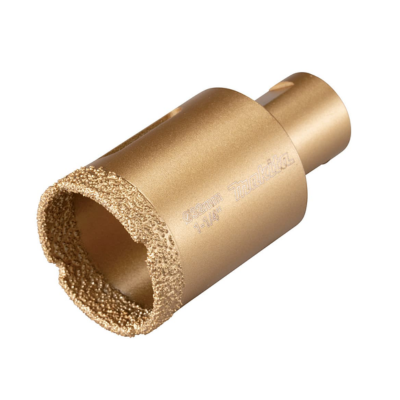
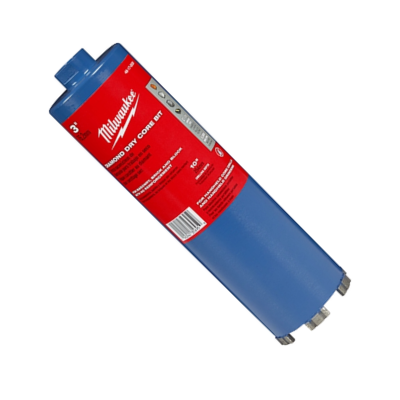


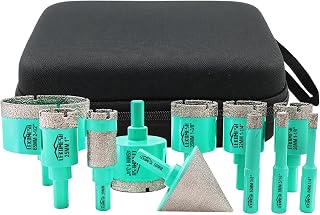
Choosing a diamond core drill bit is not simply a matter of selecting the diameter that looks closest to the hole you need to make. The bit, drilling method, machine, material, cutting depth and cooling or dust-control method all need to work together. A diamond core cutter that performs well in soft brick can be a poor choice for dense concrete, porcelain, engineering brick or reinforced concrete.
For UK buyers, the most useful starting point is to identify the exact application. Think about the material you will drill, the required hole diameter, whether the hole is a one-off or part of regular trade work, whether drilling will be dry or wet, and what type of drill or core-drilling machine you already own. Only then should you compare brands, segment construction, shank systems and price.
The best diamond core drill bit is the one whose construction and specification match the job. A premium bit is not automatically the best purchase if it is designed for a different material or drilling method.
The substrate is one of the most important factors in diamond core drilling. Brickwork can vary considerably in hardness, density and composition. Concrete can range from relatively straightforward aggregate mixes to dense reinforced structures containing steel. Natural stone, porcelain and other hard materials can also require specialised diamond tooling.
This is why simply buying the most expensive core bit available can be a mistake. Diamond tooling is engineered around particular cutting conditions. The diamond concentration, segment design, bond characteristics and cooling requirements can all influence how effectively the bit cuts.
Before buying, establish whether you are drilling through:
If the material is unknown, avoid assuming that a general-purpose masonry bit will handle it safely or efficiently. The manufacturer's stated material compatibility is more useful than a generic description such as “heavy duty” or “professional”.
Diameter is an obvious specification, but it is surprisingly easy to select the wrong size. The required core diameter should be based on the installation and clearance requirements rather than the nominal diameter of the item passing through the hole.
Common applications can include holes for plumbing, waste pipes, ventilation, electrical services, extraction systems, cable routes and other building services. The required opening varies by installation, so check the dimensions specified by the equipment, pipework or building-system manufacturer before choosing a cutter.
Do not automatically assume that a slightly larger hole is better. Oversizing can create unnecessary gaps that may require additional sealing, finishing or making good. Conversely, a hole that is too small can make installation difficult and may force you to enlarge the opening afterwards.
Pipe terminology can be confusing because nominal pipe sizes do not necessarily represent the actual outside diameter of the pipe. Wall construction, insulation, collars, sleeves and required clearance can also affect the final opening.
For that reason, use the actual installation specification when deciding on a core bit size. If the hole is being made for a flue, waste pipe, ventilation duct or service penetration, check the relevant installation instructions rather than relying solely on a remembered “standard” diameter.
Dry and wet diamond core bits are not interchangeable simply because they have the same diameter. The drilling method affects the bit, machine, work area and debris-management strategy.
Dry drilling does not require a continuous water supply at the cutting area. This can make it particularly convenient for certain masonry applications and indoor work where managing water would be impractical.
Dry systems can also be attractive for smaller, occasional jobs because the setup can be simpler. However, dry drilling produces airborne dust unless an effective extraction arrangement is used. The manufacturer's instructions should always be followed regarding suitable materials, drilling technique and dust control.
Dry diamond cores are commonly associated with applications where convenience and controlled dust extraction are more important than continuous water cooling. Some specialist systems are designed specifically to work with extraction equipment.
Wet drilling uses water to cool and lubricate the cutting area while also helping control dust. It can be particularly useful for demanding applications and larger holes where heat management is important.
Wet drilling introduces additional considerations, including water supply, slurry management, electrical safety and protection of surrounding surfaces. Water should never be treated as a substitute for proper equipment selection or safe working practice.
Neither method is universally better. The appropriate choice depends on the material, diameter, depth, location and equipment.
The cutting edge is where much of a diamond core bit's performance is determined. Rather than relying on a conventional solid steel cutting edge, diamond core cutters use industrial diamond incorporated into the cutting structure.
Different manufacturers use different segment geometries, diamond concentrations and bonding approaches. These are intended to balance cutting speed, durability, heat management and the type of material being drilled.
Segmented designs have distinct cutting sections around the circumference. The spaces between segments can assist with debris clearance and cooling, depending on the design and drilling method.
Segment geometry is not merely a cosmetic feature. The dimensions and arrangement of the cutting sections influence how aggressively the bit engages with the substrate and how efficiently material is removed.
Continuous-rim diamond tooling is commonly associated with applications requiring controlled cutting, particularly in some hard and delicate materials. The exact suitability depends on the product specification.
Do not assume that a continuous rim is automatically superior to a segmented design. The two configurations can be intended for different materials and applications.
A diamond tool has to expose fresh cutting particles as the working surface wears. The bond therefore plays an important role in how the tool behaves over its service life.
In practical terms, the important point for buyers is to choose a bit intended for the material rather than attempting to judge quality from diamond quantity alone. A specification that contains more technical detail about intended substrates and operating conditions is generally more useful than marketing language promising extreme durability without explaining the application.
Diamond core products can use different manufacturing approaches. One construction method may be particularly effective for a particular material or application, while another may prioritise cutting speed, segment retention or service life.
Vacuum-brazed diamond tooling, for example, uses a manufacturing process that secures diamond particles to the cutting surface. Sintered and segmented products use different approaches to integrate diamond into the cutting structure.
For the buyer, the practical question is not which manufacturing term sounds most advanced. Instead, check whether the construction is recommended for your substrate and whether the manufacturer specifies the tool for the drilling method you intend to use.
Compatibility is one of the easiest areas in which to make an expensive buying mistake. A core bit can have the correct diameter and still be unusable with your drill.
Core systems may use different thread standards, adaptors and machine interfaces. SDS Plus and SDS Max equipment also have different capabilities and connection systems. Some diamond cutters are designed to connect through an adaptor rather than directly to the drilling machine.
Never force an adaptor, modify a connection or improvise a fitting because the diameter appears correct. The complete drilling system must be compatible, not just the bit.
Sometimes, but this depends on the specific bit, adaptor, drill and application. An SDS drill is not automatically a substitute for a dedicated core-drilling machine.
Some smaller dry diamond core cutters can be used with suitable SDS equipment through an appropriate adaptor when the manufacturer's instructions permit it. The drill generally needs to operate in rotation-only mode for diamond cutting. Hammer action can damage unsuitable diamond tooling and create unnecessary hazards.
For larger diameters, hard materials, deeper holes or repeated professional drilling, a dedicated core-drilling system may be more appropriate. The machine needs to provide suitable torque, speed and control for the cutter being used.
The decision between a dedicated machine and an adaptor-based setup should be based on the workload rather than purchase price alone.
If you only need one or two holes through suitable masonry, buying a complete professional core-drilling system may be unnecessary. Conversely, repeatedly pushing an unsuitable SDS setup beyond its intended application can cost more through damaged bits, equipment and poor results.
Reinforced concrete deserves particular attention because steel reinforcement changes the drilling conditions substantially. A bit selected for ordinary masonry should not be assumed to be suitable for cutting through embedded reinforcement.
If reinforcement is expected, select a diamond core system specifically rated by its manufacturer for the application. Machine capacity, wet cooling, segment specification and operating technique all become more important.
Before drilling into structural concrete, also consider what may be concealed inside the structure. Reinforcement, electrical services, water pipes and other embedded systems can create serious risks if their location is unknown.
Where the drilling is structural, safety-critical or outside your competence, professional assessment and appropriate specialist equipment may be necessary.
There is no single useful lifespan figure for all diamond core bits. Service life depends on the material, diameter, depth, drilling speed, pressure, cooling, machine compatibility, operator technique and bit construction.
A cutter used occasionally in relatively soft masonry can behave very differently from one used repeatedly in dense concrete. A low-cost bit may be perfectly reasonable for a one-off application, while a trade user carrying out repeated core drilling may benefit from a product designed for greater workload and consistency.
Instead of asking only “How long will it last?”, consider the total cost per successful hole. A more expensive bit can represent better value if it produces more usable holes under the conditions for which it was designed. Equally, paying a premium for specifications you do not need may not improve the economics of an occasional DIY job.
Wear should be assessed in the context of the manufacturer's instructions, but several practical changes can indicate that a cutter is no longer performing as expected.
Do not continue using a damaged core bit merely because it still rotates. Inspect the complete tool before use and follow the manufacturer's replacement criteria.
Good maintenance starts before the bit is stored. After drilling, remove accumulated material and allow the tool to dry appropriately for its construction and operating method.
Wet-drilling equipment deserves additional attention because slurry can accumulate around the tool and accessories. Clean the relevant equipment according to the manufacturer's instructions rather than allowing concrete residue to harden around connections.
Heat is one of the most common enemies of diamond tooling. The exact cooling requirements depend on whether the product is designed for dry or wet operation.
Using excessive pressure is not necessarily the fastest way to drill. If the machine and bit are correctly matched, the cutting system should be allowed to work according to the manufacturer's recommended technique.
For wet systems, ensure that the specified water supply and cooling method are maintained. For dry systems, use the recommended drilling technique and dust-extraction arrangement rather than introducing water to a product that is not designed for wet operation.
Dry diamond drilling can generate significant quantities of fine mineral dust. Dust control should therefore be treated as part of the equipment selection rather than an optional extra.
Where the manufacturer provides a compatible extraction or dust-management solution, use it as instructed. Consider the surrounding environment as well: indoor drilling, occupied rooms and finished surfaces require more careful containment than an exposed external wall.
Appropriate respiratory protection and other personal protective equipment should be selected according to the material, risk assessment and applicable UK workplace requirements. Professional users should follow their employer's control measures and relevant site procedures.
Wet drilling can significantly reduce airborne dust, but the resulting slurry needs to be controlled. Water can travel farther than expected through floors, walls and unfinished openings.
Core drilling is a cutting operation involving rotating machinery, abrasive materials, dust, water in some applications and potentially concealed services. A suitable bit does not remove the need for a proper risk assessment.
DIY buyers often have a different priority from professional contractors. If you need to drill a small number of suitable holes, the most economical solution may be a compatible bit and existing equipment rather than a complete professional system.
However, economy should not come from ignoring compatibility or safety. A cheaper bit that is unsuitable for the substrate can quickly become a false economy.
Plumbing applications often involve precise penetrations through masonry for pipework, wastes and associated services. The correct diameter matters because the finished hole needs to accommodate the installation while leaving suitable clearance for sealing and finishing.
Plumbers should also consider whether the wall contains different layers. A penetration may pass through render, brick, block, insulation, cavity space and another masonry layer. The cutter must be capable of completing the required depth without exceeding its intended application.
For repeated trade use, durability, cutting consistency, machine compatibility and availability of replacement sizes can be more important than the lowest purchase price.
Electrical installations can require smaller service penetrations through masonry and other building materials. A compact dry diamond system can be convenient where the application and equipment are suitable.
Dust control is particularly important for indoor electrical work. Before drilling, identify concealed services and establish a safe drilling zone. Do not assume that a small hole presents a small risk.
Builders and general tradespeople may need a broader range of diameters and materials. In this situation, buying individual specialist cutters can be more sensible than choosing a large set containing sizes that are rarely used.
Consider the jobs you perform most often and build a selection around those applications. If several diameters are required regularly, compare the cost and practicality of individual professional-grade cutters with multi-piece sets.
Sets can look attractive because they provide several diameters in one purchase, but a set is not automatically better value.
Before choosing a set, check every included diameter, connection type, intended material and drilling method. A set containing the wrong specifications is less useful than one carefully selected individual cutter.
The distinction between budget and professional tooling should be viewed in terms of workload rather than prestige.
A budget cutter can make sense for an occasional, clearly defined job where the substrate and operating conditions fall comfortably within its specification. Professional tooling becomes more compelling when drilling is frequent, downtime is expensive or consistent performance is important.
When comparing prices, consider the complete cost of ownership. This can include adaptors, pilot accessories where required, extraction equipment, water-management equipment, replacement cutters and the machine itself.
A higher purchase price can be justified when it provides a feature that matters to your workload. Examples include a construction intended for a harder substrate, improved segment retention, a specification suited to repeated drilling or compatibility with an established professional system.
However, “professional” should not be treated as a guarantee of better results in every application. The most expensive cutter can still perform poorly if it is used on the wrong material, with the wrong machine or outside its intended operating method.
Several established tool manufacturers offer diamond drilling accessories or related core-drilling systems. When comparing products from Bosch Professional, DEWALT, Makita, Milwaukee and other specialist manufacturers, look beyond the logo.
Brand reputation can be a useful starting point, but it should not replace specification checking. A reputable manufacturer can produce multiple ranges aimed at very different applications.
A useful comparison should look at more than price and star ratings. Create a shortlist and compare the following specifications side by side:
Customer reviews can provide useful information about packaging, compatibility and general ownership experience, but they should not be used as a substitute for technical specifications. A reviewer drilling soft brick may have a completely different experience from someone cutting reinforced concrete.
Price is only meaningful when the products are comparable. A low-cost masonry cutter is not a direct alternative to a specialist reinforced-concrete bit simply because both have the same diameter.
Measure the actual requirement and check installation documentation. Avoid choosing a size solely because it is commonly associated with a particular trade application.
Always check the thread and adaptor system. A correct diameter is useless if the bit cannot be safely connected to the machine.
Diamond core drilling is generally a rotary cutting operation. Use only the operating mode specified for the particular bit and machine.
Concrete varies considerably. Dense concrete and reinforced concrete can require specialised tooling and machinery.
Excessive pressure can increase heat, reduce control and place unnecessary stress on the equipment. Follow the manufacturer's recommended drilling technique.
Dry drilling needs suitable dust control, while wet drilling needs suitable slurry and water management. Plan these requirements before the cutter starts rotating.
Sets are useful when the sizes are genuinely required. Otherwise, individual cutters may provide a more rational purchase.
A clean hole depends on more than the quality of the diamond. Accurate positioning, suitable machine control, correct pressure, appropriate cooling and a stable drilling setup all contribute.
Start the cut according to the bit and machine manufacturer's instructions. Avoid aggressive side loading and unnecessary movement. Once the cutter has established the cutting path, maintain a controlled feed rather than repeatedly forcing and releasing the tool.
Where the application requires a particularly neat penetration through finished surfaces, take additional care with positioning and surface protection. The final appearance of the hole can be affected by the substrate as well as the cutter.
Some core-drilling systems use a pilot drill to help position the cutter. Others are designed to operate without one or use a different centring method.
Do not automatically purchase a pilot drill simply because one appears in an accessory list. Check the manufacturer's instructions for the particular core system. A pilot accessory that is appropriate for one setup may not be intended for another.
Extensions can be useful where the standard barrel length is insufficient for the required penetration. However, extensions introduce another component into the drilling system and therefore require careful compatibility checking.
Check the extension's connection, permitted use, maximum length and compatibility with the core bit and machine. A longer setup can also affect handling and control, particularly when drilling at awkward angles.
Thick walls require more planning than simply buying a longer core bit. Consider the total wall construction, access from both sides, drilling depth, potential cavities, reinforcement and how the core will be removed.
If the hole is deeper than the cutter's effective capacity, check whether the manufacturer provides a compatible extension or alternative system. Do not improvise by combining incompatible components.
Creating the annular cut is only part of the process. Depending on the application, the central core may remain inside the cutter or wall opening and need to be removed.
Plan core removal before drilling, particularly for large or deep penetrations. A core that is difficult to access can turn a straightforward drilling operation into a more complicated job.
Take care when removing cores from walls, floors or other structures. Heavy cores can cause injury or damage if they fall unexpectedly.
For occasional users, hiring can be worth comparing with purchasing. The calculation should include more than the headline hire rate.
For one-off work, hiring suitable professional equipment can sometimes be more practical than buying a machine and accessories that will spend most of their life in storage. For frequent trade work, ownership can become more attractive because equipment is available whenever it is needed.
If you are comparing several apparently similar diamond core drill bits, prioritise the specifications that directly affect compatibility and application.
Product listings can contain a mixture of useful technical information and broad marketing language. Focus first on measurable specifications.
“Professional”, “heavy duty”, “long life” and similar descriptions are less informative than a clear statement of compatible materials, drilling method, diameter, connection and operating requirements.
When a product description is incomplete, check the manufacturer's technical documentation before buying. This is especially important for reinforced concrete, large-diameter drilling and specialist materials.
Yes, but they should be interpreted carefully. Reviews can highlight practical issues that specifications do not always communicate clearly, such as whether a product arrived with the expected adaptor, how users found the packaging, or whether the stated dimensions matched their expectations.
However, review scores can be misleading when the underlying applications are different. A five-star review from someone drilling a few holes in soft brick does not establish that the same cutter is suitable for continuous reinforced-concrete work.
For commercial investigation, combine customer feedback with manufacturer specifications and compatibility information.
There is no universal winner because different applications demand different characteristics. A useful shortlist can instead be organised by the type of job.
A diamond core drill bit is designed to cut circular holes through suitable hard materials while removing a cylindrical core. Applications can include building-service penetrations for plumbing, electrical work, ventilation and other installations.
They are designed for different levels and types of work. Diamond core cutters can be particularly useful where accurate circular holes are required in suitable masonry, concrete, stone or other hard materials. The appropriate choice depends on the substrate, diameter, depth and equipment.
Some diamond core bits are specifically designed for concrete, but not every diamond core is suitable for every concrete type. Check the manufacturer's stated material compatibility and whether the product is intended for dry or wet drilling.
Some are designed specifically for reinforced concrete. Reinforcement changes the cutting conditions, so use a product and machine explicitly intended for the application rather than assuming a general masonry core will be adequate.
Yes, provided the particular cutter is rated for the type of brick and the chosen drilling method. Brick hardness varies, so check the product specification rather than assuming all brickwork is equivalent.
It depends on the bit, material, machine and working environment. Dry drilling can simplify certain masonry jobs, while wet drilling can provide cooling and dust suppression for appropriate applications. Always follow the manufacturer's instructions.
Some smaller compatible diamond core systems can be used with SDS equipment through an appropriate adaptor and in the correct operating mode. This is not a universal arrangement, so check the bit, adaptor and drill specifications before use.
Some systems use pilot drills while others do not. The requirement depends on the specific cutter and mounting system. Follow the manufacturer's instructions rather than adding a pilot accessory automatically.
Start with the required finished hole diameter specified by the installation. Check the actual outside dimensions and clearance requirements of the pipe, duct, sleeve or service being installed, then choose the appropriate cutter.
Possible causes include an unsuitable bit, incorrect material compatibility, excessive or insufficient pressure, poor cooling, an unsuitable machine, worn cutting segments or operating outside the manufacturer's recommended conditions. Check the complete system rather than assuming the bit alone is defective.
Overheating can occur when cooling is inadequate, the tool is being forced, the operating conditions are unsuitable or the cutter is being used outside its intended application. For wet systems, check the cooling arrangement; for dry systems, follow the specified dry-drilling technique.
Use the correct cutter for the substrate, position the machine carefully, maintain controlled pressure and follow the recommended operating procedure. Dust or slurry management and machine stability can also affect the quality of the finished penetration.
They can be, particularly for frequent use or demanding materials, but price alone does not determine suitability. Compare the actual specifications, intended substrate, drilling method, expected workload and total cost per usable hole.
Well-known manufacturers with diamond drilling or related accessory ranges include Bosch Professional, DEWALT, Makita and Milwaukee, alongside specialist diamond-tool manufacturers. The best choice depends on the individual product specification rather than brand name alone.
Buy individually if you only need a few specific diameters or require different specifications for different materials. A set can make sense when you regularly use several of the included sizes and all of them meet your application requirements.
Clean the tool appropriately after use, inspect it for damage and store it where the cutting edge and connection will not be struck or damaged. Follow the manufacturer's storage instructions for the specific product.
Replace it when its cutting performance, structural condition or connection no longer meets the manufacturer's requirements. Visible damage, abnormal wear or unsafe operation should not be ignored simply because the cutter can still rotate.
The strongest buying decision comes from matching the entire drilling system to the job. Start with the substrate and required hole size, then determine whether dry or wet drilling is appropriate. From there, check the machine, connection, working depth and cutting construction before comparing brands and prices.
For occasional work, avoid paying for capabilities you will never use. For frequent professional drilling, prioritise consistent performance, appropriate durability, machine compatibility and the availability of the sizes and accessories you actually need.
When comparing products from brands such as Bosch Professional, DEWALT, Makita and Milwaukee, read the individual technical specification rather than relying on brand reputation alone. Product ranges can contain cutters intended for very different materials and drilling methods.
Most importantly, do not treat a diamond core bit as an isolated accessory. The bit, machine, adaptor, substrate, drilling method, cooling or extraction system and operator technique all contribute to the result. A carefully matched, correctly operated system is generally a better investment than simply choosing the most expensive or highest-rated cutter.