

♥ Wishlist
Compare 40 verified Metabo Drill Bit Sets products in United Kingdom. Reviews, ratings, pros, cons and buying advice updated for October 2026.


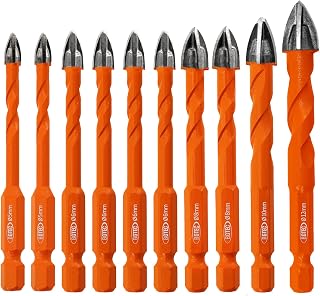


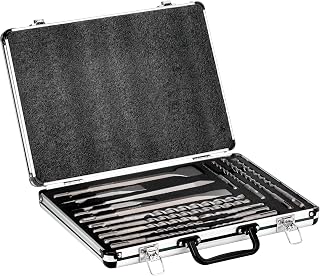


Choosing a Metabo drill bit set is not simply a matter of counting how many bits are included in the case. The more useful question is whether the set contains the right bit types, sizes, materials and shank designs for the work you actually carry out. A compact set of high-quality bits can be more useful than a much larger assortment containing sizes or bit types that rarely leave the case.
Metabo produces drilling accessories for a broad range of applications, including metalworking, woodworking, masonry and general workshop use. When comparing Metabo drill bit sets, pay particular attention to the material being drilled, the drill or driver being used, the expected frequency of use and whether the set needs to cover occasional household jobs or regular professional work.
The best set for one user may be the wrong choice for another. A tradesperson working with steel has different requirements from a DIY user mainly drilling timber, plasterboard and brick. Before comparing individual sets, assess the following factors.
The material from which a drill bit is made has a direct relationship with the work it is designed to perform. This is one of the most important specifications to understand when comparing drill bit sets.
High-speed steel, commonly abbreviated to HSS, is widely used for drilling metals and is also suitable for various general workshop applications. HSS bits are available in different grades and manufacturing qualities, so simply seeing “HSS” on a specification sheet does not tell you everything about a bit's expected performance.
HSS bits can also differ in how they are manufactured. Rolled or standard HSS construction and ground HSS construction should not automatically be considered equivalent. Grinding can allow more precise flute and cutting-edge geometry, while the exact performance depends on the particular bit design and intended application.
Some drill bit sets use designations such as HSS-R and HSS-G. These terms can be useful when comparing specifications, but they should be considered alongside the complete product description rather than used as the only measure of quality.
HSS-R generally refers to rolled HSS construction, whereas HSS-G commonly identifies ground HSS bits. For users drilling metal regularly, understanding this distinction can make a specification comparison more meaningful.
Cobalt-alloy HSS drill bits are designed for demanding metal-drilling applications where greater heat resistance can be useful. They are often considered when drilling harder or more difficult metals, particularly where ordinary general-purpose HSS bits may not be the most appropriate option.
They are not automatically the best choice for every job. Cobalt bits can be less forgiving of poor technique, and correct speed, pressure, lubrication and workpiece preparation remain important.
Masonry drilling requires a different cutting arrangement from drilling ordinary metal or timber. Masonry bits typically use a hard cutting tip designed to work against materials such as brick, block and some forms of concrete.
A masonry bit should therefore not be substituted for an HSS metal bit simply because both have a similar diameter. Likewise, an ordinary masonry bit is not a replacement for an SDS-plus bit when a rotary hammer and SDS tooling are required for heavier concrete drilling.
Two bits with the same diameter and material can behave differently because their geometry is different. For commercial buyers and frequent DIY users, geometry deserves more attention than it usually receives in basic buying guides.
A large drill bit set can look attractive because it appears to offer greater value, but the useful measure is coverage of the sizes you actually need. A set containing several rarely used sizes may provide less practical value than a smaller assortment covering the most frequently required diameters.
For general household and workshop work, compare the common metric sizes included in the set and check whether there are useful increments between them. If you regularly create pilot holes, clearance holes or fixing holes, consider the sizes required by the screws, wall plugs and fasteners you normally use.
For professional users, the size range should be assessed against the specifications of the fixings and materials encountered during normal work. If one or two sizes are used repeatedly, their availability as replacement individual bits can also be more important than the total number of pieces in the original case.
Metric sizing is particularly important when buying drill bits in the UK. Before ordering a set, check that the stated dimensions are metric and that the range matches the requirements of the fixings and materials you commonly use.
Do not assume that a visually similar imperial size is an adequate substitute for a metric bit. Small differences in diameter can matter when drilling accurately sized holes, particularly for mechanical work, dowelling, threaded holes and certain fixing systems.
The shank is the part of the bit held by the drill, chuck or tool holder. Matching the shank to the tool is essential.
Traditional round-shank drill bits are widely used with keyed and keyless drill chucks. They are a common choice for general-purpose drilling and are available across many different bit materials and sizes.
Hex-shank bits are particularly useful where quick bit changes are desirable or where the tool is designed around a hexagonal holder. They are frequently associated with drill drivers and impact-compatible accessories, although the exact compatibility must always be checked against the tool and accessory specifications.
A common buying mistake is assuming that every hex-shank bit is automatically suitable for impact driving. Check the manufacturer's stated compatibility rather than relying solely on the appearance of the shank.
SDS-plus is a specialised shank system commonly associated with rotary hammers and masonry drilling. SDS-plus accessories are not simply alternative versions of ordinary round-shank masonry bits; they are intended for compatible SDS tool holders.
If a set is advertised as an SDS set, confirm the exact SDS format before buying. SDS-plus, SDS-max and other systems are not interchangeable simply because they share the SDS name.
Metal drilling places greater demands on cutting geometry, heat management and technique than many light DIY applications. When comparing Metabo sets for metalworking, look at the stated material, manufacturing method and intended application.
For ordinary mild steel and general workshop drilling, a suitable HSS set may provide the versatility required. More demanding materials can call for a specialised grade or coating. The correct drilling speed also becomes increasingly important as bit diameter increases.
When drilling metal, avoid treating pressure as a substitute for the correct cutting speed. Excessive speed can generate heat rapidly, while excessive force can damage the cutting edges or workpiece. Appropriate cutting fluid or lubricant may also be required depending on the material and application.
Woodworking calls for different priorities from metal drilling. Depending on the required hole, users may need standard twist drills, brad-point bits, flat bits, auger bits or specialised woodworking accessories.
A general-purpose drill bit can make holes in timber, but it may not produce the same clean entry, positioning or chip removal as a bit specifically designed for woodworking. If appearance and hole accuracy matter, choosing the correct woodworking bit can be more important than choosing a larger general-purpose set.
For clean holes through finished timber, support the exit side of the workpiece where appropriate and select a bit designed for the required hole diameter and depth.
Masonry drilling requires an accessory designed for abrasive mineral materials. Brick, block and concrete are not interchangeable materials, and the appropriate drilling method can vary significantly between them.
For lighter masonry work, conventional masonry bits may be sufficient. Harder concrete and heavier drilling tasks may require a compatible rotary hammer and SDS-plus or another suitable masonry system.
Always check whether a particular bit is intended for rotary drilling only or for use with hammer action. Using an accessory outside its specified application can reduce performance and may damage the bit.
Cordless drills are versatile, but their performance depends on matching the accessory to the tool. Before selecting a set, consider the drill's chuck capacity, maximum recommended bit diameter and operating modes.
A compact cordless drill may be perfectly suitable for small pilot holes but unsuitable for sustained heavy masonry drilling. Buying a more extensive bit set does not change the fundamental capabilities of the power tool.
Impact drivers require particular care when selecting accessories. Standard round-shank drill bits are not automatically suitable for an impact driver simply because an adaptor exists.
Look for accessories specifically identified by the manufacturer as compatible with impact applications where relevant. The shank design, bit construction and intended loading all matter.
For routine drilling where maximum control is required, a conventional drill or drill driver may remain the more appropriate tool. Impact drivers are particularly useful where their high torque and quick-change system provide a genuine advantage.
When comparing several Metabo drill bit sets, create a simple specification checklist rather than relying on product photographs alone.
A 50-piece set is not necessarily a better purchase than a 19-piece set. If many of the additional pieces are accessories you rarely use, the headline piece count can be misleading.
Twist drills, masonry bits and woodworking bits have different purposes. A universal approach can lead to poor hole quality, excessive wear and premature damage.
Before purchasing a large-diameter set, check whether the drill can actually accept the largest shank supplied. This is particularly important with compact cordless drills.
Premium specifications only provide an advantage when they address the demands of the application. A highly specialised metalworking bit can be unnecessary for occasional softwood drilling.
Drill bits are consumable accessories. Frequent users should consider the long-term cost of replacing heavily used sizes, not just the purchase price of the initial set.
A poorly organised case makes it easier to lose bits and harder to identify the correct diameter. A well-labelled storage system can save time during repeated jobs.
Metabo should be compared with other established accessory manufacturers according to specifications and intended use rather than brand name alone. Bosch, Makita, DeWalt, Milwaukee and Irwin all offer drilling accessories across different application categories, while specialist industrial manufacturers may focus more heavily on particular materials or professional machining applications.
The most useful comparison is therefore bit-to-bit rather than brand-to-brand. Check the material, geometry, manufacturing method, size range and intended application of each set. A specialist set from one manufacturer may be a better fit for a particular job than a larger general-purpose set from another.
When comparing Metabo and Bosch, start by identifying the exact accessory range rather than assuming that all drill bits under either brand have identical specifications. Both manufacturers offer products for different drilling applications, so the relevant comparison is between equivalent product categories.
For example, compare HSS metal-drilling sets with other HSS metal-drilling sets, and masonry accessories with equivalent masonry accessories. Examine the published dimensions, bit material, shank design and application guidance before making a decision.
Makita is another established power-tool and accessory brand worth considering when comparing drill bit sets. As with Bosch, the specific product specification matters more than the logo on the case.
Users who already own Makita or Metabo tools may also find it useful to standardise their accessory storage and purchasing around the system that best matches their existing equipment. However, brand loyalty should not replace checking compatibility and application requirements.
DeWalt and Milwaukee both have extensive accessory ranges, including products aimed at demanding trade applications. When comparing them with Metabo, pay particular attention to whether the bits are designed for standard drilling, impact use, masonry drilling or specialist metalworking.
For professional users, durability-related specifications, replacement availability and the suitability of the bit range for common jobs may matter more than the number of pieces in the case.
For general DIY, prioritise versatility without buying an unnecessarily specialised assortment. A useful set should cover the common sizes and materials encountered around the home.
Someone who mainly hangs shelves and assembles furniture may have little need for an extensive industrial metalworking assortment. Conversely, someone maintaining machinery or fabricating metalwork should place much greater emphasis on HSS specifications and metal-drilling capability.
Professional users should consider workflow as well as technical specifications. A good accessory set should reduce interruptions rather than simply provide a broad selection of diameters.
Think about the materials drilled most frequently, the sizes used most often, the type of power tools available and the expected drilling volume. If a small number of sizes are used constantly, buying a set that contains several replacements or maintaining spare individual bits may be more practical than relying on one bit of each size.
For engineering and fabrication applications, the workpiece material should be treated as a primary selection criterion. Stainless steel, hardened steel, aluminium and mild steel do not necessarily require identical drilling approaches.
Correct drill speed is one of the most overlooked factors in drill bit performance. The ideal rotational speed depends on the bit diameter, material and bit construction.
As a general principle, larger drill bits normally need to run at lower rotational speeds than smaller bits when drilling the same material. The objective is to maintain an appropriate cutting speed without generating unnecessary heat.
Feed pressure should also be controlled. Too little pressure can cause rubbing rather than efficient cutting, while excessive pressure can overload the bit and tool. Follow the manufacturer's application guidance wherever available.
Heat is a major contributor to drill bit wear, particularly when drilling metal. A bit that becomes excessively hot can lose cutting performance and suffer damage to its cutting edges or material properties.
Appropriate speed, controlled feed pressure, suitable lubrication and regular clearing of swarf can all contribute to better drilling conditions. The precise approach depends on the workpiece material and the manufacturer's recommendations for the particular bit.
Even good-quality drill bits benefit from proper handling. Basic maintenance can extend useful service life and make it easier to recognise when a bit should be replaced.
A drill bit may be approaching the end of its useful life when it takes noticeably longer to cut, requires unusual pressure, produces excessive heat, wanders during drilling or leaves a noticeably poorer hole finish.
Visible damage is another clear warning sign. Chipped cutting edges, severe wear, bent shafts and damaged tips should not be ignored. Continuing to use a damaged accessory can produce poor results and place additional load on the drill.
Good organisation is particularly valuable when a set contains many similar-looking bits. Always return each bit to its designated position where possible. Clear size markings reduce the temptation to estimate diameter visually.
For workshop users, keeping frequently used sizes readily accessible can also reduce tool-change time. Separate storage for metal, masonry and woodworking accessories helps prevent accidental cross-use.
The storage case is more important than it may initially appear. A useful case should hold each accessory securely, make sizes easy to identify and allow bits to be removed without damaging neighbouring cutting edges.
Consider the case's portability if the set will be carried between jobs. For workshop use, easy access and clear identification may be more important than compactness. For mobile tradespeople, secure retention and resistance to everyday handling can be higher priorities.
For general-purpose use, the strongest option is usually the set that provides a sensible combination of common sizes, useful bit types and compatibility with the user's drill. There is little benefit in paying for specialist accessories that will rarely be used.
Compare the actual contents of each Metabo set carefully. A set aimed at metal drilling should not be judged by the same criteria as a mixed set containing masonry and woodworking accessories.
For metalworking, prioritise the HSS specification, geometry, size range and suitability for the metals being drilled. If the work involves demanding alloys or frequent production drilling, investigate whether a cobalt-alloy or other specialist construction is more appropriate.
Also consider drilling technique. Even a high-quality metal bit can wear quickly if it is operated at an unsuitable speed or used without appropriate heat management.
For brick and blockwork, choose accessories specifically designed for masonry. For heavier concrete work, check whether an SDS-plus-compatible solution is more suitable than conventional masonry bits.
The correct power tool is equally important. A standard cordless drill and a rotary hammer are designed for different levels of masonry work, so accessory selection should always be considered alongside tool capability.
A mixed-material set can be convenient for homeowners who carry out varied tasks. However, check precisely what “mixed” means. Some sets combine drill bits with screwdriver bits, sockets or other accessories, which increases the total piece count without necessarily increasing the number of drilling options.
If drilling versatility is the priority, compare the number and type of actual drill bits rather than the headline number of accessories.
Customer reviews can provide useful information, but they should not replace specification checking. When reading reviews for a drill bit set, look for comments that describe the actual material drilled, the tool used and the particular bit size involved.
Reviews are more informative when the reviewer explains the application. A comment about drilling softwood is not strong evidence of performance in stainless steel, while a review concerning masonry drilling may not be relevant to a metalworking set.
Pay attention to recurring themes rather than isolated statements. Also distinguish comments about delivery or packaging from comments about the technical performance of the drill bits themselves.
When checking current prices, compare equivalent sets rather than relying on the headline discount or piece count. A smaller professional-grade set can have a different value proposition from a large general-purpose assortment.
Consider the cost of replacement bits, the frequency with which individual sizes are used and whether unused accessories are adding to the apparent value of the package. Prices and retailer availability can change, so check current retailer information before purchasing.
The distinction between professional and DIY use is not simply about budget. Professional users often place greater emphasis on repeatability, productivity, material-specific performance and replacement availability, whereas occasional users may value versatility, convenience and storage.
A DIY user who drills only a few holes each month may reasonably choose a versatile general-purpose set. A tradesperson drilling dozens or hundreds of holes may benefit more from a carefully selected range of high-use bits and appropriate specialist accessories.
Use the drill, accessory and workpiece in accordance with the manufacturer's instructions. Secure loose workpieces before drilling, use appropriate eye protection and keep hands away from the cutting area.
Do not touch a recently used metal drill bit immediately after drilling because it may be extremely hot. Allow appropriate cooling time and take care when removing swarf. Do not attempt to clear rotating swarf with your hands.
Where the material, tool or accessory requires additional protective equipment or specific operating procedures, follow the relevant manufacturer and workplace guidance.
Yes, depending on the particular set. Metabo offers drilling accessories for different applications, so choose a set according to the materials and hole sizes required rather than assuming every Metabo set is designed for general DIY.
Look for a Metabo set specifically designed for metal drilling, paying attention to the HSS grade or other stated material, manufacturing method, geometry and recommended applications. More demanding metals may require specialised drill bit constructions.
Usually, compatibility depends on the bit shank and the drill's chuck or holder rather than the brands being identical. Check the shank dimensions and the tool manufacturer's compatibility information before use.
Suitable HSS drill bits can be used for many steel-drilling applications, but the correct specification depends on the particular steel and drilling conditions. Speed, feed pressure and heat management are also important.
HSS-R generally refers to rolled HSS construction, while HSS-G commonly refers to ground HSS construction. Ground construction can provide different geometry and cutting characteristics, but the complete specification should be considered rather than using the designation alone.
In most cases, using a bit designed for the material gives better results. Woodworking bits and metal-drilling bits have different geometries and cutting characteristics, so a specialist bit is preferable when hole quality or productivity matters.
Some masonry bits are suitable for certain concrete applications, but the appropriate accessory depends on the concrete, drilling method and tool. Hard or demanding concrete work may require SDS-plus or another rotary-hammer-compatible system.
No. A larger set is only more useful if its additional sizes or accessories match your requirements. Compare the actual drilling contents, material specifications and useful diameter range rather than the total piece count alone.
Keep them clean and dry, protect the cutting edges and use the supplied case or another organised storage system. Returning each bit to its labelled position also makes it easier to identify the correct size and reduces accidental damage.
Consider replacement when the cutting edge is visibly damaged, drilling becomes unusually slow, excessive heat is produced, the bit wanders or considerably more pressure is required to achieve the same result. Damaged bits should not be forced through the workpiece.
There is no universal winner across every application. Compare equivalent products by bit material, geometry, size range, shank design, intended material and current price. The best choice is the accessory that most closely matches the work you actually perform.
An informed comparison should look beyond ratings and piece counts. The most useful criteria are application suitability, material construction, bit geometry, size coverage, tool compatibility, storage and long-term practicality.
For anyone comparing the best Metabo drill bit sets in the UK, the final decision should therefore be based on the precise specification of the set rather than the brand name or promotional headline. Always check the manufacturer's current specifications and retailer information before buying, as product contents, pricing and availability can change.
Whether the priority is everyday DIY, woodworking, metalworking, masonry or professional workshop use, matching the bit to the material and tool is the single most important buying decision. Once that is established, size range, construction quality, storage and replacement options provide the detail needed to distinguish between otherwise similar drill bit sets.