

♥ Wishlist
Compare 27 verified Bit Sets for DIY, Drilling & Professional Jobs products in United Kingdom. Reviews, ratings, pros, cons and buying advice updated for October 2026.
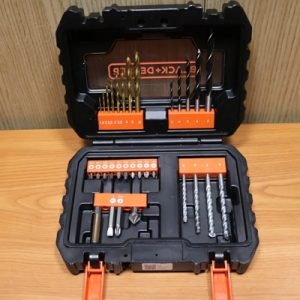
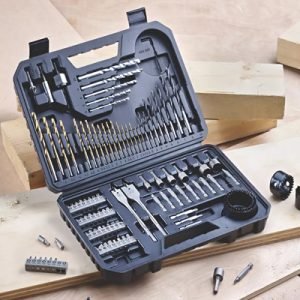
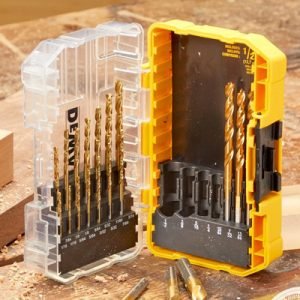
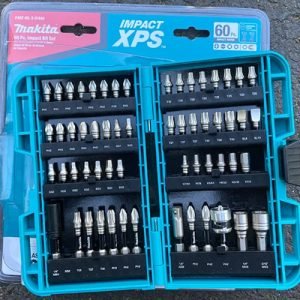
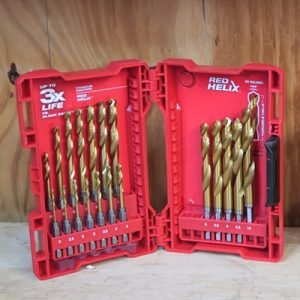


The best bit set is not necessarily the one containing the greatest number of pieces. A useful set should match the fasteners you actually encounter, provide the right bit types and sizes, and offer a holder or case that makes the contents easy to identify. For occasional DIY work, a compact set can be more practical than a large professional assortment. For furniture assembly, workshop use, construction or regular maintenance, a broader selection and tougher bit construction can make a noticeable difference.
When comparing bit sets, look beyond the headline piece count. A 100-piece kit can include holders, sockets, adapters and duplicate sizes, while a smaller set may concentrate on the most useful screwdriver profiles. The meaningful comparison is therefore the number of genuinely useful bits, their sizes, their construction, their compatibility with your tools and the quality of the storage system.
Think about the screws and fixings you regularly work with before choosing a set. Phillips, Pozidriv, Torx, slotted and hex profiles are all common, but their relative importance varies considerably between jobs. UK DIY users may encounter Pozidriv frequently in general household work, while Torx is particularly useful for many modern appliances, vehicles, power tools, outdoor products and engineered fixings.
Bit durability depends on more than the name of the steel alone. Manufacturing quality, heat treatment, dimensional accuracy and the intended application all influence how well a bit performs. Bits designed for high-torque impact applications need to tolerate repeated shock loads differently from conventional screwdriver bits.
Common descriptions such as hardened steel, S2 steel and impact-rated construction can be useful indicators, but they should not be treated as interchangeable guarantees of quality. The specification should be considered alongside the type of bit, the tool with which it is intended to be used and the manufacturer's stated application.
This distinction is important when choosing a set for a cordless impact driver. Conventional bits are designed for rotary driving applications and are not automatically suitable for repeated impact loading. Impact-rated bits are engineered for the stresses generated by impact drivers and typically use construction intended to absorb those forces.
If an impact driver is part of your toolkit, look specifically for a set whose manufacturer states that the bits are suitable for impact applications. Do not assume that a bit is impact compatible simply because it fits the tool's hex chuck.
Standard-length bits are convenient for general work and usually provide a good balance between access and control. Longer bits can reach recessed screws and awkward locations, while short bits can be useful where clearance is limited.
A comprehensive kit may therefore benefit from several lengths rather than treating one length as suitable for every task. Extension holders can increase reach, but they are not always a substitute for a correctly sized long bit when access is particularly restricted.
A correctly formed tip should seat properly in the screw recess. Poor dimensional accuracy can lead to excessive movement, slipping and damage to either the fastener or the bit. This is especially important with profiles such as Torx, Pozidriv and security bits, where using the correct size is central to maintaining a secure fit.
A magnetic holder can make everyday driving more convenient by helping to retain the bit and, depending on the design, assisting with screw placement. However, magnetism does not compensate for a poor bit-to-screw fit. The correct profile and size remain the primary considerations.
If you frequently switch between bits, a quick-change compatible holder can save time. Check the interface used by your drill, driver or ratchet and make sure the supplied accessories are compatible. Some sets include adapters or holders that increase versatility, but these should be regarded as useful accessories rather than extra screwdriver bits when comparing overall value.
One of the most common DIY mistakes is treating Phillips and Pozidriv bits as interchangeable. Although the profiles can look similar at a glance, they are designed differently. Using the wrong type can produce a poor fit and increase the risk of damaging the screw head.
If you regularly work with timber screws in the UK, having a useful selection of correctly sized Pozidriv bits can be more valuable than simply buying a set with a very high piece count.
Torx bits are identified by T sizes, with smaller and larger sizes serving different applications. A set containing a sensible spread of sizes is generally more useful than one containing several duplicates of only the most common size.
For specialist maintenance, check whether the kit also includes security Torx bits. These have a central recess arrangement that requires a compatible bit and cannot be substituted with an ordinary Torx bit in applications where the fastener incorporates a security pin.
Hexagonal profiles are commonly used with socket-head fasteners. They can be particularly useful for furniture, machinery, bicycles, workshop equipment and general maintenance. As with other profiles, matching the exact size is important to minimise movement between the bit and fastener.
Slotted bits remain useful despite the popularity of newer screw profiles. Their simplicity makes them relevant to traditional fixings and certain maintenance tasks. A good general-purpose set should normally include useful slotted sizes without allowing them to dominate the assortment.
Piece count is one of the easiest specifications to compare and one of the least useful when viewed in isolation. Before deciding between a compact set and a large kit, establish what the advertised number actually includes.
A compact set can be an excellent choice for basic household maintenance, furniture assembly and occasional DIY. Fewer pieces can also make storage simpler and reduce the time spent searching through a case for a commonly used bit.
A medium assortment often offers a practical balance between coverage and portability. This type of set can be appropriate for general DIY users who want several screwdriver profiles, multiple sizes and a few useful accessories without carrying a large specialist kit.
Larger sets become more useful when your work is varied. They may include specialist profiles, security bits, socket accessories, extensions and multiple sizes. The trade-off is that the case can become bulkier, and a large number of rarely used pieces does not necessarily provide better value.
Regular users should place greater emphasis on consistency, durability and replacement practicality than on the total number of pieces. A professional-oriented kit should be judged by whether the bits are suited to the torque and frequency of the work involved.
Not every bit set is equally appropriate for every power tool. A cordless drill can be used with conventional driving bits for many applications, whereas an impact driver places different mechanical stresses on the bit.
When comparing sets for a cordless drill, consider the chuck or holder compatibility, bit length, tip accuracy and the range of profiles. For an impact driver, prioritise products explicitly intended for impact use and consider whether the kit includes a suitable impact-rated holder.
Brands such as Bosch, DeWalt, Makita, Milwaukee, Wera and Wiha offer ranges covering different driving applications, but the brand name alone should not determine the purchase. Compare the specific set's contents and stated application rather than assuming that every product within a manufacturer's range has identical characteristics.
A well-designed case can make a modest bit collection much easier to use. Look for clear size markings, secure retention and a layout that lets you remove individual bits without disturbing the rest of the kit.
Cases designed for workshop drawers may prioritise compactness, whereas portable kits may use a more protective hinged case. If the set will be transported regularly, check how securely the bits are held when the case is moved or turned upside down.
Small screwdriver bits can look remarkably similar, especially when stored together. Permanently marked positions or clearly printed labels can reduce selection errors and speed up repetitive work.
Cases sometimes contain holders, adapters, countersinks, sockets and other accessories alongside the actual driving bits. These can be useful, but they should be counted separately when comparing the depth of two sets.
A large number of pieces does not automatically mean better coverage. Examine the actual profiles and sizes before comparing the headline quantity.
The cheapest set can appear attractive for occasional work, but a frequently used bit that rounds quickly may provide poor long-term value. Conversely, buying a premium professional assortment for a handful of household jobs may be unnecessary.
Using conventional bits in applications involving repeated impact loading can lead to premature failure. Match the bit construction to the tool and job.
A bit that appears to fit is not necessarily the correct bit. This is particularly relevant when confusing Phillips and Pozidriv fasteners.
A set may contain several different profiles but still have gaps in the sizes you actually need. Check the detailed contents rather than relying on photographs or marketing descriptions.
Bits are consumable components in demanding applications. If you use one or two sizes heavily, the ability to replace individual pieces can be more useful than owning a very large assortment.
A straightforward comparison process can prevent most unsuitable purchases. Start with the work you intend to perform, then narrow the choice according to compatibility, coverage and durability.
Manufacturers use several material descriptions when specifying screwdriver bits. Understanding the terminology helps separate genuinely relevant information from specifications that sound impressive but do not answer the main buying question.
S2 tool steel is commonly used for screwdriver bits and other tooling components. Its presence can be a useful indication of the intended material class, but the steel designation should not be treated as a complete measure of product quality. Heat treatment, geometry and manufacturing tolerances also matter.
Chrome vanadium steel is widely used for tools and accessories. It can be appropriate for many general-purpose applications, although the suitability of a particular bit still depends on its construction and intended use.
Some bits use surface treatments or coatings intended to influence wear resistance, corrosion resistance or friction. These features can be useful, but a coating does not automatically make a bit suitable for high-torque or impact applications.
A bit should be treated as a wear component rather than an item that must last indefinitely. Inspect frequently used bits for rounding, deformation, chipped edges and a visibly compromised driving profile.
If a bit repeatedly slips despite using the correct size and applying appropriate pressure, inspect both the bit and the screw. Continuing to use a damaged bit can increase the chance of damaging fasteners and making subsequent removal more difficult.
Even high-quality bits can wear prematurely if they are used incorrectly. Select the exact profile and size, keep the driver aligned with the fastener and apply controlled pressure rather than relying solely on high rotational speed.
For stubborn fasteners, avoid forcing a marginally fitting bit into the screw head. Check whether the fastener requires a different profile, size or security variant before increasing torque.
For power-tool use, select an appropriate speed and torque setting for the material and fixing. The objective is controlled driving rather than maximum available power.
Prioritise the profiles and sizes most commonly found in household jobs. A compact general-purpose kit can be preferable to a large professional assortment if the majority of the contents would rarely be used.
Look for a practical selection of hex, Phillips, Pozidriv and Torx profiles, depending on the furniture and fixings involved. A magnetic holder and compact case can be particularly convenient when working in confined spaces.
Focus on the screwdriver profiles and sizes used by the screws you install most often. Durability becomes increasingly important if the same sizes are used repeatedly with a drill or driver.
A broader selection can be worthwhile because maintenance work may involve unfamiliar fasteners. Consider security profiles, longer bits, extensions and adapters if your equipment requires them.
Choose a set explicitly designed for impact applications. The ability to tolerate repeated impact loading should take precedence over an inflated piece count.
Established tool manufacturers can provide useful ranges across different price and performance categories. Bosch, DeWalt, Makita and Milwaukee are familiar names across power-tool and accessory markets, while Wera and Wiha are also well known for screwdriver and hand-tool products.
However, comparing brands at a general level can be misleading because each manufacturer may offer multiple bit ranges with different constructions and intended applications. When evaluating a specific product, compare its bit profiles, sizes, material description, impact suitability, accessories, storage and stated application rather than choosing solely on the reputation of the manufacturer.
The best general-purpose bit set is one that covers the profiles and sizes you are most likely to encounter while remaining compatible with your tools. For many household users, a balanced assortment of common Phillips, Pozidriv, Torx, slotted and hex bits can be more useful than a very large specialist kit.
They can be worthwhile for frequent users because durability, consistency and appropriate construction become more important as usage increases. For occasional DIY, a well-specified mid-range set may provide better value than paying for professional-level features that will rarely be used.
No. Bits differ by profile, size, length and construction. The shank may fit a compatible holder while the working end remains unsuitable for a particular fastener. Always match the bit to both the tool and the screw.
Do not assume that they can. Impact drivers subject bits to repeated shock loading. Use bits that the manufacturer specifically identifies as suitable for impact applications.
Neither is universally better because they are different screw profiles designed for different fasteners. The correct choice is determined by the screw head. Using the correct matching bit is more important than choosing one profile as a universal replacement for the other.
Torx bits are increasingly useful for general maintenance because Torx fasteners are used across a wide range of products and equipment. If your work involves appliances, machinery, vehicles, power tools or modern manufactured products, a useful Torx size range can add considerable versatility.
No. A larger assortment is only better when the additional profiles, sizes and accessories are relevant to your work. A smaller set containing the right bits can be more convenient, easier to store and better value.
Look for explicit impact suitability, appropriate construction, a useful range of sizes and profiles, secure bit retention and compatibility with your impact driver. For regular high-torque work, durability and replacement practicality are particularly important.
Keep them in a dry environment and preferably in a case that prevents the pieces from becoming mixed together. Clear size identification makes it easier to select the correct bit and reduces unnecessary handling of the contents.
There is no universal replacement interval. Frequency depends on the material, workload, torque, screw type and quality of the bit. Replace individual pieces when the working profile becomes damaged, rounded or otherwise unreliable rather than replacing an entire set unnecessarily.
The strongest bit-set purchase is the one that matches the work rather than the marketing headline. Compare the exact contents, profiles, sizes, materials, impact suitability, bit lengths and storage system before making a decision.
For occasional household jobs, concentrate on useful coverage and straightforward storage. For frequent DIY or woodworking, put greater emphasis on durability and the sizes you use repeatedly. For professional or demanding applications, match the bit construction to the driver and workload, particularly where impact tools are involved.
Before buying, compare the current specifications of the shortlisted sets, check verified customer feedback for recurring practical issues and review the latest retailer information for today's price and availability. A careful comparison of the actual contents is usually more informative than choosing the set with the biggest piece count or the most familiar brand name.