

♥ Wishlist
Compare 25 verified Bosch Drill Bit Sets products in United Kingdom. Reviews, ratings, pros, cons and buying advice updated for October 2026.
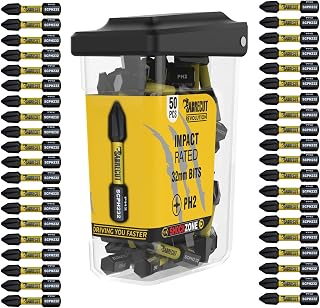


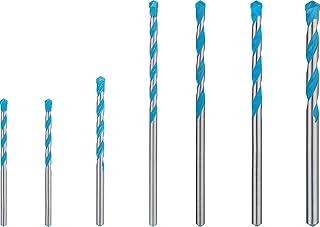


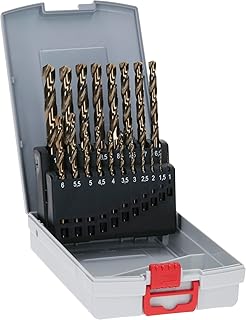


A Bosch drill bit set can be a practical choice when you want several drill sizes and bit types in one organised kit, but the right set depends heavily on the materials you intend to drill. A compact set for occasional household jobs is not necessarily the best choice for renovation work, while a larger multi-material assortment can contain bits you rarely use.
Before comparing individual Bosch sets, consider the three things that have the greatest effect on suitability: material compatibility, drill compatibility and the range of sizes supplied. These factors are usually more important than simply choosing the set with the largest number of pieces.
Drill bits are designed around particular materials and cutting requirements. A bit that performs well in timber may be unsuitable for masonry, while a masonry bit should not automatically be treated as a substitute for a metal-cutting bit.
Bosch is not a single drill-bit design. Its range includes different bit constructions and product families intended for different applications. This matters when comparing a small Bosch set with a larger one because two kits containing a similar number of pieces can be aimed at very different users.
Look beyond the Bosch name and identify the actual bit family, material, geometry and intended application. The product description should tell you whether the set is primarily for wood, metal, masonry or mixed-material drilling.
HSS, or high-speed steel, is widely used for drill bits intended for metalworking. Bosch HSS options can be found in different geometries and coatings, with the choice affecting cutting behaviour, durability and suitability for particular applications.
For general DIY metal drilling, a useful set should provide a sensible progression of common diameters rather than an unnecessarily large selection of rarely used sizes. When drilling metal, speed control, lubrication where appropriate, secure workholding and correct pressure are also important.
Masonry bits typically have a cutting tip designed for mineral-based materials. They are commonly used for brick, block and masonry applications, but their suitability varies according to the material and drilling method.
A key buying mistake is assuming that every masonry bit is intended for heavy-duty concrete drilling. If your projects regularly involve hard concrete, reinforced material or substantial fixing holes, investigate the specific bit technology and machine requirements rather than choosing solely on the number of pieces in the box.
Woodworking places different demands on a drill bit. Clean entry, accurate positioning and controlled chip removal can be more important than extreme impact resistance.
For general household work, a set containing several commonly used wood-drilling diameters may be more useful than a mixed set with only a few wood bits. If appearance matters, particularly when drilling visible timber, bit geometry becomes an important consideration.
Multi-material bits are designed to offer broader application coverage. They can be attractive for homeowners and general DIY users who do not want separate specialist sets for every material.
The trade-off is that a multi-purpose bit should not automatically be regarded as the best specialist solution. If you frequently work with one particular material, a dedicated bit family may provide more appropriate performance and a better selection of sizes.
Not every drill bit should be used with every drilling mode. If you own a combi drill, hammer drill or impact-oriented tool, check the manufacturer's compatibility information before use.
Pay particular attention to the difference between conventional rotary drilling and hammer drilling. A bit designed for one mode may be damaged, become unsafe or perform poorly if used outside its intended application.
The diameter range tells you more about a set's practical usefulness than the headline piece count alone. A compact set may concentrate on small diameters for screws, plugs and general household tasks, whereas a broader kit may include larger sizes for plumbing, joinery or heavier fixings.
Think about the holes you actually expect to drill. If most of your projects involve small wall fixings, a kit dominated by large diameters may provide little additional value.
Two bits with the same diameter can have different overall and working lengths. Longer bits can provide additional reach, but they can also require more careful handling because increased length can make the bit more susceptible to deflection.
For ordinary household drilling, standard lengths are often sufficient. Deep-hole applications may require a specific long bit rather than a general-purpose set.
The base material affects durability, heat resistance and suitability for the intended application. Common descriptions include HSS for metal drilling and carbide-tipped constructions for particular masonry applications.
Do not compare materials in isolation. A coating, tip design or specialised geometry may be just as important to the intended use as the underlying material.
Some drill bits feature coatings intended to improve wear resistance, reduce friction or assist performance in demanding applications. Titanium-containing coatings, for example, can appear on certain metal-drilling products.
A coating should not be interpreted as a universal guarantee of longer life. Actual durability depends on the workpiece, drilling speed, pressure, cooling, machine condition and whether the bit is being used within its intended application.
Drill bit sets can range from small collections containing only the most common sizes to large kits containing wood, metal, masonry and accessory pieces. Bigger does not automatically mean better value.
Before buying a large kit, review the diameter list. A set with 30 pieces may contain several duplicates or accessories while offering fewer useful drill sizes than expected.
For hanging shelves, assembling furniture, installing fittings and completing occasional repairs, a compact multi-purpose set can be practical. Focus on common diameters and compatibility with the drill or driver you already own.
Renovation projects may involve timber, masonry, metal and other materials. A mixed set can reduce the need to purchase separate bits, but check that each included bit is appropriate for the actual materials and drilling methods used in the project.
Woodworkers may benefit from a set focused on accurate wood drilling rather than a general-purpose assortment. Consider brad-point designs, diameter progression, cutting geometry and the finish required at the entry and exit points.
Metal drilling requires suitable HSS or other appropriate bit construction. Compare the diameter range, material specification, coating, drilling-speed guidance and intended metal type.
Before buying, check how the bits connect to your drill. Conventional round-shank bits are commonly used in standard drill chucks, while specialist systems may use different shank designs.
If your tool uses a quick-change system, verify that the bit set is compatible with that system. Do not force a bit into a chuck that is not designed for its shank type.
Correct technique can have a major effect on drill-bit performance. Select the correct bit for the material, secure the workpiece, use the recommended speed and avoid applying unnecessary pressure.
Proper storage makes it easier to protect cutting edges and quickly identify the correct diameter. Keep bits organised in the supplied case or another suitable storage system.
A worn bit can produce poor results and may require more pressure than normal. Watch for excessive heat, slow cutting, unusual vibration, damaged cutting edges, poor hole quality or visible deformation.
Do not continue using a bit simply because it remains physically intact. If its cutting geometry has deteriorated enough to make drilling difficult or unsafe, replacement is generally more appropriate than excessive force.
A high piece count does not guarantee that the kit contains the sizes and bit types you need. Review the actual contents before comparing prices.
Multi-material bits can be convenient, but specialist materials may require specialist bit designs. Match the bit to the workpiece.
Check whether the bit is designed for rotary drilling, hammer drilling or another specific operating mode. Do not assume every bit can be used with every setting.
Make sure the bit's shank matches the drill chuck or quick-change system on your machine.
Forcing a dull or unsuitable bit can create excess heat and damage the bit or workpiece. Correct selection and technique are more useful than simply increasing pressure.
When comparing Bosch drill bit sets in the UK, consider the useful contents rather than only the advertised piece count. A smaller set containing the diameters you frequently use can provide better practical value than a larger kit filled with sizes or accessories you rarely need.
There is no universally best Bosch drill bit set for every UK user. The suitable set depends on the materials you drill, the diameters you need, your drill or driver, the frequency of use and whether you prefer a specialist or multi-purpose collection.
A practical decision therefore asks five questions: Which materials will I drill? Which hole sizes do I use most? Is the set compatible with my machine? Does it contain specialist bits where necessary? And am I paying for pieces that I will actually use?
Bosch offers drill bit families for different materials and applications. For DIY, choose a set whose bit types and sizes match the work you actually perform.
HSS drill bits are commonly used for general metal drilling. The appropriate bit still depends on the type and thickness of the metal and the drilling conditions.
Some masonry bits are suitable for particular concrete or masonry applications, while harder or more demanding concrete work may require specialised bit technology. Check the manufacturer's specification for the exact bit.
Some multi-material sets are designed for broader coverage, but a multi-purpose bit should not automatically be considered equivalent to a specialist bit for demanding applications.
Choose the diameter according to the hole, fixing or fastener required. When drilling for wall plugs or specific fittings, follow the manufacturer's stated hole-size recommendation.
Check the shank type, chuck compatibility, diameter limits and operating-mode requirements. Compatibility should be confirmed for the exact tool and bit.
Keep them clean, dry and organised in a suitable case. Protect cutting edges and avoid storing bits where they can be damaged by impact against other tools.
Consider replacement when the cutting edge is visibly worn or damaged, drilling becomes unusually slow, excessive heat develops, or the bit produces poor-quality holes despite correct use.
Bosch drill bit sets differ in bit family, material, geometry, diameter range, coatings, shank design and intended application. This guide is intended to support informed product comparison for shoppers in the UK. Product specifications, kit contents, prices, packaging and availability can change, so current manufacturer and retailer information should be checked before purchase. Bosch is a registered brand name; references to Bosch products are included for product identification and comparison.