

♥ Wishlist
Compare 20 verified DeWalt Diamond Core Drill Bits products in United Kingdom. Reviews, ratings, pros, cons and buying advice updated for October 2026.


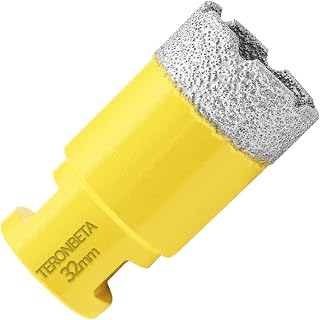


Choosing a diamond core drill bit is not simply a matter of selecting the largest diameter or the most expensive option. The right bit depends on the material being drilled, the required hole diameter and depth, the drilling method, the machine being used and whether the job calls for wet or dry drilling. These factors have a direct effect on cutting speed, hole quality, bit life and overall value.
DEWALT is a well-established professional power-tool brand, but even within one manufacturer's range, diamond core accessories can differ substantially in construction, application and compatibility. Before buying, check the complete product specification rather than relying on the product name alone.
A diamond core drill bit is a cylindrical cutting accessory designed to produce a circular hole through masonry and other hard construction materials. Instead of cutting with conventional pointed drill flutes, a core bit uses diamond-containing cutting segments or a diamond-impregnated cutting surface around the working edge.
The cutting action removes a circular section of material while leaving a central core. This makes core drilling particularly useful when a clean, accurately positioned opening is required for applications such as pipework, ventilation, electrical installations, drainage and other building services.
Diamond core drilling is especially associated with concrete, reinforced concrete, brickwork, blockwork and masonry. However, not every core bit is designed for every substrate. Material compatibility should therefore be treated as one of the first purchasing checks.
The diameter is usually the first specification buyers consider, but it should be matched to the finished hole required rather than the accessory that happens to be available.
A carefully selected diameter can prevent the need for enlarging a hole later, which can compromise accuracy and create unnecessary damage to the surrounding material.
Maximum drilling depth is another important specification, particularly for thick masonry and concrete. A bit suitable for shallow penetrations may not be appropriate for deeper holes.
When comparing options, consider both the stated working length and the practical requirements of removing the drilled core. Deep-hole drilling can require additional attention to clearance, debris removal and machine capability.
Never assume that a diamond core bit will fit every core drilling machine. The connection system, arbor arrangement and any required adaptor must be checked against the drilling equipment.
This is particularly important when comparing accessories from different ranges or manufacturers. A bit can have suitable cutting characteristics but still be unsuitable if the connection is incompatible with the machine.
One of the most important distinctions when comparing diamond core drill bits is whether the accessory is intended for wet drilling, dry drilling or a particular combination of applications.
Water can be used to cool the cutting area and help control drilling dust. Wet drilling is commonly associated with demanding applications where heat management and continuous cutting performance are important.
However, introducing water creates additional practical considerations. The work area needs to be suitable for water use, electrical safety precautions become particularly important and slurry must be managed rather than simply allowed to accumulate.
Dry drilling can be advantageous where water is impractical or undesirable. It can simplify work in certain indoor environments and can avoid the need to collect drilling water and slurry.
Dry drilling does not mean that every diamond core bit can be used without water. The accessory must specifically be suitable for the intended dry-drilling application, and the manufacturer's instructions should always take precedence.
There is no universal winner. Wet drilling may be preferable for certain demanding materials and applications, while dry drilling can be more convenient in situations where water management is difficult.
The best choice is therefore the combination of bit, machine, substrate and drilling method rather than the bit considered in isolation.
The cutting edge is central to a core bit's performance. Diamond cutting systems rely on the interaction between the diamond material, the bonding matrix and the substrate being drilled.
Different segment constructions can be intended to balance cutting speed, durability and material compatibility in different ways. A bit designed for a relatively abrasive masonry material may not be the ideal choice for heavily reinforced concrete, and vice versa.
Buyers sometimes focus exclusively on how quickly a bit can make a hole. That is only one part of the equation.
A fast-cutting accessory can be attractive when many holes must be produced, whereas a longer-lasting bit may provide better overall value for repeated work. The correct balance depends on the number of holes, substrate hardness, reinforcement, drilling conditions and cost of replacing the accessory.
For occasional domestic work, the economics can be different from those of a contractor drilling dozens or hundreds of penetrations. Commercial users should consider cost per usable hole rather than simply the purchase price of the bit.
Concrete varies considerably in composition and hardness. Aggregate type, density, curing characteristics and reinforcement can all influence drilling behaviour.
A specification stating suitability for concrete should not automatically be interpreted as meaning that every concrete application will produce identical results. Particularly demanding reinforced-concrete work requires equipment and accessories selected for that environment.
Reinforcing steel introduces an additional challenge because the cutting system may encounter metal as well as mineral aggregate. If reinforcement is likely to be present, buyers should pay close attention to the manufacturer's stated application range.
For professional structural work, the position of reinforcement should also be considered before drilling. Core drilling through reinforced structures can have implications beyond accessory selection, so appropriate site procedures and professional guidance may be necessary.
Brick can generally be easier to drill than dense concrete, but brick types vary. Older masonry, hard engineering brick and softer modern materials can behave differently.
The surrounding mortar and the condition of the wall can also affect the quality of the finished opening. A suitable core bit should therefore be selected according to the actual construction material rather than assuming that all brickwork is equivalent.
Lightweight blocks, dense concrete blocks and other masonry products can have very different characteristics. A bit that works effectively in one material may not offer the same balance of speed and durability in another.
Where the material is unknown, identify the substrate before purchasing the accessory whenever possible.
Occasional users should prioritise compatibility, correct diameter and suitability for the material rather than buying solely on the basis of professional branding.
Tradespeople who use core bits regularly should consider productivity as well as purchase cost. A suitable professional accessory can be judged by the balance between drilling speed, hole quality, usable life and compatibility with existing equipment.
It can also be useful to standardise commonly used diameters and connection systems where practical. This can simplify accessory selection and reduce the likelihood of purchasing incompatible components.
High-volume users should think in terms of total operating cost. The cheapest accessory is not necessarily the lowest-cost option if it requires frequent replacement or significantly increases drilling time.
Relevant considerations include the number of holes expected, average hole depth, substrate, reinforcement, machine power, cooling method, operator time and accessory replacement frequency.
Two core bits can share the same nominal diameter while being intended for different applications. Diameter is essential, but it is only one specification.
A compatible-looking accessory can still be unsuitable for the intended drill. Always check the connection system and machine requirements before ordering.
Diamond technology does not make an accessory universally suitable. Cutting systems are designed around particular materials and operating conditions.
Purchase price should be assessed alongside expected service life and drilling productivity. For repeated professional work, a low initial price can be misleading if the accessory wears quickly.
Do not assume that a wet-drilling bit can simply be used dry, or that a dry-drilling accessory is automatically suitable for wet operation. Check the stated application requirements.
Core drilling can generate substantial dust or slurry depending on the method. Buyers should consider how the work area will be protected and how waste will be controlled before starting the job.
When comparing several DEWALT options, use a consistent set of criteria rather than judging each product from its headline description.
DEWALT is not the only manufacturer worth considering when comparing diamond core accessories. Buyers may also encounter ranges from brands such as Bosch Professional, Makita, Milwaukee, Hilti and Norton.
Brand comparison is most useful when it is based on specifications and application rather than reputation alone. A competing accessory may be preferable for a particular machine, substrate or drilling method even when another brand is generally well regarded.
When comparing products from different manufacturers, pay particular attention to connection compatibility, stated material suitability, diameter range, drilling method and manufacturer's technical guidance. Comparing like-for-like specifications is more meaningful than comparing brand names in isolation.
The purchase price of a diamond core bit is only one part of its value. A more useful comparison considers the amount of useful drilling the accessory can provide under the conditions for which it is designed.
For example, a professional user making numerous penetrations may place a high value on cutting speed and usable life, while an occasional user may place greater emphasis on compatibility and avoiding unnecessary expenditure.
This approach provides a more useful indication of value than simply selecting the accessory with the lowest advertised price.
Correct preparation can be just as important as choosing the right accessory. Before drilling, identify the exact hole location and check the surrounding area for potential hazards, including concealed electrical services, plumbing and other building infrastructure.
For structural work, additional checks may be necessary. The fact that a core bit is technically capable of cutting a material does not mean that every location is safe or appropriate to drill.
Proper care can help preserve the usable condition of a diamond core accessory. After use, remove accumulated material and slurry according to the manufacturer's instructions and allow components to dry appropriately where required.
Inspect the cutting edge regularly. Excessive wear, damaged segments, distortion or other visible defects are reasons to stop and assess whether the accessory remains suitable for use.
Diamond core drilling involves rotating machinery, abrasive cutting, dust or slurry and potentially heavy equipment. Safe operation depends on using the correct machine, accessory and working method.
Always follow the manufacturer's safety instructions for both the drill and the core bit. Personal protective equipment should be selected according to the specific work environment, and appropriate controls should be used for dust, water, noise and debris.
Electrical safety deserves particular attention when water is used. The combination of water and powered equipment requires appropriate procedures and equipment for the working environment.
Core drilling into structural elements can also create hazards that are not solved by selecting a better bit. Where the location, reinforcement or structural significance of the drilling is uncertain, seek appropriate professional advice before proceeding.
Some DEWALT diamond core accessories are designed for masonry and concrete applications, but suitability depends on the specific product and the material being drilled. Always check the individual manufacturer's specification rather than assuming that every diamond core bit is suitable for every type of concrete.
Some diamond core drilling systems are designed for reinforced concrete, but reinforcement can significantly affect the drilling process. Check the specific accessory's application guidance and consider the structural implications of drilling before starting work.
Some are designed for dry drilling and others are intended for wet drilling. The correct method depends on the particular accessory and application. Never assume that a wet-rated accessory is suitable for dry operation without checking the manufacturer's instructions.
Start with the required finished hole size. If the hole is being made for a pipe, conduit, fixing or service penetration, establish the necessary clearance and then select an appropriate nominal diameter according to the installation requirements.
No. The most suitable accessory is the one that matches the substrate, machine, drilling method, diameter and workload. A higher purchase price can be justified for demanding or frequent use, but it does not automatically make an accessory better for every application.
There is no single reliable lifespan figure that applies to every application. Service life depends on the substrate, aggregate, reinforcement, drilling technique, cooling method, pressure, machine and amount of work performed. Manufacturer specifications should be used rather than assuming a fixed number of holes.
Possible contributing factors include unsuitable material, incorrect drilling technique, excessive pressure, inappropriate cooling, machine limitations and encountering reinforcement or other unexpected material. The exact cause should be assessed against the manufacturer's operating guidance.
Compare the actual specifications rather than choosing solely by brand. DEWALT, Bosch Professional, Makita, Milwaukee, Hilti and Norton all have established positions in professional tool and accessory markets, but the best option depends on the particular application and machine.
Neither is universally more important. For occasional work, compatibility and correct application may matter most. For high-volume professional drilling, productivity and cost per usable hole can become much more significant.
The best DEWALT diamond core drill bit is not necessarily the one with the highest rating, largest diameter range or highest purchase price. The strongest choice is the accessory whose specifications closely match the actual job.
Start with the material, then establish the hole diameter, depth, drilling method and machine connection. After those fundamental requirements have been satisfied, compare cutting construction, expected workload, durability and overall value. This approach reduces the risk of buying an unsuitable accessory and makes comparisons between DEWALT and competing professional brands much more meaningful.
Before purchasing, check the latest manufacturer specifications and the current retailer listing because product configurations, compatibility information and availability can change. For demanding professional applications, treat the manufacturer's technical documentation as the primary reference rather than relying