

♥ Wishlist
Compare 61 verified Power Tool Batteries & Chargers products in United Kingdom. Reviews, ratings, pros, cons and buying advice updated for October 2026.
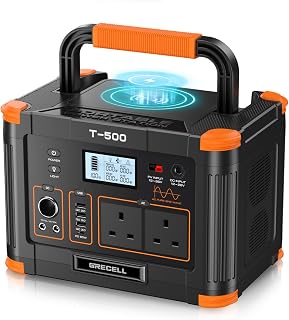


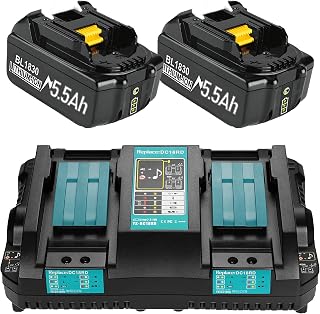


The most suitable battery and charger combination depends on the device, battery chemistry, expected frequency of use and the way the batteries will be stored and recharged. A charger that is appropriate for one battery type is not necessarily suitable for another, so checking compatibility should always come before comparing headline capacity or price.
For everyday household equipment, rechargeable AA and AAA batteries are often the most relevant option. For vehicles, motorcycles, leisure equipment and other higher-demand applications, the requirements are substantially different. Before buying, identify the exact battery format and chemistry, then check the manufacturer's charging requirements.
Never assume that two batteries with a similar physical size can be charged in the same way. Voltage, chemistry, charging method and protection requirements can differ considerably.
Rechargeable battery packaging can contain several figures that look useful at first glance but do not tell the whole story. Capacity, usually expressed in milliamp-hours (mAh) for smaller cells, indicates how much charge a battery can theoretically store. It should not be treated as a direct prediction of how many hours a particular device will operate.
A higher mAh figure can provide greater energy storage within a comparable battery type, but maximum capacity is not automatically the best choice. Some applications benefit from batteries designed around low self-discharge and long storage life rather than simply the largest nominal capacity.
For frequently used devices, capacity can be an important comparison point. For emergency equipment, remote controls or devices that may sit unused for long periods, storage characteristics can matter just as much.
Rechargeable batteries gradually lose stored charge while sitting unused. Low-self-discharge designs are particularly useful where batteries may remain in a drawer, torch, controller or emergency kit for weeks or months before being needed.
This is one reason a slightly lower nominal capacity can sometimes be a more sensible purchase than chasing the highest number on the packet. The better choice depends on how the batteries are actually used.
Rechargeable batteries are consumable components rather than permanent replacements for disposable cells. Their useful life depends on factors including charging conditions, discharge depth, storage temperature, age and the particular battery design.
Manufacturers may quote cycle-life information under defined test conditions. Such figures should be treated as an indication rather than a guarantee of exactly how many cycles a household user will obtain.
Nickel-metal hydride (NiMH) rechargeable batteries remain a practical option for many everyday AA and AAA applications. They are available in widely used cylindrical formats and are supported by chargers specifically designed for NiMH cells.
NiMH batteries can be particularly attractive for devices that consume batteries regularly because they can reduce the number of disposable cells that need to be purchased over time. Brands such as Panasonic, Duracell, Energizer, Varta and Ansmann offer rechargeable battery ranges, although individual products can differ in capacity, self-discharge characteristics and intended use.
Rechargeables are not automatically superior for every application. A device that is used only once every few years may place little value on rechargeable capability. Some manufacturers also specify particular battery types for equipment, especially where voltage characteristics or operating requirements are important.
For smoke alarms, medical equipment, security equipment or other safety-critical applications, follow the equipment manufacturer's instructions rather than selecting batteries solely on price or capacity.
A good charger should be selected according to the batteries it is designed to charge rather than simply by the number of charging slots. Important considerations include chemistry compatibility, independent charging channels, charge detection, charging speed, safety protections and the information provided to the user.
Chargers with independent charging channels can be more flexible than designs that require batteries to be inserted in matched pairs. With independent channels, each compatible cell can be monitored and charged according to its own condition rather than relying on a paired arrangement.
This can be especially convenient when household batteries are replaced at different times or when a device uses an odd number of cells.
Modern rechargeable-battery chargers can use electronic methods to determine when charging should stop or change to an appropriate maintenance mode. The precise charging method depends on the battery chemistry and charger design.
Automatic charge management is an important feature because simply supplying power continuously is not an appropriate charging strategy for every rechargeable battery.
Fast charging can be useful when batteries need to be returned to service quickly, but charging speed should be considered alongside battery compatibility and thermal management. The fastest charger is not necessarily the best charger for long-term everyday use.
If batteries are normally charged overnight or when the household is not using them, there may be little practical advantage in paying more for an extremely high charging rate.
A basic charger may provide straightforward charging with limited information, whereas a more advanced charger can provide features such as individual-cell monitoring, charge status indicators, automatic termination and, on some models, battery testing or conditioning functions.
For occasional users, a simple compatible charger may be sufficient. For households with several rechargeable devices, an advanced charger can provide greater flexibility and make it easier to identify batteries that are behaving differently from the rest.
Battery safety should take priority over convenience, charging speed or price. Always follow the instructions supplied with the battery and charger, and use equipment intended for the relevant chemistry and format.
Particular care is required with lithium-ion batteries. Do not substitute a generic charger merely because its connector appears to fit. Charging specifications can differ between lithium-ion products, and the correct charging system may include protection circuitry that is part of the product design.
Battery performance is influenced by the electrical demands of the device. A battery used in a low-drain remote control faces very different demands from one used in a powerful camera flash, motorised toy or high-output torch.
Remote controls, clocks and some basic wireless accessories can place relatively modest demands on their batteries. For these devices, long storage life and low self-discharge may be more valuable than maximum rated capacity.
High-drain equipment can benefit from batteries capable of delivering the required current while maintaining suitable voltage under load. Nominal capacity alone does not provide enough information to determine whether a battery is appropriate for a demanding device.
Where a device manufacturer specifies a battery chemistry or minimum performance requirement, those specifications should take precedence over general buying advice.
Before purchasing a charger, check these points against the batteries already in your home:
If the intended purchase is a charger for a vehicle battery, do not compare automotive chargers with AA or AAA household chargers as though they were interchangeable categories. Car battery chargers are designed around different battery capacities, voltages and charging requirements.
Common automotive battery technologies include conventional flooded lead-acid designs as well as batteries using technologies such as AGM and EFB. The vehicle and battery manufacturer should be consulted before selecting a charging mode.
Brands such as CTEK, NOCO and Ring are well-known names in the automotive charging market, but the correct model still depends on the vehicle battery and intended use. A reputable brand does not remove the need to check technical compatibility.
A battery maintainer is intended for a different purpose from simply charging a flat battery as quickly as possible. Maintenance equipment can be useful for vehicles or machinery that remain unused for extended periods, provided the charger is compatible with the battery and the manufacturer's instructions allow its use.
This can be relevant to seasonal vehicles, classic cars, motorcycles, leisure equipment and other applications where a battery may spend considerable time without normal charging from the vehicle's electrical system.
The cheapest packet is not necessarily the lowest-cost option over its useful life. For rechargeable batteries, a more meaningful comparison considers the initial purchase price, capacity, expected usage pattern, charging requirements and how many disposable batteries the rechargeable cells may replace.
For disposable batteries, compare the number of cells supplied, battery chemistry, stated shelf-life information and the requirements of the device rather than focusing only on the price displayed on the packet.
If a household frequently uses AA or AAA batteries, rechargeable cells can change the economics of ownership because the same cells can be used repeatedly. The actual value depends on how often they are recharged, how long they remain useful and whether the charger is already available.
For occasional use, the convenience and storage characteristics of disposable batteries may be more important. There is no universal winner; the correct choice depends on usage.
A larger capacity figure can look attractive, but it does not automatically mean longer useful life in every device. Compare capacity alongside self-discharge behaviour, discharge performance, compatibility and intended use.
Battery chemistry is one of the first specifications to verify. A charger designed for NiMH AA cells should not be treated as a universal charger for every AA-sized rechargeable cell.
Physical dimensions do not tell you everything about a battery. Voltage characteristics, chemistry, capacity and discharge behaviour can differ between products that share the same nominal size.
Using cells with significantly different ages, capacities or conditions together can lead to uneven performance. Where the device requires multiple batteries, using a matched set intended for that application can make management simpler.
Temperature, humidity and storage duration can affect batteries. Keep them according to the manufacturer's recommendations and avoid leaving rechargeable cells in unsuitable conditions for long periods.
Brand reputation can be a useful starting point, but it should not replace specification checking. Established manufacturers such as Duracell, Energizer, Panasonic, Varta and Ansmann offer different battery products for different applications. The relevant specification is the individual product, not simply the name printed on the packaging.
For specialist charging equipment, brands including CTEK and NOCO are associated with automotive battery chargers, while Nitecore produces charging equipment and batteries aimed at a range of specialist applications. Product suitability should always be assessed from the manufacturer's stated specifications.
When comparing products from different manufacturers, record the specifications in the same order. This avoids making a decision based on whichever figure happens to be most prominently displayed.
Packaging should be treated as a specification sheet rather than a collection of marketing claims. Identify the battery chemistry, voltage, size and capacity first. Then check whether the manufacturer describes the product as disposable, rechargeable, low-self-discharge, high-drain or intended for a specific application.
Where information appears inconsistent between a retailer listing and the manufacturer's documentation, the manufacturer's current technical information should generally be given greater weight.
Look beyond phrases such as “fast charger” or “smart charger”. Determine what the charger actually supports. A useful specification should make it possible to identify the compatible battery chemistry and formats, power requirements, charging current and relevant safety or control features.
For automotive chargers, also check whether the stated modes correspond with the battery technology in the vehicle. Some chargers offer multiple programmes, but the presence of a mode does not mean it should be selected without checking compatibility.
Good storage practices can help preserve battery performance and reduce avoidable failures. Store batteries in a clean, dry location and follow the manufacturer's temperature and storage recommendations.
Keep loose cells organised so that terminals cannot accidentally contact conductive objects. Do not store visibly damaged or leaking batteries with usable cells.
Rechargeable batteries should also be managed as a set when the equipment uses several cells together. Labelling sets can make it easier to keep compatible batteries together and monitor their age and condition.
There is no single replacement date that applies to every rechargeable battery. Consider replacing a cell when its performance has deteriorated noticeably, it no longer holds an adequate charge for the intended application, becomes physically damaged or shows other signs that make continued use inappropriate.
A cell that behaves substantially differently from the other batteries in a matched set may also indicate that the set needs attention. Follow the manufacturer's guidance for disposal and recycling rather than placing batteries in ordinary household waste where local rules prohibit this.
Batteries should be disposed of through appropriate recycling routes. Do not assume that household rubbish is suitable for unwanted batteries, particularly lithium-containing batteries, which can present a fire risk when damaged or incorrectly handled.
For current disposal requirements, use guidance from the relevant UK local authority and established recycling schemes. Retailer collection arrangements can also vary, so check the current arrangements before disposing of batteries.
These applications often favour convenience and long storage life. Rechargeable batteries can work where supported, but the low frequency of replacement may make disposable batteries practical for some users.
Rechargeable AA or AAA cells can be convenient for frequently used accessories. A low-self-discharge battery can be particularly useful when equipment needs to remain ready for use between charging sessions.
Battery drain can vary dramatically between toys. Motorised products may place substantially greater demands on batteries than simple electronic toys, so capacity and discharge characteristics should both be considered.
Check the torch manufacturer's specified battery type before choosing rechargeable cells. High-output torches can have more demanding electrical requirements than basic household torches.
Camera equipment can have comparatively high instantaneous power demands. Use the battery chemistry and specifications recommended by the camera or accessory manufacturer, particularly for flash equipment.
Vehicle batteries require dedicated charging equipment appropriate to their voltage and construction. Check the battery label, vehicle documentation and charger specifications before connecting anything.
When two chargers appear similar, compare them specification by specification rather than relying on appearance or brand familiarity.
Customer reviews can provide useful information about packaging, ease of use, compatibility issues and long-term ownership, but they should not be treated as a substitute for technical specifications. Individual reports can be affected by the device, charger, storage conditions or user's expectations.
For a more reliable buying decision, compare several sources of information. Look at the manufacturer's specification, retailer information and verified customer feedback, and pay particular attention to repeated observations rather than isolated comments.
Not every advanced feature provides meaningful value for every user. A household that charges four AA batteries occasionally may have little practical need for extensive diagnostic functions. Conversely, someone managing several sets of rechargeable batteries may benefit from greater control and information.
Choose features according to the problem they solve. Spending more on a charger only makes sense when its additional capabilities are relevant to the batteries and devices you actually use.
There is no single battery or charger that is objectively best for every UK household. A sensible purchasing process starts with compatibility, narrows the options using technical specifications, and then considers reliability, convenience, value and independent customer feedback.
For rechargeable AA and AAA use, prioritise compatible chemistry, suitable capacity and low self-discharge characteristics, then choose a charger that manages those cells appropriately. For automotive applications, identify the exact battery technology and voltage first, then compare compatible chargers based on charging current, operating modes, maintenance capability and safety features.
When comparing well-known brands such as Duracell, Energizer, Panasonic, Varta, Ansmann, CTEK, NOCO and Ring, the strongest choice is still the individual product whose specifications match the intended application. Brand recognition can help narrow a shortlist, but it should not replace checking the details.
For many compatible AA and AAA household applications, NiMH rechargeable batteries are a practical option. The best capacity and design depend on the device and how frequently it is used. Check the device manufacturer's requirements before switching from disposable batteries.
No. A higher mAh rating indicates greater nominal charge capacity, but real-world suitability also depends on self-discharge, discharge characteristics, device requirements, charging conditions and battery quality.
No. The charger must support the specific battery chemistry. Physical size alone is not sufficient to establish compatibility.
Not necessarily. Some chargers use independent charging channels and can charge individual cells, while other designs use paired charging arrangements. A charger with independent channels can be more flexible, but the manufacturer's instructions should always be followed.
Mixing battery types in the same device is generally not advisable unless the device manufacturer specifically permits it. Different batteries can have different voltage and discharge characteristics.
The useful life varies according to battery design, usage, charging method, storage and age. Manufacturer cycle-life figures can provide a useful indication, but actual household performance will vary.
They can be worthwhile when their additional functions solve a genuine need. Independent charging, automatic charge management, status information and diagnostic features can be useful for frequent users, while occasional users may prefer a simpler compatible charger.
Do not assume that every charger is designed for indefinite connection. Follow the charger manufacturer's instructions regarding charge completion, maintenance mode and storage.
A conventional charger is primarily intended to replenish a battery's charge, while a maintainer is designed to help keep a compatible battery at an appropriate charge level during periods of inactivity. Some modern products combine both functions.
No. Similar physical dimensions do not make different battery chemistries interchangeable. Voltage, charging requirements and protection systems can differ substantially.
Start with the battery's voltage and technology, such as lead-acid, AGM or another supported type. Then check the charger's compatible battery range, charging current, operating modes and safety features against the battery manufacturer's recommendations.
Use an appropriate battery recycling or collection route and follow current UK disposal guidance. Avoid putting batteries into general household waste where local rules prohibit this.
The best batteries and chargers are not necessarily the products with the highest capacity, fastest charging speed or lowest purchase price. The strongest choice is the combination that matches the device, battery chemistry, charging requirements and frequency of use.
For household rechargeable batteries, compatibility, capacity, low self-discharge behaviour and sensible charging management are the main factors to compare. For automotive batteries, voltage, battery technology, charging current, charging modes and maintenance capability become much more important. Taking a few minutes to verify these specifications can prevent compatibility problems and help ensure that the product you choose is appropriate for its intended job.