

♥ Wishlist
Compare 39 verified DeWalt Chisels & Points for Demolition, Masonry & Concrete products in United Kingdom. Reviews, ratings, pros, cons and buying advice updated for October 2026.


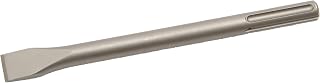


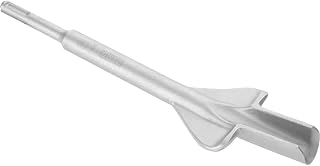
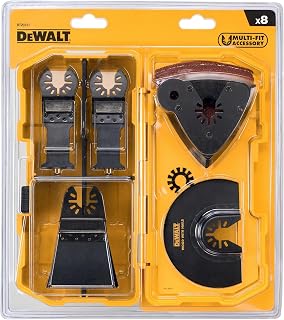


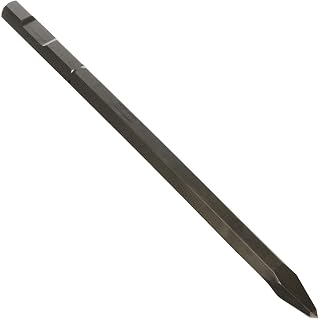


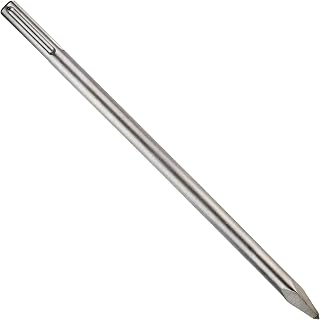


Choosing a DEWALT chisel is not simply a matter of selecting the longest or heaviest option. The correct accessory depends on the tool's chuck or tool holder, the material being worked, the type of work being carried out and the amount of impact energy involved. A pointed chisel that is effective for breaking up hard concrete is not automatically the best choice for removing tiles, chasing masonry or cleaning mortar joints.
For UK buyers, the first specification to check is the shank or connection system. DEWALT's current chisel range includes SDS-Plus, SDS-Max and larger hex-based options, with different lengths and working profiles for demolition, chiselling, scaling and specialist applications. The manufacturer's range includes pointed and flat chisels alongside more specialised designs such as scaling chisels, bush hammer chisels, clay spades and asphalt cutter chisels.
The most common buying mistake is choosing the working end first and checking compatibility afterwards. A chisel can have exactly the right point or blade profile yet still be unsuitable because its shank does not match the power tool.
Never assume that all DEWALT demolition accessories fit all DEWALT machines. The DEWALT product range itself demonstrates why checking the stated connection type matters: an SDS-Plus chisel and an SDS-Max chisel are different accessories for different tool-holder systems.
There is no universal winner between a pointed and flat chisel. Each profile concentrates impact energy differently and is suited to a different stage of the job.
A pointed chisel concentrates the impact at a relatively small contact area. This makes the profile useful when the objective is to initiate cracks, penetrate masonry, break up concrete or work into a particularly resistant section of material.
Pointed chisels are particularly worth considering for:
DEWALT's SDS-Max pointed range includes the 300 mm DT6820-QZ, while the XLR SDS-Max pointed 300 mm DT6888-QZ is designed for demanding chiselling, channelling and demolition work. The manufacturer also lists longer pointed SDS-Max options, including 400 mm and 600 mm versions.
A flat chisel spreads the working edge over a wider area than a pointed profile. This makes it useful when the task involves breaking away material, chasing, scaling or working along a surface rather than simply penetrating a single point.
Flat chisels can be suitable for:
DEWALT produces SDS-Plus flat chisels in compact sizes as well as SDS-Max flat chisels in larger widths and lengths. Some models are approximately 20 mm wide, while broader profiles are available for jobs where a wider working edge is preferable.
An SDS-Plus chisel is worth considering when the job can be completed with a lighter SDS-Plus rotary hammer or combination hammer. The smaller shank format can be a practical choice for general building work, renovation tasks and less demanding chiselling.
For example, DEWALT's DT6801-QZ is a 250 mm pointed SDS-Plus chisel, while the DT6802-QZ is a 250 mm flat chisel with a 20 mm working width. DEWALT also lists a 250 mm flat chisel with a 40 mm working width, giving buyers a choice of working profile without changing the basic SDS-Plus connection system.
A 300 mm XLR SDS-Plus pointed chisel is another option in the range. The important point is that length and profile should be considered alongside the tool holder and the hammer's intended application rather than in isolation.
SDS-Max is intended for larger compatible machines and more demanding applications. If the job involves substantial concrete, hard masonry or prolonged demolition, an SDS-Max system may be more appropriate than an SDS-Plus system, provided the power tool is designed for it.
DEWALT's SDS-Max range includes pointed chisels such as the DT6820-QZ, which is 300 mm long, as well as longer pointed accessories. The DT6889-QZ is a 400 mm pointed SDS-Max chisel, while the DT8087-QZ extends to 600 mm. These different lengths demonstrate why simply searching for the "best DEWALT chisel" is insufficient: the right accessory depends heavily on reach, access and the material being removed.
A longer chisel can provide useful reach where the operator needs to work deeper into a material or access a location without placing the hammer itself directly against the work area. However, longer does not automatically mean better.
The manufacturer's specifications should always take priority over assumptions about what a particular length can do.
DEWALT's XLR designation appears across parts of its demolition steel range. XLR chisels are worth comparing with conventional accessories when durability, wear resistance and demanding demolition work are important considerations.
For example, the XLR SDS-Max pointed 300 mm chisel is specified by DEWALT for heavy-duty chiselling, channelling and demolition in concrete, rebar and hard stone. Its stated construction includes a fully hardened steel point or chisel face, while DEWALT describes the tip as designed to maintain sharpness for longer.
This does not mean an XLR model is automatically the best purchase for every user. For occasional DIY work, the additional specification may be less important than correct fit, appropriate profile and sensible tool selection. For frequent professional demolition, however, wear characteristics can become a more significant part of the buying decision.
Chisels operate under repeated impact, so steel quality and heat treatment are important. A suitable demolition chisel needs to withstand repeated shock without becoming unsuitable prematurely through excessive wear or damage.
DEWALT states that its chisel and demolition steel products use toughened or heat-treated steel, with some ranges incorporating additional design features intended to improve durability and shock resistance. These specifications are more meaningful than vague descriptions such as "heavy duty" because they indicate what aspect of construction the manufacturer is addressing.
The working end of a chisel has to withstand repeated impact against abrasive and often extremely hard materials. If the working profile wears rapidly, the accessory can become less effective and require more frequent replacement.
However, hardness should not be considered in isolation. A demolition chisel must balance hardness, toughness and resistance to impact. The best choice is therefore not necessarily the hardest-looking accessory but one designed by the manufacturer for the intended application and tool class.
Buyers searching specifically for "chisels and points" can overlook the fact that the DEWALT range extends beyond basic pointed and flat designs. Specialist profiles can be considerably more appropriate for particular jobs.
A scaling chisel is designed around surface removal and preparation rather than deep penetration. DEWALT lists SDS-Max scaling chisels, including wider working profiles intended for surface-oriented applications.
Consider a scaling profile when the objective is to remove surface material efficiently rather than repeatedly drive a narrow point into the substrate.
A bush hammer chisel has a specialised working face and should not be treated as a general-purpose pointed chisel. DEWALT lists bush hammer accessories for SDS-Max systems. These are relevant to particular surface-treatment and masonry applications where the textured working face is more appropriate than a conventional point.
Clay spade chisels have a broad blade intended for specific excavation and material-removal applications. DEWALT's range includes large hex-based clay spade accessories. They are not a substitute for a pointed demolition chisel simply because both are used with powerful demolition equipment.
An asphalt cutter is another specialist profile. DEWALT lists hex-based asphalt cutter chisels intended for cutting and breaking asphalt. If asphalt is the primary material, a purpose-designed cutter can be a more logical choice than a generic point.
When comparing several models, focus on specifications that affect real-world compatibility and task suitability rather than simply counting features.
If two products look almost identical, compare them specification by specification. A useful comparison should answer why one accessory is better suited to the intended job rather than declaring one model universally superior.
This is the most straightforward mistake and one of the easiest to prevent. SDS-Plus and SDS-Max are not interchangeable simply because the accessories have similar-looking working ends.
The length of a chisel does not determine the impact energy of the hammer. A longer accessory may provide reach, but the performance of the complete system depends on the compatible power tool, its impact mechanism and the material being worked.
Pointed chisels are versatile, but they are not ideal for every job. A flat, scaling or specialist chisel may be more suitable when the objective is controlled surface removal or wider material separation.
The chisel should be selected as part of a complete tool-and-accessory system. Consult the power tool's operating instructions for permitted accessories, applications and safety requirements.
DEWALT is a well-established power-tool brand, but brand recognition should not replace specification checking. When comparing DEWALT with Bosch, Makita, Milwaukee or Hilti, compare equivalent shank systems, working profiles, dimensions, intended applications and construction rather than assuming one brand is universally better.
For shoppers conducting commercial research, it can be useful to compare DEWALT with other established tool manufacturers. The comparison should remain like-for-like.
Compare the exact tool-holder format first, followed by chisel geometry, length, working width and stated application. Bosch offers a broad range of professional power-tool accessories, but a Bosch chisel should not be assumed to fit a DEWALT machine simply because both products use the word SDS in their descriptions.
Makita is another major professional power-tool manufacturer with demolition accessories. When comparing equivalent chisels, examine the connection system, material specification, working profile and intended application rather than choosing on brand reputation alone.
Milwaukee also produces professional power-tool accessories. The most useful comparison is between equivalent accessories designed for the same tool-holder system and material. Pay particular attention to whether the accessory is intended for general chiselling, demolition, surface preparation or a specialist task.
Hilti is strongly associated with professional construction and demolition equipment. If comparing Hilti and DEWALT accessories, consider the complete tool ecosystem, specified compatibility and intended workload. A premium professional accessory is not necessarily the best choice for occasional work if its additional features are irrelevant to the task.
A demolition accessory is exposed to considerable mechanical stress, so routine inspection is sensible even when the product is designed for demanding work.
Remove concrete dust, masonry residue and other debris from the chisel before storage. Keeping the shank reasonably clean also helps prevent contamination from being transferred into the tool holder.
Check the point or blade for abnormal wear, cracking, deformation or other visible damage. A working end that has changed significantly from its intended profile may no longer perform as expected.
The connection area is just as important as the working tip. Look for excessive wear, visible damage or deformation around the shank. If an accessory shows signs of damage, follow the power-tool and accessory manufacturer's guidance rather than continuing to use it simply because the tip still appears serviceable.
Store accessories in a dry environment where they will not be knocked against other tools. Avoid leaving them exposed to unnecessary moisture or contaminants for extended periods.
There is no single replacement interval that applies to every chisel. Service life depends on the material, hammer, impact energy, frequency of use, working technique and accessory design.
Replacement should be considered when the chisel develops visible damage, excessive wear or a working profile that no longer performs the intended task effectively. A heavily worn point may become less efficient, while a damaged shank can create a compatibility and safety concern.
Do not attempt to restore a specialist demolition accessory by improvising modifications to the working end. Use the manufacturer's guidance for the specific accessory and power tool.
Power chiselling creates significant vibration, noise, dust and flying debris. The correct accessory is only one part of safe operation.
Even a high-quality chisel can wear prematurely if it is used incorrectly. Allow the hammer's impact mechanism to perform the work rather than applying unnecessary lateral force or using the accessory as a lever.
Use the correct working angle and let the tool manufacturer's operating instructions determine the appropriate technique. Excessive side loading can place stresses on both the accessory and the tool that are unrelated to the intended impact action.
For demolition, it can be more efficient to use a pointed accessory to initiate fractures and then switch to a flat or specialist profile when the task changes. This approach avoids expecting one accessory to perform every stage of a job.
"Heavy duty" is useful as a description but should not be treated as a complete technical specification. A genuinely useful comparison looks at the details behind the description.
These questions provide much more useful buying information than simply selecting the product described with the strongest marketing language.
For concrete, a pointed DEWALT chisel is often the logical starting point when the job involves penetration and breaking. The exact choice depends on whether the power tool uses SDS-Plus, SDS-Max or another compatible holder, as well as the required length and workload.
The two systems use different shank formats and are intended for different classes of power tools. SDS-Plus accessories are commonly used with compatible lighter rotary hammers and combination hammers, while SDS-Max accessories are designed for compatible larger machines and heavier applications. They should not be treated as interchangeable.
Neither is universally better. A pointed chisel is useful for concentrated impact and breaking, while a flat chisel provides a wider working edge for applications such as material removal, chasing and surface work. Choose according to the task rather than the perceived strength of the accessory.
Choose the shortest practical length that provides the reach required for the job, unless the manufacturer specifies another approach. Longer chisels can be useful for access and reach, but additional length is not automatically an indication of superior performance.
XLR models are worth comparing when durability, wear resistance and demanding demolition work are important factors. DEWALT specifies additional durability-related features on its XLR chisel range. Whether the additional specification represents good value depends on how frequently and aggressively the accessory will be used.
Do not assume that an SDS-Plus accessory can be used in an SDS-Max tool. Always follow the power-tool manufacturer's compatibility requirements and use an accessory designed for the stated tool holder.
A compatible pointed chisel may be useful for breaking or penetrating material, but a flat chisel can be more appropriate for lifting and separating surface material. Check the power-tool and accessory manufacturer's instructions before using either profile for tile removal.
There is no universal replacement schedule. Inspect the accessory regularly and replace it when it becomes excessively worn, damaged or unsuitable for the intended application. Actual service life varies considerably according to material, tool, workload and technique.
Not necessarily. Length primarily affects reach and working access. Demolition performance also depends on the compatible hammer, impact energy, chisel profile and material being removed.
A scaling chisel is designed around surface removal and preparation rather than deep penetration. It can be a better choice than a pointed chisel when the objective is to work across a surface.
Frequent users should pay particular attention to compatibility, construction, wear resistance, intended application, working profile and the suitability of the complete tool-and-accessory combination. For intensive work, small differences in durability and productivity can become more important than the initial accessory price.
A useful buying guide should distinguish between a product that is technically suitable and one that is actually appropriate for a particular job. For that reason, the most important comparison criteria are compatibility, application, chisel geometry, dimensions, construction and expected workload.
Manufacturer specifications should be used to establish technical facts such as connection type, dimensions and intended applications. Customer reviews can then provide additional context about recurring ownership considerations, while current retailer information can be checked separately for today's price and availability.
Because accessory ranges and specifications can change, buyers should verify the current product information before purchasing. A model number, shank type or working dimension should always take precedence over a generic product title when the two appear inconsistent.
The best DEWALT chisel is the one that matches the power tool, material and job rather than simply the accessory with the largest dimensions or strongest-sounding description. For concentrated breaking, start with the appropriate pointed profile. For wider material removal, compare flat chisels. For surface preparation or specialist materials, investigate purpose-designed profiles such as scaling, bush hammer, clay spade and asphalt cutter options.
Above all, verify the connection system before buying. DEWALT's range spans SDS-Plus, SDS-Max and larger hex-based accessories, so compatibility is the first filter in any sensible comparison. Once compatibility is confirmed, use length, working width, steel construction, intended application and workload to narrow the choice.
For occasional DIY work, a correctly matched standard chisel can be more sensible than an oversized specialist accessory. For frequent professional demolition, durability, wear resistance and application-specific design deserve greater attention. Comparing the specification of the exact model with your actual working requirements is the most reliable way to choose well.