

♥ Wishlist
Compare 41 verified Socket Sets & Sockets products in United Kingdom. Reviews, ratings, pros, cons and buying advice updated for October 2026.


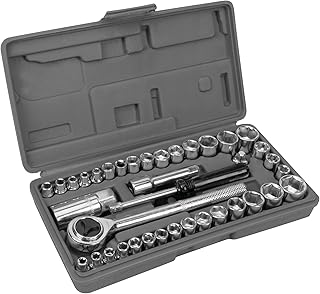


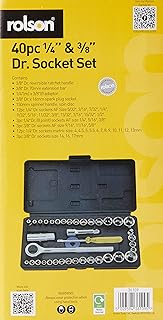


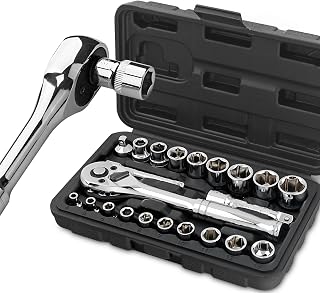


Choosing the right socket set is less about buying the largest collection of pieces and more about matching the tools to the fasteners, vehicles, machinery and general maintenance tasks you are likely to encounter. A compact set can be the better choice for occasional household jobs, while a comprehensive professional set may make more sense for workshop, automotive or frequent mechanical work.
Before comparing individual socket sets, consider the drive size, socket dimensions, measurement system, socket profile, ratchet mechanism, construction materials, case design and the types of fasteners you regularly work with. These details can make a substantial difference to usability, access and long-term value.
The drive size describes the square connection between the socket and the ratchet, extension or other compatible drive tool. Common sizes include 1/4-inch, 3/8-inch and 1/2-inch, with larger drives used for heavier-duty applications.
If you are building a general-purpose toolkit from scratch, a set centred around 3/8-inch drive can be particularly versatile. However, the ideal choice depends on the size of fasteners you need to remove and tighten rather than on drive size alone.
One of the easiest mistakes to make is assuming that every socket set uses the same measurement system. Metric sockets are measured in millimetres, whereas imperial sockets are measured using fractional or other imperial sizing conventions. AF, or Across Flats, is another term commonly associated with imperial fasteners.
For many users in the UK, a predominantly metric socket selection is a sensible starting point. Older machinery, classic vehicles, imported equipment and certain specialist applications can nevertheless require imperial sizes.
If you work on a mixture of modern and older equipment, buying a set that provides both measurement systems can reduce the need to purchase additional sockets later. It is worth checking the actual size range rather than judging a set by its total piece count.
A large number printed on the packaging does not automatically mean a socket set offers better value. Piece counts can include ratchets, extensions, adapters, screwdriver bits, universal joints and duplicate socket types.
When comparing sets, identify which actual socket sizes are included. A smaller collection containing the sizes you use frequently can be considerably more useful than a much larger kit with gaps in the range you need.
Socket depth is an important consideration that is often overlooked when comparing sets. Standard or shallow sockets are compact and can be advantageous where access is restricted. Deep sockets extend further over the fastener and are useful where a nut sits on a relatively long threaded section.
A socket set containing only shallow sockets may be perfectly adequate for straightforward household maintenance but can become limiting when working on vehicles or machinery. Conversely, a set containing both shallow and deep options provides greater flexibility.
The number of contact points inside a socket affects how it engages with a fastener. Six-point sockets are designed to contact the flats of compatible hexagonal fasteners, while 12-point designs can offer more engagement positions when positioning the socket on the fastener.
A six-point socket is often a sensible choice when loosening tight fasteners because its geometry is designed to engage the flats rather than the corners of a conventional hexagonal fastener. Twelve-point sockets can be convenient where access or positioning is the main concern.
Neither design makes a socket universally superior. The better option depends on the fasteners, access and type of work involved. For a general-purpose toolkit, having both where practical can increase versatility.
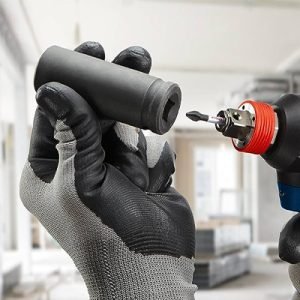
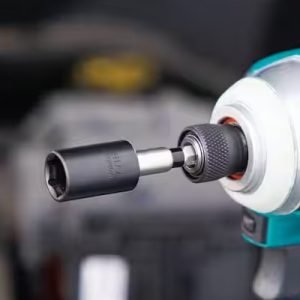
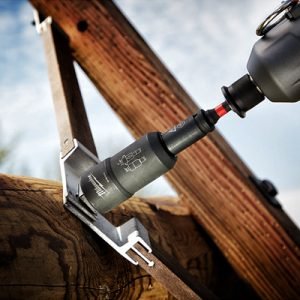
Standard chrome-finished sockets and impact-rated sockets should not be treated as interchangeable. Impact sockets are specifically designed for use with compatible impact tools and are generally identifiable by their darker finish and construction intended for repeated impact loading.
A conventional hand-tool socket should not automatically be assumed to be suitable for an impact wrench or impact driver. Always check the manufacturer's intended use and compatibility before connecting a socket to a powered tool.
Chrome vanadium steel is widely associated with conventional hand-tool construction. The alloy can provide a useful combination of strength, toughness and durability when properly manufactured and heat-treated.
For ordinary ratchet-and-socket work, construction quality matters more than simply seeing an alloy name on the packaging. Compare the manufacturer's specifications, intended use and warranty information rather than treating one material description as a guarantee of superior performance.
Chrome molybdenum, commonly referred to as chromoly, is frequently associated with impact sockets. Its characteristics make it suitable for applications involving repeated impact loading when the socket is properly designed and manufactured for that purpose.
Do not select an impact socket solely because the material sounds more robust. The complete design, manufacturing quality, drive interface and stated application all matter.
The ratchet is arguably just as important as the sockets themselves. A good selection of sockets is less useful if the included ratchet has poor access, an uncomfortable handle or a mechanism that does not suit the work.
Look at the ratchet's drive size, reversing mechanism, handle shape, head profile and stated mechanism characteristics. A compact head can be advantageous in confined spaces, while a longer handle can provide greater leverage. However, leverage should not be confused with permission to exceed the manufacturer's specified use.
Some manufacturers advertise fine-tooth or high-tooth-count ratchet mechanisms. A greater number of teeth can allow smaller movements between engagement positions, which may be helpful where there is limited room to swing the handle. It does not, by itself, establish that one ratchet is stronger or more durable than another.
A socket set becomes substantially more versatile when its accessories are appropriate for the intended work. Extensions can help reach recessed fasteners, while universal joints can provide additional articulation where a straight socket-and-extension arrangement cannot align with the fastener.
Clear size markings can save considerable time, particularly when several sockets are stored together. Look for markings that are easy to read under normal workshop lighting and remain identifiable after regular handling.
Knurled areas on some sockets can provide additional grip when the socket is being turned by hand before a ratchet is engaged. This is a small feature, but it can make routine work more convenient.
A ratchet with a socket-release button can make changing sockets faster and reduce the effort required to remove a socket from the drive. When comparing designs, consider whether the mechanism is easy to operate with the gloves or working conditions you normally encounter.
Surface finish is relevant to both appearance and maintenance. Chrome finishes on conventional sockets can make them easier to wipe clean and help protect the underlying steel from corrosion. Impact sockets commonly use a different finish and should be maintained according to the manufacturer's guidance.
A good case is more than packaging. Proper storage helps prevent individual sockets from becoming scattered around a toolbox and makes it easier to identify missing pieces.
For mobile toolkits, portability can be more valuable than having the maximum possible number of components. A compact, logically arranged case can make frequently used tools easier to transport and locate.
Home users generally benefit from versatility rather than specialist coverage. A practical DIY socket set should cover commonly encountered metric fasteners, include a useful ratchet and provide enough extensions or accessories for ordinary maintenance tasks.
There is little reason for an occasional DIY user to pay for a specialist professional configuration if its additional sizes and accessories will rarely be used. On the other hand, buying an extremely basic set and repeatedly adding missing components can become less economical over time.
For household use, prioritise sensible metric coverage, a reliable ratchet, clear markings, useful extensions and a storage case that keeps everything organised.
Automotive work can demand a broader range of sizes and configurations than routine household maintenance. Access can also be difficult, making deep sockets, extensions and different drive sizes particularly useful.
When comparing automotive socket sets, consider whether the kit contains the socket types you actually encounter on the vehicle. A set intended for general servicing may differ considerably from one aimed at heavier mechanical work.
Professional users should consider frequency of use, replacement availability, compatibility with existing tools and the demands placed on the sockets. In a workshop environment, a tool that is used repeatedly can justify a more comprehensive and carefully specified set.
Look beyond the initial piece count. A professional-oriented comparison should examine the range of sizes, drive configurations, socket profiles, ratchet design, case organisation and manufacturer's specifications.
For demanding work, it can also make sense to build a toolkit around several specialised sets rather than expecting one box to perform every task. For example, conventional hand sockets, deep sockets and impact sockets may each have a distinct role.
When comparing two or more socket sets, use the same criteria for each product. This prevents a large piece count or attractive packaging from overshadowing practical differences.
A 100-piece set is not necessarily a better purchase than a 40-piece set. If the additional pieces are adapters or sizes that you never use, the extra components may add clutter without solving a practical problem.
Buying sockets that do not match your existing ratchets, extensions or torque tools can result in unnecessary adapters or additional purchases. Check the drive interface before ordering.
The opposite mistake is purchasing an extremely narrow set because it contains one or two sizes required for a current project. If you expect to perform similar work regularly, a broader range may provide better long-term flexibility.
Do not assume that a conventional hand-tool socket can safely be used with an impact wrench simply because the drive size matches. Check the manufacturer's instructions and select sockets specifically intended for the application.
The size stamped on a socket refers to the dimensions of the socket's internal engagement with the fastener, not necessarily the nominal diameter of the bolt itself. This distinction is particularly important when identifying replacement fasteners.
If you regularly encounter long studs or recessed nuts, a shallow-only set can quickly become restrictive. Check the socket depth before buying.
You do not necessarily need to purchase every possible socket size at once. A staged approach can be more economical if you have a clear idea of the work you undertake.
Product photographs can provide useful information, but they should not be the only basis for a purchase. Read the manufacturer's specification and compare it against the actual contents of the set.
Pay particular attention to the stated drive sizes, socket dimensions, materials, intended application and included accessories. Where available, inspect clear photographs of the markings and storage layout so that you can confirm how the set is organised.
Customer feedback can provide additional insight into recurring practical issues, but reviews should be read critically. Look for patterns across multiple verified customer reviews rather than relying on one particularly positive or negative comment.
Several established tool manufacturers produce socket sets across different price and performance categories. Brand reputation can be a useful starting point, but the specific set still needs to be assessed on its own specifications and intended use.
These brands should be treated as examples for comparison rather than automatic recommendations. The best option depends on the particular set, specification, intended use and current value.
A socket transfers the turning force from a ratchet, breaker bar or other compatible drive tool to the fastener. When a fastener is particularly tight, the temptation can be to add excessive leverage. This is where tool selection and safe working practices become important.
Use a suitable tool for the required torque rather than treating a standard ratchet as a substitute for a breaker bar or other purpose-designed equipment. When a specified tightening torque is required, use an appropriate torque wrench and follow the relevant manufacturer's instructions.
Adapters and extensions can also alter the practical behaviour of a tool arrangement. Never assume that connecting several components together automatically makes the resulting setup suitable for high-torque work.
Wipe sockets after use to remove oil, dirt, metal particles and other contaminants. Clean tools are easier to inspect and their markings remain easier to read.
Before use, examine sockets for cracks, deformation, excessive wear or other visible damage. Pay particular attention to the drive end and the internal engagement surfaces.
A socket that no longer fits a fastener correctly should not be forced into service. A damaged tool can increase the likelihood of slipping or damaging the fastener and may create an avoidable safety risk.
Keep sockets dry and organised. If tools are regularly exposed to moisture, appropriate storage and maintenance can help reduce corrosion. Follow the manufacturer's recommendations for cleaning and protection.
Always select a socket and drive tool suitable for the application. Wear appropriate eye protection when working in situations where debris, dirt or damaged components could present a hazard.
Never strike a conventional socket with a hammer unless it is specifically designed for that purpose. Likewise, do not use a standard hand-tool socket with an impact tool unless the manufacturer explicitly states that it is suitable.
Before applying force, make sure the socket is fully seated on the fastener and that the drive connection is secure. Where possible, keep the tool aligned with the fastener to reduce the likelihood of slipping.
Price should be considered alongside the frequency and severity of use. For occasional DIY tasks, a sensibly specified mid-range set may provide everything necessary without paying for professional-level coverage.
Frequent users may place greater value on ratchet ergonomics, socket availability, replacement components, extensive size coverage and long-term tool support. However, a premium price should still be assessed against the actual specification rather than brand name alone.
There is no universal list of components that makes one set objectively best, but a versatile general-purpose collection will typically be judged on more than the number of sockets in the box.
A useful comparison should start with your own requirements rather than with the highest-rated or largest-looking product. Make a short list of the fastener sizes you encounter, the tools you already own and the applications you expect to tackle.
Then compare each candidate against the same specification. Check the drive sizes, socket range, depth, point configuration, construction, accessories and storage. Finally, consider current retailer pricing and verified customer reviews to determine whether the set represents good value at the time you intend to buy.
Remember that recommendations can change as manufacturers update product ranges and retailers change their stock. Always confirm the current specification and contents before purchasing.
The best socket set depends on the work you need to perform. For general DIY, a well-balanced metric set with a useful drive size and sensible accessory selection may be preferable to a very large specialist kit. Automotive and professional users may need broader coverage, multiple drive sizes, deep sockets or impact-compatible tools.
Neither is universally better. A 3/8-inch drive is a versatile choice for many general mechanical applications, while 1/2-inch drive equipment is more appropriate for larger fasteners and applications requiring greater torque. Your fastener sizes and existing tools should determine the choice.
No. A high piece count can be useful if it provides the sizes and accessories you actually need, but it can also include components that add little practical value. Compare the individual socket sizes and configurations rather than relying on the headline piece count.
For many modern UK applications, metric sockets are a sensible starting point. Imperial sockets remain useful for certain older vehicles, machinery and specialist applications. If you regularly work across different equipment types, a set covering both systems may be more convenient.
Deep sockets are worthwhile when fasteners are positioned over long studs or otherwise require additional socket depth. They are not essential for every user, but they can prevent access problems that a shallow-only set cannot solve.
A six-point socket engages a compatible hexagonal fastener across its flats and is often favoured when secure engagement is important. A 12-point socket provides more engagement positions, which can make positioning easier in some situations. The appropriate design depends on the fastener and application.
You should not assume that conventional sockets are suitable for impact tools. Use sockets specifically intended for the type of impact equipment you are operating and follow the manufacturer's compatibility and safety instructions.
Keep sockets clean, dry and organised in their supplied case or another suitable storage system. Good organisation makes it easier to identify missing components and inspect tools before use.
They can be worthwhile for users who work with sockets frequently and value features such as extensive coverage, ergonomics, tool availability and long-term support. For occasional DIY, a less expensive set with an appropriate specification may be more suitable.
The required socket size corresponds to the compatible fastener dimensions. Use the correct measurement system and make sure the socket seats fully on the fastener. Avoid forcing a socket that does not fit correctly.
Focus on the exact socket range, drive sizes, construction, ratchet design, access options, storage, replacement availability and suitability for your working environment. Professional users should also consider how frequently the tools will be used and whether the set integrates with their existing equipment.
The strongest socket-set purchase is rarely the one with the biggest number printed on the box. Start with the jobs you actually perform, identify the fastener sizes involved and then select the drive sizes, socket depths and accessories that solve those requirements.
For general UK DIY, sensible metric coverage and a versatile drive size are often more useful than a huge collection of rarely needed components. For automotive and workshop work, broader coverage, deep sockets, multiple drive sizes and application-specific tools can become more important. If impact equipment is involved, make sure the sockets are specifically intended for that use.
Before committing to a purchase, compare the complete specification rather than relying solely on ratings or promotional descriptions. Read verified customer reviews for recurring practical issues, check the manufacturer's current information, compare today's prices from trusted retailers and confirm exactly what is included in the set.
Most importantly, judge every socket set against the work it needs to do. The right combination of sizes, drive formats, socket types, accessories, construction and storage will usually provide more useful value than simply choosing the largest or most heavily marketed kit.