

♥ Wishlist
Compare 42 verified Makita Socket products in United Kingdom. Reviews, ratings, pros, cons and buying advice updated for October 2026.


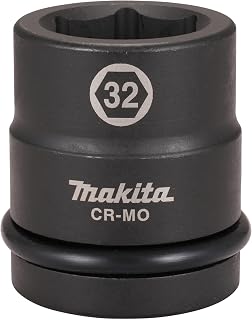


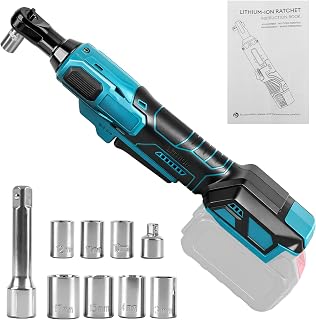


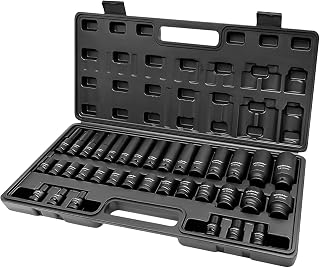


Choosing a Makita socket set is not simply a matter of selecting the largest number of pieces. The more useful question is whether the sockets match the drive system, fastening jobs and tools you actually use. A compact set containing the right sizes can be considerably more useful than a much larger kit containing sockets that rarely leave the case.
For UK buyers, the most important decisions usually involve drive size, socket type, metric coverage, depth, impact compatibility, storage and the way the sockets will be used. Makita's accessory range includes individual impact sockets as well as sets covering different drive formats, so checking the specification of the individual product is essential rather than assuming that every Makita socket is intended for the same application.
The drive is the square connection between the socket and the ratchet, breaker bar, impact wrench or suitable adaptor. Common sizes include 1/4-inch, 3/8-inch and 1/2-inch. The correct choice depends on the tool and the level of torque involved.
A socket with the wrong drive size should not be forced into service simply because the hex size happens to be correct. If an adaptor is required, check that the complete combination is appropriate for the tool and intended application.
One of the most important distinctions when comparing Makita sockets is whether they are intended for impact use. Standard hand-tool sockets and impact sockets are not interchangeable simply because they have the same nominal drive and hex size.
Impact sockets are designed for use with compatible impact tools and are commonly manufactured from tougher materials suited to repeated shock loading. Makita's UK accessory range includes black-finished impact socket products, with examples using chrome-molybdenum steel. For instance, the Makita E-16639 is specified as a 3/8-inch, nine-piece impact socket set with a chrome-molybdenum steel construction and blackened finish.
This distinction matters because an impact wrench does not apply torque in exactly the same way as a hand-operated ratchet. Repeated impacts place different stresses on the socket and drive connection. If the socket is intended for an impact tool, verify that the manufacturer's specification explicitly supports that application.
Black impact sockets are visually easy to distinguish from many conventional polished chrome sockets, but appearance alone should never be treated as proof of impact compatibility. Look at the product description and technical specification for the words impact, the specified drive size and the intended tool type.
Material is also worth considering. Chrome-molybdenum steel is commonly associated with impact socket construction because it combines strength and toughness suitable for demanding applications. That does not mean every socket made from the same broad material category has identical performance, so the complete manufacturer specification remains more useful than material terminology in isolation.
Metric sockets are particularly important when working on modern vehicles, machinery, power tools, fixtures and general equipment. A set should be judged by the sizes it actually contains rather than the headline piece count.
For example, a nine-piece set may be more useful for a particular workshop than a much larger mixed kit if its size range closely matches the fasteners encountered most frequently. Conversely, a small set can become frustrating if several commonly needed sizes are missing.
Socket depth is an often-overlooked buying consideration. A standard or shallow socket is useful where the nut is accessible close to the surface. A deep socket provides additional clearance around a protruding threaded stud, making it useful for applications where a conventional socket cannot reach the nut correctly.
Extended sockets go further still and can be valuable when access is restricted or the fastener sits deeper inside a component. However, additional length can become a disadvantage in confined spaces where a shorter socket would provide better clearance.
Makita offers dedicated deep impact socket products as well as conventional impact socket sets. One example is the E-12354 three-piece deep wheel-nut socket set, which is specified with 17 mm, 19 mm and 21 mm deep impact sockets.
These three measurements are easy to confuse when shopping online.
A 21 mm socket, for example, can exist in different drive sizes and lengths. Therefore, searching only for “21 mm Makita socket” is not sufficient when compatibility matters.
A complete set is usually attractive when building a socket collection from scratch. It can also make storage and identification easier because the sizes are supplied together. However, buying individual sockets can be the more rational choice when you already own most of the sizes you need.
Consider a set when:
Consider individual sockets when:
The Makita range includes several configurations, so comparing the product code is often more useful than comparing the number of pieces alone. Current UK listings include the E-16564 nine-piece 1/2-inch impact socket set, E-16639 nine-piece 3/8-inch impact socket set, E-16592 seven-piece 1/2-inch impact socket set and E-16645 nine-piece 1/2-inch impact socket set with a 1/4-inch hex adaptor.
These products illustrate why “best Makita socket set” has no universal answer. A user with a 3/8-inch impact driver has different requirements from someone using a high-torque 1/2-inch impact wrench. The correct choice should therefore begin with the tool, followed by the fastener sizes and working environment.
The E-16564 is a nine-piece 1/2-inch square-drive impact socket set. UK product information identifies it as part of Makita's Impact Black range and specifies chrome-molybdenum steel construction.
It is the type of set worth considering when 1/2-inch impact compatibility is the priority. Before purchasing, compare its included sizes with the fasteners you actually encounter rather than assuming a nine-piece configuration will cover every workshop requirement.
The E-16639 provides a nine-piece 3/8-inch impact socket configuration. RS specifies a 3/8-inch drive, nine-piece quantity, blackened finish and chrome-molybdenum steel construction.
This type of set can make sense when a smaller 3/8-inch drive system is preferable to a larger 1/2-inch arrangement. The deciding factors should be the drive of the tool, required socket sizes and the space available around the fastener.
The E-12354 is a specialist three-piece deep impact socket set rather than a general-purpose collection. Its listed sizes are 17 mm, 19 mm and 21 mm, making it particularly relevant to applications where those sizes and additional socket depth are required.
A specialist three-piece set can therefore be a better purchase than a larger general-purpose kit if the job calls specifically for deep sockets in these sizes.
Some Makita socket sets are supplied with adaptors that allow a suitable impact driver or other compatible tool to connect to a square-drive socket. UK listings, for example, identify Makita sets supplied with 1/4-inch hex adaptors alongside impact sockets.
An adaptor changes the connection format; it does not automatically make every combination suitable for every torque level or application. Check the specification of the socket, adaptor and driving tool as a complete system.
This is especially important when moving from a compact impact driver to a high-torque impact wrench. The fact that an adaptor physically fits does not, by itself, establish that the combination is appropriate for demanding fastening work.
For demanding impact work, toughness is more important than simply choosing the hardest possible material. The socket needs to withstand repeated shock loads without becoming excessively brittle.
Chrome-molybdenum steel is a common choice for impact sockets. Product specifications for Makita impact sets in the UK identify chrome-molybdenum steel construction, including the E-16639.
Other factors also influence practical durability:
A correctly sized socket should engage the fastener properly. A socket that is too large can introduce unwanted movement and increase the likelihood of damaging the fastener. A socket that is contaminated with debris can also fail to seat properly.
For impact work in particular, selecting the correct size and ensuring that the socket is fully seated before applying force is a basic but important habit. If a fastener is badly rounded, heavily corroded or otherwise compromised, simply increasing impact force is not necessarily the best solution.
“100-piece” sounds more impressive than “9-piece”, but the larger kit may contain bits, adaptors and sizes that are irrelevant to your work. Compare the actual socket sizes and drive formats.
Do not assume that a conventional chrome socket is suitable for impact use. Check the manufacturer's intended application.
A 19 mm socket is not automatically compatible with every 19 mm socket tool. The hex size and drive size describe different parts of the accessory.
If the nut sits over a long stud, a standard socket may not provide enough depth. Check whether a deep socket is required before buying.
Makita manufactures a broad accessory range. Product codes, drive dimensions and intended applications vary, so the exact specification should be checked for each item.
An adaptor can solve a connection mismatch, but it does not eliminate the need to check torque suitability, impact compatibility and clearance.
A socket collection is easier to use when sizes can be identified quickly and missing pieces are obvious. A case, pouch, rail or organiser can therefore have genuine practical value.
When comparing two or more products, use the same criteria for each rather than relying on headline descriptions.
A DIY user may benefit most from a compact set containing the sizes needed for common household, garden and maintenance jobs. There is little advantage in carrying a large professional assortment if most of its contents will remain unused.
Automotive users should pay particular attention to drive size, metric coverage, depth and impact compatibility. Wheel-related work can also make deep impact sockets particularly useful. A dedicated three-piece deep set such as the Makita E-12354 demonstrates the difference between a specialist socket configuration and a general-purpose set.
Tradespeople who use sockets frequently should prioritise reliability, correct sizing, easy identification and efficient storage. A smaller set of frequently used sizes can reduce wasted time, while specialist individual sockets can fill gaps without forcing the purchase of an entire additional kit.
Good socket maintenance is straightforward. After use, wipe away dirt, grease and moisture before putting the sockets back into storage. This makes size markings easier to read and reduces the accumulation of contaminants.
Look for cracks, deformation, excessive wear, damaged drive areas or other visible defects. Check that the socket seats properly on the tool and fastener. If anything appears abnormal, stop and investigate rather than applying more torque.
Value is not simply the lowest purchase price. A useful socket set should provide the sizes and configuration required for the work while avoiding unnecessary duplication.
A practical value assessment can include:
Makita is not the only established manufacturer worth considering. Depending on the application, buyers may also compare socket and impact-accessory ranges from brands such as Bosch, DeWalt, Milwaukee, Wera, FACOM, Bahco and Teng Tools.
The most useful comparison is not simply brand against brand. Compare equivalent products with the same drive size, similar socket range, comparable intended use and similar storage requirements.
Brand reputation should be treated as one consideration rather than a substitute for checking the exact specification of the socket set.
The word “professional” can be used loosely in product marketing, so it is better to translate it into measurable requirements. For socket sets, professional suitability can mean a combination of appropriate impact compatibility, durable construction, useful size coverage, accurate fit, dependable storage and suitability for frequent use.
A DIY user does not necessarily need the most expensive professional-oriented kit. Likewise, a professional who uses a socket set every day may find that a cheap assortment costs more in the long run through missing sizes, poor organisation or premature replacement.
Online listings can present several similar-looking products together, so read the technical details rather than relying on the product photograph.
Use the socket, adaptor and driving tool according to their manufacturer's instructions. Wear appropriate eye protection and other personal protective equipment for the job, particularly where debris or damaged fasteners could present a hazard.
Do not use visibly damaged sockets. Avoid improvised combinations that exceed the intended application of the components, and take particular care when working around high-torque tools. When loosening or tightening critical fasteners, follow the equipment or vehicle manufacturer's specified procedure and torque requirements rather than relying on the maximum output of the tool.
For someone already invested in Makita tools, a Makita socket set can be a logical accessory choice, particularly where the drive format, socket sizes and impact requirements match the existing equipment. The range also includes compact, specialist and deep-socket configurations rather than a single universal set.
However, the “best” Makita socket set depends on the job. A 3/8-inch impact set can make more sense for compact applications, while a 1/2-inch set may be preferable for higher-torque work. A deep three-piece set may be more useful than a general-purpose kit when the specific requirement is wheel or long-stud access.
There is no single best set for every user. The right choice depends primarily on drive size, socket sizes, intended application and whether impact compatibility is required. A compact 3/8-inch set may suit one user, while a 1/2-inch impact set or a specialist deep socket set may be more appropriate for another.
Impact sockets specifically identified by Makita as impact products are intended for compatible impact applications. Always check the exact product specification and the requirements of the tool before use.
The drive size is different. A 3/8-inch socket connects to a 3/8-inch square drive, while a 1/2-inch socket connects to a 1/2-inch square drive. The hex size of the socket is a separate measurement.
Neither is universally better. Deep sockets provide additional depth where a fastener extends over a stud or sits in a deeper position. Standard sockets are often more compact and can be preferable where space is limited.
Not necessarily. If you already own most common sizes, buying individual sockets can be more economical. A complete set makes more sense when you need several sizes at once or want a coordinated storage solution.
No. A larger set is only better value if the additional pieces are useful. Compare the exact sizes, drive format, socket depth and intended application rather than the headline piece count.
Some Makita socket sets are supplied with adaptors designed to connect an impact driver to a square-drive socket. However, compatibility must be checked for the complete tool, adaptor and socket combination. An adaptor does not automatically make every socket suitable for every impact application.
UK product specifications for several Makita impact socket products identify chrome-molybdenum steel construction. The precise specification should be checked against the exact product code because Makita sells different types of socket and accessory.
No. Socket compatibility is primarily determined by the drive connection, socket specification and intended application rather than the logo on the power tool. A Makita socket can therefore be relevant to compatible equipment from other manufacturers, provided the complete combination meets the manufacturer's requirements.
Prioritise the correct drive size, metric socket coverage, impact compatibility where required, appropriate socket depth and easy identification. Deep sockets can be especially useful for applications involving extended studs or wheel fasteners.
Keep them clean and dry and use the supplied case, pouch, rail or another suitable organiser where available. Good organisation makes missing sizes immediately obvious and reduces the time spent searching for individual sockets.
There is no universal replacement interval. Replace a socket when it develops damage, excessive wear, deformation or another defect that could compromise safe and effective use. Frequency of use, loading and working conditions all affect service life.
The strongest approach to choosing a Makita socket set is to work backwards from the job rather than forwards from the product count. Identify the tool, determine the required drive, list the socket sizes you actually use and decide whether you need standard, deep or impact sockets. Then compare construction, storage and overall value.
For general comparison, the Makita E-16639 demonstrates the compact 3/8-inch impact-set format, while the E-16564 represents a nine-piece 1/2-inch impact configuration. The E-12354 illustrates the specialist deep-socket approach for users who specifically need 17 mm, 19 mm and 21 mm deep impact sockets.
Most importantly, do not assume that the largest set, highest piece count or most expensive option is automatically the best purchase. Match the socket to the fastener, the drive to the tool and the construction to the application. That approach makes it easier to compare Makita products with alternatives from Bosch, DeWalt, Milwaukee, Wera, FACOM, Bahco and Teng Tools and select the set that genuinely fits your requirements.
Product ranges, specifications, retailer stock and prices can change during the year. The Makita product codes and examples discussed above should therefore be checked against the current manufacturer or retailer specification before purchase. Retailer listings can also differ in packaging, included accessories and availability.
This guide is intended as independent consumer information. It does not manufacture, sell, ship or provide warranty or after-sales support for the products discussed. Buyers should verify current specifications, read verified customer reviews and compare today's prices from reputable UK retailers before making a purchase.