
♥ Wishlist
Compare 69 verified DeWalt Sockets for Professional and DIY Applications products in United Kingdom. Reviews, ratings, pros, cons and buying advice updated for October 2026.


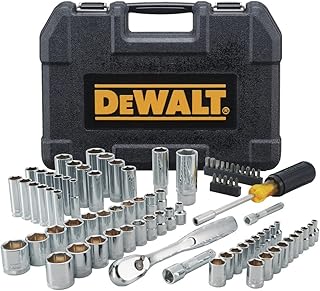


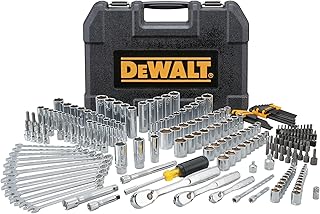


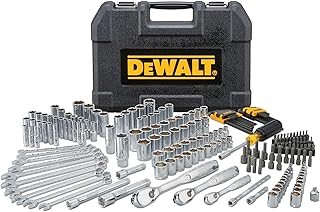


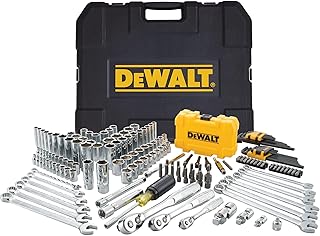


Choosing a DEWALT socket set is not simply a matter of selecting the largest set or the highest number of pieces. The most suitable option depends on the drive size, socket profile, measurement system, working environment, fastener sizes you regularly encounter and whether the set will be used with a hand ratchet, breaker bar, torque wrench, impact tool or another compatible drive tool.
For occasional home maintenance, a compact set containing common metric sizes may be more useful than a large professional-oriented collection. For automotive work, mechanical repairs and workshop applications, a broader selection can reduce the need to purchase additional sockets later. If powered impact tools are involved, socket compatibility becomes particularly important because standard chrome hand-tool sockets should not automatically be treated as suitable for impact applications.
DEWALT is a well-established tool brand with socket and accessory products aimed at different types of users. However, the DEWALT name alone should not determine a purchase. Compare the actual specification of each set, including drive size, socket sizes, construction, markings, storage system and intended application.
The drive size determines which ratchets and compatible drive tools can be used with the sockets. Common sizes include 1/4-inch, 3/8-inch and 1/2-inch drive, with larger drive formats intended for heavier-duty applications.
A 1/4-inch drive set is generally suited to smaller fasteners and lighter mechanical or maintenance work. A 3/8-inch drive offers a useful middle ground for general-purpose workshop and automotive tasks. A 1/2-inch drive is more appropriate where larger sockets and greater torque are required.
Do not assume that a larger drive is automatically better. A 1/2-inch socket set can be unnecessarily cumbersome for small fasteners, while a compact 1/4-inch set may lack the capacity required for larger nuts and bolts. If your toolkit covers several types of work, a combination of drive sizes can be more practical than trying to make one set cover every application.
Metric sockets are normally the first consideration for UK buyers, particularly for modern vehicles, machinery, appliances and general mechanical work. Imperial or SAE sizes remain useful for certain older vehicles, imported machinery, specialist equipment and applications where imperial fasteners are still encountered.
If you already own a metric set, adding a second set containing only metric sizes may provide little additional value unless it offers a different drive size, socket profile or specialist feature. Conversely, a set covering both metric and imperial sizes can be useful where the toolkit is shared between domestic repairs, automotive work and older equipment.
Before buying, examine the actual size range rather than relying on the total piece count. A 100-piece set is not necessarily more useful than a 40-piece set if many of the additional pieces are accessories you rarely use.
The useful size range depends on the jobs you expect to perform. Small sockets are valuable for compact fasteners, brackets and mechanical components, while larger sizes become increasingly relevant for automotive, machinery and heavier maintenance work.
Look for sensible progression between socket sizes. A set with numerous frequently used sizes may be more practical than one that concentrates heavily on unusual sizes simply to increase the advertised piece count.
Socket depth can make a significant difference when selecting a set. Standard sockets are suitable for many conventional fasteners, whereas deep sockets extend further over the nut and threaded portion of a bolt.
Deep sockets can be particularly useful where a nut sits on a long exposed thread. A standard socket may bottom out against the protruding thread before fully engaging the fastener, whereas a suitably designed deep socket can provide the required clearance.
Deep sockets are not automatically better for every job. They can have a larger overall profile and may be less convenient in confined spaces. For a versatile toolkit, having access to both standard and deep sockets can be more useful than choosing one type exclusively.
This is one of the most important distinctions to understand before buying sockets for powered tools. Impact sockets are designed for use with compatible impact-driving equipment, while conventional chrome-finished hand sockets are intended for hand-operated tools unless the manufacturer specifically states otherwise.
Impact sockets are commonly associated with darker finishes and heavier construction, although appearance alone should never be used to determine suitability. Always check the manufacturer's stated application and compatibility.
If you intend to use a DEWALT socket set with an impact wrench or impact driver, verify that the sockets are explicitly intended for that application. The important consideration is not simply whether the socket fits the tool's drive; it is whether the socket itself is designed for the forces generated by impact equipment.
Impact tools subject accessories to repeated high-energy loading. A socket designed for conventional hand use is not automatically equivalent to an impact-rated accessory.
When comparing impact-compatible sets, consider the stated application, drive size, socket dimensions, construction and any manufacturer's guidance concerning use with impact equipment. Avoid choosing solely on the basis of colour or appearance.
The material and manufacturing method influence how a socket performs under repeated use. Buyers should look beyond the brand name and examine the specification of the individual product.
Many quality sockets use alloy steel formulations selected for a combination of strength, durability and resistance to deformation. The exact material specification can vary between product ranges, so it is better to compare the manufacturer's stated construction than to assume that every DEWALT socket has identical characteristics.
Surface finish affects identification, corrosion resistance, cleaning and general appearance. Chrome-finished sockets are commonly associated with hand-tool applications, while impact-oriented sockets often have a different finish.
A finish should not be treated as proof of impact compatibility. The manufacturer's intended-use specification remains the more important consideration.
Clear, durable markings are particularly useful in a busy toolbox. Socket sizes can be difficult to identify when several pieces are similar in appearance, especially under workshop lighting or when tools become dirty.
When comparing sets, examine how the sizes are marked and whether the markings are likely to remain legible after repeated handling. Easy identification can save considerable time over the life of a tool set.
The number of contact points is another important comparison criterion. Six-point sockets engage the flat sides of compatible hexagonal fasteners and are widely valued where secure engagement and torque transfer are priorities.
Twelve-point sockets can provide more engagement positions, making them convenient where the ratchet cannot be repositioned through a large angle. That can be useful in restricted spaces.
The choice should therefore reflect the application rather than a simple assumption that one design is universally superior. If your work regularly involves stubborn fasteners or higher torque, examine the socket geometry and intended application carefully.
A socket set should be considered as part of a wider drive system. Before purchasing, check that the sockets are compatible with the ratchets and other drive tools already in your toolbox.
The number of sockets is only one part of a complete kit. Accessories can significantly affect how useful a set becomes in practice.
Extension bars allow sockets to reach recessed fasteners and can be especially useful around engine bays, machinery and awkwardly positioned components. Different extension lengths serve different purposes, so consider whether the supplied sizes suit your normal working environment.
A universal joint can help reach fasteners that are not conveniently aligned with the ratchet. It can be useful for access, but buyers should follow the manufacturer's guidance because universal joints can change the way torque is transmitted through the drive system.
Adapters can allow tools and sockets with different drive sizes to work together. They can be convenient, but they should not be regarded as a substitute for selecting the correct drive size for demanding applications.
A breaker bar is designed to provide greater leverage than a conventional ratchet. If you regularly encounter tight fasteners, a suitable breaker bar may be a valuable separate addition to a socket collection. It is important to use tools and sockets in accordance with their intended applications.
Automotive users should pay particular attention to socket coverage rather than selecting a set based solely on its advertised piece count. Vehicle maintenance can involve a mixture of fastener sizes, restricted access and situations where deep sockets or extensions are useful.
For wheel-related work, suspension components and larger mechanical fasteners, a suitable larger-drive system may be more appropriate than a compact small-drive kit. For smaller engine-bay components and general servicing, a mid-size drive can offer a useful balance of access and torque.
If an impact wrench is part of the workshop, select compatible impact sockets rather than assuming that a general-purpose chrome socket set is suitable.
Home users do not necessarily need the largest DEWALT socket set available. For assembling equipment, maintaining garden machinery, carrying out household repairs and dealing with occasional mechanical tasks, a smaller set covering common sizes may be easier to store and quicker to use.
Prioritise the sizes and drive format you are most likely to need. A compact case can also be advantageous where tools are stored in a domestic cupboard, garage or small workshop rather than a dedicated tool chest.
Professional users should consider long-term usability, coverage and compatibility with the wider workshop rather than focusing exclusively on initial purchase cost.
A professional-oriented toolkit may benefit from multiple drive sizes, standard and deep sockets, impact-compatible accessories where required, extensions and clearly organised storage. The correct configuration depends heavily on the trade and the type of equipment being serviced.
For technicians who frequently work on a narrow range of fastener sizes, a carefully selected smaller collection can sometimes be more efficient than a large general-purpose kit. Conversely, mobile technicians may prefer broader coverage to reduce the need to carry separate sets.
Good storage is more than a convenience. It can reduce misplaced sockets and make it easier to identify missing pieces before starting a job.
When comparing DEWALT socket sets, examine the supplied case or storage arrangement. Consider whether sockets remain securely positioned, whether sizes are easy to identify and whether the case is practical for your storage space.
For mobile use, the durability and portability of the storage solution can matter considerably. For a fixed workshop, compatibility with existing tool drawers and organisers may be more important.
Piece count can be misleading when comparing socket sets. A manufacturer's total may include sockets, ratchets, extensions, adapters and other accessories rather than representing the number of useful socket sizes.
Compare the contents line by line. Two sets with similar advertised piece counts can have very different practical coverage.
A large number of pieces can look attractive, but the most useful set is the one containing the right combination of sockets and accessories for your work.
Buying sockets that do not match the drive tools you already own can result in unnecessary additional purchases. Confirm compatibility before ordering.
This is a particularly important mistake. Standard hand sockets should not automatically be used with impact equipment. Verify the manufacturer's intended application.
A very large kit can introduce unnecessary duplication. If you already have several socket sets, compare the new set with your existing tools and identify what it actually adds.
If your work involves long threaded studs or recessed fasteners, a set without suitable deep sockets may leave important gaps in your toolkit.
A socket set that is difficult to organise can become frustrating to use, particularly when several sizes look similar or tools are regularly transported between locations.
When two DEWALT sets appear similar, use a consistent comparison process rather than choosing the one with the larger headline number.
DEWALT should be compared with other established tool manufacturers rather than evaluated in isolation. Brands such as Milwaukee, Makita, Bosch Professional, Facom, Bahco, Stanley and Wera cover different parts of the professional and enthusiast tool market, and their socket ranges can differ in configuration, drive sizes, accessory coverage and intended applications.
The right comparison is therefore specification against specification. Consider the actual socket contents, construction, compatibility and storage rather than assuming that one brand is automatically superior across every category.
When comparing DEWALT with Milwaukee, pay particular attention to the intended application and whether the competing sets are designed for hand tools, impact equipment or general workshop use. Compare the actual contents and specifications of the individual sets rather than judging by brand reputation alone.
Makita is another major power-tool brand with a broad accessory ecosystem. For buyers who already use one brand extensively, compatibility with existing tools and preferred drive systems can be a practical consideration, although socket selection should still be based on the specification of the individual product.
Facom and Bahco are well-established names in hand tools and professional workshop equipment. When comparing their socket sets with DEWALT, examine socket profiles, size coverage, drive formats, storage and intended professional use rather than relying on the number of pieces.
Wera takes a distinctive approach to hand-tool design and storage. Buyers considering Wera alongside DEWALT should compare the specific socket systems, included tools and compatibility with their existing workshop equipment.
Retailer descriptions can sometimes condense a substantial amount of information into a short product title. Before purchasing, open the detailed specification and verify the individual contents.
The cheapest socket set is not necessarily the best value, but a more expensive set is not automatically better either. Long-term value comes from buying the configuration that matches your actual requirements.
Consider how often the set will be used, which sizes are essential, whether additional tools will need to be purchased separately and whether the storage system is useful. A smaller set that covers your common applications may represent better value than a larger collection containing numerous pieces that remain unused.
For professional users, downtime and tool availability can also influence value. Having the appropriate socket available when a job requires it can be more useful than owning a larger number of rarely used sizes.
Use each socket with the drive tool and application for which it is intended. Keep sockets clean and dry, particularly after use in environments where they are exposed to moisture, dirt or corrosive substances.
Inspect sockets periodically for visible damage, deformation, cracks or excessive wear. Damaged tools should not be relied upon simply because they still appear to fit a fastener.
Keep sockets organised according to size and drive. Returning each piece to its designated position makes missing tools easier to identify and can reduce the time spent searching through a toolbox.
Wipe away oil, dirt and debris after use. Contamination can make markings harder to read and may interfere with secure engagement between the socket and drive tool.
Look for cracks, damaged drive openings, excessive rounding, corrosion or other visible defects. Pay particular attention to accessories that have been exposed to unusually high loads.
Use the supplied case or another suitable organiser to keep sizes separated and protected. Avoid leaving sockets loose in a toolbox where they can become mixed with unrelated tools.
A socket should be used with a compatible drive tool suited to the application. Avoid using improvised methods that could damage the socket, fastener or tool.
Always use appropriate personal protective equipment and follow the manufacturer's instructions for the tools involved. Make sure the socket is fully seated on the fastener before applying force.
For high-torque applications, use equipment appropriate to the task and inspect accessories beforehand. If an impact wrench is being used, select sockets specifically intended for impact applications where required.
Do not use a visibly damaged socket merely because it appears to engage with the fastener. A compromised accessory can create unnecessary risk during high-force work.
DEWALT socket sets can be worth considering for DIY users, vehicle owners, maintenance workers, tradespeople and workshop users who want to build or expand a compatible tool collection. The best option varies considerably between these groups.
A homeowner may prioritise compact storage and common metric sizes. An automotive enthusiast may need deeper coverage, extensions and larger drives. A professional technician may prioritise comprehensive coverage, convenient organisation and compatibility with existing workshop equipment.
Buyers who only perform occasional light maintenance may not benefit from paying for a large professional-oriented collection. If most of your work involves a small number of fastener sizes, a compact set can be more efficient.
Likewise, if your existing toolbox already contains a comprehensive collection, consider whether the proposed purchase fills a genuine gap. Buying duplicate sockets can provide less value than adding specialist sizes, deep sockets or another drive format that you actually need.
They can be suitable for DIY users, but the most appropriate set depends on the work being carried out. For occasional maintenance, focus on common sizes, a suitable drive format and convenient storage rather than automatically selecting the largest available set.
There is no single best drive size. Smaller drives are useful for smaller fasteners and restricted spaces, while larger drives are better suited to larger fasteners and higher-torque applications. A 3/8-inch drive can provide a useful general-purpose option, but the correct choice depends on your existing tools and intended work.
DEWALT offers socket configurations covering different measurement systems and applications. Check the individual product specification to confirm whether a particular set is metric, imperial or mixed.
Only use sockets with impact equipment when the specific sockets are intended and rated for that application. Do not assume that every DEWALT socket is impact-compatible simply because it fits a DEWALT impact tool.
Neither is universally better. Deep sockets provide additional clearance around longer threaded fasteners, while standard sockets can be more convenient in applications where extra depth is unnecessary or space is restricted. Many users benefit from having access to both.
Six-point sockets are often preferred where secure engagement with compatible hexagonal fasteners is important. Twelve-point sockets can offer more engagement positions when working in restricted spaces. The best choice depends on the type of fasteners and access conditions you regularly encounter.
No. A larger set can provide greater coverage, but only if the additional sizes and accessories are useful to you. Compare the actual contents rather than relying on the advertised piece count.
Check the exact socket sizes, drive format, measurement system, depth, point configuration, intended application, impact compatibility, accessories and storage system. Product titles can be abbreviated, so the detailed specification is the more useful reference.
There is no universal replacement interval. Inspect sockets regularly and replace them when they show damage, significant deformation, cracking, excessive wear or other signs that could affect safe and effective use.
Adapters can be useful for compatible applications, but they should not be treated as a universal solution. Check the manufacturer's guidance and consider the forces involved, particularly for high-torque or impact applications.
Both matter, but the balance depends on the user. A carefully selected set with the right sizes, appropriate construction and useful accessories can be more practical than a much larger collection containing sizes you rarely need.
The best DEWALT socket set is the one that matches the fasteners, tools and working conditions you actually encounter. Start with drive size and socket coverage, then consider metric or imperial requirements, standard versus deep sockets, six-point versus twelve-point designs, impact compatibility, construction, accessories and storage.
For a confident purchase, compare the complete specification of each shortlisted set rather than relying on piece count, brand familiarity or promotional wording. Check current prices from trusted retailers, read verified customer feedback alongside the manufacturer's specifications, and make sure the set fills a genuine gap in your existing toolkit.
Whether you need a compact socket collection for household maintenance, a broader set for automotive work or a more comprehensive workshop solution, careful comparison should help you select a DEWALT configuration that provides useful coverage without paying for features or sizes you do not need.