

♥ Wishlist
Compare 52 verified DeWalt Drilling & Fixing Bit Sets products in United Kingdom. Reviews, ratings, pros, cons and buying advice updated for October 2026.
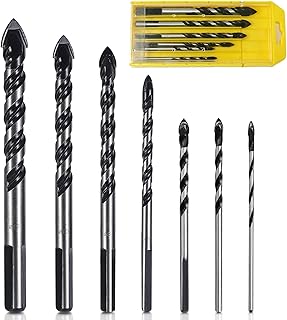


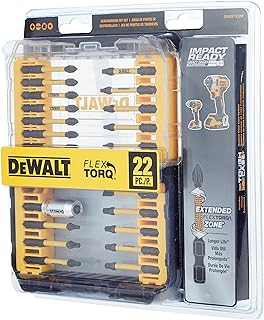


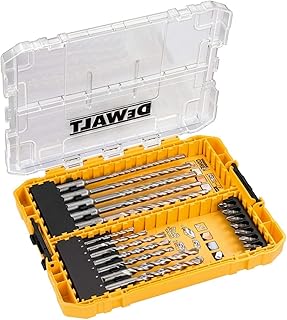


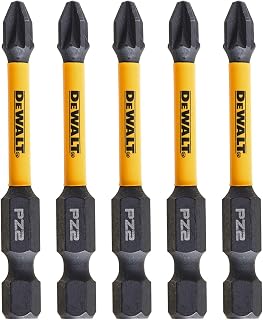


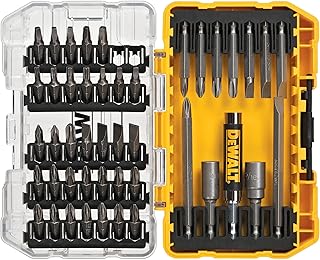


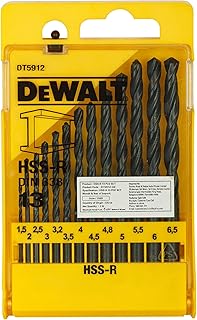


The most suitable DEWALT drilling and fixing bit set is not necessarily the one with the highest piece count. A compact set with the right drill-bit diameters, screwdriver profiles and shank types can be considerably more useful than a much larger assortment containing accessories you rarely use.
For UK DIY, maintenance and trade work, start by identifying the materials you expect to drill and the type of fasteners you normally install. Wood, metal, masonry and screwdriving each require different accessory designs. A combination set can be convenient for general-purpose work, whereas a specialist masonry, metal or impact-driver set can be the better choice when one application dominates.
Drill-bit construction has a direct effect on how an accessory behaves under load, how accurately it starts a hole and how well it withstands repeated use. When comparing DEWALT bit sets, consider the material and geometry rather than relying solely on the number of pieces supplied.
High-speed steel, commonly abbreviated to HSS, is widely used for metal-drilling accessories. HSS-R and HSS-G describe different manufacturing approaches, so these labels should not be treated as interchangeable marketing terms.
DEWALT's HSS-G 29-piece range includes sizes from 1 mm through 13 mm, giving users a particularly broad selection for general metal-drilling work. The manufacturer specifies a 118-degree split-point design for that range and describes it as suitable for a range of ferrous and non-ferrous materials.
For buyers who rarely need larger diameters, a smaller HSS set can make more sense. A 13-piece HSS-R black-oxide set, for example, concentrates on smaller diameters from 1.5 mm to 6.5 mm. DEWALT describes the black-oxide finish as providing additional corrosion resistance.
Masonry drilling places different demands on a bit from drilling mild steel or timber. The cutting end must withstand abrasive mineral material and, where percussion drilling is used, repeated impact.
DEWALT's EXTREME masonry range includes carbide-headed bits and reinforced steel bodies, with the manufacturer identifying applications such as anchors, plastic plugs, fixings and pipework clearance holes. The five-piece DT6956-QZ set includes 4 mm, 5 mm, 6 mm, 8 mm and 10 mm masonry bits.
One of the most common buying mistakes is assuming that every masonry bit works with every drill. Check both the shank and the manufacturer's stated application before purchasing.
DEWALT specifies three-flat anti-slip shanks on some of its masonry and metal accessories, while its SDS-Plus accessories are designed around SDS-compatible machines. Always verify the exact connection specification rather than relying on the appearance of the bit.
These categories overlap in everyday tool use, but they are not the same thing. Understanding the distinction makes it much easier to compare products fairly.
A dedicated drill-bit set prioritises drilling rather than screwdriving. It is often the better choice when you already own a comprehensive screwdriver-bit collection and need more coverage for wood, metal or masonry.
The principal advantage is a more useful size range. Instead of paying for dozens of screwdriver bits you already have, you can put the budget towards the drilling diameters and specialist geometries you actually need.
A screwdriver-bit set is focused on driving and removing fasteners. The important specifications are bit profile, size, length, holder compatibility and, where relevant, impact suitability.
DEWALT's 45-piece DW2166 screwdriver set, for example, includes a mixture of screw bits, longer double-ended and power bits, a magnetic drive guide, nutsetters and a ToughCase container.
A combination set is designed to cover multiple everyday jobs with one case. This can be particularly useful for homeowners, maintenance workers and tradespeople who regularly switch between drilling pilot holes and installing fixings.
DEWALT's 19-piece DT7921-QZ combination set is described as containing both drill and screwdriver bits, with applications covering metal, wood, plastic and masonry.
The trade-off is that a combination kit may provide fewer specialist bits in each category. If you frequently drill 10 mm masonry holes but only occasionally use screwdriver bits, a specialist masonry set may be a more rational purchase.
A 100-piece kit can appear better value than a 20-piece kit, but the headline number needs to be examined carefully. Some manufacturers count every individual component, including duplicate screwdriver bits, holders and accessories.
Instead of asking “How many pieces are included?”, ask the following:
For example, DEWALT's 109-piece mixed accessory set includes metal and masonry drill bits alongside screwdriver bits, nut drivers, a countersink, depth stops, a bit holder and a screwdriver handle. The large piece count therefore represents a broad accessory system rather than 109 different drill bits.
Do not assume that a standard drill bit or screwdriver bit is suitable for an impact driver merely because the shank fits.
Impact drivers generate rapid rotational impacts that can place substantially different stresses on accessories. Where impact use is expected, select accessories specifically designed and rated for that application.
DEWALT's IMPACT READY drilling and fastening range includes FlexTorq screwdriver bits designed around impact-driver use, with the manufacturer describing a reflex-core design intended to allow controlled flexing and reduce breakage.
If your primary tool is a conventional drill driver, however, you should not automatically pay extra for an impact-focused accessory range. Match the accessory to the machine and application you actually use.
Shank design is one of the easiest specifications to overlook when comparing sets online. It is also one of the quickest ways to buy an otherwise unsuitable accessory.
Conventional drill chucks accept a broad range of cylindrical and compatible shaped shanks. This makes them versatile for general-purpose drill bits, provided the chuck's clamping range accommodates the accessory.
Hex accessories are particularly convenient when repeatedly switching between drilling and screwdriving operations. They can make workflow faster because the accessory can be changed without completely opening a conventional chuck.
SDS-Plus accessories belong to a different connection system. If you own an SDS-Plus rotary hammer, check that the bit is specifically manufactured for SDS-Plus use. DEWALT lists SDS-Plus masonry accessories separately from conventional masonry drill bits.
The ideal size range depends on your work. For general household tasks, prioritise the diameters you are most likely to use rather than selecting a kit purely because it contains the greatest number of sizes.
For metal drilling, a broad graduated set can be valuable because small pilot holes and progressively larger holes are common. DEWALT's 29-piece HSS-G set covers a particularly broad 1 mm to 13 mm range.
For masonry, the useful range is often narrower because plugs and fixings tend to dictate the required hole diameter. A compact set containing several commonly used masonry sizes can therefore be more practical than a large mixed case.
A pilot hole can improve control when drilling larger holes, particularly in materials where the cutting edge may otherwise wander. The appropriate pilot-hole procedure depends on the material, bit design and manufacturer's instructions.
Do not assume that progressively stepping through multiple diameters is always necessary. Some modern drill-bit geometries are designed to start directly at their intended size. Follow the accessory manufacturer's recommendations for the specific bit.
The case is a functional part of a bit set, not merely packaging. A good storage system makes it easier to identify the required size, protects accessories during transport and reduces the likelihood of losing small bits.
Look for clearly labelled positions, secure retention, practical access and enough space to return accessories after use. A compact case is particularly valuable for tradespeople who carry tools between sites.
DEWALT uses different storage approaches across its ranges, including plastic cases and ToughCase systems. The exact contents and case design vary by model, so compare the physical storage arrangement rather than assuming every DEWALT set uses the same system.
More accessories can mean more versatility, but only when those accessories are relevant. An oversized assortment can add cost, weight and storage requirements without improving your everyday toolkit.
A bit can have an excellent cutting head yet still be unsuitable for your machine. Check the connection specification before buying.
A screwdriver bit is not a substitute for a drill bit, and a general-purpose metal drill bit should not automatically be treated as a masonry accessory. Match the cutting geometry and material specification to the job.
Phillips and Pozidriv are different profiles. Torx sizes also need to be matched precisely. Using an approximate fit can increase the likelihood of cam-out, fastener damage or premature bit wear.
Impact-driver use requires appropriate accessories. If impact use is part of your normal workflow, specifically check the manufacturer's compatibility information.
A set may initially contain everything you need, but high-use bits will eventually experience wear. Before buying, consider whether replacement accessories are readily identifiable by model or size and whether you would prefer to replace individual bits or the entire set.
A structured comparison prevents the headline piece count from dominating the decision. Use the following criteria when evaluating shortlisted products.
A modest combination set can be a sensible starting point if your projects involve assembling furniture, putting up shelves, installing brackets and carrying out general household repairs. Prioritise common drill sizes, common screwdriver profiles and straightforward storage.
Renovation work tends to expose the limitations of small general-purpose kits. If you regularly work across masonry, timber, metal and fixings, consider a combination set alongside specialist accessories for the materials you encounter most often.
Frequent users should place greater emphasis on accessory life, consistency, compatibility, storage and the availability of replacement sizes. A specialist set can be preferable to an all-purpose case because it avoids carrying unnecessary accessories while ensuring the most frequently used sizes are immediately available.
Prioritise accessories specifically designed for impact applications. A dedicated impact-ready screwdriving set may be more appropriate than a conventional mixed drill-and-drive kit when most work involves fastener installation.
DEWALT's accessory catalogue includes several distinct product families, so shoppers should compare like with like rather than treating every DEWALT bit set as equivalent. Its drilling-accessory catalogue includes metal, wood, masonry and multi-material categories, alongside dedicated drill-drive combinations.
Good accessory maintenance starts with using the correct bit for the correct material. Excessive pressure, inappropriate speed, overheating, side loading and using a worn bit can all reduce useful life.
Remove dust, chips and residue before returning accessories to the case. This is particularly useful after masonry drilling, where fine mineral dust can accumulate around the cutting end and shank.
Look for visibly damaged tips, chipped carbide, rounded cutting edges, excessive wear or deformation. A damaged accessory should not simply be kept in the case because it “might be useful later”.
Store metal accessories in a dry environment and avoid leaving them exposed to moisture for prolonged periods. Surface treatments can help with corrosion resistance, but they do not make accessories immune to poor storage conditions.
Let the cutting geometry do the work rather than forcing the accessory excessively. Use suitable drilling speeds, pressure and lubrication where recommended for the material and accessory. For metal drilling in particular, heat management can be important.
A drill bit does not necessarily become unusable at the moment it stops cutting completely. Performance can deteriorate gradually.
When a bit is worn, replacing it can be more efficient than compensating with additional pressure. It can also help reduce damage to the workpiece and fastener.
When comparing individual models, focus on the manufacturer's specification sheet rather than relying solely on retailer titles or photographs. Product names can be similar while the included accessories, shank connection and intended application differ.
Useful specifications include the number of pieces, application material, drill material, head or point type, shank connection, packaging and included sizes. DEWALT's individual product pages provide this type of information for its accessory ranges.
Model numbers are particularly useful when comparing products that look almost identical. A small suffix or model variation can indicate a different assortment, connection type or regional product configuration.
Before purchasing, compare the exact model number, included sizes and manufacturer's specification rather than relying on a product image alone.
Price should be considered alongside usable coverage rather than viewed in isolation. A cheaper set is not necessarily better value if several included accessories are unsuitable for your work, while an expensive professional set may be unnecessary for occasional DIY.
For a meaningful comparison, calculate the value of the accessories you are most likely to use. A set that includes ten genuinely useful sizes may provide greater practical value than one containing fifty pieces where most are duplicates or accessories you rarely need.
Always follow the instructions supplied with the drill, driver and accessory. Wear appropriate eye protection and use other protective equipment where required by the task and work environment.
Secure the workpiece appropriately, select the correct accessory, check that it is properly seated and use the operating mode recommended for the material and tool. Never assume that an accessory is suitable for an application simply because it physically fits the machine.
For masonry, metal and other demanding materials, dust, heat, debris and flying particles can create additional hazards. The correct technique and protective equipment depend on the specific job, material and equipment being used.
Many DEWALT sets are designed for a range of drilling and fastening applications, making them suitable for appropriate DIY tasks as well as more demanding use. The important consideration is selecting a set whose accessories match the material, fastener and power tool involved.
There is no single best set for every user. A combination drill-and-drive set is generally the most versatile starting point, while a dedicated masonry, metal or impact-ready set can be the better option when one type of work dominates.
No. Piece count should be treated as only one comparison factor. Examine the actual drill-bit sizes, materials, screwdriver profiles, duplicates, accessories and storage system before deciding which set offers the better fit.
Choose a DEWALT metal-drilling range appropriate to the material and hole size. HSS-G and HSS-R options are available in different configurations, so compare the exact model, size range and intended application rather than choosing solely by the HSS label.
No. Compatibility depends on the bit's shank and the drill's chuck or tool interface, as well as the intended drilling mode. Check whether the accessory is designed for a conventional chuck, hex holder or SDS connection before use.
Compatibility depends on the specific bit. For impact-driver applications, select accessories that are specifically designed or rated for impact use. DEWALT offers dedicated IMPACT READY and FlexTorq accessories for this type of application.
Check the exact model number, included sizes, bit material, intended applications, shank connection, impact compatibility, case contents and manufacturer's specifications. Then compare the current retailer price and verified customer feedback before making a purchase.
Compare the useful contents rather than the headline number. Check how many unique drill sizes are supplied, which materials are covered, how many screwdriver profiles are included, whether there are duplicates, what storage is provided and whether the set matches your power tools.
Neither should automatically be considered “better” for every job. They represent different manufacturing approaches and are offered in different configurations. Match the specific drill's geometry, size range and intended application to your work rather than choosing solely from the HSS-G or HSS-R label.
There is no universal replacement interval. Service life depends on the material being drilled, frequency of use, drilling technique, heat generation, pressure and accessory construction. Inspect the cutting end regularly and replace accessories when wear or damage begins to affect performance.
A useful independent buying guide should distinguish between specifications that genuinely affect performance and features that simply increase the headline piece count. The most meaningful comparison starts with application, compatibility, accessory construction, size coverage and intended frequency of use.
Product specifications should be checked against the manufacturer's current information because accessory ranges and individual configurations can change. DEWALT's UK catalogue currently separates drilling accessories into categories including metal, wood, masonry and multi-material products, while individual product pages provide model-specific contents and specifications.
For buyers comparing the recommendations on this page, the strongest choice is therefore the product whose specifications most closely match the work you actually undertake. Consider the tool you own, the materials you drill, the fasteners you install, the sizes you use most frequently and whether portability or specialist performance matters more than having the largest possible collection.