

♥ Wishlist
Compare 53 verified Bosch Sockets products in United Kingdom. Reviews, ratings, pros, cons and buying advice updated for October 2026.




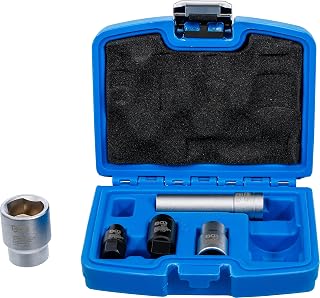


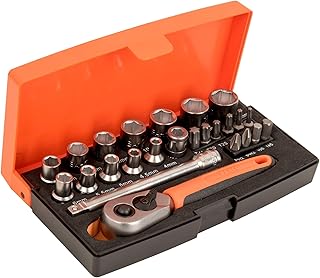


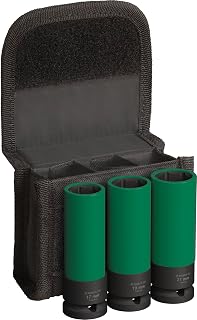


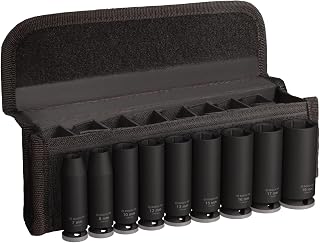


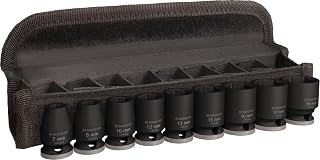


Choosing a Bosch socket set is not simply a matter of counting how many pieces are included in the case. The more useful question is whether the set contains the right drive size, socket sizes, socket depths and construction for the jobs you actually expect to undertake. A compact set with the right sizes can be considerably more useful than a much larger kit containing pieces that rarely leave the case.
For UK buyers, it is also worth paying attention to metric coverage. Most everyday automotive, mechanical, maintenance and DIY work in the UK calls for metric sockets, so a set with a sensible spread of commonly used metric sizes is generally more practical than one built around an assortment of rarely needed sizes.
Bosch produces both consumer-oriented DIY tools and Bosch Professional products, so buyers should not assume that every Bosch-branded socket or ratchet accessory is intended for the same level of work. The distinction between ordinary hand-tool use and impact-tool use is particularly important.
Before comparing individual Bosch socket sets, identify the work the sockets will perform. Occasional household assembly, bicycle maintenance, furniture repair and light mechanical work place very different demands on sockets from automotive servicing, workshop maintenance or repeated use with a cordless impact wrench.
The square drive is the connection between the socket and the ratchet, breaker bar, torque wrench or other compatible tool. Drive size has a major influence on the physical dimensions, torque capability and typical applications of a socket set.
A 1/4-inch drive is particularly useful for smaller fasteners and work where compact dimensions matter. It is a good fit for many household, electronics-adjacent mechanical, bicycle and light automotive tasks, although the correct application always depends on the fastener and the manufacturer's tool limitations.
The main advantage is manoeuvrability. A small ratchet and socket can fit into spaces where a larger drive assembly becomes awkward. The trade-off is that a 1/4-inch system is not the natural choice for very large or heavily tightened fasteners.
For many users, 3/8-inch drive equipment represents a useful middle ground. It offers more capability than a compact 1/4-inch system while remaining relatively easy to handle around an engine bay, workshop bench or general mechanical project.
A 3/8-inch Bosch socket set can therefore make sense for buyers who want one versatile system rather than maintaining several specialised socket collections. Check the actual size range before buying, because two sets with similar piece counts can have very different practical coverage.
A 1/2-inch drive is commonly associated with larger fasteners and applications where greater torque is required. It is a popular choice for automotive maintenance and workshop use, particularly when combined with a suitable breaker bar or torque wrench.
However, a larger drive is not automatically better. Bigger sockets and ratchets can be cumbersome on small fasteners and in restricted areas. The ideal setup is the one that matches the fastener size and the tool being used.
Large-drive sockets are aimed at substantially heavier applications and are less relevant to most household users. They can become appropriate for heavy machinery, industrial maintenance and large fasteners where smaller drive systems are unsuitable.
For an ordinary DIY toolkit, purchasing a very large-drive socket set simply because it appears more substantial is unlikely to provide good value. Consider whether you have a genuine application for that level of equipment before spending more on it.
Socket depth is one of the easiest specifications to overlook and one of the most useful differences to understand.
Standard, or shallow, sockets are generally shorter. Their compact profile can be beneficial when access around the fastener is restricted. They are often the everyday choice for conventional nuts and bolts where there is no unusually long threaded section.
Deep sockets extend further around the fastener. They can accommodate nuts positioned on longer exposed sections of threaded rod or studs, where a shallow socket would bottom out before fully engaging the nut.
Deep sockets are not necessarily superior to standard sockets; they solve a different access problem. A well-equipped workshop may reasonably use both.
Extra-deep designs can be useful for specific automotive and mechanical applications where conventional deep sockets still lack sufficient reach. They are more specialised, however, so check the dimensions of the fasteners you regularly encounter before making them a priority.
This is one of the most important distinctions in any Bosch sockets buying guide. Standard hand sockets and impact sockets should not be treated as equivalent accessories simply because they appear to fit the same square drive.
Impact sockets are engineered for the repeated shock loads associated with compatible impact tools. Bosch Professional's PRO Impact Socket range, for example, uses chrome-molybdenum steel and a design intended for high-torque applications. Buyers should nevertheless check the exact socket specification and tool compatibility rather than relying solely on the Bosch name.
Impact sockets are commonly darker in appearance than conventional polished chrome sockets. The finish is not simply cosmetic: impact socket construction and coatings are selected with the demands of impact use in mind.
Impact sockets can also have features such as retention holes or grooves for securing them to compatible impact tools. These details become particularly relevant when working with a powerful cordless or pneumatic impact wrench.
Do not assume that a conventional hand socket is suitable for an impact wrench. The repeated shock loading generated by an impact tool is different from the smoother loading produced by manually operating a ratchet or breaker bar.
For impact applications, use sockets explicitly intended for impact work and follow the manufacturer's instructions for the socket, impact tool, adapters and accessories.
Material specification is useful, but it needs to be interpreted in context rather than treated as a simple league table.
Chrome vanadium, often abbreviated to Cr-V, is widely associated with conventional hand tools. It can provide a strong and durable material for sockets designed for ratchets, spanners and other manual applications.
For general DIY and workshop use, a well-made chrome vanadium socket set can be entirely appropriate. Construction quality, heat treatment, dimensions and manufacturing consistency all matter alongside the alloy designation.
Chrome molybdenum, commonly abbreviated to Cr-Mo, is frequently used for impact sockets. Bosch Professional uses heat-treated chrome-molybdenum steel in its PRO Impact Socket range, specifically for applications involving high torque.
This does not mean that Cr-Mo is automatically the best choice for every socket. If you mainly operate a hand ratchet on ordinary fasteners, an impact-oriented set may add features you do not need. Match the socket material and construction to the intended method of use.
A long list of socket sizes can make a set look comprehensive, but the number of pieces is only one part of the buying decision. The more important question is whether the set covers the sizes you are most likely to encounter.
For many UK applications, metric sockets are the starting point. A useful set should ideally provide sensible progression through commonly encountered sizes rather than concentrating on a handful of unusually large or small sockets.
Metric sockets are measured in millimetres, with the stated size referring to the width across the flats of the hexagonal fastener. For example, a 13 mm socket is designed to fit a compatible 13 mm hex fastener.
Do not assume that a socket marked with a particular size will fit every fastener that appears visually similar. Correct fit is important for transmitting force without unnecessarily damaging the fastener.
Imperial sockets can still be useful for certain machinery, older vehicles and specialist applications. A mixed set can be convenient when you genuinely encounter both measurement systems, but it can also increase the number of pieces without improving everyday usefulness.
If most of your work is metric, a comprehensive metric range may be preferable to a mixed kit with gaps in the sizes you actually use.
The geometry of the socket affects how force is transferred to the fastener. Traditional six-point sockets are often preferred where maximum contact with a standard hex fastener is important, particularly when loosening stubborn or partially worn fasteners.
Multi-point sockets can provide additional flexibility for certain applications, but buyers should consider the condition of the fasteners they work with. If removing older, corroded or previously damaged nuts and bolts is part of the job, socket engagement deserves more attention than simply choosing the largest set.
A socket set is only useful if its drive interface matches the ratchet or other tool with which it will be used. A 1/4-inch socket belongs to a 1/4-inch drive system, while a 3/8-inch socket is intended for a 3/8-inch drive.
Adapters can bridge different drive sizes, but they introduce another component into the assembly. When using an impact tool, adapters require particular care because the adapter itself must be suitable for the loads involved.
Ratchet and socket retention mechanisms can make a practical difference in day-to-day use. A secure connection reduces the likelihood of dropping a socket when working above or around machinery, while an easily operated release can make changing sizes faster.
For impact applications, use the retention method specified for the socket and tool combination. A secure fit is especially important when vibration and repeated impacts are involved.
A socket set containing useful accessories can sometimes be more versatile than a larger set consisting almost entirely of additional socket sizes.
Extensions allow a socket to reach fasteners positioned below obstructions or inside recessed areas. Different lengths can be useful for different jobs, but an unnecessarily long extension can introduce flex and make positioning more difficult.
A universal joint can help access fasteners that are not conveniently aligned with the ratchet. This can be valuable in cramped mechanical spaces, although angled connections should be used appropriately and not as a way of forcing a socket onto an inaccessible fastener.
Adapters can allow compatible sockets and drivers with different interfaces to work together. Their suitability depends on the intended application. An adapter that is acceptable for light manual work should not automatically be assumed to be suitable for high-torque impact use.
When comparing several Bosch socket options, use the same criteria for each rather than allowing piece count or packaging to dominate the decision.
The Bosch and Bosch Professional names can appear on products aimed at different users, so it is worth checking the product family rather than judging suitability solely by branding.
Bosch DIY products can be attractive for household users who want a practical selection of hand tools and accessories for general maintenance. Bosch Professional products are aimed at more demanding professional and trade applications, with dedicated product ranges for heavy-duty work.
The right choice depends on the job. A homeowner assembling furniture does not necessarily benefit from buying professional impact sockets, while someone regularly servicing machinery may need construction and impact compatibility that a basic DIY kit does not provide.
For general DIY, prioritise versatility over maximum torque. A compact ratchet system with a useful range of metric sockets, extensions and basic adapters can cover a surprisingly broad range of household tasks.
Look for a set that is easy to store, easy to identify and sufficiently comprehensive for the fasteners you encounter. A compact case can also be advantageous if the tools need to be carried between locations.
There is little benefit in paying for a heavy-duty impact socket system if the sockets will almost exclusively be operated by hand.
Automotive work usually benefits from having more than one drive size available. A smaller drive can be useful for confined areas and smaller fasteners, while a 1/2-inch system can be more appropriate for larger fasteners and higher-torque work.
Deep sockets may also become valuable around studs and recessed components. If an impact wrench is part of your workshop, include dedicated impact sockets in the comparison rather than treating a standard chrome socket set as an equivalent substitute.
For impact-wrench applications, the deciding factor should be explicit impact compatibility. Bosch Professional's PRO Impact Socket range is designed around impact use and includes drive sizes and standard or deep configurations intended for different applications.
Check the exact variant before buying because socket sets can differ substantially in drive size, socket depth and included sizes even when they share the same product family name.
It is also important to distinguish an impact socket from an impact-rated accessory or adapter. Every component between the impact wrench and fastener should be suitable for the intended application and loading.
A socket set that remains organised is easier to use and easier to inspect. A good storage system should make missing pieces obvious and allow the user to identify sizes quickly.
For a workshop, a hard case can make sense where the set is stored in one location. For mobile maintenance, a compact case or pouch may be more convenient. The best option depends on whether portability, protection or quick access is the priority.
More pieces do not necessarily mean better value. A large set can contain duplicates, specialist sizes or accessories that you rarely use. Concentrate on useful coverage.
A socket may have the correct millimetre measurement but still be unsuitable for your existing ratchet because the square drive is different. Always check both specifications.
This is one of the more serious mistakes because impact tools impose repeated shock loading. Use sockets and accessories intended for the application.
Deep sockets are useful, but their extra length can make access less convenient in some locations. Do not assume that deeper automatically means more versatile.
If your work is overwhelmingly metric, a mixed imperial and metric set may occupy valuable storage space without solving a genuine need.
Frequent users should consider what happens if one socket is lost or damaged. Before committing to a set, check whether replacement pieces or compatible additions are realistically obtainable.
There is no single correct budget because socket requirements vary considerably. Instead of setting a price target first, establish the minimum specification required for the work.
When comparing prices, compare like for like. A 20-piece hand socket set and a 20-piece impact socket set may have very different construction and intended uses, so the lower price is not necessarily the better purchase.
A torque wrench can be appropriate where the fastener must be tightened to a specified torque. The socket is only the interface with the fastener; the torque specification comes from the particular mechanical application and should be followed using the correct procedure.
Do not use a torque wrench as a general-purpose breaker bar unless the manufacturer specifically permits that use. Similarly, do not assume that a socket's maximum capability determines the correct tightening torque for the fastener.
Inspect sockets before use, particularly when they have been subjected to heavy loads. Look for cracks, deformation, excessive wear or damage around the drive interface.
Good socket care is straightforward. After use, remove dirt, grease and moisture before returning sockets to storage. This is particularly worthwhile when tools have been used around automotive fluids, outdoor machinery or damp workshop environments.
A light clean also makes wear and damage easier to identify. If a socket develops visible cracking, distortion or significant damage, it should not simply be returned to the case for the next job.
For ordinary workshop contamination, wipe sockets with a suitable clean cloth and use an appropriate degreasing method when necessary. Dry them thoroughly before storage. Avoid allowing moisture to remain trapped in a case for extended periods.
Keep sockets dry and stored in a suitable environment. Protective finishes can help resist corrosion, but no coating eliminates the need for sensible storage and maintenance.
Replacement becomes sensible when a socket is cracked, visibly distorted, badly worn or no longer engages the fastener correctly. A damaged socket can make a difficult fastener problem worse and can compromise safe force transmission.
Pay particular attention to the square-drive area and the working faces around the hex profile. Heavy users should also inspect sockets after demanding jobs rather than waiting until a problem becomes obvious.
When comparing Bosch with brands such as DeWalt, Makita, Milwaukee, Draper, Sealey and Halfords, avoid making the decision solely on brand reputation. Compare the individual socket specification, drive size, material, included sizes and intended use.
Different manufacturers may package their ranges differently. One brand may emphasise compact mixed tool kits, while another may focus heavily on professional impact accessories. The most suitable set is therefore the one that fits your existing tools and your actual workload.
If you are comparing several Bosch socket sets and want to reduce the decision to a practical shortlist, focus on these specifications in order:
Product listings can contain a large amount of technical information, but several terms are especially important.
A socket set advertised as having dozens of pieces may include ratchets, extensions, adapters, screwdriver bits and other accessories. That can be useful, but it means the advertised piece count should not be confused with the number of sockets.
For a socket-focused purchase, calculate the number of actual sockets and examine their size range. Then assess whether the additional accessories are relevant to your work.
A set is generally convenient when you need several sizes at once. It also keeps compatible sockets together and often provides purpose-built storage.
Buying individual sockets can make more sense when you already own most of the range and only need to replace a missing size or add a specialist deep or impact socket.
For established workshops, a combination of a core socket set and individually selected specialist sockets can be more efficient than repeatedly buying complete sets.
Bosch offers socket and hand-tool products aimed at DIY users as well as Bosch Professional products intended for more demanding applications. The important consideration is choosing a product with specifications appropriate to the work rather than assuming that every Bosch socket is designed for identical use.
Bosch Professional has dedicated impact socket ranges designed for use with impact tools. Always check the exact product specification and compatibility information before using a socket with a particular impact wrench.
For general-purpose work, choose the drive size and metric range that match your existing tools and the fasteners you regularly encounter. A smaller drive is useful for compact work, while a 1/2-inch system is more appropriate for many larger and higher-torque applications.
Yes, when your work involves long studs, recessed fasteners or nuts positioned deeper than a standard socket can accommodate. They are not essential for every user, so consider your actual applications before making them a priority.
Regular users may benefit from having both because the two designs solve different access problems. Occasional DIY users can often start with standard sockets and add deep versions when a specific application requires them.
No. A larger set is only better if its additional sizes and accessories are useful to you. A smaller set containing the right metric sizes and drive system can be more practical and easier to carry.
Chrome vanadium is commonly associated with conventional hand sockets, while chrome molybdenum is widely used for impact sockets. Material alone does not determine suitability; the complete socket design and its stated intended application are what matter.
Compatible adapters can allow different drive sizes to be connected, but the adapter must be appropriate for the application. Extra care is required for high-torque and impact-tool work because every component in the drive chain must be suitable for the forces involved.
Consider metric coverage, 3/8-inch and 1/2-inch drive options, standard and deep sockets, suitable extensions and, where relevant, dedicated impact sockets. The exact combination depends on the vehicle and the work being performed.
Keep sockets clean and dry, remove contamination after demanding jobs and store them in a dry, organised case. Inspect them periodically for cracks, deformation and excessive wear, particularly if they are used frequently or with high torque.
Compare the individual specifications rather than choosing solely by brand. Drive size, socket range, depth, impact compatibility, construction, storage and compatibility with your existing tools are more useful decision factors than brand recognition alone.
The best Bosch socket set is ultimately the one that matches the work rather than the one with the most impressive-looking specification sheet. Start with the fasteners you actually need to remove and tighten, identify the appropriate drive size, then decide whether you require standard, deep or impact sockets.
For light household work, a compact metric set can provide a practical foundation. For regular mechanical maintenance, broader size coverage and multiple drive options can be worthwhile. For impact-wrench work, dedicated impact sockets should be treated as a separate category rather than an optional upgrade to ordinary hand sockets.
Before making a purchase, compare the exact Bosch model number, included sizes, socket depth, drive interface, material, accessories and storage arrangement. It is also sensible to compare equivalent products from other established manufacturers and to read verified customer feedback for the exact model under consideration.
Most importantly, do not judge a socket set by piece count alone. The strongest buying decision comes from matching the specification to the fasteners, tools, working environment and frequency of use. That approach makes it easier to identify which Bosch sockets are genuinely useful for your workshop and which features are simply unnecessary for your particular jobs.