

♥ Wishlist
Compare 42 verified Screwdriver Bits for DIY, Trade & Professional Use products in United Kingdom. Reviews, ratings, pros, cons and buying advice updated for October 2026.
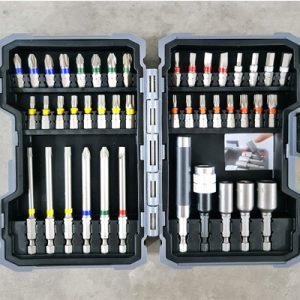
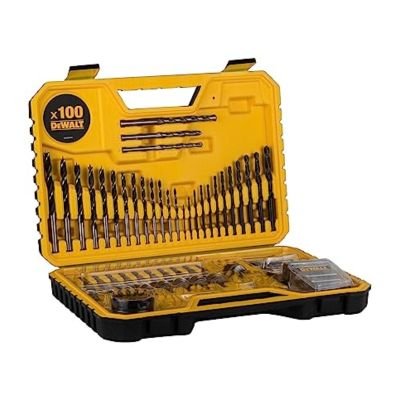
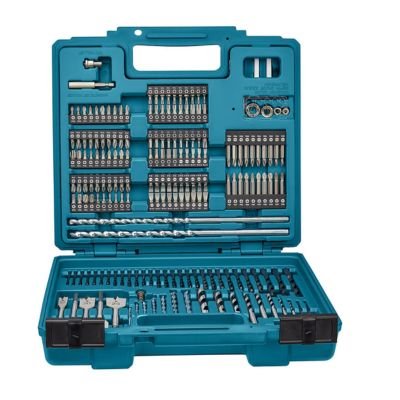
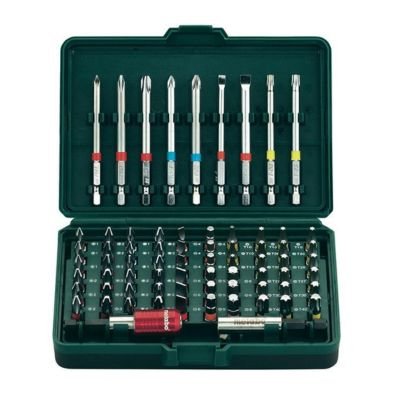
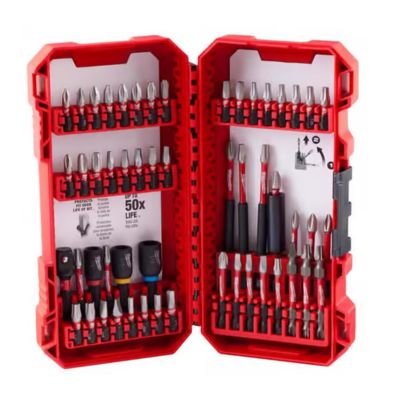


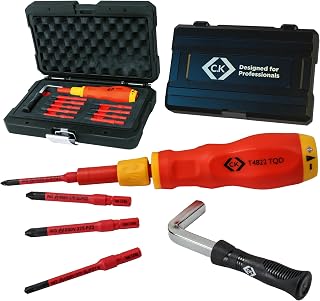


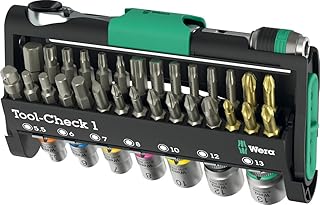


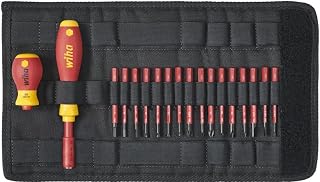


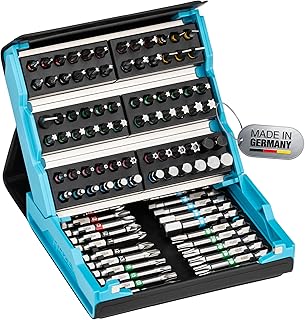


The best screwdriver bits are not necessarily the most expensive or the hardest. The right choice depends on the fastener profile, the material being driven into, the torque produced by your drill or impact driver, how frequently the bit will be used and whether speed, precision or maximum durability matters most.
A bit that works exceptionally well for assembling furniture may be a poor choice for repetitive construction work. Likewise, a standard bit can be entirely adequate for a conventional cordless drill but may wear much faster when used in a high-torque impact driver. Comparing the bit type, dimensions, material, coating, drive compatibility and intended application therefore matters more than relying on a simple "best" label.
The screw head determines which bit you need. Phillips, Pozidriv, Torx, hex and other drive profiles are designed to engage with their corresponding fasteners. Using a supposedly similar profile can result in poor engagement, cam-out, damaged screw heads and premature bit wear.
Choosing the correct profile is only the first step. The bit must also be the correct size. A bit that is too small can move inside the recess and damage the fastener. One that is too large may fail to seat properly, preventing the drive surfaces from making consistent contact.
For routine work, a useful screwdriver-bit set should contain the sizes you actually encounter rather than simply offering the largest possible number of pieces. A smaller, well-selected set containing commonly used sizes can be more useful than a large collection dominated by profiles that rarely leave the case.
Bit material has a direct effect on durability, flexibility and resistance to wear. However, material alone does not determine performance. Heat treatment, manufacturing quality, geometry and the intended drive system all influence how a bit behaves in real use.
Hardened steel is widely used for screwdriver bits because it provides a practical balance between hardness and toughness. Hardness helps resist deformation of the working end, while sufficient toughness reduces the likelihood of brittle failure under demanding loads.
For everyday DIY, furniture assembly, maintenance and general workshop use, a good-quality hardened-steel bit set is often the most sensible starting point.
Some premium and professional-grade bits use specialised alloy steels designed to withstand repeated loading. The important consideration is not simply the name of the steel but whether the complete bit has been engineered for the application in which it will be used.
For repetitive fastening, particularly with impact drivers, a purpose-designed bit can be preferable to a general-purpose bit even when both appear similar.
Impact-rated bits are designed to tolerate the repeated torsional loads produced by impact drivers. They commonly incorporate a construction intended to accommodate controlled flexing rather than behaving like a rigid bit that can be more vulnerable to sudden shock loading.
If you regularly use an impact driver, check that the bits you buy are specifically intended for impact applications. Do not assume that every screwdriver bit with a standard 1/4-inch hex shank is automatically suitable for impact use.
This distinction is one of the most important considerations when comparing screwdriver-bit sets.
A conventional cordless drill or drill driver applies rotational torque in a relatively continuous manner. An impact driver adds rapid impact pulses when resistance increases. Those impacts can subject a bit to considerably different stresses from ordinary drilling or screwdriving.
Using the wrong bit does not necessarily cause immediate failure. More commonly, repeated use can gradually round the working end, reduce engagement and increase the chance of damaging screw heads.
Coatings can influence friction, corrosion resistance and wear characteristics, but they should not be treated as a substitute for sound bit design or correct usage.
Dark finishes are common on screwdriver bits and can provide useful surface protection. Their presence alone, however, does not prove that one bit will outlast another. Manufacturing quality and heat treatment remain important.
Titanium coatings are used on some tool bits to improve surface properties and resistance to wear. The coating should be considered alongside the underlying material and the intended application rather than as a standalone measure of quality.
Some premium bit ranges use proprietary coatings or surface treatments. When comparing these products, look for information about the intended application, compatibility and construction rather than choosing solely because a particular coating sounds more advanced.
Magnetic bits can make screwdriving more convenient, particularly when positioning a screw with one hand or working in a confined location. The magnetic connection can help retain a compatible fastener before the screw is driven.
Magnetism should not be confused with mechanical retention. A magnetic bit is not automatically a substitute for a dedicated screw holder, locking bit holder or other retention system where secure fastener control is essential.
For overhead work, awkward positions and repetitive assembly, convenient fastener retention can make a noticeable difference to usability even when it does not increase the fundamental strength of the bit.
Bit length affects accessibility as much as convenience. Short bits generally provide a compact setup and can be advantageous when working in restricted spaces. Longer bits can reach recessed fasteners and make certain applications easier, but excessive length can increase the amount of flex or movement under load.
A screwdriver bit can be used directly in a compatible chuck or through a bit holder. The choice affects convenience, reach and the way the fastening system handles the tool.
A quality holder can make changing bits faster and can provide useful extension for recessed screws. However, adding another connection between the driver and fastener also means there is another interface that needs to fit correctly and securely.
For users who frequently switch between Pozidriv, Phillips and Torx sizes, a reliable holder combined with a carefully selected bit set can be more convenient than carrying numerous complete driver accessories.
When comparing the best screwdriver-bit sets, count useful combinations rather than simply counting pieces. A box containing dozens of rarely used duplicates may offer less practical value than a smaller set covering the profiles and sizes most relevant to your work.
Not necessarily. A 100-piece set is not automatically better than a 30-piece set. Large kits can be useful for tradespeople or households working on a wide variety of equipment, but they can also contain duplicates and specialist profiles that see little use.
For a typical DIY toolkit, prioritise frequently used sizes and profiles. Expand the collection later when a particular project demonstrates a genuine need for another bit type.
Several established tool manufacturers offer screwdriver bits and accessories worth considering when comparing quality, range and intended application. Brand reputation should be treated as one consideration rather than a guarantee that every product in a range is ideal for every task.
When comparing products from these or other established manufacturers, examine the specific product specifications rather than assuming that every bit from a premium brand has the same construction or intended use.
A useful comparison should look beyond the number of pieces in the box. Consider the following factors in order of practical importance.
Piece count is one of the easiest specifications to advertise and one of the least useful on its own. A set with numerous duplicates may be less versatile than a smaller collection with a better selection of useful profiles and sizes.
This is a particularly relevant mistake for UK users. Phillips and Pozidriv profiles may look similar at a glance, but they are not interchangeable. The wrong bit can sit poorly in the screw recess and increase the likelihood of cam-out or damage.
Check the manufacturer's stated application before putting a conventional bit into a high-torque impact tool. Impact-rated accessories are specifically designed to cope with the type of loading generated by impact mechanisms.
Maximum hardness is not automatically the same as maximum durability. A screwdriver bit needs an appropriate balance of hardness and toughness for its application. A bit that cannot tolerate repeated shock or torsional loading may fail despite having a very hard working surface.
A good bit cannot compensate for a damaged, poorly manufactured or inappropriate fastener. If a screw head is already damaged, continuing to apply high torque can make removal considerably more difficult.
Correct technique can extend the useful life of even a good-quality bit.
The same screwdriver bit can have very different service life depending on how it is used. High torque, high speed, repeated impacts and poorly aligned fastening all increase the stresses placed on the bit.
For delicate materials, lower speed and controlled torque can help prevent overdriving. For repetitive construction fastening, the priority may instead be a purpose-designed impact bit combined with an appropriate driver setting and fastener.
Professional-looking results are not achieved simply by selecting the highest available torque. Controlled fastening is generally more useful than maximum power.
Woodworking often involves large numbers of repeated fasteners, making bit consistency and correct sizing particularly important. Pozidriv screws are common in UK woodworking, while Torx is also widely encountered in modern fastening systems.
A good woodworking setup should provide easy access to the profiles and sizes you use most often. A magnetic bit can be convenient for positioning screws, while an impact-rated option may be appropriate when using an impact driver for repetitive fastening.
When working near finished surfaces, precise control can be more important than maximum torque. Excessive force can drive a screw too deeply, damage the material or leave an unsatisfactory finish.
Furniture assembly generally rewards control and correct bit selection rather than brute force. Many flat-pack and cabinet products use common cross-head profiles, while specialist fittings can introduce hex or other drive types.
A versatile general-purpose set is often more useful for household furniture work than a heavy-duty construction-focused kit.
Construction and renovation work can place significantly greater demands on bits, particularly where hundreds of fasteners are driven into timber, sheet materials or other substrates.
For these applications, impact-rated bits deserve particular attention if an impact driver is used. The bit should also be matched to the screw profile and expected load. Keeping spare commonly used bits available can be more practical than trying to extend the life of a visibly worn bit.
Premium bits can make more sense when they are used frequently, subjected to high loads or expected to deliver consistent performance over a long period. Professional users who spend significant time fastening can benefit from reducing interruptions caused by worn or damaged bits.
For occasional DIY, however, the most expensive set may provide little additional value if the tool is used only a few times a year. In that situation, a reputable general-purpose set containing the right profiles and sizes may be the more rational purchase.
Product descriptions can contain several specifications that are easy to overlook. Before buying, check what each term actually tells you.
A good storage system is more useful than it might initially appear. If the correct bit can be identified immediately, there is less temptation to use a similar-looking alternative.
Look for cases that clearly identify bit profiles and sizes. Secure retention is also useful because small bits are easily misplaced in a general toolbox. If you frequently work on different types of projects, organising bits by profile or application can make selection faster.
Inspect the working end periodically rather than waiting for complete failure. Signs of wear can include rounded edges, visibly altered corners, deformation, chipping or a bit that no longer seats firmly in a correctly matched screw.
If a bit repeatedly slips despite using the correct profile, size and technique, replacement is usually preferable to increasing pressure or torque. Continued slipping can damage both the bit and the fastener.
Price can correlate with construction quality, but it is not a reliable substitute for comparing specifications. A premium bit designed for impact use may be a poor purchase for someone who only performs occasional furniture assembly, while an inexpensive general-purpose bit may be inappropriate for heavy repetitive fastening.
The best value comes from matching the bit to the workload. Consider how often you use your tools, which profiles you need, whether you use an impact driver and how costly a failed or damaged fastener would be.
Prioritise a compact set containing common Phillips, Pozidriv and Torx sizes, with a useful holder and clear storage. Versatility is generally more important than extreme impact performance.
Look for accurate, correctly sized Pozidriv and Torx bits, particularly if you regularly work with modern timber screws. A selection of commonly used sizes is more valuable than a huge collection of unusual profiles.
Choose bits explicitly designed and rated for impact-driver use. Consider a set that includes several replacements of the profiles you use most often because repetitive high-load fastening can accelerate wear.
Prioritise consistency, durability, convenient storage and availability of replacement individual bits. The ability to replace frequently worn sizes can be more useful than buying another large mixed set.
A smaller general-purpose set is normally sufficient. Correct sizing, comfortable access and controlled torque are more important than purchasing a professional construction-oriented range.
Screwdriver bits are simple accessories, but sensible tool use still matters. Inspect the bit and fastener before applying substantial torque. Keep hands clear of the rotating tool, use appropriate eye protection for work where material or fastener fragments could be ejected, and follow the operating instructions for the drill, driver and accessory system.
Do not continue using a bit that is visibly cracked, badly deformed or otherwise compromised. Similarly, do not force a bit into a screw recess that it does not fit correctly.
Even high-quality accessories perform poorly when the fundamentals are wrong. Hold the driver square to the fastener, select the correct speed and torque, allow the bit to seat fully and avoid unnecessary pressure once the fastener has reached the required position.
For repeated work, develop a simple routine: identify the fastener, select the matching bit, inspect the bit for wear, set the driver appropriately and check the finished fastening rather than automatically using maximum power.
The best general-purpose option is usually a well-made set containing the profiles and sizes you use most frequently. For many UK DIY toolkits, that means a useful combination of Pozidriv, Phillips and Torx bits, supplemented by other profiles when your projects require them.
They are particularly worth considering if you regularly use an impact driver or carry out repetitive, high-torque fastening. For occasional low-load work with a conventional drill driver, a standard quality bit may be sufficient.
Neither is universally better because they are different drive systems intended for different fasteners. The correct answer is to use the bit that precisely matches the screw head. In UK DIY and woodworking, Pozidriv is especially common, making a suitable selection useful in many toolkits.
Yes, provided the bit has a compatible shank and the application is suitable. A drill driver can be used for screwdriving with the appropriate bit. Always check compatibility and avoid using standard bits for impact applications unless the manufacturer specifically states that they are suitable.
Do not assume that they can. Check the manufacturer's specifications and select bits specifically intended for impact-driver use when required.
There is no universal service-life figure. Wear depends on the bit's construction, fastener type, material being driven into, torque, speed, alignment, frequency of use and whether an impact driver is involved. Replace a bit when its working end becomes visibly worn or it repeatedly slips with correctly matched fasteners.
The most common causes include using the wrong profile, choosing the wrong size, approaching the screw at an angle, applying insufficient forward pressure, using a worn bit or driving a damaged fastener. Confirm the screw and bit are a precise match before increasing torque.
Magnetic retention can improve convenience when positioning compatible screws, particularly during one-handed or awkward work. It does not necessarily make the underlying bit stronger or more durable, so magnetic functionality should be treated as a usability feature rather than a universal quality indicator.
There is no ideal number for every user. A small collection covering the profiles and sizes you regularly encounter can be sufficient for household DIY, whereas tradespeople may need a much broader selection and multiple replacements of frequently used sizes.
All are established tool brands with screwdriver accessories in their ranges. The important step is to compare the particular bit or set for its construction, drive profile, size selection, impact compatibility and intended application rather than assuming the brand name alone determines suitability.
Focus on consistent manufacturing, suitable materials and construction, accurate profiles, impact compatibility where required, useful size coverage, secure storage and the ability to replace commonly worn bits. A professional set should be selected around the work it will perform rather than its advertised piece count.
There is no requirement to store them separately, but organised storage can make it easier to identify the correct profile and detect missing or damaged bits. A dedicated case or organised accessory compartment can be particularly useful for small bits.
The strongest buying decision comes from matching the accessory to the fastener and tool rather than selecting a product solely because it has the highest rating, largest set or highest price. For general DIY, prioritise the profiles and sizes you actually use. For repetitive construction work, place greater emphasis on impact compatibility and durability. For precision assembly, accurate fit and controlled driving may matter more than extreme torque capacity.
Before making a purchase, compare the complete specification, inspect the included profiles and sizes, consider how your tools are used and check current customer feedback and retailer information. That approach gives you a much better basis for choosing screwdriver bits that are appropriate for your projects throughout 2026.