

♥ Wishlist
Compare 30 verified Dewalt Screwdriver Bits products in United Kingdom. Reviews, ratings, pros, cons and buying advice updated for October 2026.


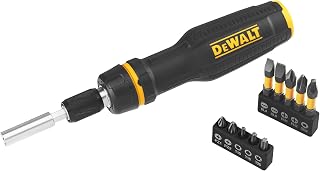


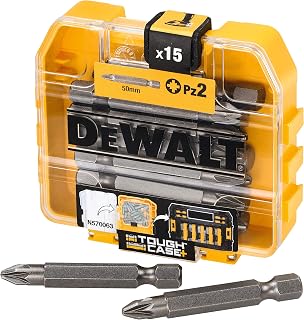


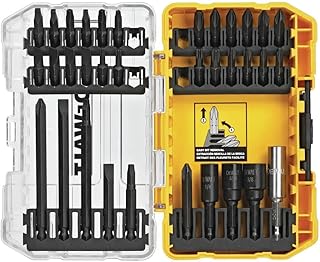
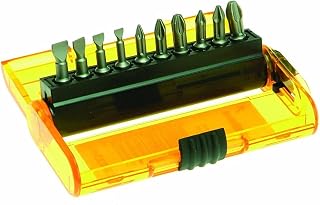


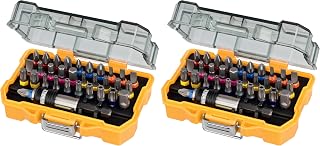


Choosing screwdriver bits is less about buying the largest set and more about matching the bit profile, length, construction and intended tool to the fasteners you actually use. A professional fitting kitchen cabinets, assembling timber structures, installing electrical equipment or carrying out general maintenance can have very different requirements from someone who only occasionally uses a cordless drill around the home.
DeWalt offers screwdriver bits in several profiles, lengths and performance categories, including conventional screwdriving accessories and FlexTORQ designs intended for higher-torque applications. The most suitable option therefore depends on the fastener type, the driving tool and the amount of repetitive work involved.
The screw head should determine the bit you select. Using a bit that is almost the right size or profile can increase cam-out, damage the screw recess and accelerate wear on the bit itself.
Do not assume that a Phillips bit should be used on a Pozidriv screw simply because the profiles appear similar. The geometry is different, and using the wrong profile can produce poor engagement and premature damage.
Bit length is an important buying decision that is sometimes overlooked when comparing screwdriver bit sets. A shorter bit is generally convenient for compact holders and restricted spaces, while a longer bit can make it easier to reach recessed or awkward fasteners.
25mm bits are compact and are particularly useful when used with a suitable bit holder. They are convenient for everyday screwdriving because the overall tool length can remain relatively short. A 25mm bit is often a sensible choice for users who already own a magnetic or quick-change holder.
Longer intermediate-length bits can provide additional reach without the overall length of an extra-long accessory. They can be useful for cabinet work, general installation and situations where the fastener is recessed or partly obstructed.
Extra-long bits are useful where access is the main consideration. They can provide reach into deeper recesses and awkward locations without requiring a conventional extension in every situation. The trade-off is that a longer bit can be less convenient in tight spaces and may expose more of the accessory to bending forces if it is used carelessly.
For a general-purpose kit, a mixture of lengths is usually more useful than buying every bit in the same length. A set containing frequently used profiles in short, medium and long formats can cover substantially more real-world fastening situations.
One of the most important distinctions when comparing screwdriver bits is whether they are designed for impact-driver use. A conventional drill driver and an impact driver deliver torque differently, so an accessory intended for repeated high-torque impact applications can be preferable when driving larger or more demanding fasteners.
DeWalt's FlexTORQ range is specifically designed around impact applications. Its torsion-zone construction is intended to allow controlled flex under torque peaks, while hardened and heat-treated steel is used to improve resistance to wear and breakage.
That does not mean an impact-rated bit is automatically the best choice for every job. For occasional low-load screwdriving, a standard quality bit may be entirely appropriate. Conversely, someone repeatedly driving long structural screws with an impact driver has stronger reasons to prioritise an impact-oriented design.
A torsion zone is designed to manage sudden torque peaks rather than forcing the entire bit to absorb those loads rigidly. In practical terms, this is particularly relevant when an impact driver produces rapid pulses of torque while a screw is being driven.
The purpose is not to make the bit indestructible. A torsion bit can still be damaged by excessive torque, incorrect bit selection, side loading, poor engagement or using a worn accessory. Its advantage is that its construction is intended for a more demanding operating environment.
DeWalt's FlexTORQ accessories also incorporate features such as precision-machined tip geometry and clearly identified sizes on applicable products. These details matter because good engagement between the bit and screw recess can reduce unnecessary movement during fastening.
The tip should sit securely in the fastener recess. Excessive movement can cause cam-out, where the bit climbs out of the screw head under load. Cam-out can damage both the bit and the fastener, making subsequent removal more difficult.
A correctly sized bit with a close fit is therefore more important than simply choosing the most expensive accessory available. The bit needs to match the fastener before material quality and advanced construction become meaningful factors.
Screwdriver bits are small components, but they experience significant mechanical stress. Repeated loading, friction and torque can cause wear at the tip and, in demanding applications, fatigue or breakage through the shaft.
For heavier use, look for manufacturer information describing hardened or heat-treated steel and, where appropriate, an impact-oriented construction. These features are not substitutes for correct technique, but they can be useful indicators when comparing accessories intended for demanding applications.
Hardening can improve resistance to wear and deformation. However, hardness alone does not tell you everything about a bit's performance. A screwdriver bit must balance wear resistance with sufficient toughness to tolerate the forces generated during use.
Heat treatment can alter the mechanical properties of steel and is commonly used in quality tool accessories. When assessing products, consider the complete design rather than treating a single material claim as proof that one bit will always outlast another.
A worn tip may begin to fit less securely even when it appears usable at a glance. If the bit repeatedly slips, rocks in the screw recess or requires noticeably more pressure to maintain engagement, replacing it is often more sensible than continuing to force it.
A good bit holder can be almost as important as the bit itself. It can improve retention, simplify bit changes and make short bits easier to control.
Magnetic holders are especially convenient for general fastening because they can help retain the fastener while positioning the screw. However, magnetic retention should not be confused with mechanical locking. The exact retention system varies between products, so the holder's specification should be checked before purchase.
Some DeWalt FlexTORQ sets include holders designed to complement shorter bits. The holder's torsion-zone design can be relevant when a 25mm accessory is being used with a high-torque driver. This can make a complete set more appropriate for demanding impact-driver work than simply buying a collection of inexpensive standard bits.
A large piece count does not necessarily represent better value. A 30-piece set containing numerous profiles that you rarely use may be less useful than a smaller selection containing several replacements of the sizes you use most often.
A compact set covering PH, PZ and common Torx sizes is usually a sensible starting point. Prioritise the profiles encountered in your own projects rather than buying a large assortment simply because it has a higher piece count.
A broader set with multiple sizes and at least a few longer bits provides greater flexibility. Duplicate PH2 and PZ2 bits can be worthwhile because frequently used sizes tend to experience more wear than less common profiles.
Professionals should consider buying around their actual workload. A joiner may prioritise PZ sizes and longer bits, while an installer working with modern equipment may need a wider selection of Torx profiles. Someone regularly using an impact driver should place greater emphasis on impact-ready construction and convenient bit storage.
DeWalt's range includes compact sets, larger mixed assortments and individual replacement bits. The right format depends on whether you need variety, duplicates of a frequently used size or a particular length.
Smaller sets are useful for keeping essential profiles together without carrying a large accessory case. They can be particularly convenient for homeowners and tradespeople who already have specialist bits elsewhere.
A mixed FlexTORQ set can make sense for buyers who want several lengths and profiles in one purchase. DeWalt's current 25-piece FlexTORQ configuration includes 25mm, 57mm and 89mm screwdriver bits alongside a magnetic drive guide and a nut driver, giving it broader coverage than a basic single-profile pack.
Larger FlexTORQ assortments can be attractive when variety and replacement coverage are more important than minimum case size. Before buying, check the exact contents because two sets with similar piece counts can have substantially different combinations of PH, PZ and Torx bits.
Buying individual replacement bits can be the more economical approach for frequent users who already have a complete set. If PZ2 is the profile that repeatedly gets used on your projects, for example, purchasing additional PZ2 bits may be more practical than replacing an entire assortment every time the most-used accessory becomes worn.
When comparing two apparently similar products, work through the following criteria rather than relying on the number of accessories in the box.
DeWalt is not the only established manufacturer worth considering. Buyers comparing professional accessories may also encounter ranges from Makita, Bosch Professional, Milwaukee, Wera and Wiha.
The important point is not to assume that one brand is automatically superior in every category. Compare the actual bit profile, dimensions, intended application, impact suitability, material construction and set contents. A specialist accessory from one manufacturer may be a better fit for a particular job than a larger mixed set from another.
Both brands offer extensive cordless-tool accessory ecosystems. If your existing tools and storage system are already centred around one manufacturer, staying within that ecosystem can make accessory identification and organisation simpler, although screwdriver bits themselves are generally selected according to the fastener rather than the drill-driver brand.
Bosch Professional is another major name in power-tool accessories. Compare the specific bit construction and intended application rather than choosing based solely on brand recognition.
Milwaukee's accessory range is another option for users who prioritise professional and impact-driver applications. As with DeWalt, the correct comparison should focus on individual specifications, profile selection and intended workload.
Wera and Wiha are particularly familiar names among users interested in precision hand tools and professional fastening equipment. They are worth considering when the job involves specialist profiles or when hand-driven applications are more important than high-torque impact work.
A set containing more pieces is not automatically better. Check how many of those pieces are actually useful and whether the set provides duplicates of your most frequently used sizes.
Buying a large collection of PH bits when most of your fasteners are PZ is a poor allocation of money. Identify the screws used in your normal projects before selecting the set.
Check the manufacturer's stated application before using an accessory with an impact driver. High-torque impact work places different demands on screwdriver bits than conventional drill-driver use.
Very short bits can be awkward when access is restricted, while very long bits can be unnecessary for open work. A mixed-length assortment is often more versatile.
A rounded, chipped or visibly distorted tip should not be treated as normal wear that can simply be ignored. Continuing to use a damaged bit can increase the likelihood of poor engagement and fastener damage.
More downward pressure is not always the solution when a bit slips. First check that the profile and size are correct and that the fastener is seated properly. Excessive pressure can make control more difficult and does not compensate for an incorrectly matched bit.
Even high-quality bits will eventually wear, but correct technique can reduce unnecessary damage.
Screwdriver bits require relatively little maintenance, but sensible storage helps preserve their condition. Wipe away dust, wood particles and other debris after intensive use. If an accessory becomes contaminated with material that affects engagement, clean it before returning it to the case.
Keep bits organised by profile and size. This reduces the temptation to grab a nearly compatible bit simply because it is immediately available. For professional users, clearly labelled storage can also make it easier to identify which frequently used accessories need replenishing.
Do not store visibly wet or contaminated steel accessories for prolonged periods. Keeping the case and accessories reasonably dry helps reduce the risk of surface corrosion.
There is no universal replacement interval because bit life depends heavily on material, torque, fastener type, frequency of use and driving technique. Instead of replacing every bit after a fixed number of jobs, inspect the working tip regularly.
Prioritise a compact assortment containing the profiles and sizes most likely to be encountered around the home. A smaller set with a useful holder can be preferable to a large professional assortment that contains many unused accessories.
Look for a combination of common PZ and PH sizes together with medium-length bits. A magnetic holder can also be useful when positioning screws in confined cabinet interiors.
Users driving longer or larger screws repeatedly should pay particular attention to impact suitability, torsion-zone construction and the availability of commonly used PZ and Torx sizes. Long bits may also be useful where access around timber components is restricted.
A versatile selection of common profiles and lengths is usually more useful than a specialist collection containing numerous rarely encountered sizes. Where equipment manufacturers specify a particular screw profile, use that specification rather than substituting a similar-looking bit.
Frequent users should prioritise consistency, replacement availability, storage and suitability for their primary driver. Buying duplicate high-use bits can reduce interruptions when a frequently used accessory eventually wears out.
Before choosing a particular set, make a short inventory of the screws you regularly encounter. Write down the profiles, sizes and approximate lengths that are genuinely useful. Then compare that list with the exact contents of each candidate set.
Compatibility is normally determined by the accessory's shank and the tool or holder's chuck system rather than the screwdriver bit carrying the same brand name as the drill. Always check the manufacturer's specifications for the specific accessory and tool combination.
DeWalt positions its FlexTORQ screwdriver bits for impact-driver applications and high-torque fastening. They are designed with features intended to manage torque peaks and resist wear. The exact suitability still depends on using the correct bit for the fastener and following the manufacturer's application guidance.
No. PZ2 and PH2 are different screw profiles even though they can look similar at first glance. Use the profile specified for the fastener to achieve the best fit and reduce the likelihood of cam-out.
Not universally. Longer bits provide useful reach but can be less convenient in restricted spaces. Shorter bits are compact and work well with holders. The best length is the one that gives you adequate access while maintaining good control and alignment.
There is no single size that is best for every project. PH2 and PZ2 are common choices in many general-purpose assortments, but your own fasteners should determine the priority. Torx sizes are increasingly important for applications using Torx fasteners.
Not necessarily. If you repeatedly use only a few profiles, purchasing those sizes individually can be more sensible. A complete set becomes more attractive when you regularly encounter different fasteners or want a convenient all-in-one accessory case.
First confirm that the bit profile and size match the screw. Keep the driver aligned with the fastener, maintain firm but controlled contact and use an appropriate speed and torque setting. If the bit or screw head is worn, replacement may be necessary.
Not for every application. A conventional drill driver does not impose the same impact forces as an impact driver, so standard quality screwdriver bits can be appropriate for many jobs. Impact-oriented bits become more relevant when the accessory is being subjected to repeated high-torque impact loading.
For occasional light DIY, the additional cost of premium accessories may not provide a meaningful benefit for every user. For frequent fastening, demanding materials or impact-driver work, construction features such as hardened steel, heat treatment and torsion-zone designs can become more relevant. The sensible choice depends on workload rather than price alone.
Compare the actual contents rather than the headline piece count. Look at how many bits are included in your preferred profiles, which sizes are duplicated, which lengths are supplied and whether useful accessories such as holders or nut drivers are included.
The strongest choice is not necessarily the set with the most accessories or the highest specification on paper. A good DeWalt screwdriver bit set should provide the profiles you actually use, the sizes you need, suitable lengths for your working conditions and construction appropriate to your driver.
For occasional DIY, practicality and coverage are likely to matter most. For regular professional work, durability, replacement strategy, storage and impact suitability become increasingly important. For heavy-duty fastening with an impact driver, FlexTORQ-style torsion construction is a feature worth examining closely.
The most reliable buying decision comes from matching the accessory to the fastener and workload first, then comparing materials, construction, length, holder design and set contents. That approach avoids paying for features you will not use while ensuring that the bits you rely on most are suited to the job.
Image generation and editing require logging in; once you are logged in, an appropriate editorial image can be generated for this buying guide.