

♥ Wishlist
Compare 35 verified Metabo Screwdriver Bits products in United Kingdom. Reviews, ratings, pros, cons and buying advice updated for October 2026.


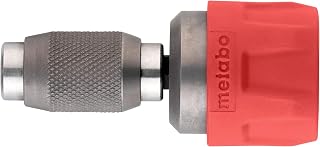


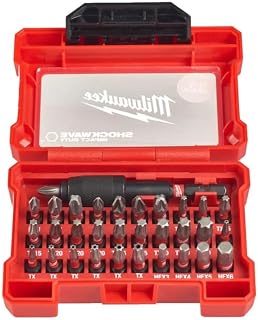


The right screwdriver bit is determined by much more than the brand name. Screw type, drive profile, material, bit length, tool type, frequency of use and the amount of torque involved all affect how well a bit performs. A bit that is perfectly suitable for light DIY assembly may be a poor choice for repetitive professional screwdriving or use with a high-torque impact driver.
When comparing Metabo screwdriver bits, start with the screws you use most frequently and then work backwards to the bit specification. This approach is more useful than simply choosing the largest set or the most expensive option.
The screwdriver profile must correspond closely with the screw recess. Common profiles include Phillips, Pozidriv and Torx, while other specialist profiles are available for particular applications.
A common buying mistake is assuming that a bit will work simply because it fits physically into the screw recess. The fit should be close and positive, with the bit fully seated in the recess before torque is applied.
If the bit is too small, the driving forces are concentrated on a relatively small contact area. If it is too large, it may not seat properly at all. Both situations can increase the likelihood of damaging the screw head or wearing the bit prematurely.
For frequent work, it can therefore be more useful to buy several replacement bits in the sizes you actually use than to rely exclusively on a very large assortment containing numerous rarely required profiles.
Material choice is one of the most important differences between basic screwdriver bits and bits intended for demanding applications. The steel formulation, heat treatment, surface treatment and geometry can all influence durability.
S2 steel is commonly associated with professional screwdriver bits because it offers a useful combination of hardness and toughness. Metabo's accessory documentation identifies S2-quality steel for several of its screwdriver bit ranges.
Hardness alone is not the complete story. A bit that is extremely hard but insufficiently tough can be vulnerable to cracking under shock loading, while a softer bit may deform more readily under high torque. The intended application therefore matters when assessing the material specification.
Some Metabo bit ranges use a diamond coating intended to improve grip between the bit and screw recess. This can be particularly useful where maintaining engagement is more important than simply having a very hard bit surface.
A coating does not eliminate the need to select the correct profile and size. A diamond-coated bit that is the wrong size remains the wrong bit for the screw.
Torsion bits incorporate a deliberately engineered zone that can flex slightly under high torque. The purpose is to help absorb torque peaks rather than transferring every sudden load directly through the bit.
This design can be particularly relevant for demanding screwdriving applications and compatible impact-driving equipment. Torsion construction should nevertheless be viewed as one part of the overall specification rather than a guarantee that a bit cannot break or wear.
One of the most important distinctions when shopping for screwdriver bits is whether they are intended for conventional screwdrivers and drills or for impact-driving applications.
Impact drivers subject accessories to repeated, rapid torque pulses. A bit designed primarily for conventional hand or drill-driver use should not automatically be assumed to be suitable for an impact driver simply because it has the correct 1/4-inch hexagonal shank.
Look specifically for manufacturer information describing impact suitability or impact-rated construction. This is particularly important when using a powerful cordless impact driver for long screws, structural fixings or repetitive work.
Bit length affects access, visibility and control as well as reach. Longer does not automatically mean better.
Short bits are often a sensible choice for accessible screw heads because they keep the driving interface close to the tool. They can be convenient for compact drill drivers and work where there is plenty of clearance around the fastener.
Longer bits are useful when the screw is recessed, obstructed by surrounding material or difficult to reach with a standard bit. They can also make it easier to see the screw head in certain applications.
The trade-off is that additional length can increase the amount of flex and leverage in the assembly. For high-torque work, use the shortest suitable bit or bit holder arrangement that gives adequate access.
Common bit lengths include compact formats around 25 mm as well as longer options. Metabo's accessory range has included 25 mm, 49 mm and extended-length screwdriver bits, illustrating why length should be treated as a deliberate buying criterion rather than an afterthought.
For a mixed toolkit, having a selection of short everyday bits plus a smaller number of longer bits is often more practical than using long bits for every job.
Many screwdriver bits use a 1/4-inch, or 6.35 mm, hexagonal shank. This format is widely used with compatible drill drivers, impact drivers, bit holders and dedicated screwdrivers.
However, a 1/4-inch hex shank does not mean every bit is appropriate for every tool or application. Compatibility has two separate aspects: whether the bit physically fits the tool and whether the bit is rated for the loads generated by that tool.
A good bit set is not necessarily the one containing the highest number of pieces. The useful measure is how many of those pieces match the fasteners you actually encounter.
A practical general-purpose selection should normally concentrate on commonly encountered Phillips, Pozidriv and Torx sizes. A compact set can be easier to organise and replenish than an oversized assortment containing specialist profiles that rarely leave the case.
Prioritise the screw profiles and sizes used by your preferred fixing systems. In UK woodworking, Pozidriv bits are particularly relevant to many common construction and furniture screws, while Torx is also increasingly encountered in modern fixings.
For repetitive work, keeping multiple replacements of the most frequently used size can be more useful than owning a single example of every conceivable size.
Construction users should pay closer attention to impact suitability, torsion design, durability and bit retention. A small set of robust, frequently used sizes can be preferable to a broad household assortment if the bits are subjected to repeated high-torque driving.
Professional users may benefit from separating everyday bits from specialist and replacement stock. This makes it easier to identify worn bits before they are returned to regular service and reduces the temptation to continue using a damaged bit simply because it is still in the toolbox.
Metabo is not the only established manufacturer producing screwdriver bits and power-tool accessories. Depending on the application, it can be useful to compare Metabo with brands such as Bosch Professional, Makita, DeWalt, Milwaukee and Wera.
The objective should not be to identify a universally superior brand. Bit performance depends on the specific range, construction, profile, application and tool being used.
When comparing Metabo and Bosch Professional bits, examine the actual specification rather than relying on brand reputation. Look at the drive profile, steel specification, coating, impact suitability, length and quantity of commonly required sizes.
Makita offers a broad ecosystem of cordless tools and accessories, making it another useful comparison point for users who already work with Makita equipment. The key consideration remains whether the individual bit is suited to the screw and driving application rather than whether the power-tool brand and bit brand match.
For users operating high-torque cordless equipment, compare impact-rated accessory ranges carefully. Pay particular attention to torsion construction, intended use and the availability of replacement sizes.
Milwaukee is another prominent professional-tool brand worth considering when comparing impact-driving accessories. Rather than selecting purely on brand loyalty, compare the relevant bit's profile, material, length and stated application.
Wera is particularly well known for hand tools and screwdriver accessories, so it can be a useful alternative when the application involves conventional screwdrivers, precision work or specialist profiles. For power-tool use, check the specification of the individual bit before making a comparison.
When several products appear similar, use a consistent comparison process. This avoids choosing a set because of packaging, piece count or marketing language alone.
Piece count can be misleading. Many large sets include duplicates, accessories or uncommon profiles that may spend most of their life unused. For occasional DIY, a smaller selection of relevant sizes can be easier to manage.
Phillips and Pozidriv are not interchangeable simply because their recesses can look similar at a glance. Using the correct profile helps achieve proper engagement and reduces unnecessary wear.
The 1/4-inch hex format is not, by itself, an impact rating. Always check the manufacturer's stated application before using a bit with an impact driver.
A visibly worn tip can compromise engagement with the screw. Continuing to use a badly worn bit may make the work slower and can increase the likelihood of damaging the fastener.
Longer bits are valuable when reach is needed, but unnecessary length can make precise driving less convenient. Select the shortest option that provides the required clearance.
The purchase price is only one part of value. For frequent users, durability, replacement requirements, suitable profiles and application compatibility can matter more than the initial cost of a set.
Even a high-quality bit can be damaged quickly by poor technique. Proper seating and controlled pressure are particularly important when driving screws at higher torque.
Screwdriver bits are consumable accessories, but sensible storage and inspection can help you get more useful service from them.
Remove accumulated dust, wood debris, metal particles and other contamination before storing bits. A clean driving tip is easier to inspect and less likely to carry debris into a screw recess.
Look for rounding, deformation, chipped edges, damaged corners or other changes to the driving profile. Compare frequently used bits with a new or known-good example when you are unsure whether wear has become significant.
Do not return obviously worn bits to the main compartment. Keeping damaged accessories separate reduces the chance of accidentally using them on an important job.
Store steel accessories in a clean, dry environment. If condensation or damp conditions are a recurring issue, pay particular attention to the condition of the metal surfaces and storage case.
There is no universal replacement interval because bit life depends heavily on screw material, driving torque, frequency of use, tool type and technique.
Replacement is sensible when the bit no longer seats securely, the tip has become visibly rounded or damaged, the bit slips repeatedly despite using the correct screw size, or the accessory has suffered deformation or other physical damage.
For professional users, replacing a relatively inexpensive consumable before it causes repeated failed fixings can be more efficient than attempting to maximise every last use from a worn accessory.
Choose a compact assortment containing the profiles and sizes most likely to be encountered in household repairs, furniture assembly and basic woodworking. There is little advantage in paying for specialist sizes that you are unlikely to use.
Prioritise the profiles used by your preferred screws, then consider bit length, grip and durability. If your projects involve repetitive screwdriving, keeping several replacements of your most-used size can save interruptions.
Impact suitability and durability become increasingly important when screws are driven repeatedly throughout the working day. A professional-focused set should be assessed on its actual construction rather than simply the number of pieces supplied.
Look for bits specifically designed for demanding torque loads and compatible impact-driving applications. Torsion construction may be particularly relevant where repeated torque peaks are expected.
A workshop can justify a broader selection because different machines, components and fasteners may require different profiles. Organised storage and readily available replacement sizes are particularly useful where downtime is costly.
Product descriptions can contain several measurements and technical terms. Understanding them makes comparison much easier.
The cheapest screwdriver bits are not necessarily the least expensive option over the life of a project, while the most expensive set is not automatically the best value.
For occasional users, a reasonably priced set with the correct profiles can provide better practical value than a premium assortment containing features that will never be used. For professional users, the calculation can change because frequent replacement, lost working time and poor screw engagement can become more significant.
A sensible value assessment should therefore consider the number of genuinely useful bits, construction quality, intended application, availability of replacement sizes and expected frequency of use.
The distinction between DIY and professional accessories is not simply about who buys them. It is primarily about workload and operating conditions.
A DIY user may drive only a handful of screws during an occasional project. A professional installer may drive hundreds of fasteners in a working session. The second user places substantially greater cumulative demands on the accessory.
If your usage is infrequent, prioritise correct fit and sensible selection. If you use screwdriver bits daily, place greater emphasis on construction, impact suitability where applicable, replacement availability and maintaining a reliable stock of commonly used sizes.
Always follow the instructions supplied with the power tool and accessory. Inspect the bit before use and do not continue with an accessory that is visibly cracked, severely worn or otherwise damaged.
Some Metabo screwdriver bit ranges are designed for demanding and impact-driving applications, while others are intended for more conventional screwdriving. Always check the specification of the exact bit or set rather than assuming every Metabo bit has the same rating.
Compatibility depends on the interface and accessory specification rather than the name on the power tool. Many screwdriver bits use a standard 1/4-inch hex shank, but you should still confirm that the bit is suitable for your particular tool and application.
They can be suitable for woodworking when the profile, size, length and construction match the screws being used. For repetitive woodworking, select bits according to the fasteners used most frequently rather than simply choosing the largest assortment.
Use the correct Pozidriv bit size specified for the screw. PZ1, PZ2 and PZ3 are different sizes and should not be treated as interchangeable.
Choose the Torx size that corresponds exactly to the screw recess. Common sizes include T15, T20, T25, T30 and T40, but the correct choice should always be determined from the fastener.
They can be worthwhile when improved engagement with the screw recess is useful for your application. They are not automatically better for every job, so compare the coating, profile, size and intended use with your actual requirements.
Not universally. Torsion construction is particularly relevant to applications involving higher or repeated torque loads, whereas standard bits can be entirely appropriate for lighter conventional screwdriving.
Choose a set if you regularly need several profiles and sizes. Individual bits can make more sense when you repeatedly use only a few sizes and want to maintain a stock of replacements.
There is no ideal number for every user. A sensible starting point is to identify the fasteners used in your regular projects and build your collection around those profiles and sizes.
Possible causes include an incorrect bit profile, incorrect size, worn bit, damaged screw recess, insufficient alignment or excessive torque. Check the screw and bit together before assuming that the accessory itself is defective.
Yes. A worn or poorly fitting bit can reduce engagement and increase the likelihood of slipping or damaging the screw recess. Replace accessories when their driving geometry has deteriorated significantly.
The strongest buying decision is not necessarily the product with the longest specification sheet or largest assortment. It is the accessory that matches the fastener, tool and workload while providing the level of durability appropriate for the way you work.
For occasional DIY, concentrate on common profiles, sensible sizing and useful set contents. For woodworking and construction, give greater weight to repeated-use durability, suitable lengths and the demands placed on the bit. For impact-driver users, confirm impact suitability before purchase and consider torsion-style construction where it matches the application.
When comparing today's options, check the latest manufacturer specifications, compare like-for-like set contents, read verified customer feedback and check current retailer information before committing to a purchase. This provides a more reliable basis for choosing between Metabo and alternative professional accessory brands such as Bosch Professional, Makita, DeWalt, Milwaukee and Wera.