
♥ Wishlist
Compare 40 verified Milwaukee Saw Blades products in United Kingdom. Reviews, ratings, pros, cons and buying advice updated for October 2026.


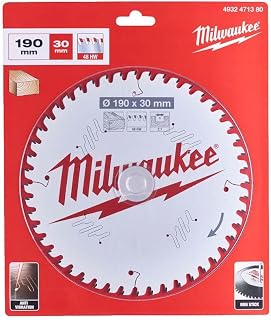


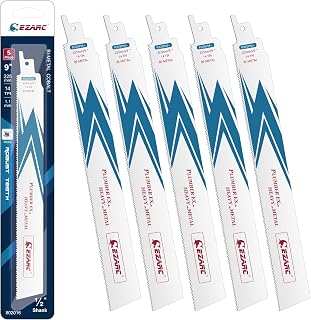


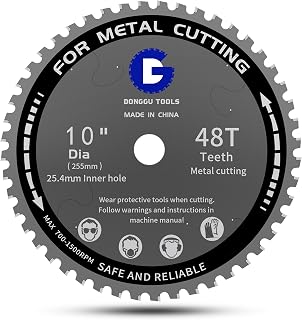


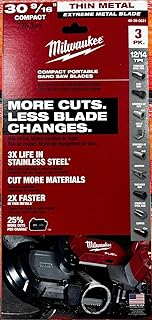


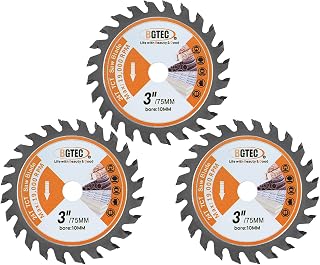
Choosing a Milwaukee saw blade is not simply a matter of selecting the correct diameter. The blade needs to match the saw, the material being cut, the required finish and the type of work you expect it to perform. A blade that is excellent for rapid timber cuts may be a poor choice for laminated sheet material, while a metal-cutting blade requires an entirely different tooth design and application.
For UK buyers, the most useful starting point is the specification printed on the existing blade and the saw manufacturer's instructions. Check the blade diameter, bore size, maximum permitted blade speed, tooth configuration and intended material before comparing individual Milwaukee options. Milwaukee's current UK circular-saw-blade range covers both wood and metal applications, with different sizes and tooth configurations intended for handheld, mitre and table saws.
The best Milwaukee saw blade for a particular job is therefore the one that provides the appropriate combination of compatibility, cutting speed, finish, durability and kerf rather than simply the blade with the highest tooth count or the most expensive specification.
Wood blades are designed around the way timber and sheet materials behave when cut. Milwaukee offers blades for applications including softwood, hardwood, plywood, laminated chipboard, melamine and MDF, with different tooth counts and tooth forms allowing the blade to favour either faster cutting or a cleaner finish.
Lower tooth-count blades generally remove material quickly and are useful when productivity is more important than an exceptionally fine edge. Higher tooth-count configurations can provide a smoother finish, although the appropriate choice still depends on the material, saw, feed rate and blade geometry.
For construction timber, framing and general-purpose site work, a blade designed for efficient material removal is often more appropriate than a fine-finish blade. For visible joinery, furniture components, laminated boards or applications where breakout must be minimised, a finer tooth configuration can make more sense.
Metal-cutting blades should not be treated as interchangeable alternatives to wood blades. Their tooth geometry, blade construction and intended operating conditions are designed around metalworking applications. Milwaukee's metal-cutting range includes blades for applications involving materials such as mild steel, steel pipe, sheet steel, aluminium and other specified non-ferrous materials.
Milwaukee describes its metal-cutting blades as using engineered tooth geometry, hardened and tensioned blade bodies and carbide or cermet tooth tips on applicable models. The manufacturer also highlights chip removal, vibration control and reduced finishing requirements as characteristics of its metal-cutting designs.
The exact material limits must still be checked for the individual blade. A metal blade suitable for thin sheet or tube should not automatically be assumed to be suitable for every type, thickness or grade of metal.
Handheld circular saw blades need to balance cutting efficiency with the power characteristics of the saw. This is particularly important with cordless equipment, where kerf width, cutting resistance and tooth geometry can affect how efficiently available battery energy is converted into useful cutting work.
Milwaukee lists handheld circular-saw blades in a range of diameters, bore sizes, tooth counts and kerf widths. Its wood range includes configurations using ATB and other tooth forms, alongside thin-kerf options intended to reduce cutting width and resistance.
Mitre saw work often places greater emphasis on the quality of the cut because the blade is frequently used for cross-cutting timber, mouldings, trim and other components where the finished edge may be visible. A blade selected for rapid ripping is not necessarily the best choice for repeated cross-cuts or precision joinery.
When comparing a Milwaukee blade for a mitre saw, pay particular attention to the tooth count, tooth form, kerf and stated application. The saw's own specification should also be checked because diameter, bore and maximum speed requirements vary between machines.
Table saw applications can range from rough dimensioning to more demanding joinery. The appropriate blade therefore depends heavily on whether the priority is rapid ripping, cross-cutting, sheet material or a cleaner finished edge.
Do not assume that a blade suitable for a handheld circular saw is automatically appropriate for a table saw. Even where the diameter and bore appear compatible, the manufacturer's stated application and maximum operating speed should be verified before use.
Diameter and bore size are two of the first specifications to check when comparing Milwaukee saw blades. A blade can have an attractive tooth configuration and still be unsuitable for a particular saw if its physical dimensions or operating specification do not match.
The diameter determines whether the blade can physically be accommodated by the saw and contributes to the maximum cutting depth available. Common Milwaukee circular-saw blade sizes include 140 mm, 160 mm, 165 mm, 184 mm, 190 mm, 210 mm and 235 mm in relevant wood-cutting ranges, while metal-cutting options use their own selection of diameters.
Never select a larger blade simply because it offers greater potential cutting depth. The saw must be designed for that diameter, and the blade must remain within the manufacturer's specified limits.
The bore is the central hole through which the blade mounts to the saw. Milwaukee blades are available with different bore sizes, including 20 mm and 30 mm configurations in its handheld wood range, while metal-cutting models may use other specified dimensions.
Check the saw's exact spindle and blade requirements rather than relying on the appearance of the blade or assuming that an adapter is appropriate. If the manufacturer does not specify a particular mounting arrangement, do not improvise.
A blade's maximum permitted rotational speed matters just as much as its diameter and bore. The blade must be suitable for the saw's operating speed. This is particularly important when moving between different types of saws or considering a blade originally intended for another machine.
Always compare the maximum blade speed with the saw manufacturer's specification before installation. The correct diameter and bore alone do not establish compatibility.
Tooth count is one of the most visible differences between circular saw blades, but it should not be used in isolation when choosing a blade.
A lower tooth count normally provides larger gullets between teeth. These spaces allow more material to be removed with each revolution and can make the blade well suited to fast cutting and ripping applications.
This type of blade can be useful for construction timber and work where cutting speed matters more than an ultra-smooth edge. It is generally less appropriate when the finished edge must be exceptionally clean.
More teeth can increase the number of cutting actions taking place over a given section of material. This can favour cleaner cross-cuts and finished work, provided the blade is correctly matched to the material and saw.
However, more teeth does not automatically mean better performance. If the blade is too fine for the application, cutting can become slower and the gullets may be less effective at clearing waste. The ideal tooth count is therefore application-dependent.
Two blades with the same number of teeth can behave differently because their tooth geometry is different. Milwaukee's wood blades include configurations using tooth forms such as ATB and TF, with the exact design varying between products.
When comparing two blades, therefore, look at the complete specification rather than ranking them solely by tooth count.
ATB stands for Alternate Top Bevel. The cutting edges are bevelled in alternating directions, a geometry commonly associated with clean cutting in wood and sheet materials.
ATB blades can be particularly useful when the quality of the finished edge matters. The precise performance depends on the blade design, tooth count, material and machine, so ATB should be treated as one part of the specification rather than a guarantee of a particular finish.
Kerf is the width of the cut produced by the blade. A thin-kerf blade removes less material than a wider-kerf design, all else being equal.
Milwaukee identifies thin-kerf designs within its wood-blade range as cordless-optimised, with the narrower cutting width intended to support maximum runtime.
For cordless saw users, this can be an important consideration because cutting less material can reduce the work required from the saw. However, the thinnest possible kerf is not automatically the best option. Blade rigidity, application, material and saw compatibility remain important.
Kerf influences more than the width of the finished cut. It can affect material waste, cutting resistance and the amount of material removed on every pass.
For high-volume cutting, even a small difference in kerf can become meaningful over many cuts. This is one reason professional users should consider the blade as part of the complete saw-and-material system rather than treating it as an inexpensive disposable accessory.
Milwaukee lists multiple kerf values across its circular-saw range, including configurations around 1.6 mm, 1.8 mm, 2.1 mm, 2.2 mm, 2.4 mm and 2.8 mm depending on the blade specification.
The cutting teeth are among the most important components affecting a blade's usable life and cutting behaviour. Milwaukee describes its wood blades as using premium cobalt-infused tungsten carbide on applicable models, while its metal-cutting range includes top-grade carbide and cermet tooth tips depending on the product.
Carbide-tipped teeth can retain a cutting edge for considerably longer than a basic steel cutting edge in many applications, but the actual service life depends on what the blade encounters. Nails, screws, abrasive materials, dirty timber, mineral contamination, incorrect feed pressure and unsuitable materials can all affect longevity.
When assessing blade quality, look beyond the word carbide. The overall blade body, tooth geometry, tooth attachment, sharpening profile, kerf and intended application all contribute to performance.
Some Milwaukee wood blades use PTFE coating. Milwaukee states that this coating is intended to provide cooler, non-stick cutting, while also helping protect against corrosion and resin accumulation.
This can be relevant when cutting timber that leaves significant resin or when the blade is used frequently. Resin contamination can interfere with smooth cutting and increase friction, so keeping the blade clean remains important even when a coated blade is selected.
A coating should therefore be considered a useful design feature rather than a substitute for correct maintenance.
Some Milwaukee wood blades incorporate laser-cut vibration slots. The manufacturer describes these as a means of reducing vibration and improving cutting accuracy, with polyurethane-filled slots acting as shock absorbers on applicable designs.
Reduced vibration can be valuable when making repeated cuts because excessive blade movement can affect perceived smoothness, control and cut quality. Nevertheless, vibration can also result from an unsuitable blade, incorrect installation, a damaged blade, an unsuitable saw, poor workpiece support or another mechanical issue. A blade's vibration-control features should not be considered a cure for an underlying equipment problem.
There is no universal winner between these two approaches. A professional carpenter may need several blades for different stages of a project, while an occasional DIY user may prefer a versatile general-purpose configuration.
Sheet materials can be more demanding than ordinary construction timber because the surface layer can chip or splinter even when the core cuts relatively easily.
When cutting plywood, MDF, laminated chipboard or melamine, consider a blade specifically listed for the material rather than assuming that any wood blade will provide the same result. Milwaukee's wood-blade specifications identify applications across several sheet-material categories, with tooth count and tooth form varying between models.
For visible finished work, support the sheet properly, use an appropriate blade and avoid forcing the saw through the material. A correctly selected blade can only perform as well as the cutting setup allows.
Hardwood places different demands on the blade from softwood because the material can offer greater cutting resistance and can produce a demanding cutting environment during repeated work.
Look for a blade whose manufacturer specification explicitly includes hardwood or all relevant wood types. Milwaukee lists wood blades for soft and hardwood applications within its current range, although the suitability of an individual model still needs to be confirmed from its specification.
For high-quality joinery, prioritise the appropriate tooth configuration and finish rather than simply choosing the most aggressive blade available.
Aluminium and other non-ferrous metals require a blade designed for the application. A wood-cutting blade should not be substituted simply because its diameter and bore happen to fit the saw.
Milwaukee's catalogue distinguishes metal-cutting applications and provides separate specifications for metal blades, including tooth counts, kerf dimensions and material applications.
Always confirm the exact material, thickness and saw compatibility before purchasing a metal-cutting blade. The manufacturer's application limits take priority over general assumptions based on blade appearance.
Professional users should evaluate blades differently from occasional DIY users because blade cost is only one part of the total operating cost. Time spent changing blades, poor-quality cuts, additional finishing work and premature wear can all affect productivity.
For frequent users, consider:
Occasional users generally have a different set of priorities. Buying several highly specialised blades may not make sense if the saw is used only for occasional home projects.
A versatile blade suitable for the materials most commonly encountered can be a practical choice, provided its specification matches the saw. Before paying extra for specialist features, identify the work you actually intend to undertake.
For example, a DIY user cutting construction timber may gain more from an appropriately specified general-purpose blade than from a very fine-tooth blade intended for specialist finishing work.
Milwaukee is a recognised power-tool and accessory brand, but brand familiarity does not remove the need to check specifications. Even within one manufacturer's range, blades can differ substantially in diameter, bore, tooth count, kerf and intended material.
More teeth can favour a cleaner cut, but the highest available tooth count is not automatically the best choice. Fast ripping, cross-cutting and specialist sheet-material work can call for different configurations.
A blade that is the correct diameter but has an incompatible bore is not a correct blade for the saw. Always verify the mounting specification before purchase.
Kerf affects the amount of material removed and can be especially relevant for cordless saws. Treat it as a meaningful specification rather than a minor number on the packaging.
This is an application error rather than a simple performance compromise. Metal-cutting blades are designed specifically for metalworking applications and should be selected according to the material and manufacturer's stated limits.
General-purpose blades can be useful, but specialist work may benefit from a blade designed around the material and desired finish. A single blade rarely represents the optimum solution for every cutting task.
Blade compatibility includes speed. Check the saw and blade specifications together before installation.
When two Milwaukee blades appear similar, compare their specifications in a consistent order.
Milwaukee is not the only established manufacturer worth considering when comparing replacement saw blades. Depending on the saw and application, buyers may also encounter Bosch, Makita, DeWalt and Evolution among established tool and accessory brands in the UK market.
The important comparison is not simply which logo appears on the blade. Compare the actual specification, intended material, tooth geometry, kerf, diameter, bore and expected application.
A Bosch, Makita, DeWalt or Evolution blade may be worth considering where its specification better matches a particular cutting task. Conversely, a Milwaukee blade may be the more logical choice where its configuration fits the user's saw and material requirements particularly well.
Cordless saws make blade selection especially interesting because the available electrical energy is finite. A blade that requires less material removal per cut can reduce the work required from the machine, although real-world runtime depends on many factors including material, cutting depth, feed pressure, battery capacity, saw design and operating conditions.
Milwaukee specifically describes thin-kerf wood blades as cordless-optimised and intended to maximise runtime.
This does not mean every cordless saw should automatically use the thinnest available blade. The blade must remain appropriate for the saw and application, and the manufacturer's compatibility instructions should always take precedence.
A blade does not necessarily become unusable at the first sign of reduced performance, but changes in cutting behaviour should not be ignored.
Not every cutting problem is caused by the blade. A dull blade, incorrect blade, poor workpiece support, damaged saw, misalignment or incorrect feed technique can produce similar symptoms.
Good blade maintenance can help preserve cutting performance and makes it easier to identify damage before the next job. Follow the blade manufacturer's cleaning guidance and use methods appropriate for the blade construction and coating.
Remove accumulated resin and debris using a suitable blade-cleaning approach rather than aggressively scraping or grinding the cutting teeth. Avoid damaging carbide tips, blade coatings or the tensioned blade body.
After cleaning, inspect the teeth individually where practical. Look for missing carbide, cracks, deformation and unusual wear. A damaged blade should not be treated as serviceable simply because it has been cleaned.
Correct storage matters because the cutting edge can be damaged even when the blade is not installed in a saw.
There is no single replacement interval that applies to every Milwaukee saw blade. Service life depends on the material being cut, cutting frequency, feed pressure, contamination, blade design, machine condition and operator technique.
A professional cutting clean timber throughout the day will create a very different wear pattern from a DIY user making a handful of cuts each month. For that reason, condition and cutting performance are more useful indicators than an arbitrary number of weeks or months.
Where a blade is designed to be professionally sharpened, follow the relevant manufacturer's guidance and use an appropriate sharpening service. Do not assume that every blade can or should be resharpened indefinitely.
Fast cutting is not simply a question of pushing the saw harder. Excessive feed pressure can increase heat, vibration and tooth loading while reducing control.
A better approach is to match the blade to the job, maintain a sensible feed rate and let the cutting teeth do the work. If the saw struggles despite using an appropriate technique, reconsider the blade specification, cutting depth, material and machine condition before increasing pressure.
A useful general-purpose blade should provide a sensible compromise between cutting speed, edge quality and versatility. The ideal configuration depends on the user's most common materials.
For someone mainly cutting construction timber, a blade prioritising efficient material removal may be more useful. Someone regularly cutting finished boards may prefer a finer configuration. A user switching between very different materials may be better served by keeping separate blades for separate applications rather than forcing one blade to cover every task.
For construction timber, prioritise compatibility, efficient cutting and durability. A relatively lower tooth count can be advantageous when rapid ripping and dimensioning are the main requirements.
Where timber may contain embedded fasteners or site contamination, select a blade specifically designed and rated for that type of work rather than assuming that a standard fine-finish timber blade will be suitable.
Fine woodworking places greater emphasis on the finished edge. A higher tooth count and an appropriate tooth geometry can be preferable for controlled cross-cutting and visible surfaces.
The exact blade should still be chosen according to the material. Solid timber, veneered board, melamine, MDF and plywood can respond differently, so the manufacturer's stated application is more useful than a generic label such as “fine cut”.
Plywood benefits from a blade selected for clean sheet-material cutting. The number of teeth, tooth geometry and blade kerf should all be considered together.
Where the surface finish matters, make sure the workpiece is properly supported and use a blade whose specification includes the relevant sheet material. Milwaukee's wood-blade range includes products intended for plywood and OSB among its stated applications.
MDF produces fine dust and can place considerable demand on a blade during repeated cutting. A suitable blade should be selected according to its stated application, while effective dust extraction and appropriate respiratory protection remain important considerations for the overall cutting setup.
Milwaukee lists MDF among the wood materials covered by applicable handheld circular-saw blades.
For metal, choose from Milwaukee's dedicated metal-cutting range rather than a general-purpose wood blade. The current range includes different diameters, tooth counts and kerf configurations, with individual products intended for specified metal applications.
Before purchasing, confirm the material and thickness limits for the exact blade. Metal type, wall thickness and saw compatibility can all affect whether a particular blade is appropriate.
Milwaukee product numbers can be useful when comparing listings, but the product number should be treated as an identification reference rather than a substitute for checking the complete specification.
When shopping, compare the product number alongside the blade diameter, bore, tooth count and stated application. This reduces the risk of selecting a visually similar blade with a different specification.
For example, Milwaukee currently lists individual wood blades with product identifiers such as 4932498976 and handheld configurations such as 4932471324, but the relevant dimensions and tooth configuration still need to be checked for the specific model.
Product ranges can change, and retailers may continue displaying older stock or historic descriptions. A product name alone is therefore not sufficient evidence that two listings represent exactly the same specification.
When comparing Milwaukee blades in 2026, check the current manufacturer specification where possible, then compare the retailer listing against it. Pay particular attention to diameter, bore, kerf, tooth count, tooth form and intended material.
This is especially useful when an older product number appears alongside a newer model or when a retailer uses a shortened product title that omits important technical information.
Retailer listings can differ considerably in the amount of technical information they display. Before making a purchase, compare the full specification rather than relying on a product title or photograph.
Customer reviews can provide useful commercial information, but they should be interpreted carefully. A review from someone cutting softwood occasionally is not directly comparable with feedback from a professional using the blade daily on hardwood or sheet material.
Look for recurring comments about the specific characteristics relevant to your project. Useful themes include cutting quality, durability, fit, tooth condition on arrival, suitability for the stated material and whether the product specification matches the listing.
Do not treat a small number of reviews as definitive proof of long-term performance. Review quantity, reviewer use case and the age of the feedback all matter.
The cheapest blade is not necessarily the lowest-cost option over its useful life. Conversely, paying more does not automatically guarantee better value.
Consider the total cost of the cutting job. A blade that lasts longer, produces the required finish and reduces rework may provide better value even if its purchase price is higher. For occasional DIY work, however, paying for specialist features that will rarely be used may not be justified.
For professional users, the most useful comparison can be cost per useful cut rather than cost per blade. This should be based on actual usage and not on an assumed lifespan that has not been independently established.
For users who perform varied work, owning more than one blade can be more practical than looking for a single “do everything” option.
The benefit is that each blade can be used for the job it was designed to perform, reducing the temptation to compromise on cutting quality or blade suitability.
A saw blade is a high-speed cutting accessory and should always be treated accordingly. Follow the saw manufacturer's instructions and the blade manufacturer's safety information before installation and use.
There is no single Milwaukee saw blade that is best for every application. The correct choice depends on the saw, blade diameter, bore, material, tooth count, tooth form, kerf and whether the priority is rapid cutting or a cleaner finish.
Milwaukee produces circular-saw blades aimed at professional cutting applications, including wood and metal ranges. Whether a particular blade is suitable for professional use depends on its specification and the demands of the job.
Use the blade diameter specified by your saw manufacturer. Do not select a blade based solely on the cutting depth you want. The blade diameter, bore and operating speed all need to be compatible with the saw.
24T means the blade has 24 teeth. A 24-tooth blade will generally be oriented more towards efficient material removal than a much higher-tooth-count blade, although tooth form and the manufacturer's specific design also affect performance.
Not necessarily. Higher tooth counts can favour cleaner cuts, while lower tooth counts can favour faster material removal. The correct balance depends on the material and intended finish.
Kerf is the width of the cut made by the blade. A thinner kerf removes less material and can be particularly relevant to cordless saw applications.
They can be advantageous for cordless applications because Milwaukee describes its thin-kerf wood blades as cordless-optimised and designed to support maximum runtime. However, the blade must still be compatible with the particular saw and suitable for the material being cut.
A wood blade should not be assumed to be suitable for metal. Milwaukee offers dedicated metal-cutting circular-saw blades with specifications designed around metal applications. Choose a blade according to the material and the manufacturer's stated application.
Sharpening suitability depends on the individual blade and its construction. Where professional sharpening is supported, use an appropriate sharpening service and follow the manufacturer's guidance. Do not assume that every blade should be resharpened.
There is no universal lifespan. Blade life depends on the material, cutting frequency, contamination, technique, saw condition and blade specification. Inspect the blade and monitor cutting performance rather than relying on an arbitrary replacement interval.
Burning can result from a dull or unsuitable blade, excessive friction, incorrect feed rate, poor blade alignment or other equipment and material issues. Inspect the blade and setup rather than assuming that changing to a higher tooth count will automatically solve the problem.
Vibration can have several causes, including blade damage, incorrect installation, an unsuitable blade, saw alignment or workpiece movement. Some Milwaukee blades incorporate vibration-control features, but these do not replace correct installation and safe operating practices.
Choose a general-purpose blade if versatility is more important than maximising performance in one particular material. Choose a specialist blade when a particular material, finish or cutting process makes the additional specialisation worthwhile.
Compatibility depends on the exact saw and blade specification rather than the brand name alone. Diameter, bore, operating speed and intended application must all be checked. A Milwaukee blade should not be assumed to fit or be suitable for every Bosch, Makita, DeWalt, Evolution or other-brand saw.
Start with the saw manufacturer's instructions and the current blade manufacturer's specification. Then compare the exact product number with the retailer listing. This is particularly important when older and newer blade variants have similar names.
The strongest approach to choosing a Milwaukee saw blade is to start with the cutting task and work backwards to the specification. Identify the saw, confirm compatibility, establish the material and then decide whether speed, finish, runtime or versatility is the dominant requirement.
Milwaukee's current circular-saw blade range includes separate wood and metal applications, multiple diameters, tooth configurations and kerf options, so there is no reason to treat every blade as interchangeable.
For occasional DIY work, a correctly specified versatile blade may provide the best balance. For professional users, dedicated blades for different materials and cutting objectives can make more sense. The most expensive option is not automatically the best, and the highest tooth count is not automatically the cleanest or most productive choice.
Before buying, compare the manufacturer's current specification with the exact saw you own, consider the materials you actually cut, and use verified customer feedback as supporting evidence rather than as a substitute for technical compatibility. That approach makes it easier to identify the Milwaukee saw blade that genuinely fits your requirements rather than simply choosing the most prominent product listing.