

♥ Wishlist
Compare 52 verified Bosch Jigsaw Blades for Wood, Metal and Precise Cutting products in United Kingdom. Reviews, ratings, pros, cons and buying advice updated for October 2026.


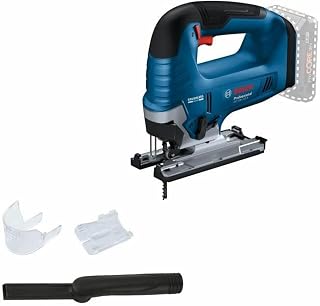













Choosing a jigsaw blade is not simply a matter of selecting the longest, thickest or most expensive option. The blade has a direct influence on cutting speed, accuracy, surface finish, vibration, blade life and the amount of rework required afterwards. Two blades that appear similar can behave very differently once they are used on different materials or for different types of cuts.
For buyers in the UK, the most useful starting point is the material being cut. Wood, laminate, plywood, chipboard, plastic, aluminium, mild steel and mixed construction materials each place different demands on the blade. The thickness of the workpiece also matters, as does whether the priority is a fast rough cut, a clean finished edge, a straight cut or a curved cut.
Bosch produces a broad range of jigsaw blades, including specialist options for wood, metal and multi-material applications. Its range also includes blades aimed at different levels of finish and cutting performance. This means that the best Bosch jigsaw blade is usually the one whose tooth geometry, blade material and dimensions match the job rather than one particular model being universally superior.
One of the easiest mistakes to avoid is buying a blade that does not match the jigsaw's blade-fitting system. Many Bosch jigsaw blades use the widely adopted T-shank format, which is supported by numerous jigsaws from Bosch and other manufacturers. However, compatibility should always be confirmed against the specific tool rather than assumed from the blade's appearance.
The shank is the part of the blade that locks into the jigsaw. It is separate from the cutting section, so a blade can have an excellent tooth pattern and still be unsuitable for a particular machine if the fitting system is incompatible.
Before ordering, check the jigsaw manufacturer's specifications and the blade manufacturer's compatibility information. This is particularly important if you own an older jigsaw, a specialist machine or a model using a less common fitting arrangement.
T-shank blades are widely used because they provide a convenient fitting system for many modern jigsaws. Bosch, Makita, DeWalt, Milwaukee and other established tool manufacturers offer jigsaws compatible with T-shank blades, although compatibility should still be checked for the individual machine.
The practical advantage for a DIY user is that a selection of specialist blades can often be kept available without needing a completely different blade-fitting system for every material. A wood-cutting blade, metal-cutting blade and fine-finish blade can therefore form a useful working collection.
Bosch blade names can look complicated at first because the model designation communicates information about the intended application and tooth configuration. Learning how to interpret the basic terminology makes comparing blades much easier.
Rather than choosing a blade solely because its code appears familiar, look for the characteristics behind the code: material suitability, tooth spacing, blade length, tooth geometry and intended cut quality.
Tooth pitch refers to the distance between consecutive teeth. A finer pitch means more teeth are engaged with the material over a given distance, while a coarser pitch generally allows material to be removed more aggressively.
Fine-tooth blades can be useful when surface finish is important, particularly on thinner materials. Coarser blades are often better suited to rapid cutting where speed is more important than a highly finished edge.
Progressive tooth arrangements provide a compromise by changing the tooth spacing along the cutting section. This can make a blade more versatile across a range of material thicknesses, but it does not mean one progressive blade is automatically the best choice for every job.
Blade length should be considered alongside material thickness. A blade needs sufficient usable cutting length to pass through the workpiece without the jigsaw mechanism or blade body becoming unsuitable for the application.
Using an unnecessarily long blade can increase movement and make control more difficult, particularly during detailed work. Conversely, a blade that is too short is unsuitable for thicker stock and may not provide adequate cutting depth.
Blade thickness affects rigidity and cutting behaviour. A more substantial blade can provide greater resistance to deflection during demanding straight cuts, while thinner blades can be advantageous for tight curves and intricate shapes.
This is one reason why a professional or experienced DIY user may keep several blade types available. Straight cuts through substantial timber and intricate curved cuts require different characteristics, even though both operations are performed with the same jigsaw.
Wood is one of the most common jigsaw applications, but “wood” covers a surprisingly wide range of materials. Softwood, hardwood, plywood, chipboard, MDF, veneered boards and laminated panels do not necessarily respond identically to the same blade.
For general-purpose timber work, look for a blade designed specifically for woodworking and choose its tooth pattern according to the required balance between speed and finish.
When speed is the priority, a blade with a relatively aggressive tooth arrangement can remove material quickly. This is useful for rough construction work, cutting framing timber or making openings where the finished edge will not be highly visible.
The trade-off is that aggressive blades can leave a rougher surface and may increase splintering on materials with a delicate face.
When the edge will remain visible, a finer cutting configuration is generally preferable. Clean-cut blades are particularly useful for furniture components, shelving, visible panels and other applications where sanding and finishing should be minimised.
Even with a fine blade, cutting technique matters. Support the workpiece properly, use an appropriate cutting speed and avoid forcing the jigsaw through the material. Excessive pressure can reduce control and may produce a poorer finish than the blade itself would normally deliver.
Plywood presents a different challenge because the blade passes through multiple layers, while laminated boards may have a decorative surface that is particularly susceptible to visible chipping.
When cutting a finished panel, consider which face will be visible and whether the blade's cutting action is likely to produce tear-out on that surface. A blade designed for clean or reduced-tear cutting can be more appropriate than a fast-cutting construction blade.
Thicker timber requires a blade with sufficient usable length, appropriate tooth spacing and enough stability to remain controllable through the cut. A blade intended primarily for thin sheet material should not be treated as a substitute for a blade designed for substantial wood sections.
For thick workpieces, keep the jigsaw moving steadily rather than trying to compensate for an unsuitable blade by applying excessive pressure.
Metal cutting requires a fundamentally different approach from timber cutting. Metal blades normally use much finer tooth arrangements because the material is harder and the cutting action needs to be controlled.
There is no single “metal blade” suitable for every metalworking application. Steel sheet, aluminium and other metals can require different blade characteristics. The manufacturer's stated material compatibility should therefore be treated as an essential specification rather than a suggestion.
Fine teeth help distribute the cutting action across a larger number of teeth. This is important when working with hard materials and thin sheet metal, where an overly aggressive tooth pattern can be unsuitable.
Blade speed and feed pressure also become more important. Allowing the blade to do the cutting rather than forcing the jigsaw through the material can improve control and reduce unnecessary stress.
Aluminium is softer than steel but still requires a blade specifically suitable for the application. Blade selection should account for the thickness and profile of the aluminium, as well as whether the workpiece is sheet, extrusion or another form.
For occasional DIY work, always check the manufacturer's recommended materials and thickness range before starting the cut.
Multi-material blades are attractive because they can reduce the need to switch blades when a project involves more than one material. This can be particularly useful during renovation and construction work where timber may contain nails, screws or other embedded material.
However, versatility should not be confused with universal superiority. A specialist wood blade can still be preferable when producing a particularly clean timber cut, while a dedicated metal blade may be more appropriate for repeated metalwork.
A multi-material blade makes most sense when convenience, flexibility and durability across varied materials are more important than optimising the blade for one specific cutting task.
Tooth geometry is one of the most important but frequently overlooked specifications when comparing jigsaw blades. Two blades can have similar dimensions but behave very differently because their teeth are shaped, ground, set or arranged differently.
Ground teeth can be used where precision and a cleaner cut are important. Milled teeth can be suited to more aggressive applications. Side-set teeth can create additional clearance around the blade, while specialised geometries are designed to reduce tearing or improve cutting efficiency.
Rather than memorising every blade code, consider what the geometry is trying to achieve: speed, clean finish, durability, material versatility, straight-line stability or curved-cut control.
One of the most important decisions when buying a jigsaw blade is deciding whether cutting speed or finish quality matters more.
A fast-cutting blade is useful when the edge will be hidden, subsequently trimmed or heavily sanded. A clean-cut blade is preferable when the cut edge is part of the finished appearance.
Trying to use a single aggressive blade for every woodworking job can result in unnecessary splintering and additional finishing work. Equally, using a fine-tooth blade for every rough construction cut can make a simple job slower than necessary.
The material used to manufacture a jigsaw blade has a major influence on its intended application. Common blade materials include high-carbon steel, high-speed steel and combinations of different metals.
High-carbon steel blades are commonly associated with woodworking applications. They can provide the flexibility and cutting characteristics required for many timber and non-abrasive woodworking tasks.
They should not automatically be treated as a general-purpose solution for hard metal or abrasive materials. Always use the manufacturer's stated application range.
High-speed steel is harder and is commonly used where greater resistance to wear is required. It is particularly relevant to blades intended for metal-cutting applications.
Hardness alone does not make a blade suitable for every job. Blade geometry, thickness and tooth arrangement remain important.
Bi-metal construction combines different materials to balance characteristics such as tooth hardness and body flexibility. This can be advantageous for demanding applications where a combination of durability and resistance to breakage is desirable.
For buyers comparing premium and standard blades, blade construction is therefore a useful specification to investigate rather than judging value purely from the number of blades in a pack.
Some higher-end Bosch jigsaw blades use carbide technology for demanding multi-material applications. Carbide-based designs are intended to provide high wear resistance and can be particularly relevant where conventional blades would be subjected to difficult or abrasive materials.
Premium construction does not automatically make a blade the best choice for occasional DIY work. The additional capability is most valuable when the cutting conditions justify it. For straightforward softwood projects, a specialist woodworking blade may provide a more sensible match than paying for advanced multi-material durability.
Blade width is particularly important when cutting curves. A wider blade tends to favour stability and straight-line control, while a narrower blade can turn more readily when following a tight curve.
This creates another unavoidable trade-off. A blade optimised for straight cuts is not necessarily the ideal blade for intricate shapes.
If your project includes both straight and curved sections, consider whether changing blades between operations will improve the result. A small selection of purpose-specific blades is often more useful than trying to make one blade perform every task.
Worktops require careful attention to finish, accuracy and blade suitability. The exact blade choice depends on the worktop material and the direction of the cut, but a clean-cut solution is generally more appropriate when the finished surface is visible.
Measure carefully, support the workpiece securely and account for the cutting line before starting. A quality blade cannot compensate for inaccurate marking or poor workpiece support.
Laminate flooring can chip at the decorative surface if the blade and cutting technique are unsuitable. A blade intended to reduce tearing can be advantageous, particularly where the cut edge will be visible.
Always follow the flooring manufacturer's cutting recommendations and consider whether the blade should enter from the finished or reverse face.
MDF produces fine dust and can place significant demands on cutting edges. Choose a blade designed for the material and use appropriate dust extraction or respiratory protection according to the manufacturer's safety guidance.
For visible MDF components, a finer cutting blade can help reduce the amount of finishing required.
Plywood quality varies considerably, so blade selection should take account of thickness, veneer quality and the required finish. A fine-tooth blade can be preferable for visible edges, while a faster configuration may be appropriate for hidden structural cuts.
This is one of the situations where a multi-material blade can be particularly useful. If old timber may contain concealed metal, using a conventional wood-only blade can result in rapid damage when the blade encounters a fixing.
Never assume that a multi-material blade makes unknown materials completely risk-free. Inspect reclaimed timber where possible and follow appropriate safety precautions.
A large pack can appear to offer better value, but the number of blades is not the only consideration. A pack containing blades you rarely use may be less useful than a smaller selection that closely matches your projects.
Budget blades can make sense for occasional rough work, but the cheapest option is not always the lowest-cost solution once cutting speed, finish quality and blade replacement are considered. For frequent use, buying the correct blade for the application can reduce wasted time and unnecessary rework.
Wood and metal blades are designed around different cutting requirements. Using a wood blade on metal is not a sensible substitute for selecting a blade designed for the material.
Compatible shank dimensions do not mean identical cutting performance. Tooth pitch, blade length, width, thickness and material can all differ substantially between blades.
Always compare the manufacturer's recommended material thickness with the thickness of your workpiece. A blade that performs well on thin sheet material may be unsuitable for a thick board.
A dull blade can make a straightforward cut unnecessarily difficult. Signs of deterioration can include slower cutting, increased pressure requirements, excessive wandering, burning, unusual vibration and a noticeably poorer finish.
Jigsaw blades do not have one universal replacement interval because service life depends heavily on material, cutting frequency, technique and blade type.
Instead of replacing blades according to an arbitrary number of cuts, inspect their condition and monitor how the tool behaves. If a blade that previously cut cleanly begins to wander, requires substantially more pressure or produces an increasingly poor finish, it may have reached the end of its useful life.
The way a jigsaw is used can be just as important as the blade selected. Forcing the machine through a workpiece places additional stress on the blade and can accelerate wear.
Use a suitable blade for the material, allow the cutting teeth to remove material at an appropriate rate and keep the workpiece securely supported. Avoid twisting the blade unnecessarily, particularly when cutting thick material.
Do not continue using a damaged blade simply because it still cuts. Replacing a worn component is generally preferable to compensating for it with excessive pressure or poor technique.
Jigsaw blades are small consumable components, but storing them properly makes it easier to identify the correct blade and helps prevent accidental damage.
For a beginner, versatility is often more useful than buying a large collection of specialist blades immediately. A sensible starting selection should cover the materials you expect to cut most frequently.
For general DIY involving timber, a general-purpose woodworking blade can form the foundation of the collection. Add a cleaner-cut option when appearance matters, and consider a metal or multi-material blade if your projects regularly involve those materials.
Beginners should pay particular attention to compatibility and material recommendations. A sophisticated blade is not a substitute for correct jigsaw operation, secure workpiece support and appropriate personal protective equipment.
Professional users should generally choose blades according to the work performed most frequently rather than buying a single all-purpose pack. Time spent changing blades is only one consideration; cut quality, productivity, durability and consistency can be equally important.
A joiner carrying out finish work may prioritise clean-cut woodworking blades, while a construction professional may benefit more from durable multi-material options. A fabricator or maintenance professional working with metal will have different requirements again.
The right professional selection is therefore determined by workload and material rather than job title.
Bosch is not the only established manufacturer worth considering. Makita, DeWalt, Milwaukee and Festool also produce jigsaw blades and related cutting accessories for different applications.
Brand comparison is most useful when it focuses on the actual blade specification rather than assuming that one manufacturer is automatically superior. Look at compatibility, blade material, tooth geometry, intended material, thickness range and finish requirements.
If you already own a particular manufacturer's power tools, it can also be practical to standardise on blade types that are easy to identify and source for your regular applications, provided the technical specifications meet the requirements of the job.
Blade sets can be an efficient way to build a useful selection, especially for DIY users who work with several materials. A mixed set can provide rough, fine, straight, curved and material-specific options without requiring separate purchases for every blade.
The disadvantage is that some blades may remain unused. If you already know exactly what you cut most often, buying individual blades or smaller application-specific packs can produce a more focused selection.
When comparing sets, examine the actual blade codes and applications included. Do not judge a set solely by the number printed on the front of the packaging.
There is no single budget that suits every buyer. Occasional DIY users may reasonably prioritise a practical selection of general-purpose blades, while frequent users can justify spending more on specialist or more durable designs when the additional capability is useful.
Instead of asking whether an expensive blade is “worth it” in isolation, consider how often it will be used and what the consequences of poor cutting performance are. For a one-off hidden cut, an inexpensive suitable blade may be sufficient. For repeated precision work, improved cutting characteristics can be considerably more valuable.
A simple comparison process can prevent most purchasing mistakes. Start with the material, then consider thickness, cut direction, desired finish and the type of blade movement required.
Blade selection should always be accompanied by safe working practices. Read the instructions supplied with both the jigsaw and blade, and use the appropriate protective equipment for the material and operation.
Secure the workpiece before cutting and keep hands away from the blade path. Allow the blade to stop completely before placing the tool down or attempting to remove a blade. Disconnect or otherwise safely isolate the power source according to the tool manufacturer's instructions before changing blades where required.
Dust management is especially important when cutting wood-based boards and other materials that generate significant airborne particles. Follow the recommendations applicable to the material and your particular working environment.
A high-quality blade cannot overcome every limitation of the machine. The jigsaw's orbital action, variable-speed control, blade guidance, base stability and power delivery can all influence the finished result.
If a blade appears to wander despite being appropriate for the material, consider whether the tool is being operated correctly and whether the workpiece is adequately supported. Check the blade installation and condition before concluding that the blade itself is at fault.
For demanding work, matching the blade to the machine and application is more effective than simply choosing the most advanced blade available.
Customer reviews can be useful when comparing jigsaw blades, but they should be read selectively. A five-star rating does not necessarily tell you whether a blade is suitable for your particular material.
Look for reviews that explain what was cut, the approximate material thickness, the type of jigsaw used and whether the reviewer was seeking speed, precision or finish quality.
Comments that simply state that a blade is “good” provide less useful information than a detailed account of the application. It is also worth looking for recurring comments rather than allowing one unusually positive or negative review to dominate the buying decision.
The best Bosch jigsaw blade is the one that matches the material, thickness, cutting style and required finish of the job. There is no single blade that can deliver maximum speed, perfect finish, extreme durability and ideal curved-cut control in every situation.
For general woodworking, concentrate on tooth configuration and material thickness. For precision work, prioritise clean-cut characteristics. For metal, choose a blade specifically designed for the relevant metal and application. For renovation and mixed construction work, a multi-material blade can offer useful flexibility.
Compatibility should always come first, followed by application, material, thickness and desired finish. Once those fundamentals are correct, compare blade construction, tooth geometry, pack contents, verified customer feedback and current UK pricing.
For general DIY, the best choice depends on the materials you expect to cut most often. A suitable general-purpose woodworking blade is a sensible starting point for timber projects, while a mixed set can be useful if you regularly work with wood, metal and other materials.
Many Bosch jigsaw blades use T-shank fittings and can therefore be compatible with jigsaws from other manufacturers that accept the same shank type. Compatibility must still be confirmed against the specific power tool before purchase.
Look for a Bosch blade specifically designed for clean or precision cutting in wood. Fine tooth geometry and blade characteristics intended to reduce tearing are generally more appropriate for visible finished edges than aggressive rough-cut blades.
Choose a blade with sufficient cutting length and a tooth configuration intended for the thickness of the timber. A blade designed primarily for thin sheet material is not an appropriate substitute for one specified for thicker workpieces.
A wood-specific blade should not be treated as a metal-cutting blade. Use a blade whose manufacturer specifically states that it is suitable for the metal and thickness being cut.
They can be worthwhile when a project involves several materials or potentially contaminated construction timber. Their main advantage is versatility, whereas specialist blades can remain preferable when maximum performance in one particular material is the priority.
There is no fixed number. A practical collection might include a general woodworking blade, a clean-cut woodworking blade, a blade for thicker timber and a suitable metal or multi-material option if those materials are part of your projects.
Bending can result from excessive lateral pressure, an unsuitable blade, poor workpiece support, an overly aggressive cutting approach or a damaged blade. Check the blade specification and condition, reduce sideways pressure and allow the jigsaw to perform the cutting action rather than forcing it through the workpiece.
The blade may be designed for fast rather than clean cutting, or it may be worn or unsuitable for the material. Cutting technique, workpiece support and the direction in which the blade enters the material can also affect the finished edge.
A large set can be useful if you regularly work with several materials and cutting styles. If your projects are more specialised, a smaller selection of purpose-specific blades may provide better value because you are less likely to pay for blades that remain unused.
More expensive blades can incorporate different materials, specialised tooth geometry or enhanced durability, but that does not mean they are automatically better for every project. The best value comes from matching the blade's capabilities to the work you actually perform.
Choose according to the balance you need between cutting speed and surface finish. Coarser teeth are generally associated with faster material removal, while finer teeth can provide a more controlled finish. Material thickness also needs to be considered.
Yes. Cutting performance declines as teeth wear, although the rate of wear varies significantly according to the blade material, workpiece and cutting conditions. Replace blades when their performance or condition indicates that they are no longer suitable for the job.
Some Bosch multi-material blades are specifically designed for multiple material types, but a conventional wood-only blade should not be assumed to have the same capability. Always check the manufacturer's stated material range for the individual blade.
The most reliable way to choose between Bosch jigsaw blades is to stop looking for a universal “best” blade and instead identify the best blade for the particular cut. A homeowner cutting occasional shelves has different requirements from a joiner producing visible furniture components, while someone renovating an older property may value multi-material durability more than either.
That approach also makes product comparisons more meaningful. Instead of comparing blades purely by ratings, pack size or price, compare their intended materials, tooth geometry, dimensions, construction and stated cutting range. This provides a much clearer basis for deciding whether a particular Bosch blade is genuinely suitable for your next project.