

♥ Wishlist
Compare 44 verified Metabo Saw Blades for Precise, Reliable Cutting products in United Kingdom. Reviews, ratings, pros, cons and buying advice updated for October 2026.





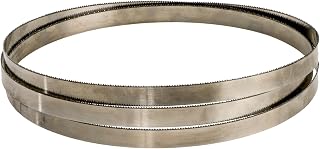


Choosing a Metabo saw blade should begin with the material being cut and the type of finish required, rather than simply selecting the blade with the highest tooth count. A blade designed for clean cuts in timber has different priorities from one intended for laminated board, aluminium or other specialist materials. The correct combination of blade diameter, bore size, tooth geometry, tooth count and material compatibility can make a substantial difference to cutting quality, noise, feed resistance and blade life.
Before buying, identify the exact saw model and check its permitted blade diameter, bore and maximum rated speed. These specifications should always take priority over a generic recommendation. A blade that physically fits the spindle is not necessarily suitable for the saw, the material or the intended cutting operation.
Blade compatibility involves more than diameter. Check the blade diameter, bore diameter, permissible rotational speed and any other restrictions stated by the saw manufacturer. The cutting machine's manual remains the authoritative reference for compatibility.
For Metabo machines, buyers should identify the complete saw model before comparing replacement blades. Similar-looking machines can have different blade requirements, and a blade intended for one machine should not automatically be assumed to be suitable for another.
The diameter determines whether the blade can be physically installed and whether it is compatible with the saw's guard and cutting mechanism. The bore is the central hole through which the blade mounts to the spindle. Both dimensions matter.
Never modify, enlarge, reduce or otherwise alter a blade's mounting dimensions unless the saw and blade manufacturer explicitly permits the relevant accessory. Improvised fitting can compromise blade alignment and safe operation.
Tooth count is one of the easiest specifications to compare, but it is frequently misunderstood. More teeth do not automatically mean a better blade. Instead, tooth count influences the balance between cutting speed, chip clearance and finish.
Blades with fewer teeth generally provide larger gullets between the teeth. These spaces help carry chips away from the cutting area and can make a blade appropriate for faster, more aggressive cuts in suitable materials.
The trade-off is that a coarse blade may leave a less refined edge than a blade designed specifically for fine finishing. For structural timber or applications where the cut will subsequently be concealed, maximum visual finish may be less important than efficient progress.
More teeth can provide a finer cutting action and may be preferable where the appearance of the cut edge matters. They can be useful for certain sheet materials, finished boards and precision applications when the blade's tooth geometry is also appropriate.
However, a high-tooth-count blade is not automatically the right choice for every job. If the material and cutting operation generate large quantities of waste, an overly fine blade may have less effective chip clearance and can make the saw work harder.
Two blades with the same number of teeth can behave differently because their tooth shapes, hook angles, kerf dimensions and carbide design may differ. When comparing Metabo-compatible blades, therefore, consider the complete specification rather than using tooth count as the sole buying criterion.
Tooth geometry describes the shape and arrangement of the cutting teeth. It affects how the blade enters the material, removes waste and leaves the finished edge.
Alternating tooth arrangements are commonly used where a balance between efficient cutting and a reasonably clean edge is required. The alternating profile can help distribute the cutting action across the material.
Flat-top tooth profiles can be useful for applications where robust material removal and chip clearance are priorities. Their suitability depends on the material and the manufacturer's intended application for the blade.
Combination designs aim to balance cutting efficiency with finish quality. They can be useful when one blade needs to perform more than one type of woodworking task, although a specialist blade can still be preferable when a particular application is especially demanding.
Some blades use tooth arrangements developed for particular materials or finishing requirements. These can be worthwhile when working repeatedly with a specific board, laminate or non-ferrous material rather than using a general-purpose blade for every job.
Kerf is the width of material removed by the blade. It is an important specification because it influences cutting resistance, material waste and the demands placed on the saw.
A thinner kerf can reduce the amount of material removed during each cut and may be advantageous on compatible machines, particularly where minimising waste is important. However, kerf should never be considered in isolation. Blade construction, machine compatibility, stability and the manufacturer's recommendations all matter.
A wider kerf can provide characteristics that are desirable for particular machines or applications. The objective is not simply to choose the narrowest blade available, but to select a blade whose complete specification is suitable for the saw and cutting task.
Many modern circular saw blades use carbide-tipped teeth because carbide can provide the hardness required for repeated cutting. The quality and construction of the teeth, however, are only part of the overall blade design.
The blade body needs to maintain suitable stability during operation, while the teeth need to retain an appropriate cutting profile. Poor maintenance, incorrect material selection, excessive feed pressure or contact with unsuitable materials can all affect performance regardless of the blade's original specification.
For general woodworking, the most useful way to compare blades is to decide whether the priority is speed, finish or versatility.
For repetitive cutting of suitable timber where the edge will not be the final visible surface, a blade designed around efficient chip removal can be more practical than a fine-finishing blade. The exact specification should be selected according to the saw and material.
When cutting furniture components, finished boards or other visible parts, edge quality becomes more important. A blade with an appropriate fine-cutting specification may reduce the need for subsequent finishing work, provided it is suitable for the material and machine.
A general-purpose blade can make sense for occasional users who cut several compatible timber and board materials. The compromise is that a general-purpose product may not equal a specialist blade when a particular material or finish requirement becomes demanding.
When comparing several blades, it helps to use the same criteria for every candidate. Looking at one specification at a time can produce misleading conclusions.
A reputable manufacturer is a useful starting point, but brand name does not remove the need to check compatibility. Metabo makes a wide range of equipment, and the correct blade depends on the particular machine and application.
More teeth can improve the finish in suitable applications, but they can also alter cutting speed and chip clearance. Choose according to the task rather than assuming a higher number is universally superior.
Diameter alone is not enough. The mounting bore must be compatible with the saw and the manufacturer's fitting requirements.
A blade must be rated appropriately for the rotational speed of the machine. Never treat speed markings as an optional specification.
General-purpose products have their place, but materials behave differently. Timber, abrasive boards, laminates, plastics and metals can require substantially different cutting characteristics.
The cheapest blade is not necessarily the most economical choice. Consider cutting performance, edge quality, durability, sharpening options where applicable and how frequently the blade will be used.
A specialist blade becomes more compelling when a particular material or cutting task represents a large proportion of your work. If you repeatedly cut the same type of board and consistently require a clean finished edge, a blade optimised for that material can be more sensible than relying on a general-purpose product.
Specialist selection is also worthwhile when poor cutting results create additional work. If excessive breakout, burning or rough edges require sanding, trimming or re-cutting, the apparent saving from a general-purpose blade may disappear.
A blade does not necessarily become unsuitable simply because it has been used. However, changes in cutting behaviour should be investigated rather than ignored.
These symptoms can have several causes, including an unsuitable blade, incorrect cutting technique, material problems or a machine issue. Do not assume that replacing the blade is always the solution.
Resin, dust and other deposits can accumulate on cutting teeth and alter the way a blade performs. Keeping a blade clean can help preserve its intended cutting characteristics, but cleaning should be carried out using a method appropriate to the blade manufacturer's instructions.
Do not aggressively scrape or grind carbide teeth. The cutting edges are precision components, and careless cleaning can damage them.
Store blades so that the teeth cannot strike hard surfaces or one another. A protective storage method helps reduce accidental tooth damage and makes it easier to keep different blades identified by application.
It is useful to label blades according to their intended material or cutting purpose, particularly in a workshop containing several similar-looking products.
Whether sharpening makes financial sense depends on the blade, its condition, its construction and the cost of professional sharpening. A quality blade with a suitable construction may be a candidate for professional re-sharpening, whereas a heavily damaged or inappropriate blade may not justify the expense.
Professional sharpening is preferable to attempting to recreate precision tooth geometry with improvised equipment. Once a blade has damaged teeth, excessive wear or other structural problems, seek qualified advice before returning it to service.
Occasional DIY users should prioritise straightforward compatibility and an application that closely matches the work they actually perform. Buying several specialist blades before knowing what materials will be cut is rarely necessary.
A sensible approach is to identify the saw model, list the materials commonly cut, decide whether speed or finish matters more, and then compare suitable blades against those requirements.
Regular workshop users can benefit from maintaining a small selection of blades for distinct purposes. For example, a workshop may use one blade for fast timber work, another for cleaner finished cuts and a separate specialist blade for a particular board material.
The advantage is not simply improved cutting. Matching the blade to the job can make the workflow more predictable and reduce the temptation to use an unsuitable blade because it happens to be fitted to the machine.
Blade selection is important, but cutting technique also affects the finished result. Even a high-quality blade can produce poor results if the material is unsupported, the feed is inconsistent or the machine is incorrectly configured.
Support the workpiece appropriately and allow the saw to perform the cutting rather than forcing it through the material. Excessive pressure can increase heat and resistance and may reduce both finish quality and blade life.
For sheet materials, support can be particularly important because unsupported sections may vibrate or flex as the blade exits. The exact setup should follow the instructions for the saw and the material being cut.
For UK buyers, the best blade is not necessarily the one with the longest list of features. It is the product whose specification aligns with the particular saw, material and workload. Availability can also change, so buyers should check the current specification and retailer information before ordering.
Where several blades appear technically suitable, compare the manufacturer's stated application, dimensions, tooth configuration and speed rating first. Customer feedback can provide additional buying context, but reviews should be interpreted alongside the technical specification rather than replacing it.
No. The blade must meet the specific requirements of the saw, including the correct dimensions, mounting arrangement, speed rating and intended application. Always check the machine's documentation before fitting a replacement.
No. Higher tooth counts can favour cleaner cuts in appropriate materials, while lower tooth counts can favour faster cutting and chip clearance. The correct balance depends on the material and the job.
There is no single best blade for every hardwood application. Consider the particular timber, desired finish, saw model and cutting frequency. A blade intended for clean hardwood cutting may be preferable where appearance matters, while a more production-oriented specification may suit repetitive cuts where speed is the priority.
Look for a blade whose manufacturer specifically identifies it as suitable for MDF or the relevant engineered board. MDF can be abrasive, so tooth construction, geometry and durability are important considerations.
A fine-tooth blade can be appropriate when a clean edge is the priority, but the correct specification depends on the plywood and saw. Do not select by tooth count alone; consider the complete blade design and the manufacturer's intended application.
Burning can result from several factors, including a worn or unsuitable blade, excessive feed resistance, material movement, incorrect cutting technique or machine-related issues. A new blade is not automatically the answer, so inspect the complete cutting setup.
There is no universal replacement interval. Blade life depends on material, cutting frequency, technique, contamination, maintenance and tooth condition. Replace or professionally assess a blade when it becomes damaged, excessively worn or no longer performs as intended.
Some blades can be professionally sharpened, depending on their construction and condition. The economics of sharpening depend on the blade and the amount of remaining usable material. Professional assessment is preferable to attempting precision sharpening without the appropriate equipment and expertise.
Brand reputation can be useful when assessing manufacturing quality and published specifications, but compatibility and application remain more important. A well-known brand does not make an incorrectly sized or unsuitable blade safe to use.
No. Price should be considered alongside construction, intended application, durability, cutting performance and the frequency with which the blade will be used. The most suitable blade is the one that provides the right specification for the task.
Some general-purpose blades may be designed for more than one compatible material, but suitability should be confirmed by the manufacturer. If MDF is a major part of the workload, a blade specifically intended for engineered boards may be worth considering.
Check the saw's exact model documentation and compare the required blade diameter, bore and speed rating with the blade specification. If any of these details do not match the machine's requirements, do not assume that the blade is compatible.
The strongest way to compare Metabo saw blades is to start with compatibility and work outwards. First identify the exact saw. Then establish the material, required finish and typical workload. Only after those decisions should tooth count, tooth geometry, kerf and construction be compared.
For occasional DIY work, versatility may be the deciding factor. For furniture making or visible joinery, edge quality can take priority. For repetitive workshop cutting, durability, predictable performance and material-specific optimisation may be more important. For specialist materials, a dedicated blade is often more appropriate than trying to make a general-purpose product cover every task.
Before purchasing, compare the current manufacturer specifications, check the exact dimensions and speed rating, and read verified customer feedback as supplementary evidence rather than as a substitute for technical compatibility. Prices and availability can change, so check today's retailer information immediately before buying.
The best Metabo saw blade is ultimately the one that matches the machine and the work rather than the one with the most teeth, the lowest price or the longest feature list.