

♥ Wishlist
Compare 39 verified Milwaukee Oscillating Blades products in United Kingdom. Reviews, ratings, pros, cons and buying advice updated for October 2026.









Choosing an oscillating multi-tool blade is less about finding one universally “best” option and more about matching the blade construction to the material, cutting method and frequency of use. A blade that performs well in clean timber can be a poor choice for hardened screws, while a carbide blade selected for demanding metal work may be unnecessary for occasional cuts in plasterboard or softwood.
For a more useful comparison, consider five factors together: the material being cut, the type of tooth or abrasive edge, the cutting width, the required cutting depth and the expected workload. Compatibility with the multi-tool itself should be checked before anything else.
Material should normally determine blade type before price or pack size. Oscillating blades are specialised cutting accessories rather than interchangeable consumables with identical performance.
The cutting edge is exposed to heat, friction, abrasion and mechanical shock. Blade construction therefore has a direct influence on how an accessory behaves during repeated work.
High-carbon-steel blades are generally the straightforward choice for clean, softer materials where low accessory cost and fast cutting are more important than extreme wear resistance. They are not the ideal choice simply because they are cheaper when the work involves frequent nails, screws or abrasive materials.
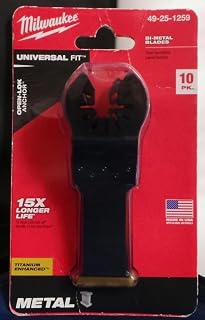
Bi-metal construction is intended to provide a more versatile balance between cutting performance and durability. Milwaukee's TITANIUM CHARGED bi-metal range is designed for multi-material applications, with the manufacturer stating that its construction can provide substantially longer life than conventional high-carbon-steel blades.
Carbide-tooth blades move further towards demanding applications. Milwaukee describes its carbide-tooth multi-material blades as being intended for wood, screws, nails, cement board, plaster and other materials, while its carbide metal variants are designed around applications such as screws, bolts, metal pipe and nails.
The practical lesson is simple: do not judge a blade solely by its advertised lifespan. The relevant question is whether its construction is appropriate for the work you actually intend to perform.
High-carbon-steel blades are a sensible option for clean wood, soft construction materials and other applications where the cutting edge is not repeatedly exposed to hard fasteners. They can be particularly attractive when a project involves many straightforward timber cuts and replacement blades are likely to be consumed relatively quickly.
The main limitation is that a clean-wood blade should not be treated as a general-purpose metal-cutting accessory. Accidentally encountering a screw or nail can dramatically change the demands placed on the teeth.
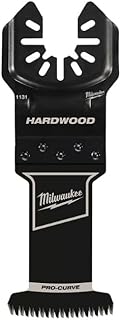
Japanese-tooth profiles are aimed at producing controlled, clean cuts in hardwood and similar applications. Tooth geometry matters because a blade intended for rapid material removal is not necessarily the same blade you would select when the appearance of the cut matters.
Milwaukee's OPEN-LOK range includes Japanese-tooth hardwood blades, including profiles described by the manufacturer as triple-ground and flame-hardened for hardwood cutting.
For joinery, trimming and detailed work, look beyond the headline material compatibility and consider tooth arrangement, blade width and the amount of control required around the cut.
Bi-metal multi-material blades are often the most useful category for general renovation work because they are designed to tolerate a mixture of materials rather than a single clean substrate.
They are especially useful when a cut may pass through timber and then encounter a nail, screw or another embedded obstruction. Milwaukee identifies its bi-metal multi-material blades for applications including wood, nails, PVC and drywall.
For homeowners and tradespeople who do not want to keep changing blades for every minor variation in material, this category can provide a useful compromise between versatility and specialist performance.
Carbide-tooth blades are designed for situations where conventional steel teeth may wear too quickly. They are particularly relevant to demolition, renovation and maintenance work involving embedded fasteners or tougher construction materials.
Milwaukee states that its carbide-tooth multi-material blades can offer up to 50 times the life of standard bi-metal blades under its specified comparison, although actual service life will vary substantially with material, technique, tool settings and workload.
That distinction is important when comparing products. Manufacturer lifespan claims are controlled comparisons rather than a guarantee that one blade will last a particular number of cuts in every UK workshop or building site.
Metal-specific carbide blades make more sense when metal cutting is a regular part of the job. They are intended for applications such as screws, bolts, nails and metal pipe, where a conventional wood blade is inappropriate.
Milwaukee's 1-3/8-inch carbide-tooth metal blades are specified for metal applications and list a maximum plunge depth of 1-1/2 inches. The manufacturer also identifies a reinforced OPEN-LOK anchor and a protective black-oxide coating on these products.
Grout removal is a different task from cutting timber or metal. An abrasive carbide-grit accessory is designed to remove material by abrasion rather than by conventional teeth.
Milwaukee's 2-in-1 grout and mortar removal accessory uses different carbide-grit areas for grout and mortar removal.
When comparing these accessories, concentrate on the width of the working edge, the intended joint size and the abrasive construction. Using a conventional toothed blade for grout can produce poor results and unnecessary accessory wear.
Blade width affects access, control and the character of the cut. A narrower blade can be easier to position in restricted spaces, whereas a wider blade can provide a broader cutting path and may be more convenient for certain trimming operations.
Milwaukee offers OPEN-LOK blades in several cutting widths, with its published range covering different profiles for wood, multi-material and specialist applications.
Do not automatically assume that the widest blade is the most productive. In a confined opening, additional width can make accurate positioning harder.
Product dimensions can be confusing because manufacturers may publish overall blade length, cutting width and maximum plunge depth separately. A longer-looking blade does not necessarily mean that the usable cutting depth is proportionally greater.
When comparing specifications, look specifically for the stated maximum plunge depth and consider the geometry of the workpiece. Milwaukee, for example, lists a 1-1/2-inch maximum plunge depth for certain 1-3/8-inch carbide-tooth blades.
Large, aggressive teeth are generally associated with rapid material removal, while finer tooth patterns can favour control and a cleaner finish. Neither is universally superior.
For demolition, speed may matter more than cosmetic finish. For visible hardwood trimming, controlled cutting and reduced splintering may be more important. For metal, the tooth construction must be capable of handling the hardness and heat generated by the application.
Compatibility is one of the easiest details to overlook when purchasing replacement oscillating blades. A blade can have the correct width and intended application yet still be unsuitable for a particular tool because of the mounting interface.
Milwaukee describes its OPEN-LOK anchor as a universal-fit system for major brands of non-Starlock oscillating tools. The manufacturer also explicitly states that the relevant OPEN-LOK products are not compatible with Starlock tools.
Do not interpret “universal fit” as “fits every oscillating multi-tool”. Check the exact mounting system of your tool before ordering. This is particularly important when comparing Milwaukee accessories with Bosch, Fein, Makita, DeWalt and other manufacturers' tool platforms, because different tools can use different interfaces.
For clean timber, a dedicated HCS wood blade is often the logical starting point. If the timber is hardwood or the finish needs to be particularly controlled, compare the available fine-tooth or Japanese-tooth options instead of defaulting to a general-purpose blade.
A multi-material bi-metal blade is generally a better fit for wood where nails or screws may be encountered. If fasteners are frequent or particularly demanding, carbide technology becomes more compelling.
Renovation work often involves unpredictable materials. A combination of carbide and bi-metal blades can be more useful than buying a large quantity of one basic wood blade.
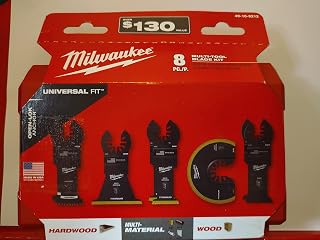
Milwaukee's multi-piece OPEN-LOK sets illustrate this approach by combining different blade constructions and applications rather than treating every cutting job as identical.
When cutting bolts, screws, nails or metal pipe is a normal part of the job, choose a blade explicitly designed for metal rather than relying on a general-purpose wood accessory.
Use a dedicated grout or mortar removal blade. The correct accessory should be selected according to the joint and substrate rather than simply choosing the toughest-looking oscillating blade.
A multipack is not automatically better value. The useful question is whether the included blade mix corresponds to the work you actually do.
A set can make sense for a renovation project because it may provide separate options for clean wood, hardwood, multi-material work and metal. Milwaukee's 3-piece, 6-piece, 9-piece and larger OPEN-LOK sets demonstrate how accessory packs can be assembled around different applications.
However, buying a large assortment containing several blades you never use can produce a higher initial spend without improving your results. A professional who repeatedly cuts one material may be better served by buying the appropriate blade type in a suitable pack quantity.
Comparing two products purely by star rating or pack quantity can produce misleading conclusions. A better comparison separates technical suitability from value.
Confirm the manufacturer's stated applications first. A blade intended for hardwood should not automatically be compared directly with a carbide metal blade simply because both fit the same multi-tool.
Look for HCS, bi-metal, carbide teeth, carbide grit or other specialist construction. The construction should reflect the demands of the material.
Check whether the blade's width suits the access available and the precision required.
Where the specification is provided, use maximum plunge depth as a meaningful comparison rather than assuming overall dimensions tell the whole story.
A two-pack, three-pack or ten-pack should be evaluated according to expected consumption. Divide the purchase cost by the number of genuinely useful blades rather than simply choosing the pack with the largest headline quantity.
Compatibility should be treated as a pass-or-fail requirement, not as a minor scoring category. An unsuitable mounting system makes every other specification irrelevant.
For occasional DIY use, a conventional blade can be entirely adequate. For repetitive professional work, a more durable blade can make sense if its higher purchase cost is justified by the workload.
Maximum durability is not always the same as maximum usefulness. Specialist carbide blades can be excellent for demanding materials, but using a specialist accessory for simple clean timber may offer little practical advantage.
Mounting systems vary. Always verify compatibility with the exact tool model and interface.
A blade that is too wide for the working area can be awkward even when its cutting performance is excellent.
Ten unsuitable blades are not better value than two blades that match the job. Evaluate the contents of the pack, not simply the number printed on the packaging.
This is one of the easiest ways to shorten blade life. If a project contains substantial metal, select an accessory designed for that application.
Blade life and cutting behaviour are affected by tool speed, pressure and material. Milwaukee provides application-specific speed guidance for its oscillating blade systems, including lower settings for some pipe work and higher settings for various wood and construction applications.
Blade longevity depends on more than the material printed on the packaging. Operator technique, tool speed, pressure, vibration, workpiece stability and contamination can all affect the result.
The most effective way to reduce unnecessary wear is to avoid asking a blade to perform a job outside its intended application.
Excessive downward pressure can reduce cutting efficiency and increase heat and mechanical stress. Use controlled pressure and allow the teeth or abrasive edge to remove material.
Follow the manufacturer's guidance for the blade and material. Faster is not automatically better because heat generation and tooth wear can increase when the accessory is used incorrectly.
Movement can cause the blade to catch, vibrate or deflect. Secure material appropriately and maintain a stable cutting position.
Oscillating blades are relatively thin accessories. Side loading and twisting can place stress on the blade body and cutting edge. Keep the blade aligned with the intended cut wherever practical.
Look for damaged teeth, excessive wear, distortion, cracks or other visible deterioration. A blade that no longer cuts predictably should not be kept in service simply because material remains on the teeth.
Oscillating multi-tools are versatile but still generate a rapidly moving cutting edge. Safe operation starts with the tool manufacturer's instructions and the blade manufacturer's application guidance.
Product descriptions sometimes include impressive relative lifespan claims, but these figures need context. A statement that one blade lasts several times longer than another is normally based on a defined comparison rather than every possible real-world application.
Milwaukee publishes comparative lifespan claims for several blade technologies, including its TITANIUM CHARGED bi-metal and carbide products.
For commercial investigation, treat these claims as one data point rather than a guaranteed number of cuts. The actual result can change considerably according to the fastener type, timber density, metal thickness, tool model, operating speed, cutting pressure and operator technique.
Professional buyers should usually place greater emphasis on consistency, productivity and predictable accessory consumption than on the lowest purchase price.
DIY users often benefit from versatility rather than a large collection of specialist accessories. A sensible starting selection may include a general-purpose multi-material blade, a clean-wood blade and a suitable specialist option for any demanding material expected during the project.
A mixed set can therefore be convenient for occasional renovation, provided the individual blades match the materials involved. Milwaukee offers several OPEN-LOK sets built around combinations of wood, hardwood, multi-material and metal applications.
Milwaukee should not be assessed in isolation. Bosch, DeWalt, Makita and Fein all have established positions in the power-tool accessory market, and the most suitable blade can depend on the tool platform already in your workshop.
The comparison should focus on compatibility, blade construction, intended application, cutting geometry, pack quantity and the manufacturer's published specifications rather than brand reputation alone.
For buyers already using Bosch oscillating tools, mounting compatibility deserves particular attention because Bosch's accessory ecosystem includes different interfaces and tool generations. Compare the actual interface and application specification rather than assuming a blade will fit because it is marketed as universal.
DeWalt is another major option for professional and DIY users. When comparing DeWalt and Milwaukee accessories, evaluate the blade construction and application category first, followed by compatibility and pack economics.
Makita offers a broad range of oscillating tools and accessories. Buyers should compare individual blade specifications rather than choosing exclusively on the basis of the tool brand already owned.
Fein has a long association with oscillating multi-tools, making it an important brand to consider when evaluating premium accessories. Compatibility remains the first checkpoint, followed by cutting application, tooth design and material construction.
The cheapest blade is not necessarily the lowest-cost blade to use. A more useful assessment considers purchase cost alongside expected consumption, productivity and suitability for the application.
For example, a low-cost HCS blade may be perfectly sensible for occasional clean timber cuts. If the same blade is repeatedly used against embedded nails, however, rapid wear can make a more durable multi-material or carbide option economically preferable.
Conversely, buying premium carbide accessories for occasional softwood trimming may increase the purchase cost without delivering a meaningful benefit.
The best-value choice is therefore the blade that provides the appropriate balance of purchase cost, cutting performance, durability and versatility for your workload.
When comparing individual Milwaukee accessories, use the complete product specification rather than relying on a shortened retailer description. Product numbers can distinguish pack quantities, blade widths, material types and particular configurations.
For example, Milwaukee publishes individual product identifiers alongside dimensions, pack quantities, cutting widths and material applications for its OPEN-LOK products.
Before purchasing, compare the exact product number, not merely a similar-looking product name. This is especially useful when a blade is available as a single accessory and in several multipack configurations.
Good storage helps protect cutting edges and makes it easier to select the correct blade. Keep accessories organised by application rather than placing every blade together in an unlabelled container.
Some Milwaukee blade sets are supplied with dedicated storage cases, including configurations designed to organise different blade types together.
Prioritise versatility and compatibility. A small selection of suitable multi-material and wood blades can cover many household renovation tasks without requiring a large accessory collection.
Consider a mixed set containing different blade constructions. Renovation work frequently moves between timber, plasterboard, PVC and fasteners, so having an appropriate accessory available can be more useful than relying on one blade for everything.
Place greater emphasis on tooth profile, cutting control and blade width. A Japanese-tooth hardwood blade may be more appropriate than an aggressive demolition-oriented accessory when the quality of the cut is important.
Durability and fastener resistance become more important. Multi-material bi-metal and carbide options should receive greater consideration, particularly where nails and screws are regularly encountered.
Build the accessory selection around the materials encountered most frequently. Keeping dedicated blades for recurring applications can reduce the temptation to misuse a general-purpose accessory and can make blade selection quicker on site.
There is no single best blade for every application. The right choice depends on the material, cutting depth, required finish, frequency of use and tool compatibility. A clean-wood blade, multi-material bi-metal blade, carbide-tooth blade and grout accessory are designed for different jobs.
Milwaukee describes OPEN-LOK as a universal-fit anchor for major brands of non-Starlock oscillating tools, but the manufacturer states that these products are not compatible with Starlock tools. Always check the exact interface of the tool before buying.
They can be worthwhile when the work involves abrasive materials, embedded fasteners or frequent metal cutting. For occasional clean timber work, a conventional steel or bi-metal blade may be more appropriate and economical.
Neither is universally better. Bi-metal construction is more appropriate for demanding multi-material applications, while HCS wood blades can be a sensible choice for clean timber and other compatible soft materials.
Only use a blade specifically designed for that application. Milwaukee offers multi-material and carbide metal blades intended for work involving screws, nails and other fasteners.
Yes, Milwaukee produces dedicated metal-cutting oscillating blades, including carbide-tooth products designed for applications involving screws, bolts, nails and metal pipe. The specific blade should be selected according to the material and application.
A dedicated hardwood blade with an appropriate fine-tooth or Japanese-tooth profile is generally the logical category to investigate. Milwaukee offers Japanese-tooth hardwood blades within its OPEN-LOK range.
A multi-material bi-metal blade is a suitable category to consider for wood containing nails. If the work frequently involves substantial metal or demanding fasteners, a carbide option may provide greater durability.
Some multi-material blades are specifically designed for combinations of these materials. Milwaukee identifies its bi-metal multi-material blades for wood, nails, PVC and drywall applications.
There is no universal replacement interval. Replace a blade when its cutting performance, tooth condition or structural integrity has deteriorated sufficiently that continued use is no longer appropriate. Usage intensity and material have a major effect on service life.
No. Price alone does not determine suitability or lifespan. Blade construction, material, technique and application all matter. A premium carbide blade can be advantageous for demanding work but unnecessary for simple occasional cutting.
Only when the included accessories match your needs. Compare the number of genuinely useful blades, the individual blade types and the expected frequency of use rather than judging value solely by pack size.
The strongest buying decision is the one that matches the accessory to the work rather than simply choosing the most expensive or most heavily advertised blade. For clean wood, a suitable HCS blade can be perfectly practical. For hardwood, tooth geometry and control deserve more attention. For mixed renovation work, bi-metal multi-material blades offer a useful balance of versatility and durability. For repeated contact with demanding fasteners or metal, carbide becomes much more relevant. Grout and mortar require their own abrasive accessories.
Compatibility should always come first. After that, compare construction, application, cutting width, depth, pack quantity and expected workload. Milwaukee's current OPEN-LOK range covers multiple blade constructions and specialist applications, so the best choice is ultimately determined by the job rather than by a single overall ranking.
For UK buyers comparing options in 2026, the most reliable approach is to check the exact product specification, confirm compatibility with the tool already owned, compare the intended material with the manufacturer's application guidance, and then assess current retailer pricing and verified customer feedback. This approach makes it easier to distinguish genuine suitability from a product that merely appears attractive because of its brand, pack size or headline durability claim.