

♥ Wishlist
Compare 40 verified Milwaukee Jigsaw Blades products in United Kingdom. Reviews, ratings, pros, cons and buying advice updated for October 2026.





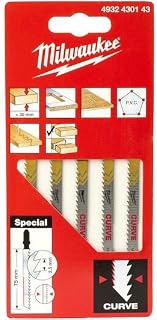


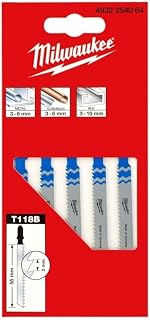
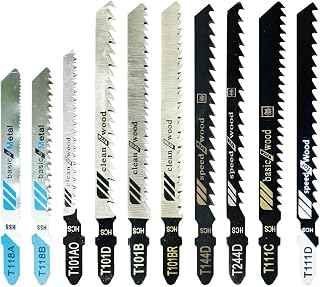


Choosing a jigsaw blade is less about finding the blade with the most impressive-looking specification and more about matching the blade to the material, thickness, finish and type of cut required. Milwaukee offers jigsaw blades for different applications, including wood, metal and specialist materials, with both T-shank and U-shank configurations represented across its range. The manufacturer describes its current jigsaw blade range as containing more than 45 products, so narrowing the choice by application is more useful than simply choosing the most expensive pack.
For most modern jigsaws, the first question should be compatibility. A T-shank blade is not automatically suitable for every jigsaw simply because it is described as a universal blade. Check the blade reception specified for your particular tool before ordering. Milwaukee's current T-shank products are designed for jigsaws accepting that fitting, while its U-shank range is intended for compatible older or screw-retained machines.
The same jigsaw can require very different blades depending on whether you are cutting softwood, hardwood, plywood, laminated board, aluminium, mild steel, stainless steel, plastic or an abrasive composite. A blade designed for rapid timber cutting may be entirely unsuitable for sheet metal, while a fine-toothed metal blade can be unnecessarily slow and prone to clogging when used for thick softwood.
Shank shape is one of the easiest specifications to overlook and one of the most expensive mistakes to make if the blade cannot be securely fitted. Milwaukee's European range includes predominantly T-shank jigsaw blades as well as a separate U-shank selection. The company's U-shank range is specifically positioned for older tools or users who prefer a screw-retained blade, while its current range states that the majority of its jigsaw blades use a T-shank configuration.
A T-shank blade has a shaped tang at the top that locks into a compatible jigsaw mechanism. This has become a common fitting for modern jigsaws and allows quick blade changes on machines designed for tool-free blade retention.
Milwaukee's current T-shank metal blades, for example, are specified as compatible with jigsaws accepting T-shank blades. Individual models can also list particular Milwaukee jigsaw model numbers, so compatibility should still be checked against the machine rather than inferred solely from the brand name.
U-shank blades use a different tang arrangement and are commonly associated with older jigsaws and machines using a screw to secure the blade. Milwaukee continues to list U-shank products, including blades intended for wood and metal applications. Its European guidance notes that the U-shank selection includes both 4 mm and 2.5 mm gauge options, with different cutting capacities and finish characteristics.
Buying rule: never purchase a blade purely because it says “Milwaukee” or because it appears to match the approximate size of your existing blade. Confirm the shank type, machine compatibility and application specification first.
Tooth pitch describes the distance between teeth, whereas TPI, or teeth per inch, is commonly used in product specifications for many jigsaw blades. The two measurements describe related aspects of tooth density, but they should not be treated as interchangeable figures without considering the manufacturer's specification system.
As a general principle, larger and more widely spaced teeth remove material rapidly and are normally associated with faster cutting in thicker, softer materials. Finer teeth remove smaller amounts of material with each stroke and are generally more appropriate where a cleaner cut or thinner material is involved.
Milwaukee's metal range illustrates this principle. Its 3-inch T-shank bi-metal blades are available in 14 TPI and 18 TPI configurations for different metal-cutting applications, while a 24 TPI version is specified for thinner metal. Milwaukee describes the 24 TPI model as intended for metal under 1/8 inch thick, whereas its 14 TPI and 18 TPI examples are aimed at thicker applications.
The practical lesson is simple: do not choose the finest blade merely because it appears to promise a better finish. A blade that is too fine for thick material can cut slowly and generate unnecessary heat, while an overly coarse blade can produce an unnecessarily rough edge or increase breakout.
Blade length is another specification that deserves more attention than it usually receives. The nominal blade length does not mean that the full length will necessarily be available as usable cutting depth. The effective capacity depends on the blade design, jigsaw stroke, material and the manufacturer's stated cutting limits.
A longer blade can be useful when cutting thicker stock, but excessive length can make the blade more difficult to control. A shorter blade may provide better rigidity for thinner materials and detailed work. For this reason, the best blade is not necessarily the longest blade available.
Always compare the stated blade length with the manufacturer's recommended cutting capacity. For example, Milwaukee lists a 5-1/4-inch, 14 TPI T-shank bi-metal blade for thick metal applications such as metal tubing, while its 5-1/4-inch, 24 TPI equivalent is intended for thinner metal. The difference is not simply blade length; tooth density and application are equally important.
The material used to manufacture a jigsaw blade influences its toughness, wear resistance and intended application. Three terms buyers commonly encounter are high-carbon steel, high-speed steel and bi-metal construction.
High-carbon steel, often abbreviated to HCS, is commonly associated with blades intended for wood and other relatively non-abrasive materials. It can provide the flexibility and cutting characteristics required for timber applications, but it is not the default choice for demanding metal cutting.
Bosch, for example, specifies HCS for its T101 D wood-cutting blade and describes it as suitable for softwood and non-abrasive woodworking materials. This illustrates why the blade material should be interpreted alongside the manufacturer's intended application rather than treated as an isolated quality ranking.
High-speed steel, or HSS, is commonly used for metal-cutting blades because it retains useful hardness at higher temperatures than conventional carbon-steel blade materials. Milwaukee lists HSS in its metal-cutting jigsaw range, including a 3-inch, 14 TPI T-shank blade specified for cutting metal over 1/4 inch thick.
Bi-metal blades combine different materials or properties within the blade construction to balance cutting performance with resistance to breakage and wear. Milwaukee describes its T-shank bi-metal metal-cutting blades as combining the strength required for metal cutting with durability against impacts.
Bi-metal is therefore particularly relevant when a blade needs to tolerate demanding work rather than simply complete a small number of occasional cuts. It does not mean every bi-metal blade is automatically the best choice, however. Tooth pitch, blade length, material compatibility and cutting technique still determine whether the blade is appropriate.
Wood cutting covers a surprisingly wide range of requirements. A blade used for rough construction timber has a different job from one used to cut a visible worktop, plywood panel or cabinet component.
For rapid rough cutting, a relatively coarse tooth pattern can remove material quickly. Milwaukee's published accessory catalogue includes T144 D and other fast-cut wood blades, while its range also includes specialist curve-cutting configurations.
The trade-off is finish. Aggressive teeth can leave a more pronounced cut surface and may increase breakout, particularly when cutting laminated sheet goods or veneered boards.
Where the visible face matters, consider a blade designed around finish quality rather than maximum cutting speed. Fine teeth, reverse-tooth configurations and controlled feed pressure can all influence breakout.
Reverse-tooth blades are particularly interesting because the cutting action can be arranged to reduce tearing on the upper surface of the workpiece. Bosch's T101 BR is an example of a reverse-tooth wood blade designed around tear-free cutting on the top surface, showing how tooth direction can be an important specification rather than a minor variation.
Cutting a curve is not the same task as making a straight cut. Narrower blade bodies can offer improved manoeuvrability, while aggressive feed pressure can cause the blade to deflect away from the intended line.
Milwaukee's accessory information identifies specialist curve-cutting blades with narrower blade bodies and also recommends working without pendulum action when making tight curves.
Metal cutting demands a more deliberate approach than general timber cutting. The material thickness, metal type, tooth density, blade composition and cutting speed all affect the result.
Thin sheet metal generally benefits from a finer tooth arrangement so that several teeth remain engaged with the material during cutting. A coarse blade can grab or produce an unnecessarily aggressive cutting action.
Milwaukee's published accessory information includes a T118 G configuration with a 0.7 mm tooth pitch for very thin sheet material, while its current product range also contains finer T-shank metal blades for thin-metal applications.
As metal becomes thicker, the appropriate tooth pitch changes. Milwaukee lists 14 TPI and 18 TPI T-shank bi-metal options for heavier metal-cutting work, with individual models specifying different material thickness ranges.
The important buying decision is not simply “metal blade versus wood blade”. Look at the manufacturer's stated application and thickness range. A blade intended for thin sheet should not automatically be used for thick steel merely because both materials are described as metal.
Aluminium has different cutting characteristics from steel. A suitable blade should be selected specifically for aluminium or non-ferrous materials where the manufacturer provides that designation.
Milwaukee's published range includes blades intended for aluminium and non-ferrous materials, while its catalogue also distinguishes specialist applications from general metal cutting.
A multi-material blade can be attractive if you regularly move between timber, metal and other materials. The advantage is convenience: one suitable blade can reduce the need to change accessories repeatedly.
The compromise is that a general-purpose blade may not match a dedicated blade when a particular material demands maximum cutting speed, minimum breakout or a very specific finish.
Milwaukee offers general-purpose jigsaw blades intended for applications across wood and metal, while its specialist range separates applications such as aluminium, stainless steel, fibreglass, reinforced plastics, acrylic glass, abrasive materials and insulation materials.
When comparing two apparently similar blades, focus on specifications that change how the blade will behave rather than marketing descriptions that simply repeat “professional”, “heavy duty” or “long life”.
A good comparison therefore asks “which blade is better for this job?” rather than “which blade is better overall?”. There is rarely a single blade that is optimal for every material and every cutting style.
Milwaukee is not the only established manufacturer of jigsaw blades. Bosch, Makita, DeWalt and other recognised tool brands produce blades covering different materials and cutting requirements. For an independent buying guide, the most useful comparison is specification against specification rather than assuming that the brand printed on the package determines performance.
Milwaukee's current jigsaw blade offering includes T-shank and U-shank options, general-purpose blades, metal-cutting bi-metal blades and specialist applications. Its metal range includes different TPI choices and blade lengths, making it possible to select a blade around material thickness rather than relying on a one-size-fits-all accessory.
Bosch has a broad jigsaw blade catalogue with clearly differentiated wood, metal, aluminium, multi-material and specialist products. Its published specifications demonstrate how blade length, tooth pitch, blade material and tooth design work together. For example, its T101 D wood blade uses HCS construction and a 4.0–5.2 mm progressive tooth pitch, while its T118 A metal blade uses HSS construction and a 1.1–1.5 mm tooth pitch.
Makita is another established option worth considering when comparing replacement jigsaw blades. The important point is to compare the actual blade specification, fitting and intended material rather than assuming that a blade from the same manufacturer as your jigsaw will necessarily be the best accessory.
DeWalt and other professional accessory manufacturers also offer jigsaw blades across wood, metal and specialist applications. For commercial investigation, compare the blade's shank, tooth configuration, material, dimensions, stated cutting application and pack contents before making a decision.
Editorial buying principle: brand reputation can be a useful starting point, but application-specific specifications should determine the final choice.
This is the most basic compatibility error. Always verify whether the jigsaw accepts T-shank or U-shank blades before considering tooth pattern or material.
A longer blade is not automatically better. If the material is thin, a shorter blade may provide more controlled cutting. If the material is thick, check the manufacturer's recommended cutting capacity rather than relying on nominal blade length.
Wood-cutting blades are designed around different tooth geometry and materials. A blade intended for timber should not be treated as a universal metal-cutting accessory.
Thin metal generally requires a finer tooth configuration. Milwaukee's range illustrates the distinction between different TPI options for different metal thicknesses.
Fast-cutting blades can be useful for rough work but may not produce the finish required for visible furniture panels, laminate or decorative work. If appearance matters, choose the blade around finish quality first.
Multi-material blades are convenient, but specialist blades exist for good reasons. If you frequently cut several very different materials, a small selection of dedicated blades may be more useful than trying to make one blade cover every task.
A blade can physically fit the jigsaw while still being unsuitable for the intended material thickness. Check the manufacturer's application and capacity information before starting the cut.
Blade selection is only part of the result. Even a high-quality blade can produce a poor finish if the workpiece moves, the feed pressure is excessive or the cutting mode is inappropriate.
Jigsaw blades are consumable accessories. Maintenance cannot restore a genuinely worn or damaged cutting edge, but sensible handling and storage can prevent premature damage.
Do not judge blade life solely by the number of cuts. Material type, thickness, cutting speed, feed pressure and the amount of abrasive contamination all affect wear.
Correct storage is particularly useful when a pack contains several blade types. Keep blades organised by application so that a fine metal blade is not accidentally selected for rough timber work.
For occasional DIY use, versatility can be more valuable than maximum specialist performance. A sensible starting selection may include a general-purpose wood blade, a finer-finish wood blade and a suitable metal-cutting blade if metal work is expected.
There is little benefit in buying a large collection of specialist blades that will rarely be used. Instead, identify the materials most commonly encountered in your projects and build the selection around those requirements.
Professional users should consider the cost of downtime as well as the purchase price of the blade. A blade that performs predictably and remains suitable for the required material can be more useful than a cheaper alternative that requires frequent replacement or produces inconsistent results.
For regular mixed-material work, keeping several blade types available can reduce the temptation to use an inappropriate blade simply because it is already installed. A professional selection might therefore include dedicated wood, fine-finish, metal and specialist blades alongside a suitable multi-material option.
Price should be considered in relation to workload. For an occasional DIY cut, a premium blade may not deliver enough additional practical value to justify the extra expenditure. For frequent work, the balance can change because cutting performance, durability, consistency and the consequences of blade failure become more important.
Rather than asking whether the most expensive blade is worth buying, consider the cost per useful cut, the material being cut, the required finish and the frequency of use. A specialist blade can be good value when it prevents poor-quality cuts or reduces unnecessary blade changes, while a premium blade can be unnecessary for a very small one-off project.
Pack size can make apparently similar products difficult to compare. A five-blade pack may look more expensive than a smaller pack while actually providing a lower cost per blade, but the larger pack is only useful if the blades suit the work you regularly perform.
Milwaukee's current T-shank blade sets include mixed applications such as wood and metal, which can be useful for users who want a compact selection rather than individual packs of specialist blades.
The best Milwaukee jigsaw blade depends on what you are actually cutting. For general timber work, select a blade designed for the required wood thickness and finish. For thin metal, move towards a finer tooth configuration. For heavier metal work, consider the appropriate bi-metal option and match its TPI and length to the material. For unusual or abrasive materials, use a specialist blade rather than forcing a general-purpose accessory beyond its intended application.
If you use a modern jigsaw that accepts T-shank blades, Milwaukee's T-shank range provides a broad selection from general-purpose products to specialist metal and material-specific options. If you own an older machine, check whether it requires U-shank blades before ordering.
Many Milwaukee T-shank blades are designed for jigsaws that accept a T-shank fitting, so compatibility is not necessarily restricted to Milwaukee machines. Milwaukee's product specifications explicitly describe several current T-shank blades as fitting jigsaws that accept T-shank blades. Nevertheless, always verify the fitting and your particular machine before purchase.
No. Milwaukee produces both T-shank and U-shank jigsaw blades. Its European range states that the majority of its jigsaw blades are T-shank, while a separate U-shank selection is available for compatible machines.
There is no single best metal blade for every situation. Select according to metal type and thickness. Milwaukee's current range includes different TPI options, including 14, 18 and 24 TPI bi-metal T-shank blades for different metal-cutting applications.
Bi-metal construction can be advantageous when toughness and resistance to breakage are important, particularly for demanding metal-cutting work. Milwaukee describes its bi-metal metal blades as combining cutting strength with increased resistance to impact compared with high-speed steel or carbon blades. However, a bi-metal blade is not automatically the right choice for every material or finish.
Use the material thickness and desired finish as the starting points. Finer tooth configurations are generally better suited to thinner material and controlled cutting, while coarser teeth can remove material faster from thicker, softer stock. Always use the manufacturer's stated application and material range as the final reference.
Not necessarily. Longer blades can provide additional cutting depth, but the correct length is the one that suits the material and gives adequate control. Excess blade length can be unnecessary for thin material, while insufficient length can prevent a clean cut through thicker stock.
Some multi-material blades are specifically designed for applications involving more than one material. Milwaukee offers general-purpose and mixed-material options, but dedicated wood and metal blades remain preferable when maximum performance or a particular finish is required.
Choose a blade designed for the material and required finish, secure the workpiece firmly, use an appropriate speed and avoid forcing the blade through the material. For visible timber surfaces, consider a blade designed specifically to reduce breakout rather than using a coarse fast-cutting blade.
Replace it when the teeth are visibly damaged or worn, cutting becomes unusually slow, the blade begins wandering or excessive pressure is required to maintain progress. A damaged blade should not be reused simply because it still appears capable of cutting.
A set can be convenient when you work with several materials and want a selection available immediately. Individual packs are often more sensible when you have a specialised application and want several identical blades. Compare the actual contents rather than choosing solely on pack size.
Milwaukee positions its jigsaw blades as professional-grade accessories, with separate products covering general-purpose, metal and specialist applications. Suitability for professional work still depends on choosing the correct blade for the specific material, thickness and finish required.
The strongest way to choose a Milwaukee jigsaw blade is to work backwards from the job. Identify the jigsaw fitting, material, thickness, cut type and required finish before comparing brands, pack sizes or prices. Once those requirements are clear, specifications such as T-shank versus U-shank, TPI, tooth pitch, blade length and bi-metal construction become much easier to interpret.
For UK buyers comparing products during 2026, it is also sensible to verify the current manufacturer specification and the exact product reference before ordering. Product ranges can change, older catalogue information can remain online and retailer listings can occasionally combine different variants under similar names. Checking the precise blade reference is therefore more reliable than relying on a generic product title.
Ultimately, the best jigsaw blade is the one that matches the material and cutting task without asking the accessory to do a job for which it was not designed. A carefully selected set of Milwaukee blades can cover substantially more real-world work than repeatedly buying the same general-purpose blade and using it across every project.