

♥ Wishlist
Compare 43 verified Bosch Saw Blade products in United Kingdom. Reviews, ratings, pros, cons and buying advice updated for October 2026.





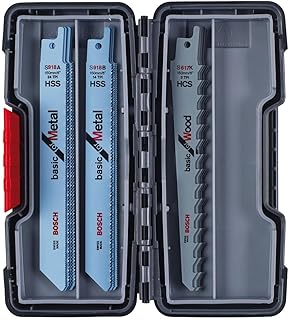
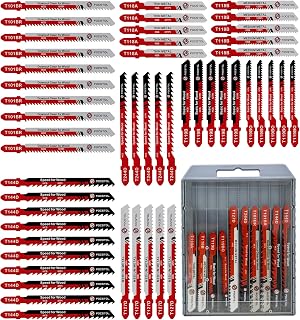





Choosing a Bosch saw blade is not simply a matter of selecting the highest-rated or most expensive option. The correct blade depends on the saw, the material being cut, the type of cut required and the finish you expect. A blade that performs exceptionally well on timber may be unsuitable for laminate, aluminium or other materials, while a blade designed for fast rough cuts may leave a noticeably less refined edge than one intended for fine finishing.
For that reason, the most useful way to compare Bosch saw blades is to start with compatibility and application rather than price. Check the saw manufacturer's requirements, then match the blade diameter, bore or shank, tooth configuration, kerf and intended material to the job. Bosch's current Professional range includes different blade designs for handheld circular saws, plunge saws, mitre saws, table saws and cordless applications, so the name of the blade alone is not enough to establish compatibility.
The first decision is the machine the blade will be fitted to. Circular saw blades, jigsaw blades and reciprocating saw blades are fundamentally different accessories, even though they all perform sawing operations. A circular saw blade normally uses a central bore and a specified outside diameter, whereas jigsaw and reciprocating saw blades use machine-specific shank systems.
Product descriptions can contain a surprisingly large amount of technical information. Understanding what those figures mean makes it much easier to compare two apparently similar Bosch blades.
Diameter is the outside measurement of a circular saw blade. Common sizes vary according to the machine, with Bosch offering numerous variants rather than one universal size. A larger blade can provide greater cutting depth on a suitable machine, but that does not mean a larger blade is automatically better.
Never select a larger diameter simply because you want more cutting depth. The saw is designed around a specific blade range, guard arrangement and operating speed. The maximum diameter specified by the saw manufacturer should always take priority.
The bore is the central hole through which the saw's arbor passes. It must be compatible with the machine. Some Bosch circular saw blades are designed to work with different bore arrangements through reduction rings, but the exact specification must be checked for the particular blade and saw. Bosch lists bore sizes as a selectable specification across its Professional circular-saw range.
A common buying mistake is to focus on diameter while overlooking the bore. A blade can have the correct outside diameter and still be unsuitable because its arbor arrangement does not match the machine.
Tooth count is one of the most useful specifications when comparing circular saw blades. In broad terms, blades with fewer teeth tend to prioritise faster material removal, while blades with more teeth can be better suited to cleaner, more controlled cuts. The ideal tooth count also depends on the material, thickness, saw type and desired finish.
This should be treated as a comparison principle rather than an absolute rule. Tooth geometry, rake angle, kerf, blade thickness and the material being cut all influence the final result. Bosch itself notes that tooth count and geometry affect whether a blade is oriented towards clean results or more substantial solid-material cutting.
Kerf is the width of material removed by the blade. It is an important specification for anyone comparing conventional and thin-kerf blades.
A thinner kerf can reduce the amount of material removed with every pass and may reduce cutting resistance. This can be especially relevant for cordless tools, where Bosch describes extra-thin-kerf designs as a way of reducing power consumption and extending battery runtime.
However, the thinnest blade is not automatically the best choice. The blade must be suitable for the saw, material and cutting conditions. Rigidity, stability and the machine's intended blade specification remain important.
Blade thickness and cutting width are related but should not be treated as interchangeable measurements. A blade may have a relatively thin steel plate and a wider cutting width because of the carbide teeth. Always compare the manufacturer's stated specifications rather than estimating compatibility from photographs.
Tooth geometry influences how a blade enters the material, removes chips and leaves the finished edge. For woodworking applications, different configurations can be selected according to whether the priority is speed, cross-cut quality, general-purpose work or finishing.
Bosch's Expert for Wood circular saw blades, for example, use ATB tooth geometry and are available with different tooth counts for different cutting requirements. Bosch also specifies MicroteQ carbide teeth and ProteQtion coating on this range.
For many woodworking circular saw applications, carbide-tipped teeth are an important feature because they provide a hard cutting edge capable of maintaining performance through repeated use. Bosch describes MicroteQ carbide teeth in its Expert for Wood range and Bosch Carbide Technology in its EXPERT Wood range.
The presence of carbide alone, however, should not be used as the only quality indicator. Tooth geometry, carbide construction, brazing, plate design, coating, sharpening and the intended application all contribute to how a blade performs.
The main steel body of a circular saw blade needs to maintain its shape while rotating at high speed. Blade stability matters because excessive vibration can affect cut quality and user control. Bosch's Expert for Wood range incorporates anti-vibration slots, which the manufacturer says are intended to support smoother cutting while reducing noise and vibration.
Some Bosch blades feature coatings designed to reduce friction and help protect the blade from corrosion. Bosch describes ProteQtion coating on Expert for Wood blades and an additional coating on EXPERT Wood blades intended to improve performance and protect against heat and corrosion.
Coating is therefore worth considering when comparing premium blades, particularly for users who expect repeated use. It should nevertheless be evaluated alongside tooth construction and the blade's intended material rather than treated as a standalone measure of quality.
Softwood includes many common construction and joinery materials. When cutting it with a circular saw, the appropriate blade depends on whether the job involves rapid dimensioning, general-purpose cutting or a cleaner finished edge.
For rough construction work, a blade prioritising efficient cutting and chip clearance can make more sense than a high-tooth-count finishing blade. For visible joinery, furniture components or finished boards, a finer configuration may be preferable.
Hardwood generally places greater demands on the cutting edge than softer timber. A durable carbide construction and suitable tooth geometry become more important when the blade will be used repeatedly.
Rather than assuming that the blade with the greatest tooth count is best, compare the manufacturer's stated application, material compatibility and recommended machine type.
Plywood and engineered boards can produce different cutting characteristics from solid timber. The number and orientation of layers can increase the risk of splintering or breakout, making blade selection particularly relevant when the visible face needs to remain clean.
For sheet materials, compare blades specifically intended for the board type rather than relying on a general-purpose timber blade. Where appearance matters, consider the balance between tooth count, geometry, feed rate and support of the workpiece.
Decorative boards require additional care because a mechanically strong board can still produce a poor-looking edge if the cutting configuration is unsuitable. When appearance is important, prioritise a blade designed for the material and finish requirement, and pay attention to the manufacturer's recommended cutting direction and machine type.
Blade choice is only one part of cut quality. Even a premium Bosch blade can produce poor results if the wrong blade specification is paired with the material or if the machine is operated incorrectly.
Bosch uses different product families, so shoppers should avoid treating every blade carrying the Bosch name as equivalent. The Expert for Wood range is described by Bosch as a long-cutting-life product featuring MicroteQ carbide teeth, ProteQtion coating and anti-vibration slots.
The EXPERT Wood range is positioned around long-life cutting and Bosch Carbide Technology, with Bosch also highlighting an additional coating and variants for different saw types and materials.
There is no universal winner between product families. The more useful comparison is to identify the exact blade variant, then compare diameter, bore, tooth count, cutting width, thickness, saw compatibility and intended material.
A Bosch blade family can contain numerous variants. The same general product name may cover different diameters, bore sizes, tooth counts and cutting widths. Bosch's current EXPERT Wood listing, for example, contains numerous selectable product options rather than one single specification.
This means that comparing two listings only by their marketing name can lead to the wrong conclusion. For a meaningful comparison, record the complete part number and specifications of the variant you intend to buy.
Although this guide focuses on Bosch, buyers may also encounter established accessory manufacturers such as Makita, DeWalt, Milwaukee and Evolution. Brand recognition can be useful, but it should not replace technical comparison.
The key point is that a blade from a respected brand is not automatically suitable for every machine. Diameter, arbor or shank, RPM rating, kerf, tooth configuration and material compatibility should remain the deciding factors.
Matching the outside diameter is only the first compatibility check. The bore, cutting width, machine type and maximum operating speed must also be compatible.
More teeth can help produce cleaner cuts in appropriate applications, but they can also change cutting speed and chip clearance. A high-tooth-count blade is not automatically the best option for fast construction cutting.
A timber blade should not be assumed to be suitable for every material simply because the diameter fits the saw. Always check the manufacturer's stated material applications.
Never exceed the saw manufacturer's permitted blade diameter, speed or other operating requirements. The machine's instructions take priority over a generic recommendation.
Bosch produces multiple saw systems and blade configurations. A Bosch-branded blade still needs to match the specific machine. Product-family names should never be treated as universal compatibility guarantees.
The cheapest blade may look attractive for occasional work, but a more durable blade can be worth investigating when the tool is used frequently. Conversely, a premium blade can be unnecessary if the job involves rough construction cuts where an extremely fine finish is not required.
A simple specification checklist makes product comparison considerably more reliable.
A premium blade is more likely to make sense when cutting is frequent, consistent finish quality matters or downtime caused by premature blade wear would be inconvenient. Professional users may also place greater value on durability, predictable cutting behaviour and application-specific designs.
For occasional DIY work, the calculation is different. If a blade will only be used for a small number of straightforward cuts, paying substantially more for advanced features may provide limited practical benefit. The best-value option is the one whose specification matches the workload rather than simply the one with the highest specification.
Correct maintenance can help preserve cutting performance and allows problems to be identified before a blade becomes unsafe or unsuitable to use.
A blade does not necessarily become unsuitable only when a tooth visibly breaks. Changes in cutting performance can be an important warning sign. If the saw begins requiring excessive force, produces increasingly poor cuts, generates unusual vibration or behaves differently from normal, stop and investigate the blade, machine and workpiece.
Do not continue using a blade that is damaged or whose condition is uncertain. For sharpening or servicing, follow the manufacturer's recommendations and use a suitably qualified service provider where appropriate.
Saw blades are high-speed cutting accessories, so compatibility and condition are safety issues as well as performance considerations. The correct blade should be installed according to the saw manufacturer's instructions, with the machine disconnected from its power source during blade changes where required by the manufacturer's procedure.
For DIY users, the best Bosch blade is usually the one that provides the right balance between finish, cutting speed, compatibility and expected frequency of use. A general-purpose timber blade can be practical for occasional construction and home-improvement work, while a finer blade can be more appropriate when visible edges matter.
DIY buyers should pay particular attention to the exact machine model. It is better to buy a correctly specified mid-range blade than an advanced blade that does not match the saw's required diameter, bore or operating characteristics.
Professional users often have a stronger reason to consider premium blade families because the accessory may be used repeatedly and cutting consistency can have a direct impact on productivity. In this situation, durability, tooth construction, vibration control, coating and application-specific design become more important purchasing criteria.
Bosch's Professional range includes blade designs aimed at long cutting life and specialist applications. The Expert for Wood range, for example, uses MicroteQ carbide teeth and an anti-corrosion ProteQtion coating, while EXPERT Wood variants use Bosch Carbide Technology and additional coating features.
Value should be judged over the expected workload rather than by purchase price alone. A useful comparison considers the blade's price alongside its intended application, construction, durability claims, tooth configuration and the amount of work it is expected to perform.
For occasional DIY cutting, a relatively straightforward blade may offer the right balance. For repeated professional cutting, a more durable blade can become more attractive if its design reduces the frequency of replacement or maintains the required finish for longer.
When comparing current listings, check today's specification and price rather than relying on an old comparison. Blade variants, retailer stock and pricing can change during the year.
Before purchasing, read beyond the headline product name. A useful product listing should make it possible to identify the exact blade variant and establish whether it is appropriate for the intended machine.
Bosch's product pages demonstrate why this level of detail matters: individual blade families can contain many variants with different diameters, bores, cutting widths, thicknesses and tooth counts.
There is no single Bosch blade that is best for every wood-cutting task. The appropriate choice depends on the saw, timber type, required finish, blade diameter, bore, tooth configuration and cutting speed. Bosch's Expert for Wood and EXPERT Wood families include multiple variants rather than one universal wood blade.
It depends on the job. Lower tooth counts can favour faster cutting and chip clearance, while higher tooth counts can be useful where a cleaner cut is more important. Material, thickness and tooth geometry also affect the result, so tooth count should never be considered in isolation.
No. A higher tooth count can be advantageous for certain finishing applications, but a lower tooth count may be more appropriate for rapid cutting of solid timber or other applications where chip clearance and cutting speed are priorities.
No. Bosch produces many blade sizes and designs for different machines. Always check the exact saw specification, blade diameter, bore, operating speed, kerf and intended application before fitting a blade.
Kerf is the approximate width of the cut made by the blade. A thinner kerf removes less material and can reduce cutting resistance, which can be particularly relevant for compatible cordless applications.
Carbide construction can be valuable where durability and consistent cutting performance are important. Bosch uses carbide technologies in several of its Professional blade families, but the right blade still depends on the material, saw and intended workload.
A rough-cut blade generally prioritises efficient material removal, while a finishing blade is designed with characteristics intended to produce a cleaner edge. Tooth count, geometry and the intended material all contribute to this distinction.
A thin-kerf blade can be useful where reduced cutting resistance is desirable, particularly with suitable cordless tools. Bosch specifically describes extra-thin-kerf designs as helping reduce power consumption in cordless applications. The blade must still be compatible with the saw and appropriate for the material.
Look for changes in cutting performance such as increased resistance, poorer cut quality, unusual vibration or other abnormal behaviour. Visible tooth damage is an obvious reason to stop using a blade, but performance changes should also be investigated rather than ignored.
Some saw blades can be professionally sharpened, but whether sharpening is appropriate depends on the blade construction, condition and manufacturer's recommendations. Do not assume that every damaged or worn blade should be resharpened.
Compatibility comes first. A blade with an impressive tooth configuration or premium construction is of little value if it does not match the saw. After compatibility has been established, compare material suitability, tooth count, geometry, kerf, durability features and expected workload.
The strongest way to choose among the best Bosch saw blades in the UK is to work backwards from the job. Identify the saw, confirm its blade requirements, determine the material and decide whether speed, durability or finish is the primary objective. Only then should price and premium features influence the final choice.
Bosch offers multiple professional blade families and numerous individual variants, so there is no need to treat the search for the “best” blade as a simple ranking exercise. The better approach is to identify the specification that fits the job and then compare the closest alternatives on construction, tooth configuration, expected durability, current price and availability.
For UK buyers in 2026, checking the exact product specification immediately before ordering is particularly important because one Bosch blade family can contain numerous variants with different diameters, bore sizes, tooth counts and cutting widths. The exact variant, rather than the headline family name, should be the final reference point for a purchase decision.