

♥ Wishlist
Compare 37 verified Makita TCT Blades for Precise, Durable Cutting products in United Kingdom. Reviews, ratings, pros, cons and buying advice updated for October 2026.


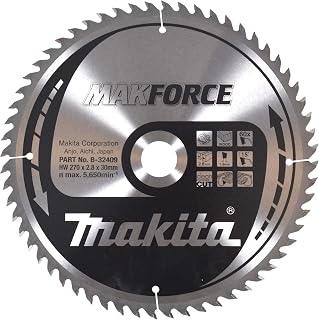


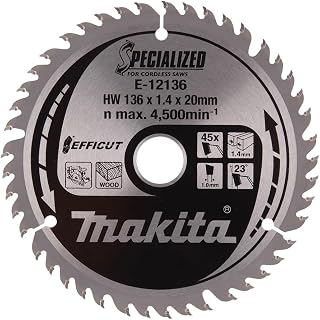


Choosing a Makita TCT blade is not simply a matter of selecting the largest number of teeth or the blade with the most impressive-looking specification. The right blade depends on the saw, the material being cut, the required finish, the thickness of the workpiece and whether cutting speed or precision is the greater priority.
Makita produces TCT blades in a wide range of diameters, tooth configurations and applications. Its range includes blades intended for general timber work as well as more specialised options for fine cutting, aluminium, metal and other materials. That means two blades that appear similar on paper can behave very differently when fitted to a particular saw.
For UK buyers, the safest approach is to treat the blade and saw as a matched system. Before comparing prices or reviews, confirm the blade diameter and bore, check the saw manufacturer's permitted blade dimensions and make sure the intended material is explicitly covered by the blade specification.
TCT stands for tungsten carbide tipped. Rather than relying solely on a steel cutting edge, a TCT saw blade uses carbide-tipped teeth attached to the blade body. Tungsten carbide is considerably harder than ordinary tool steel, which allows the teeth to retain a useful cutting edge through demanding cutting applications.
For woodworking, TCT blades are particularly useful because they can combine relatively long service life with a clean and predictable cut when the blade is correctly matched to the material and machine. The carbide teeth can also be sharpened by a suitable specialist when the blade design and condition make doing so worthwhile.
However, TCT does not mean that every carbide-tipped blade is suitable for every material. A timber blade, an aluminium blade and a metal-cutting blade can have very different tooth geometry, rake angles, kerf characteristics and recommended applications.
Three measurements deserve particular attention when comparing Makita TCT blades: diameter, bore size and kerf. They affect compatibility, cutting capacity and the behaviour of the saw.
The blade diameter must be compatible with the saw. A larger diameter can provide greater potential cutting depth, but it should never be fitted simply because it appears to offer more capacity.
The saw manufacturer's instructions take priority. The permitted blade diameter is determined by factors including the machine's guard design, spindle arrangement, maximum speed and intended cutting depth.
Common circular-saw blade sizes can look deceptively similar. A small difference in diameter may be important, so check the exact specification rather than relying on visual comparison.
The bore is the central hole through which the blade fits over the saw's spindle. It must be compatible with the machine and correctly supported by the supplied mounting hardware.
Do not assume that a blade will fit because its outside diameter is correct. A blade with an incompatible bore is not an appropriate substitute simply because the diameter matches.
Where a manufacturer's system permits the use of an appropriate reduction ring or related accessory, follow the machine and blade manufacturer's instructions precisely. Never improvise with unsuitable spacers or mounting arrangements.
Kerf is the approximate width of the cut produced by the blade. It is an important specification for anyone comparing full-kerf and thinner-kerf blades.
A thinner kerf can remove less material and may be particularly attractive for cordless saws where reducing cutting resistance can be beneficial. It can also be useful when material conservation matters. However, kerf alone should not determine the purchase decision.
The blade must still be suitable for the saw, spindle speed, material and intended application. A blade that is theoretically efficient but incorrectly matched to the machine is not a better choice.
Tooth count is one of the most commonly misunderstood circular-saw specifications.
Broadly speaking, blades with fewer teeth tend to prioritise rapid material removal, while blades with more teeth are commonly selected when a smoother or more controlled finish is required. The correct balance depends on the material and blade geometry.
A lower tooth count can be useful for ripping timber and other applications where rapid cutting is more important than achieving the finest possible edge finish.
Medium tooth counts can provide a useful compromise between cutting speed and finish. They are worth considering for general-purpose woodworking when the buyer does not want a blade dedicated exclusively to either rough ripping or very fine cross-cutting.
Higher tooth counts are generally associated with finer cutting applications. They can be useful when the appearance of the cut matters, particularly when working with sheet materials, veneered boards or applications where reducing edge breakout is important.
The trade-off is that more teeth do not automatically produce a faster cut. Feed rate, tooth geometry, material composition, saw power and blade condition all influence the result.
Two blades with the same number of teeth can behave differently because the teeth themselves are designed differently.
Rake angle, tooth shape, carbide profile, gullets and the spacing between teeth all influence how the blade enters the material, removes waste and exits the cut.
This is why simply searching for a particular tooth count is not enough when comparing the best Makita TCT blades. The application listed by the manufacturer is often more useful than tooth count in isolation.
Rake angle describes the orientation of the tooth relative to the cutting direction. Different rake configurations can be selected for different materials and cutting behaviours.
Timber blades may use geometry intended for efficient wood cutting, whereas blades designed for materials such as aluminium or metal can use substantially different geometry. Buyers should therefore avoid assuming that a blade designed for timber is interchangeable with a specialised non-ferrous-metal blade.
The gullets are the spaces between the teeth. They provide room for chips and sawdust to be carried away from the cutting area.
Larger gullets can be valuable where substantial quantities of material need to be cleared quickly. Fine-cutting blades often use different spacing because their priorities are not identical to those of aggressive ripping blades.
Makita's Efficut branding appears across selected saw blades designed around efficient cutting performance. When considering an Efficut blade, do not treat the branding as a replacement for checking the technical specification.
Look at the exact blade diameter, bore, tooth count, kerf, intended material and compatible saw before buying. Efficut blades are available in different configurations, so the name alone does not identify one universal blade.
The most useful comparison is therefore between the exact part numbers rather than between broad marketing categories.
For general construction timber, a blade designed specifically for wood is usually the logical starting point. Consider how frequently the saw will be used, whether the cuts are mainly rips or cross-cuts and whether the finished edge will remain visible.
If speed is the priority, a blade intended for efficient material removal may be preferable. If appearance is more important, consider a finer-tooth configuration.
When the objective is a cleaner cross-cut rather than maximum speed, look for a blade whose manufacturer specifically positions it for fine or precision cutting.
Higher tooth counts can be useful here, but they should be considered alongside tooth geometry and material compatibility. A fine blade can still produce poor results if it is blunt, dirty, incorrectly fitted or being forced through the workpiece.
Sheet goods present a different challenge from ordinary softwood. Plywood, laminated boards, MDF and coated panels can vary considerably in their surface construction and cutting behaviour.
For visible edges, a finer-cutting blade may be worth considering. The correct choice can also depend on whether both sides of the board need to remain presentable and whether breakout is a significant concern.
Always verify that the blade is intended for the particular board material rather than assuming that every timber blade is equally suitable.
MDF can generate considerable fine dust and can be abrasive compared with ordinary softwood. A blade specifically intended for the material or a suitable woodworking configuration may be preferable to a basic general-purpose blade.
Dust extraction, correct feed speed and a sharp blade are particularly important. A worn blade can increase friction and heat while producing a poorer finish.
Decorative surfaces can be more vulnerable to chipping and breakout than ordinary construction timber. When appearance is important, prioritise a blade designed for fine cutting and pay close attention to the cutting direction and support of the workpiece.
The blade specification should explicitly support the material. Do not select solely on the basis of a high tooth count.
Aluminium requires a blade designed for non-ferrous metal cutting rather than an ordinary wood blade. Specialised Makita TCT options exist for applications such as aluminium, with different tooth geometry from typical timber blades.
Check the exact machine and blade instructions before cutting aluminium. The operating conditions, clamping requirements and recommended blade configuration matter considerably more than simply having carbide-tipped teeth.
Metal-cutting blades should be treated as a separate category. A TCT blade designed for timber is not automatically suitable for steel, stainless steel or other metals.
For metal applications, check the manufacturer's stated material range, blade speed requirements, machine compatibility and any additional operating instructions. Never substitute a wood-cutting blade simply because it physically fits the saw.
When comparing two or more Makita blades, it helps to use a consistent checklist rather than focusing on whichever specification looks most impressive.
A general-purpose blade can be convenient for users who regularly switch between different woodworking tasks. It reduces the need to change blades for every individual job.
However, a specialist blade can make more sense when a particular material or finish is repeatedly encountered. A blade designed around a specific application can have tooth geometry better suited to that work than an all-rounder.
For occasional DIY work, versatility may be the stronger buying criterion. For professional or frequent use, the productivity gained from using task-specific blades can make blade selection more worthwhile.
Before placing an order, identify the exact saw model. Do not rely solely on the battery platform or the general category of the tool.
This is particularly important when moving between corded and cordless saws. A blade that is physically compatible is not necessarily the optimum choice for every machine.
Never assume that a larger blade will automatically increase cutting capacity safely. The machine determines the permitted blade dimensions.
Matching the outside diameter while ignoring the bore is one of the easiest ways to choose the wrong blade.
A 60-tooth blade is not automatically better than a 24-tooth blade. They may be designed for completely different purposes.
Carbide tips do not make every blade a universal cutting tool. Follow the material specification.
A cheaper blade that does not suit the machine or application can be false economy. Compare the complete specification before comparing prices.
Makita uses distinct part numbers for different blade configurations. When comparing retailers, verify that the diameter, bore and tooth configuration are identical rather than assuming similar product names describe the same item.
Even the best Makita TCT blade will not perform as intended indefinitely. Cutting performance gradually changes as the teeth wear, accumulate deposits or become damaged.
Signs that a blade deserves inspection include increased resistance, reduced cutting speed, excessive burning, rougher edges, unusual vibration and a tendency for the saw to require more force than normal.
These symptoms do not necessarily prove that the blade is at fault. Incorrect blade selection, poor workpiece support, unsuitable feed pressure, machine problems or incorrect installation can create similar symptoms.
Regular inspection is one of the simplest ways to protect cutting performance. Resin, adhesive residue and other deposits can build up on teeth and affect the way the blade cuts.
When professional sharpening is appropriate, use a competent sharpening service familiar with TCT circular-saw blades. A sharpening service can assess whether the blade is suitable for reconditioning rather than assuming that every damaged blade should be resharpened.
Blade selection is only one part of producing a clean cut. The condition of the machine, the workpiece support and the operator's technique all contribute.
If breakout is a problem, investigate whether the blade geometry, cutting direction, workpiece support or material itself is responsible before simply buying a blade with more teeth.
Cordless saws make blade efficiency particularly relevant because the blade directly influences the load placed on the machine. A blade with an appropriate kerf and tooth configuration can be worth considering when efficient cutting is a priority.
However, thinner is not automatically better. Blade stiffness, application, machine compatibility and cutting behaviour still need to be considered.
For cordless users, the best blade is often the one that achieves the required finish without unnecessarily demanding excessive effort from the saw. The exact balance will vary according to the saw, battery system, material and job.
Professionals should assess blades differently from occasional DIY users. The cost of downtime, repeated blade changes and poor-quality cuts can be more significant than the initial purchase price.
A useful professional blade strategy is to maintain different blades for distinct tasks rather than expecting one blade to handle every material. For example, a general timber blade, a finer finishing blade and a specialist blade for a particular non-ferrous material can each have a defined role.
This approach also makes it easier to identify performance changes. If a blade normally performs well on a particular material but suddenly begins burning or producing rough cuts, the problem can be investigated rather than compensating by applying more force.
DIY users often benefit from simplicity. If the saw is used only occasionally, a well-matched general-purpose woodworking blade may be more practical than buying several specialist options.
That said, users undertaking visible joinery, cabinetry, flooring or furniture work may benefit from adding a finer-cutting blade when finish quality becomes more important.
The sensible approach is to buy according to the work actually being undertaken rather than paying for features that will rarely be used.
A circular-saw blade is a high-speed cutting accessory and should be treated accordingly. Always follow the current instructions supplied with both the saw and blade.
Particular care is required when cutting treated, coated, contaminated or unfamiliar materials. If the blade manufacturer's instructions exclude a material, choose a blade specifically intended for it instead.
When comparing products on a retailer's product page, record the following information before deciding which blade represents the best option.
Keeping these specifications together makes retailer comparisons much easier and reduces the risk of buying a visually similar but technically different blade.
Customer reviews can provide useful information, but they should not replace technical specifications.
Look for reviews from buyers performing a similar job with a similar saw. A review from someone cutting softwood construction timber may tell you very little about how the same blade behaves when cutting laminated sheet material.
Pay particular attention to recurring comments rather than one unusually positive or negative review. Also check whether reviews relate to the exact blade configuration and part number being considered.
Makita is the natural starting point for a guide specifically focused on Makita TCT blades, particularly for owners who want accessories within an established tool ecosystem. Nevertheless, commercial investigation is stronger when buyers understand the wider market.
Depending on the application, buyers may also encounter blades from Bosch, DeWalt, Milwaukee, Evolution, Festool, Freud and Irwin. These brands offer different blade ranges and application-specific configurations.
The best alternative is not necessarily the brand with the most recognisable name. Compare the exact blade specification, compatibility, intended material and overall value against the Makita option you are considering.
Brand-to-brand comparisons are most useful when the products are genuinely comparable. Comparing a general-purpose Makita blade with a specialist metal-cutting blade from another manufacturer does not provide meaningful information simply because both are TCT.
Instead, compare like with like:
This method gives buyers a more reliable basis for deciding whether a premium-brand blade genuinely offers advantages for their particular work.
A higher purchase price can be justified when a blade delivers a specification that directly addresses the user's requirements. For example, a professional user may place greater value on cutting efficiency, finish quality or application-specific geometry than an occasional DIY user.
But price alone is not evidence of superior performance. A specialist blade can be the wrong purchase if its intended application does not match the work being performed.
Think in terms of cost per useful job rather than purchase price alone. A blade that is well suited to a demanding application may offer better practical value even when its initial price is higher, while a premium blade used for occasional rough construction cuts may provide little additional benefit.
There are circumstances where spending less is perfectly sensible. If a DIY user has a limited number of cuts to make, does not require a premium finish and can purchase a fully compatible blade from a reputable manufacturer, a lower-cost option may satisfy the job.
The important distinction is between saving money and compromising on compatibility or safety. The cheapest blade should not be selected if its specification is unclear or if it is not explicitly suitable for the machine and material.
For occasional users, one suitable general-purpose blade may be sufficient. More frequent users can benefit from maintaining a small selection.
There is little benefit in owning several blades that all perform essentially the same task. A smaller selection of clearly defined blade types is often easier to manage.
Correct storage helps prevent accidental damage to carbide teeth and keeps blades ready for use.
Replacement becomes appropriate when the blade is damaged, unsuitable for further use or no longer capable of delivering acceptable results after appropriate maintenance or professional sharpening.
Inspect for cracked or distorted blade bodies, missing carbide, damaged teeth and other visible defects. If the blade produces abnormal vibration or behaves unexpectedly, stop using it and investigate the cause.
Do not continue using a damaged blade merely because there are still apparently usable teeth remaining. Blade integrity is more important than extracting every possible cut from an accessory.
For UK buyers, the best option is the blade that combines verified compatibility with the required cutting performance. There is no single specification that makes a blade universally best.
A sensible buying decision considers five priorities:
If those five points are satisfied, the remaining decision can usually be made by comparing the exact specifications and current retailer pricing.
The best Makita TCT blade depends on the saw, material and required finish. A blade designed for rapid timber cutting is not necessarily the best choice for fine joinery, while a high-tooth-count finishing blade may be inefficient for demanding ripping work.
They can be a strong choice when the specification matches the machine and application. The important consideration is not simply the Makita name but whether the exact blade offers the diameter, bore, tooth configuration and material compatibility required for the job.
It depends on the exact blade and application. Efficut is a product family rather than one universal specification. Compare the precise part number and technical data with the standard TCT blade you are considering.
Not automatically. Higher tooth counts are commonly associated with finer cutting, but tooth shape, rake angle, blade condition, material and saw technique all affect the finished cut.
Do not assume that you can. Use a blade specifically designated by the manufacturer for aluminium or the relevant non-ferrous material and confirm that the saw is appropriate for that application.
Only when the particular blade is designed and approved for the metal-cutting application. TCT describes the tooth construction; it does not mean that the blade is suitable for every material.
Start with the exact saw model and its manufacturer's permitted blade specifications. Do not select a diameter based only on the cutting depth you would like to achieve.
Kerf can be relevant because the width of the cut influences the amount of material removed and the cutting resistance. However, kerf should be assessed alongside blade stiffness, tooth geometry and the saw's approved specifications.
Choose according to the job. A lower-tooth-count configuration can favour faster material removal, whereas a higher-tooth-count configuration can be more appropriate when a finer cut is required. The exact blade application remains more important than the number alone.
Some TCT blades can be professionally sharpened, depending on their condition, construction and remaining carbide. A specialist sharpening service can determine whether reconditioning is appropriate.
There is no universal replacement interval. Blade life depends on the material, frequency of use, cutting technique, machine, contamination and blade design. Inspect the blade and monitor cutting performance rather than replacing it according to an arbitrary timetable.
Burning can have several causes, including an unsuitable blade, excessive feed resistance, incorrect cutting conditions, a damaged or dirty blade, poor workpiece support or a machine-related problem. Check the complete setup rather than assuming the tooth count is responsible.
Chipping can be affected by tooth geometry, blade condition, material construction, cutting direction, workpiece support and feed technique. Laminated and veneered boards can be particularly sensitive to breakout.
If considering a marketplace listing, verify the exact part number, specification and seller information. Check that the product description matches the manufacturer's specification and be cautious when a listing uses generic photographs or unusually vague technical information.
No. Ratings can help identify recurring buyer experiences, but technical compatibility should be established first. Reviews are most useful when the reviewer used the same or a comparable saw and cut the same type of material.
Before buying, work through this checklist rather than relying on the product title alone.
The strongest way to compare the best Makita TCT blades in 2026 is to start with compatibility and intended use, then work through blade geometry, tooth count, kerf and overall value. This avoids the common mistake of treating a single specification as proof that one blade is better than another.
For most buyers, the ideal blade is not the most expensive, the blade with the highest tooth count or the newest product family. It is the blade whose specification matches the saw and the work. A construction user may prioritise efficient timber cutting, a joiner may prioritise finish quality, and a specialist fabricator may need a completely different blade for aluminium or metal.
Before purchasing, verify the current manufacturer specification for the exact Makita part number, compare equivalent alternatives from reputable brands such as Bosch, DeWalt, Milwaukee, Evolution, Festool, Freud and Irwin, and check verified customer feedback from users carrying out similar work.
Prices, stock status, product configurations and retailer listings can change, so treat the technical specification as the foundation of the buying decision and check current retailer information immediately before purchase.