

♥ Wishlist
Compare 34 verified Makita Jigsaw Blades for Precise Cutting products in United Kingdom. Reviews, ratings, pros, cons and buying advice updated for October 2026.





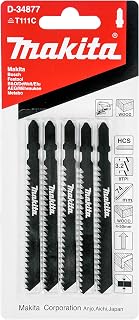


Choosing a Makita jigsaw blade is less about finding one blade that does everything and more about matching the blade to the material, thickness, finish and type of cut required. A blade that is excellent for fast cuts through softwood may be a poor choice for laminate, fine furniture work or sheet metal. The tooth pattern, blade material, length, width and shank design all influence the result.
For that reason, the best Makita jigsaw blade for occasional DIY work may not be the best choice for a professional joiner, kitchen fitter, flooring installer or metalworker. Before comparing individual products, identify the job the blade will actually perform. This makes it much easier to narrow down the options and avoid paying for features that will not improve your particular cuts.
The material should be the first consideration when selecting a jigsaw blade. Wood, plywood, MDF, laminate, plastics and metals require different tooth geometries and blade materials. Some specialist blades are also designed for particularly abrasive or difficult materials.
Tooth pitch describes the distance between successive teeth. It has a direct influence on cutting speed, finish and the thickness of material the blade can handle effectively.
As a general rule, coarse teeth remove material quickly and are better suited to faster cuts in thicker, softer materials. Fine teeth remove smaller amounts of material with each stroke and are generally more appropriate where a smoother cut or thinner material is required.
However, tooth pitch should not be considered in isolation. The blade material, tooth geometry, kerf, blade width and the jigsaw's operating characteristics all affect performance. A blade with a very fine tooth pattern is not automatically the best choice for every clean cut, nor is a coarse blade always the fastest practical option.
Jigsaw blade packaging may show teeth per inch, commonly abbreviated to TPI. A higher TPI normally indicates more closely spaced teeth, while a lower TPI indicates a coarser pattern.
For buying purposes, TPI is useful as a comparison point, but it should not be used as the only specification. Different manufacturers use different tooth designs and blade geometries, so two blades with similar TPI figures can behave differently.
The steel or cutting material used in a jigsaw blade has a major effect on durability and application suitability. Common descriptions include HCS, HSS, bi-metal and carbide-tipped or carbide-grit constructions.
HCS stands for high-carbon steel. These blades are commonly associated with woodworking and other relatively soft materials. They can provide a good balance of cutting performance and cost for ordinary DIY applications.
HCS is particularly relevant when selecting blades for timber, plywood and similar woodworking materials. It is not, however, a universal material for every application. Using an inappropriate blade against hard metal or highly abrasive material can rapidly damage the cutting edge.
HSS means high-speed steel. HSS is commonly used for blades intended to cut metal and other applications where greater tooth hardness is required.
Metal cutting also demands an appropriate tooth configuration. Simply choosing an HSS blade does not make it suitable for every metal thickness, so always check the manufacturer's recommended material range before buying.
Bi-metal, often written as BIM, combines different materials within the blade construction to balance cutting-edge hardness with body flexibility. This makes bi-metal blades particularly useful for demanding applications where a combination of toughness and wear resistance is desirable.
Bi-metal blades can be an attractive option for users who regularly switch between demanding materials or need a blade capable of coping with occasional embedded fasteners. They can also make sense for professional users who place a higher value on blade longevity than the lowest possible purchase cost.
Carbide technology is used in specialist jigsaw blades intended for particularly abrasive or hard materials. These blades can be appropriate for applications where conventional HCS or HSS teeth would wear too quickly.
Carbide options should be treated as specialist accessories rather than automatically better versions of ordinary wood blades. For routine timber cutting, a suitable conventional blade can be more appropriate and economical.
One common buying mistake is assuming that the longest blade automatically provides the deepest usable cut. Blade length, toothed length and the manufacturer's stated cutting capacity are related but not identical measurements.
A longer blade may provide additional reach, but it can also flex more readily when pushed aggressively. For controlled work, a blade with sufficient length for the material can be preferable to simply selecting the longest option available.
When comparing products, check:
Blade width influences how the blade behaves during a cut. Wider blades can provide greater resistance to sideways deflection during suitable straight cuts, while narrower blades can be advantageous for curves and tighter changes of direction.
If your priority is a long, straight cut through timber, look for a blade designed with sufficient rigidity for the material. If the project involves intricate shapes, internal cut-outs or tight curves, a narrower blade may be more appropriate.
This is particularly important when buying blades for craft work, furniture components, worktops and decorative panels. A blade optimised for straight cutting may struggle to follow a tight radius without forcing the cut or increasing the risk of blade deflection.
Compatibility should be confirmed before comparing price or blade performance. The fact that a blade is marketed for a Makita jigsaw does not remove the need to check the shank type and the exact tool model.
Many modern jigsaws use a T-shank style fitting, but older machines and certain tools can use different arrangements. Makita also offers a broad accessory range, so the safest approach is to identify the exact jigsaw model and consult its manual or the accessory manufacturer's compatibility information.
Jigsaw blades and reciprocating saw blades are not interchangeable simply because both are described as saw blades. Their shapes, attachment systems and intended cutting actions are different.
When shopping online or in a tool shop, make sure the accessory is specifically identified as a jigsaw blade. A reciprocating saw blade, even one designed for wood or metal, is not a substitute for the correct jigsaw accessory.
The shank is the part of the blade that locks into the jigsaw. T-shank blades are widely used across modern jigsaw platforms, but compatibility should still be checked against the individual machine.
Older jigsaws can use alternative shank arrangements, including U-shank designs. If you own an older Makita machine, do not assume that every modern blade will fit simply because the blade is described as a Makita accessory.
For the safest purchase, compare the blade's shank profile with the machine manual rather than relying solely on photographs or a retailer's category name.
For construction timber and other applications where speed is more important than an exceptionally fine edge, a coarse-to-medium wood blade is generally the sensible starting point.
Look for a blade that provides sufficient clearance between teeth to remove waste effectively. Very fine teeth can slow aggressive cuts in thick timber and can become unnecessarily hot when used outside their intended application.
When the visible edge matters, prioritise a fine, clean-cut tooth design rather than simply choosing the blade with the highest advertised cutting speed.
Clean-cut blades are useful for furniture components, shelving, decorative panels and other work where the cut edge will remain visible. Cutting technique still matters: forcing the jigsaw, using an unsuitable pendulum setting or allowing the blade to wander can spoil the result even with a premium blade.
Plywood and veneered materials present a different challenge because the surface layer can chip as the teeth exit the workpiece. A fine-tooth blade or a blade specifically designed for clean cutting can help reduce damage.
Where the finished face is particularly important, consider the direction of the cut and support the workpiece carefully. Test cuts on offcuts are often more useful than relying solely on the product description.
MDF can be relatively easy to cut but produces substantial fine dust. Choose a blade intended for the thickness and finish required, and avoid using a visibly worn blade simply because it still cuts.
A dull blade can encourage the operator to push harder, increasing heat and reducing control. Good dust extraction and appropriate respiratory protection are also important when working with MDF.
Laminate flooring benefits from a blade that prioritises a clean surface finish. Fine teeth and a suitable cutting geometry can help reduce chipping, particularly when cutting visible edges.
Before committing to a large number of cuts, test the blade on an offcut from the same flooring. Laminate constructions vary considerably, and the ideal blade can depend on the thickness and composition of the product.
Curved cutting requires a blade that can turn without excessive sideways pressure. Narrower blades are generally easier to steer through curves than broad blades intended primarily for straight cuts.
For tight curves, avoid forcing the jigsaw around the radius. Let the blade advance at a controlled rate and use a suitable blade designed for curve cutting. Excessive pressure can cause the blade to bend, wander or overheat.
Metal requires a different approach from woodworking. Fine-tooth metal blades are commonly used because the individual teeth need to withstand a harder material while maintaining controlled material removal.
Check the recommended thickness range carefully. A blade designed for thin sheet metal should not automatically be assumed suitable for thicker steel, pipe or structural sections.
When cutting metal, secure the workpiece firmly, use appropriate speed and cutting settings for the blade and follow the jigsaw manufacturer's instructions. Heat management becomes considerably more important than it is during ordinary softwood cutting.
If a timber workpiece may contain nails or screws, a suitable multi-material or bi-metal blade can be more practical than repeatedly changing between ordinary wood and metal blades.
This does not mean that every multi-material blade is ideal for continuous metal cutting. The manufacturer's application range remains the deciding factor.
Tooth geometry is one of the most overlooked specifications when comparing jigsaw blades. The shape and arrangement of the teeth can change the balance between speed, smoothness, chip removal and surface finish.
Ground teeth are commonly associated with blades designed for cleaner and more controlled cuts. They can be useful where the quality of the finished edge matters more than maximum cutting speed.
Milled teeth are commonly used for applications where robust material removal is required. They can be particularly relevant to general-purpose and metal-cutting blades.
Side-set teeth alternate slightly from one side to the other, creating clearance for the blade as it passes through the material. This can assist waste removal and cutting progress.
Wavy-set configurations are frequently found on fine metal-cutting blades. The tooth arrangement helps create a controlled cutting action suited to appropriate metal applications.
Reverse-tooth blades are designed to cut in a way that can reduce splintering on the upper visible surface of certain materials. They can be useful for applications where the top face must remain clean.
However, reverse-tooth blades can alter how the jigsaw behaves during the cut. Always follow the blade manufacturer's guidance and maintain firm control of the machine.
Cut quality is the result of the blade, jigsaw, material and technique working together. A premium blade cannot compensate for an incorrect cutting speed, inadequate support or excessive feed pressure.
A common misconception is that the best jigsaw blade must carry the same brand name as the power tool. In reality, blade selection should be based on compatibility and application first.
Makita has an extensive accessory range, while Bosch, Bahco, DeWalt, Milwaukee and other established tool manufacturers also produce jigsaw blades covering woodworking, metalworking and specialist applications. The important question is not simply which logo appears on the packaging, but whether the blade has the correct shank, material construction, tooth pattern and dimensions for the job.
Brand comparison is most useful when two products have similar specifications but differ in construction, pack size, intended application or stated performance characteristics. Always compare like for like rather than treating brand reputation as a substitute for technical suitability.
A more advanced blade can be worthwhile when you make frequent cuts, work with demanding materials or need consistent results. Bi-metal construction, specialist tooth geometry and application-specific designs can justify a higher purchase price when they solve a genuine problem.
For occasional DIY work, however, buying the most expensive blade available is not necessarily the best value. A correctly specified mid-range blade can be entirely appropriate for straightforward projects.
Multi-packs can make sense for users who regularly perform the same type of work because blades are consumable accessories. However, compare the number of blades with their specification rather than judging value from the pack size alone.
A large pack of unsuitable blades is poor value if the majority will never be used. A smaller pack containing the correct specialist blades may be a better purchase.
The cheapest blade is not necessarily the cheapest option over the life of a project. If a blade wears quickly, produces poor cuts or forces you to work more slowly, the initial saving may have little practical value.
Always verify the fitting before purchasing. This is one of the easiest mistakes to avoid and one of the most frustrating when it is overlooked.
General-purpose blades have their place, but there are clear limits to what one tooth pattern can do well. A blade designed primarily for wood is not a substitute for a dedicated metal-cutting blade.
Two pieces of the same material can require different blades if their thicknesses differ substantially. Check the manufacturer's stated material range before buying.
More teeth can improve the finish in suitable applications, but they can also reduce cutting speed and may not clear waste effectively in thick material. Tooth count should match the application.
Longer is not automatically better. Excess blade length can increase flexibility and make precise cutting more difficult. Choose sufficient length for the workpiece rather than maximum length by default.
A dull blade can increase heat, vibration and cutting effort. If the jigsaw begins requiring noticeably more pressure or the cut quality deteriorates, inspect the blade rather than simply increasing the machine's force.
Jigsaw blades do not always fail suddenly. Wear can develop gradually, and recognising the signs early can prevent poor cuts and unnecessary strain on the tool.
Replacement intervals cannot be reduced to one fixed number of cuts. Blade life depends on the material, thickness, cutting speed, pressure, blade construction and frequency of use.
Good blade selection is only part of the equation. Correct technique can significantly reduce unnecessary wear.
Follow the jigsaw and blade manufacturer's guidance for the material. Running excessively fast can create heat and accelerate wear, while an unnecessarily slow setting can make the cut inefficient.
A jigsaw should not need to be forced aggressively through the workpiece. Excessive feed pressure can bend the blade and increase friction.
Secure material so it does not bounce or vibrate excessively. Poor support can make a good blade appear ineffective because movement changes the relationship between the blade and the cut line.
When making straight cuts, avoid applying unnecessary sideways pressure. When making curves, use a blade designed for the radius and allow it to follow the intended path rather than forcing it sideways.
Dust and debris can obscure the cut line and interfere with accurate cutting. Appropriate dust extraction can improve visibility as well as keeping the work area cleaner.
Jigsaw blades are small accessories, but they operate at high speed and should be treated as cutting tools rather than disposable pieces of metal.
Before ordering a blade, work through the following checks. This is a practical way to compare products without being distracted by packaging claims.
When comparing several apparently similar blades, use a consistent hierarchy rather than relying on a single headline feature.
Budget blades can be suitable for occasional household tasks, simple cuts and projects where the blade is unlikely to face demanding materials. They can also be useful when a large number of blades is needed for disposable or rough-cut work.
The key is to confirm that the specification matches the job. Low price should not be treated as a performance rating.
Mid-range blades can offer a useful balance between purchase cost, cutting performance and durability. They are often a sensible choice for DIY users who want more specialised options without routinely buying professional-grade accessories.
Professional-grade blades are generally most relevant to frequent users, tradespeople and demanding applications. The additional cost may be justified when consistent cutting, specialist materials and reduced blade changes matter more than the lowest upfront cost.
Not necessarily. The correct blade should be compatible with the jigsaw and appropriate for the material and application. Other established manufacturers, including Bosch, Bahco, DeWalt and Milwaukee, produce jigsaw blades in commonly used formats and application categories.
However, compatibility should always be verified. Do not buy a blade solely because it appears similar to a Makita accessory or because another user reports that it fitted a particular machine. Tool models and blade retention systems can vary.
Blade packaging can contain a surprising amount of information. Instead of focusing only on the product name, look for the technical details that reveal how the blade is intended to perform.
There is no single best blade for every DIY project. For general woodworking, choose a blade whose tooth pattern and dimensions match the material thickness and whether you prioritise fast or clean cutting. A small selection of complementary blades is generally more useful than trying to make one blade cover every application.
Some Bosch blades may be compatible with Makita jigsaws when the shank format and individual tool requirements match. Compatibility should be confirmed for the specific machine rather than assumed from the brand names alone.
Potentially, where the blade fitting and machine specifications are compatible. Check the exact shank type and the manufacturer's compatibility information before purchase.
T-shank is a widely used jigsaw blade format, but the term should not be treated as permission to ignore the tool manufacturer's specifications. Always check the machine manual and blade information before fitting an accessory.
For plywood where a clean edge is important, look for a blade specifically intended for clean woodworking cuts and choose its tooth pattern according to the thickness of the plywood. For rough construction cuts, a faster-cutting wood blade may be more appropriate.
A fine-tooth blade designed for laminate or clean cutting is generally the better starting point when reducing chipping is important. Test the blade on an offcut first because laminate constructions vary.
Use a blade specifically rated for metal and select the tooth pattern and material construction according to the type and thickness of metal. HSS and bi-metal constructions are common in metal-cutting applications, but the manufacturer's material range remains the deciding factor.
Blade bending can result from excessive feed pressure, sideways force, an unsuitable blade, an excessively tight curve, insufficient blade stiffness or a worn cutting edge. Check the blade specification and cutting technique before assuming that the jigsaw itself is faulty.
A slow cut can be caused by a dull blade, unsuitable tooth pitch, incorrect speed, excessive pressure, material thickness outside the blade's recommended range or a blade designed for finish rather than speed.
Splintering can occur because of tooth geometry, cutting direction, blade condition, material construction or insufficient support. A clean-cut or reverse-tooth blade may help in suitable applications, but technique and workpiece support remain important.
There is no universal replacement interval. Replace a blade when its cutting performance deteriorates, the teeth are damaged or worn, the blade begins wandering or excessive pressure is required. Usage, material and blade construction all influence service life.
They can be worthwhile for frequent users, demanding materials and applications where consistent results matter. For occasional DIY work, a correctly specified lower-cost blade may provide better overall value than an expensive specialist blade that is rarely used.
A set can be useful if your projects involve several materials and cutting styles. Individual blades are preferable when you already know exactly what you need. Compare the actual blade specifications and useful applications rather than choosing a set purely because it contains more pieces.
For regular DIY use, there is rarely a need to own dozens of virtually identical blades. A small, carefully chosen collection can cover a wide range of projects more effectively.
This approach also makes replacement easier because you can identify which blade is needed for a particular task rather than experimenting with a large mixed collection.
The best Makita jigsaw blade is ultimately the one that matches the jigsaw, material, thickness and desired finish. Shank compatibility comes first, followed by application, tooth geometry, blade material and dimensions. Price and brand reputation matter, but neither should replace technical suitability.
For occasional DIY, concentrate on versatile blades that cover the materials you actually work with. For frequent or professional use, specialist blades can provide a more useful combination of cutting speed, finish and durability. If two products appear similar, compare their construction, tooth design, dimensions, recommended material range and pack contents before making the final decision.
Most importantly, treat jigsaw blades as application-specific cutting accessories rather than interchangeable pieces of metal. Selecting the right blade can improve cut quality, reduce unnecessary strain on the tool, minimise wasted material and make the overall job considerably easier.