

♥ Wishlist
Compare 29 verified DeWalt TCT Blades for Precise, Durable Cutting products in United Kingdom. Reviews, ratings, pros, cons and buying advice updated for October 2026.


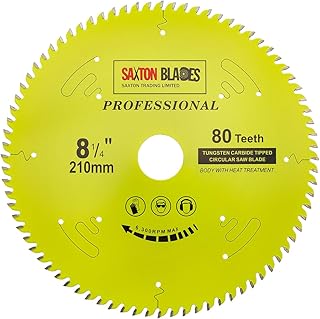


Choosing a DEWALT TCT blade is not simply a matter of selecting the largest diameter or the highest tooth count. The correct blade depends on the saw, material, cutting direction, required finish, kerf, arbor dimensions and the type of work being carried out. A blade that performs well when cutting timber may be unsuitable for laminated board, aluminium or other materials, even when the blade physically fits the saw.
Before buying, identify the exact specification required by the saw manufacturer and then compare compatible DEWALT blades on an like-for-like basis. Diameter and bore size are fundamental, but they are only the starting point. Tooth geometry, tooth count, kerf width, rake angle and intended material can have a noticeable effect on cutting speed, finish and blade life.
The blade diameter must be compatible with the saw for which it is intended. A blade that is too large can be unsafe or physically incompatible, while a smaller blade can alter the cutting depth available from the machine. The arbor or bore diameter must also match the saw, unless the manufacturer explicitly permits the use of a suitable reduction ring.
TCT stands for tungsten carbide tipped. In a typical TCT saw blade, carbide-tipped teeth provide a durable cutting edge while the steel body provides the structure of the blade. The important point for buyers is that TCT does not automatically mean that a blade is suitable for every material.
Different blades are designed around different cutting requirements. Timber, sheet material, laminated boards and metals can place very different demands on the tooth geometry and blade construction. Always check the manufacturer's stated application for the specific DEWALT blade rather than choosing solely because it is labelled TCT.
Tooth count is one of the most visible specifications on a circular saw blade, but more teeth do not automatically make a blade better. Tooth count should be considered alongside blade diameter, tooth geometry, material thickness and the type of cut required.
As a broad buying principle, blades with fewer teeth can prioritise rapid material removal, whereas blades with more teeth can be better suited to applications where a smoother finish is important. The correct balance depends on the material and saw rather than on tooth count alone.
A lower tooth count can provide larger gullets between teeth, allowing more material to be cleared during each revolution. This can be useful when cutting applications where speed and efficient chip removal are more important than achieving the finest possible edge.
However, a low-tooth-count blade should not be selected simply because it appears faster. The blade still needs to be suitable for the saw and material, and aggressive cutting can increase the importance of correct feed pressure and stable workpiece support.
A higher tooth count generally increases the number of teeth engaging with the workpiece over a given distance. This can be advantageous when the objective is a cleaner cut, particularly in suitable sheet materials and applications where edge quality matters.
The trade-off is that a high tooth count is not necessarily the best choice for every cutting task. Excessive resistance, unsuitable material choice or incorrect feed technique can affect cutting performance. Buyers should therefore treat tooth count as one part of the specification rather than the sole measure of quality.
Two blades can have the same diameter and tooth count yet behave differently because their tooth geometry is different. Tooth shape influences how the carbide teeth enter the material, remove chips and leave the cut surface.
Depending on the application, manufacturers may use different combinations of tooth shape, rake angle and gullet design. These details are particularly relevant when comparing specialist blades with general-purpose options.
Rake angle affects the way a tooth approaches the workpiece. A more aggressive geometry can favour rapid cutting in appropriate applications, while a less aggressive configuration can be better suited to applications where controlled cutting and finish are more important.
Do not compare rake angles without considering the intended material. A geometry that is appropriate for one application may not be appropriate for another.
The spaces between teeth help carry chips and cutting debris away from the cutting area. Gullet size therefore contributes to chip clearance and can influence how readily a blade cuts through a particular material.
When assessing a blade specification, look beyond the headline tooth count and consider how the teeth and gullets are configured for the manufacturer's intended application.
Kerf is the width of material removed by the blade during cutting. A thinner kerf can reduce the amount of material removed on each pass, which can be useful for certain applications and saws. A thicker kerf can provide characteristics that are desirable for other cutting setups.
Kerf also needs to be considered in relation to the saw itself. Some machines are designed around particular blade specifications, and a blade should not be selected on kerf alone.
DEWALT is a familiar power-tool brand in the UK, and its TCT blade range covers different applications rather than representing one universal blade specification. Buyers should therefore identify the job first and the blade second.
For professional users, compatibility with an existing fleet of saws, repeatability, cutting performance and the ability to select application-specific blades may be more important than choosing the cheapest option. For occasional DIY users, a suitable general-purpose blade may provide a more practical balance when the range of materials being cut is limited.
When comparing several DEWALT TCT blades, use the same criteria for every candidate. This prevents a common buying mistake in which a blade is judged on a single headline specification while important compatibility details are overlooked.
DEWALT is not the only established manufacturer worth considering. Depending on the saw, material and application, buyers may also encounter blades from brands such as Bosch, Makita, Evolution and Freud.
The most useful comparison is not simply brand against brand. Instead, compare blades that are genuinely equivalent in diameter, bore, material compatibility, tooth count, geometry and intended application. A specialist blade from one manufacturer may be a better fit for a particular job than a general-purpose blade from another, even when both have similar headline specifications.
When comparing DEWALT and Bosch blades, check the application and complete blade specification rather than relying on brand reputation. Both brands offer cutting accessories aimed at different materials and applications, so the correct choice depends on the particular blade rather than the logo on the packaging.
DEWALT and Makita both produce accessories intended for power-tool users, but compatibility should remain the first consideration. A blade should be assessed according to its stated use, dimensions and saw compatibility rather than assuming that blades associated with the same tool category are interchangeable.
Evolution is particularly visible in the UK power-tool market, including applications involving its specialist saw systems. When comparing an Evolution blade with a DEWALT blade, pay close attention to the intended material and machine. Similar-looking blades can have substantially different intended uses.
Freud is another recognised name in cutting tools. For a meaningful comparison, look at the actual engineering specification of the blade, including tooth configuration, material compatibility, diameter and bore. Brand familiarity alone is not enough to establish which blade is the better choice.
Many poor blade purchases result from choosing by appearance, price or tooth count rather than checking compatibility. Avoiding these mistakes can be more valuable than simply searching for the highest-rated product.
Always check the saw's permitted blade diameter. Blade diameter affects cutting depth and physical compatibility, so it should be confirmed before considering secondary features.
A blade can have the correct diameter but still have the wrong bore. Check the arbor specification carefully and follow the saw manufacturer's instructions concerning compatible blade configurations and reduction rings.
More teeth can be useful when a smoother cut is the priority, but that does not make a high-tooth-count blade universally superior. Material, feed rate and cutting purpose all matter.
A general-purpose blade can be convenient, but specialist work may benefit from a blade designed specifically for the material or finish required. If a project involves repeated cutting of one material, compare the appropriate specialist options rather than automatically selecting a universal blade.
The cheapest blade is not necessarily the most economical choice. A blade's suitability for the work, expected cutting workload and replacement requirements should all be considered when assessing value.
The saw manual remains one of the most important sources of compatibility information. Use it to confirm permitted blade dimensions, arbor requirements and other operating limitations before fitting a replacement.
Even a correctly selected TCT blade will not perform indefinitely under all conditions. Cutting performance can change as the blade becomes contaminated, damaged or worn.
A blade that begins producing a noticeably poorer cut should not automatically be replaced without first considering the workpiece, setup and blade condition. Resin, dust and other deposits can affect cutting behaviour, while damaged teeth can create a more serious problem.
Good blade maintenance begins with correct storage and handling. TCT teeth are durable, but carbide tips can still be damaged by impacts, incorrect handling and contact with unsuitable surfaces.
Changes in cutting behaviour can indicate that the blade, machine setup or workpiece needs attention. No single symptom proves that the blade is worn, so investigate the complete setup rather than immediately assuming the cause.
If a blade is damaged, do not continue using it simply because it still appears capable of cutting. Safety and compatibility take priority over extending the life of an accessory.
Blade selection is only one part of achieving a clean result. Workpiece support, machine setup, cutting direction and technique can all influence the final edge.
A general-purpose blade makes sense when one saw is used for a variety of compatible materials and projects. It can reduce the need to change accessories frequently and may be convenient for occasional work.
A specialist blade becomes more compelling when a user repeatedly cuts one material or when the quality of the finished edge is particularly important. The additional purchase may be justified by the closer match between blade geometry and application.
For commercial investigation, the key question is therefore not “Which blade is best?” but “Which blade specification is best suited to the work I actually do?”
Before adding a DEWALT TCT blade to a shortlist, check the complete specification against the saw and the intended job.
Users primarily cutting timber should start by deciding whether speed, cross-cut quality or general versatility is the priority. A blade intended for rapid material removal may be preferable for rough work, whereas a configuration designed around cleaner cuts may be more appropriate when the finished edge will remain visible.
When cutting sheet materials, edge quality and breakout become important considerations. Compare tooth configuration and stated application carefully, particularly when the material has a decorative or laminated surface.
For repetitive professional work, consistency may matter more than simply achieving the lowest purchase price. Consider the type of material, quantity of cuts, required finish and how frequently the blade will need attention or replacement.
For occasional users, avoid over-specifying the purchase. Select a blade that genuinely matches the saw and the materials involved rather than paying for specialist characteristics that are unlikely to be useful.
Customer reviews can provide useful information, but they should be read alongside the manufacturer's specification. A review saying that a blade “cuts brilliantly” has limited value unless the reviewer also used it on a comparable saw and material.
Retailer descriptions can shorten technical specifications, and different retailers may describe the same blade in slightly different ways. When comparing listings, use the manufacturer's stated specification as the reference point wherever possible.
Check the exact product or model identifier, dimensions and application rather than assuming that similar product names refer to identical blades. This is particularly important where a manufacturer offers several tooth counts or sizes within a related range.
The purchase price is only one part of the cost of using a saw blade. A more useful value assessment considers whether the blade is appropriate for the work, how often it will be used and whether its specification matches the desired result.
A relatively inexpensive blade can represent poor value if it is unsuitable for the material or machine. Conversely, a more specialised blade can make sense when its characteristics directly address a recurring cutting requirement.
Correct blade selection is also a safety issue. Use only blades that are suitable for the saw and intended application, and follow the operating, fitting and guarding instructions supplied with the machine.
A DEWALT TCT blade is a saw blade with tungsten carbide tipped teeth. TCT construction is used across different blade designs, with individual blades intended for particular materials, machines and cutting applications.
No. Different blades can have different diameters, bore sizes, tooth counts, geometries and intended applications. Always check the exact specification against the saw and material before fitting a blade.
Not universally. Higher tooth counts can be advantageous where a smoother cut is required, while lower tooth counts can favour rapid cutting and chip clearance in suitable applications. The correct choice depends on the material and cutting task.
No. TCT describes the tooth construction rather than making a blade universally suitable. Check the manufacturer's stated application before using a blade on any material.
Check the saw manufacturer's permitted blade diameter, bore or arbor specification and other compatibility requirements. Then compare these details with the exact blade specification rather than relying on the product title alone.
Ripping involves cutting along the grain of timber, while cross-cutting involves cutting across it. Blade geometry and tooth configuration can be optimised for these different cutting directions, so the appropriate blade depends on the work being performed.
TCT blades can be professionally sharpened where the blade design and condition make this appropriate. Whether sharpening is worthwhile depends on the blade, extent of wear, damage, frequency of use and cost of professional servicing compared with replacement.
There is no single useful lifespan for every blade. Service life varies according to material, cutting volume, machine setup, technique, contamination, storage and blade specification. Claims about a fixed number of cuts should therefore be treated cautiously unless they relate to a clearly defined test or manufacturer specification.
Slow cutting can have several causes, including blade condition, an unsuitable blade, material characteristics, machine setup or cutting technique. Inspect the blade and work setup and consult the saw and blade manufacturer's instructions before continuing.
A rough cut may result from an unsuitable tooth configuration, a worn or damaged blade, incorrect application, poor workpiece support or cutting technique. Match the blade to the material and required finish before assuming that a higher tooth count alone will solve the problem.
Brand should be one consideration, not the deciding factor by itself. Compare DEWALT with suitable alternatives from brands such as Bosch, Makita, Evolution and Freud using equivalent specifications and the requirements of your saw and material.
No. The best blade is the one whose specification matches the intended saw, material and cutting task. A premium specialist blade may offer characteristics that are valuable for a particular application but unnecessary for another.
There is no single DEWALT TCT blade that is automatically the best choice for every UK buyer. The right option is determined by the combination of saw compatibility, blade diameter, bore, material, tooth count, tooth geometry, kerf, cutting direction and desired finish.
For a confident purchase, start with the saw specification, identify the material and cutting task, then compare compatible blades on their complete technical specifications. Use customer feedback as supporting evidence, check the manufacturer's current information, and compare equivalent alternatives rather than choosing solely by price, review score or brand name.
This approach produces a more reliable buying decision because it focuses on application fit rather than a generic “best blade” ranking. It is also the most useful way to assess DEWALT TCT blades when requirements differ between professional tradespeople, workshops and occasional DIY users.