
♥ Wishlist
Compare 36 verified Makita Step Drill Bits products in United Kingdom. Reviews, ratings, pros, cons and buying advice updated for October 2026.
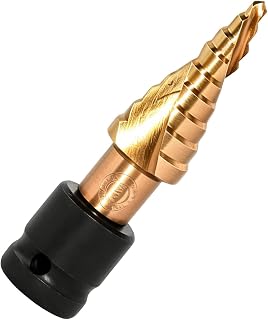



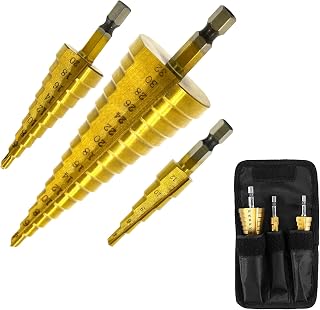


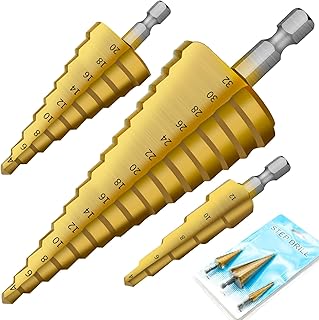


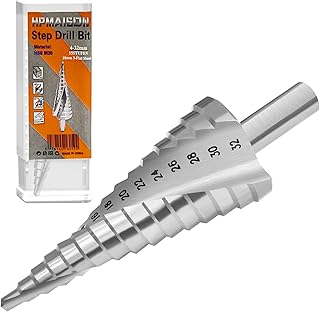


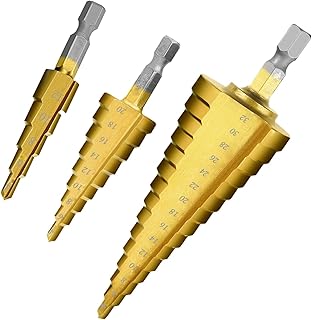


A step drill bit is designed to create and enlarge holes progressively rather than cutting the full diameter in a single pass. That makes this type of bit particularly useful when working with sheet metal, electrical enclosures, panels, ducting and other relatively thin materials where several hole diameters may be needed during the same job.
For buyers comparing Makita step drill bits in the UK, the most important consideration is not simply the number of steps printed on the bit. Diameter range, flute design, coating, shank style, material, working length and the type of drill being used all affect whether a particular model is appropriate.
Makita's range includes straight-flute and spiral-flute step drill designs, including titanium nitride coated versions and different diameter ranges. Examples include the D-40113, D-40129, D-40107, D-40179, D-40185, D-40191 and the three-piece D-41872 spiral-flute set. Specifications can vary substantially between these products, so comparing the model number and stated diameter range is more useful than relying on a generic description such as "Makita step drill".
Unlike a conventional twist drill, a step drill has several cutting diameters formed along one body. The smaller end starts the hole, while progressively larger steps enlarge it until the required diameter is reached.
This design is especially convenient for thin sheet materials because one bit can cover several common hole sizes. Instead of changing between multiple twist drills, the user can stop cutting when the required step reaches the workpiece.
The diameter range is one of the quickest ways to narrow down the right product. A compact 4–12 mm bit is useful when the majority of holes are relatively small, whereas a 4–20 mm model provides greater flexibility for general fabrication and installation work. A 4–32 mm model is more suitable when larger openings are regularly required.
A 4–12 mm range is compact and focused. It can make sense for users who mainly deal with smaller cable, fastener and installation holes and do not want to carry a larger bit unnecessarily.
The 4–20 mm range is a useful middle ground for many general-purpose applications. Makita offers both straight and spiral-flute versions in this size range, allowing buyers to choose based on the type of cutting action and application rather than diameter alone.
A 4–32 mm step drill covers a considerably wider range and can reduce the need for a separate larger cutter when the job requires openings approaching 32 mm. The trade-off is that a larger bit may be less convenient for small, repetitive work and deserves careful consideration in relation to the drill, workpiece and intended application.
Flute geometry is an important distinction that is sometimes overlooked in product comparisons. Makita offers both straight-flute and spiral-flute step drill designs.
A straight-flute design has cutting edges arranged along the body without a helical flute. These bits are straightforward to identify and can be a practical choice where a conventional step-drilling format meets the requirements of the job.
The Makita D-40113, D-40129 and D-40107 are examples of straight step drill models covering different diameter ranges. The exact specification should be checked against the current manufacturer information before purchase.
Spiral-flute step drills use a helical cutting geometry. Makita's range includes the D-40179, D-40185 and D-40191, covering 4–12 mm, 4–20 mm and 4–32 mm ranges respectively according to published product information.
Makita also lists the D-41872 as a three-piece spiral step drill set. Its three bits cover 4–12 mm, 4–20 mm and 4–32 mm ranges, with titanium nitride coating and 1/4-inch hex shanks.
For buyers choosing between straight and spiral designs, the correct question is not which geometry is universally "best". Consider the material, hole sizes, frequency of use, access to the workpiece, preferred drill setup and the manufacturer's stated application guidance.
Several Makita step drill models use a titanium nitride, commonly abbreviated to TiN, coating. TiN is a hard coating used on cutting tools and is recognisable by its characteristic gold-coloured appearance.
A TiN coating should not be treated as a guarantee that a drill bit will last indefinitely. Cutting-tool life depends on numerous factors, including the workpiece material, cutting speed, pressure, heat generation, lubrication, alignment and how frequently the bit is used.
When comparing two otherwise similar step drills, coating is therefore one consideration rather than the entire buying decision. A correctly matched uncoated bit can still be more appropriate than a coated model if its geometry and diameter range better suit the job.
High-speed steel, or HSS, is widely used for metal-cutting drill bits because it provides the hardness and heat resistance required for many drilling applications. Makita's step drill range includes HSS products, with some models additionally specified as TiN coated.
Do not assume that every step drill is suitable for every metal simply because the product description says HSS. Mild steel, stainless steel, aluminium, copper and other metals have different cutting characteristics. Always check the manufacturer's stated application guidance before drilling an unfamiliar material.
Control of heat is particularly important. Excessive speed, pressure or inadequate cutting conditions can quickly degrade a cutting edge. A rigidly supported workpiece, suitable drill setting and appropriate cutting lubricant where recommended can help produce a more controlled operation.
Aluminium can behave differently from steel because it is softer and can adhere to cutting edges under unsuitable conditions. Clean cutting technique and appropriate lubrication can be important, particularly during repeated drilling.
Stainless steel requires more care than ordinary mild steel. Excessive heat and poor cutting technique can cause problems, so the manufacturer's recommended speed, pressure and lubrication guidance should take priority over generic drilling advice.
Many Makita step drills use a 1/4-inch hex shank. This is an important specification because it affects how the bit connects to the tool.
A hex shank is particularly convenient for compatible quick-change holders and drills or drivers designed to accept 1/4-inch hex accessories. However, a 1/4-inch hex shank does not automatically mean that every power tool is suitable for every step drill application.
Many step drills are intended for use with conventional drilling equipment, and a compatible cordless drill can be a convenient option for mobile work. However, compatibility should be established from the accessory and tool specifications rather than assumed from the Makita name alone.
The key factors are the shank connection, the drill's operating characteristics, the diameter being cut and the material involved. A cordless drill with variable speed can be particularly useful because drilling conditions can be adjusted more readily than with a simple fixed-speed tool.
For demanding metalwork, the stability and control of the drill are often more important than simply having a high maximum speed. A secure workpiece and controlled feed can make a substantial difference to the quality of the hole and the life of the cutting edges.
The best Makita step drill for one user may be a poor choice for another. Before comparing prices, establish what you actually need the bit to do.
Start with the maximum diameter rather than the brand. If your work rarely exceeds 12 mm, a 4–12 mm model may be sufficient. If you regularly need holes up to 20 mm or 32 mm, selecting a broader range can reduce tool changes.
A large-range bit is not automatically the most versatile choice. If most of your work involves small holes, a dedicated smaller-range step drill can be easier to handle and more closely matched to the task.
Compare straight and spiral-flute versions where both are available. The choice should reflect the intended application and the manufacturer's guidance rather than marketing claims about one geometry being universally superior.
TiN coating can be desirable for buyers specifically seeking a coated HSS step drill, but coating should be considered alongside diameter range, geometry and overall suitability.
Confirm the shank type before ordering. This is particularly important when switching between a standard keyed or keyless chuck, a quick-change holder and an impact-driver setup.
A single bit can be the more sensible purchase when one diameter range covers almost all of your work. A set can be attractive when several ranges are regularly required, but buying a larger set simply because it contains more pieces can create unnecessary expense and unused accessories.
Makita model numbers can look similar while referring to different diameter ranges, coatings or flute designs. Always compare the exact part number rather than purchasing based only on a product title containing the words "Makita step drill".
These models are useful examples of why model-level comparison matters.
The most obvious distinction is the diameter range, but the absence or presence of a stated TiN coating is also relevant when comparing specifications. A buyer who mostly drills small holes should not automatically choose the 4–32 mm model simply because it covers the greatest range.
Makita's spiral-flute alternatives provide another useful comparison.
This makes the choice relatively straightforward when the required diameter is already known. The remaining questions concern the user's preferred geometry, working conditions, tool compatibility and whether the additional diameter capacity will actually be useful.
The D-41872 is particularly interesting for buyers who need several step-drilling ranges rather than a single bit. Makita specifies the set as containing three TiN coated spiral-flute step drills covering 4–12 mm, 4–20 mm and 4–32 mm.
The published specification also lists 1/4-inch hex shanks and overall lengths of 65 mm, 75 mm and 102 mm, with working lengths of 45 mm, 53 mm and 80 mm respectively. The set is supplied in a plastic case.
A three-piece set can make sense for workshop users who regularly move between different hole sizes. For occasional DIY users, however, it is worth calculating how often each size range will actually be used before paying for additional capacity.
When comparing products, the following specifications provide a more meaningful picture than a star rating alone.
A 4–32 mm bit may appear to offer better value than a 4–12 mm bit, but unused diameter capacity does not improve a tool that is rarely needed. Match the range to the work you actually perform.
A bit that does not fit your drill or holder is not a bargain. Confirm the shank specification before comparing prices.
A coating can improve the characteristics of a cutting tool, but it cannot compensate for unsuitable drilling conditions, excessive heat, poor alignment or using the bit on an inappropriate material.
Customer reviews can reveal useful information about packaging, fit, perceived durability and real-world suitability, but reviews should be considered alongside the manufacturer's technical specification.
Step drills and hole saws are different cutting systems. A step drill is generally intended for progressive hole enlargement and offers multiple diameters along one bit. A hole saw uses a cylindrical cutting ring and is normally selected for a particular larger opening.
Steel, stainless steel and aluminium can require different drilling techniques. Material compatibility should always be checked before starting work.
Good results depend on technique as well as the bit itself. Secure the workpiece so that it cannot move during drilling. Mark the centre accurately and keep the drill aligned with the intended hole.
Use an appropriate speed for the material and diameter, following the manufacturer's guidance. Excessive speed can generate unnecessary heat, while forcing a dull cutting edge can increase stress on the accessory and the tool.
For sheet material, supporting the workpiece properly can also help reduce vibration. Where a clean finish matters, avoid allowing the bit to continue cutting beyond the required diameter.
Maintenance begins with inspection. After use, check the cutting edges for visible damage, excessive wear, chipping or deformation. Remove swarf and contamination using a suitable method and store the bit so that the cutting edges are protected.
Do not continue using an accessory that has become visibly damaged. A worn cutting edge can require greater force and may produce poorer results, particularly when working with metal.
Storage is also important. Keeping individual bits separated from loose steel tools can reduce unnecessary edge damage. If a set is supplied with a case, using the designated storage positions helps keep the accessories organised and reduces the chance of the cutting edges striking one another.
There is no universal replacement interval because tool life depends heavily on workload and material. A step drill used occasionally on suitable thin sheet material may have a very different service life from one used repeatedly in a professional fabrication environment.
Instead of replacing a bit according to an arbitrary number of holes, inspect its condition and performance. Signs that it may be approaching the end of its useful life include visibly damaged cutting edges, persistent difficulty cutting suitable material, excessive heat generation under otherwise appropriate conditions and a noticeable deterioration in hole quality.
Occasional users should generally prioritise the correct diameter range, compatibility and sensible overall value. A single 4–12 mm or 4–20 mm bit may be enough for many household projects if those ranges cover the holes required.
Trade and workshop users should place greater emphasis on repeatability, range coverage, geometry, storage and the ability to replace individual accessories without rebuilding an entire collection. The cost of downtime and frequent tool changes can make a broader selection more useful.
Where many holes are required in sheet metal, the choice of diameter range and cutting geometry becomes especially important. A set covering several ranges may be more convenient when different hole sizes are routinely encountered.
Makita is not the only established manufacturer worth considering. Buyers comparing step drills may also encounter products from Bosch Professional, DEWALT and Milwaukee, among other tool and accessory brands.
The strongest comparison is based on the specification rather than the logo. Check the cutting material, coating, diameter range, flute design, shank format and intended application. If two products appear similar, compare the exact manufacturer part numbers and published specifications rather than assuming that a more expensive product must perform better for your particular job.
Brand compatibility can still be useful when building a broader tool collection, particularly for buyers who already use a particular manufacturer's accessories and understand its product numbering system. Even so, the accessory itself should remain the primary focus of the comparison.
The cheapest step drill is not necessarily the best value, and the most expensive option is not automatically the most durable. Compare like for like before judging the price.
The answer depends on the individual model. A 4–12 mm step drill provides a different selection of finished diameters from a 4–20 mm or 4–32 mm version. The actual step sequence should be checked against the manufacturer's specification rather than inferred solely from the minimum and maximum diameter.
This distinction matters when a project requires a precise intermediate size. Before purchasing, identify the exact hole diameters you need and then verify that those diameters are present in the chosen model.
Step drills are most commonly associated with sheet and relatively thin material, where the stepped geometry can progressively enlarge an opening. They should not automatically be treated as a replacement for conventional twist drills, annular cutters or other specialist tooling for thick sections.
If the material is substantially thicker than the cutting geometry is designed to handle, check the manufacturer's application guidance before proceeding. For heavy fabrication work, another cutting method may be more appropriate.
Not completely. A step drill can reduce the number of accessories needed for certain hole sizes, particularly in thin sheet material, but it does not provide the same functionality as a complete set of conventional twist drills.
Twist drills remain useful for precise single-diameter drilling across a wider range of materials and thicknesses. A practical workshop may therefore benefit from both systems: conventional drills for general-purpose holemaking and a step drill for jobs where progressive enlargement is advantageous.
Step drills are often considered for jobs involving metal enclosures, panels and similar installation components because a single accessory can provide several hole diameters. This can be particularly convenient when different cable-entry or fitting sizes are encountered during the same project.
However, the required finished diameter should always be established before drilling. If a fitting, gland or connector has a specified hole size, measure and verify the requirement rather than relying on a visual estimate.
Metal drilling produces sharp swarf and potentially hot surfaces. Wear appropriate eye protection and follow the safety instructions supplied with the drill, accessory and workpiece. Secure the material before drilling and keep hands away from the cutting area.
Do not attempt to hold a small metal component by hand while drilling it. Use appropriate clamps, a vice or another suitable method of securing the workpiece.
Allow hot material and the accessory to cool before handling when necessary. Follow the power-tool manufacturer's instructions concerning operating speed, auxiliary handles, personal protective equipment and compatible accessories.
Look for a compact 4–12 mm model that matches your drill and the materials you intend to work with.
A 4–20 mm step drill can provide a useful balance when both small and medium-sized openings are required.
A 4–32 mm model provides substantially more diameter capacity, provided that the work and tool setup are appropriate for the larger cutting range.
A multi-piece set such as the Makita D-41872 can be considered where three different ranges are genuinely useful.
The best Makita step drill is ultimately the one whose diameter range, cutting geometry, coating, shank and intended application match the work you actually do. There is little benefit in paying for a wider range if you only need small holes, while choosing a compact model can become frustrating if larger openings are a regular requirement.
For a focused purchase, compare the 4–12 mm, 4–20 mm and 4–32 mm ranges first. Then decide whether a straight-flute or spiral-flute design is more appropriate and whether TiN coating is an important part of your specification. Finally, confirm the exact model number and shank before checking today's price from trusted UK retailers.
Models such as the Makita D-40113, D-40129, D-40107, D-40179, D-40185, D-40191 and D-41872 illustrate the range of configurations available. The right choice should be based on the published specification and your actual drilling requirements rather than a generic "best" label.
There is no single best model for every user. A 4–12 mm bit can be appropriate for smaller holes, a 4–20 mm model offers greater general-purpose coverage, and a 4–32 mm model is more suitable when larger openings are required. Your choice should also account for flute design, coating, shank and material.
Makita manufactures step drills intended for metal-drilling applications, including HSS and TiN coated designs. Suitability still depends on the specific model and the material being drilled, so check the manufacturer's application information before use.
Both cover the 4–20 mm range, but they use different flute designs. D-40129 is a TiN coated straight step drill, while D-40185 is a TiN coated spiral step drill. The appropriate choice depends on the intended application and the user's preferred cutting geometry.
Both cover the 4–32 mm range, but D-40107 is a straight step drill while D-40191 is a TiN coated spiral step drill. Comparing the geometry and coating alongside the application is therefore more informative than comparing the diameter range alone.
The D-41872 is a three-piece spiral step drill set. The published specification lists 4–12 mm, 4–20 mm and 4–32 mm cutting ranges, TiN coating, 1/4-inch hex shanks and a plastic storage case.
No. A 1/4-inch hex shank must be compatible with the chuck or bit holder on the intended power tool. Always check both the accessory and tool specifications before use.
TiN is a hard coating used on cutting tools, but service life cannot be predicted from coating alone. Material, drilling conditions, heat, pressure, alignment, lubrication and frequency of use all influence cutting-tool life.
Buy a single bit when one diameter range covers your normal work. A set is more compelling when you regularly need several different ranges. The best-value choice depends on how often each accessory will actually be used.
Yes, provided the user follows the power-tool and accessory instructions, secures the workpiece, wears suitable eye protection and uses the bit only for appropriate applications. Beginners should pay particular attention to speed, pressure, alignment and safe handling of sharp metal swarf.
Some step drills may be suitable for stainless steel, but the correct model and drilling conditions must be confirmed from the manufacturer's guidance. Stainless steel can require more careful control of heat and cutting conditions than ordinary mild steel.
Step drills are generally associated with sheet and relatively thin material. For thick steel or demanding fabrication work, another drilling or cutting method may be more appropriate. Check the manufacturer's application guidance for the exact accessory.
Inspect the cutting edges for visible wear, chipping or damage and pay attention to changes in cutting performance and hole quality. If the accessory is damaged or no longer cuts properly under suitable conditions, replacement should be considered.
Yes, but reviews should supplement rather than replace technical research. Customer feedback can help identify recurring concerns or practical advantages, while manufacturer specifications establish the intended dimensions, materials and compatibility.
Not necessarily. Compatibility is determined by the accessory's shank and the drill or holder's ability to accept it, together with the intended application. Always check the specifications of both components.
There is no fixed replacement interval. Usage intensity, material, drilling conditions and maintenance all affect service life. Inspect the cutting edges and replace the accessory when it becomes damaged or no longer performs adequately.