

♥ Wishlist
Compare 48 verified Makita Guide Rail products in United Kingdom. Reviews, ratings, pros, cons and buying advice updated for October 2026.


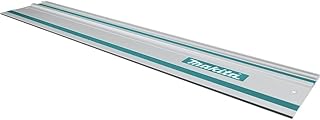
Choosing the right guide rail is about more than simply matching a rail to a Makita saw. The rail needs to suit the saw or router being used, the type of cuts you make, the length of material you normally work with, and the level of accuracy you expect. A well-matched guide system can make repetitive straight cuts considerably easier, while the wrong combination can introduce compatibility problems, awkward handling or unnecessary expense.
For UK buyers, it is particularly important to check the exact model compatibility rather than assuming that every Makita guide rail works with every Makita saw. Compatibility can depend on the saw design, guide-rail interface, accessories being used and the particular application. Always compare the manufacturer's specifications for the saw and rail before ordering.
A guide rail provides a straight reference surface for a compatible saw or other power tool. Instead of relying entirely on a pencil line and the saw's baseplate, the tool follows the rail along a predetermined path. This is especially useful when cutting sheet materials such as plywood, MDF, OSB and other large panels where maintaining a consistently straight line can otherwise be difficult.
Many guide-rail systems also incorporate an anti-slip or high-friction underside intended to help keep the rail positioned during use. Some applications may still require clamps, particularly when working with slippery materials, making long cuts, working near the edge of a panel or prioritising maximum positional security.
The guide rail itself does not automatically make an inaccurate saw accurate. The saw, blade, rail, workpiece and operator all contribute to the final result. A good setup therefore involves checking the rail, ensuring the saw is correctly seated, selecting an appropriate blade and supporting the workpiece properly.
Rail length is one of the most important purchasing decisions. A longer rail can cover a longer cut without repositioning, whereas a shorter rail is usually easier to transport, store and manoeuvre.
A shorter rail can be practical for compact workpieces, smaller panels, workshop jobs and situations where portability matters more than maximum cutting length. It can also be easier to position accurately when working in confined spaces.
A medium-length rail is often the most versatile choice for general sheet-material work. It can provide useful cutting capacity without becoming unnecessarily cumbersome to carry or store.
Longer rails are useful when making extended cuts through large panels, worktops, doors and other substantial materials. Their main advantage is reducing the need to stop and reposition the rail.
The trade-off is handling. A long rail can be more awkward to transport and may need additional support during setup. If a long cut is close to the rail's maximum practical capacity, check that the saw remains properly supported throughout the entire movement.
Some guide-rail systems can be extended using appropriate joining hardware. This can be useful for exceptionally long workpieces, but the quality of the join matters. The rails need to be aligned accurately so that the saw does not encounter a step or change of direction at the connection.
For precision work, take time to align the rails on a flat, stable surface and check the joint before starting the cut. Joining rails is not simply a matter of making the two ends touch; the resulting track needs to behave as one continuous guide.
One of the easiest buying mistakes is purchasing a rail based solely on its length or brand name. Compatibility should be checked first.
Before buying, identify the exact model number of your Makita saw or other compatible tool. Then confirm that the manufacturer lists the proposed guide rail or guide-rail system as compatible with that model. If you use an adaptor, accessory or third-party component, check the complete combination rather than considering the rail in isolation.
Guide rails are particularly valuable with plunge saws because the rail establishes the cutting path while the saw travels along it. This makes the system well suited to breaking down sheet goods and producing long, controlled cuts.
When using a plunge saw on a rail, the base of the saw should sit securely and consistently on the guide surface. Before cutting valuable material, check the setup with the tool switched off and confirm that the saw travels smoothly from the starting position to the end of the intended cut.
Also remember that plunge-cutting technique and guide-rail technique are separate considerations. The rail provides directional guidance, but the operator still needs to control plunge depth, cutting speed and tool movement appropriately.
Some circular saws can be used with guide-rail systems, but compatibility should never be assumed from appearance alone. The saw needs an appropriate interface and sufficient support from the rail.
If you intend to use a guide rail with a conventional circular saw, verify the manufacturer's compatibility information and any required accessories. A circular saw that simply appears to fit the rail may not provide the intended level of control if the interface is not designed for that combination.
Guide rails are not limited to saw work. Certain routing applications can use guide systems or compatible accessories to provide a controlled path. However, routing places different demands on a guide system because the tool may apply lateral forces and follow a different cutting geometry.
If routing is one of your intended applications, check the manufacturer's documentation for the router, guide system and accessories as a complete setup. Do not assume that a saw guide rail can automatically be used for routing simply because the dimensions appear suitable.
An anti-slip strip can make positioning more convenient by helping the rail resist movement on the workpiece. Its condition matters. Dust, debris, contamination and wear can reduce grip, so the underside should be kept clean and inspected regularly.
The interface between the tool and rail should allow smooth, controlled movement without excessive looseness. Too much movement can affect confidence and potentially influence cutting accuracy, while an excessively tight or damaged interface can make the saw difficult to move consistently.
Some guide rails use a replaceable splinter-guard strip positioned to help support the material near the blade. This can be useful when working with materials where a cleaner cut edge is important.
A splinter guard is not a substitute for the correct blade. Blade selection, cutting direction, material support and feed rate all influence tear-out.
For demanding work, the ability to use compatible clamps can be valuable. Clamps are particularly useful when the workpiece or rail cannot safely remain stationary through friction alone.
A guide rail is only as useful as its working condition. Inspect a rail for damage, distortion and contamination before relying on it for precision cuts. A rail that has been bent or damaged can compromise the result even when the saw itself is correctly adjusted.
A guide rail is particularly useful for large, flat sheet materials. Common applications include plywood, MDF, OSB, chipboard and other panel products, subject to the capabilities of the saw and blade being used.
The ideal blade depends on the material and desired finish. A blade designed for rapid construction work may not produce the same edge quality as one selected for fine woodworking. Before buying a rail, therefore, consider the entire cutting system rather than treating the rail as the only factor affecting performance.
Buying a premium guide rail does not guarantee perfectly straight or square cuts. Accuracy depends on several interacting factors.
For repeatable results, establish a consistent setup procedure. Measure and mark carefully, position the rail, check the cutting path, secure the workpiece and perform the cut without forcing the saw.
Large panels can flex under their own weight. If the material moves or drops during a cut, the saw can become harder to control and the finished edge may suffer.
Use a suitable cutting surface or support arrangement that keeps the panel stable without interfering with the blade. Think about where the offcut will fall before starting the cut, and make sure the workpiece remains adequately supported on both sides of the cutting path where appropriate.
Professional users should consider workflow as well as the basic purchase price. A rail that saves setup time and reduces the need for repositioning can be more useful than a cheaper option that repeatedly interrupts the job.
Consider how frequently the rail will be transported, how long the typical cuts are, whether it needs to fit inside a vehicle or storage system, and whether accessories such as clamps or connectors will form part of the working setup.
For site work, durability and portability deserve particular attention. For workshop use, storage and repeatability may be more important. A joiner, kitchen fitter, carpenter and general builder can therefore have very different priorities even when using similar Makita saws.
DIY buyers do not necessarily need the longest or most elaborate rail available. If most projects involve occasional cuts to standard-size panels, a versatile rail that is easy to handle may be more practical than buying an oversized system.
Think about the projects you are genuinely likely to undertake rather than choosing based on the largest job you can imagine. A rail that fits your normal workspace and storage arrangements is more likely to be convenient enough to use regularly.
Makita is not the only manufacturer with a guide-rail ecosystem. Brands such as Festool, Bosch and DeWalt also offer systems designed around particular tools and accessories.
Brand comparison should focus on compatibility and the complete ecosystem rather than simply comparing rail length or headline specifications.
Makita guide rails are a natural consideration for owners already invested in compatible Makita saws and accessories. The main advantage of staying within a manufacturer's ecosystem is straightforward compatibility, although the exact model combination should still be checked before purchase.
Festool is well known for integrated guide systems and precision-focused woodworking equipment. Its products may be particularly relevant to users who already operate compatible Festool tools, but cross-brand compatibility should be verified rather than assumed.
Bosch offers power tools and guide systems across several categories. Buyers considering Bosch alongside Makita should compare the exact tool-to-rail interface, accessory requirements and intended application.
DeWalt is another established power-tool brand with guide-rail-compatible equipment. For users who already own DeWalt tools, an integrated system may make more sense than mixing components from several ecosystems.
The best brand is therefore not necessarily the one with the longest rail or most features. It is the system that provides dependable compatibility with the tools you actually use and the cutting tasks you regularly perform.
Rail connectors allow compatible sections to be combined for longer cuts. If you regularly work with large panels, connectors can expand the usefulness of a shorter collection of rails.
Clamps provide additional security when friction alone is not sufficient. They can be particularly useful for awkward workpieces, demanding cuts and situations where even slight rail movement would be unacceptable.
Splinter guards are consumable components on systems that use them. If the strip becomes damaged, worn or no longer provides the intended edge support, replacing it can be more sensible than replacing the complete rail.
Long aluminium rails can be vulnerable to accidental knocks during transport. Store and transport them in a way that reduces the risk of bending or damaging the working edge. A rail that is technically high quality can become unsuitable for precision work if it is repeatedly mistreated.
A rail that is too short may require repositioning in the middle of a cut, while an unnecessarily long rail can be cumbersome. Match the length to your most common cutting tasks.
Never buy solely because the product description contains the words “Makita guide rail”. Check the exact tool and accessory compatibility.
The cheapest rail may not be the most economical choice if it does not suit the saw, requires unexpected accessories or is inconvenient for the jobs you perform.
A guide rail follows the position in which you place it. If the rail is positioned incorrectly, the saw will faithfully reproduce the wrong cut.
A very long rail can be excellent for cutting large panels but inconvenient if your workshop, van or storage area cannot accommodate it safely.
Buyers sometimes concentrate on the guide rail while overlooking the blade. The rail controls direction; the blade determines a large part of the cutting behaviour and finish.
Use a blade suited to the material and the required finish. Keep the blade in good condition and avoid pushing the saw faster than it can cut comfortably.
Support large panels correctly and ensure that the offcut cannot pinch the blade or interfere with the saw's movement. For visible finished edges, perform a test cut on scrap material first. This gives you an opportunity to confirm the cutting direction, blade selection, rail position and finished edge before committing to the final workpiece.
Routine maintenance is straightforward but important. Keep the rail clean and protect its working surfaces from impacts. Remove accumulated dust from areas that contact the saw and inspect anti-slip material and splinter protection periodically.
If the rail becomes visibly damaged or distorted, do not assume that it will continue to provide accurate guidance. Precision cutting equipment should be checked before being used on expensive materials.
There is no single best Makita guide rail for every buyer. The right option depends on the tool, workpiece and cutting pattern.
When comparing several guide rails, create a simple specification checklist rather than relying on marketing descriptions.
If you are comparing two or more Makita guide rails, ask these questions before making a decision:
No. Compatibility should be checked against the exact tool model and manufacturer's specifications. Do not assume that every Makita saw or router can use every Makita guide rail without additional components.
The best length depends on the work you do. Choose a shorter rail for portability and smaller workpieces, a medium rail for general-purpose use, or a longer rail for large panels and extended cuts. A compatible joining system can provide additional flexibility where appropriate.
Compatible guide rails may be extendable using the manufacturer's appropriate joining components. Check that the particular rail and connector combination is supported before purchasing.
Not necessarily for every cut. Some rails are designed to resist movement through their underside material, but clamps can provide additional security. They are worth considering when working on difficult surfaces, making demanding cuts or when maximum positional stability is important.
It depends on the exact tools and interface. Some guide systems may have cross-brand compatibility or compatible accessories, but this should be verified for the specific combination rather than assumed from similar dimensions.
A properly positioned guide rail provides a consistent path, but final accuracy also depends on the saw, blade, rail condition, workpiece support and setup. The rail cannot correct an incorrectly marked or positioned cut.
Length alone does not make a rail more accurate. A longer rail can reduce the need to reposition the guide during long cuts, which may be useful for consistency, but it also requires careful handling and support.
A suitable saw-and-rail system can be useful for long straight cuts in worktops, provided the tool, blade, rail and workpiece are appropriate for the application. Always account for the width and weight of the worktop and provide adequate support.
Guide rails are commonly useful for cutting sheet materials such as MDF and plywood when paired with a suitable compatible saw and blade. The required blade specification depends on the material and desired edge quality.
Start with a clean contact surface and ensure the rail's anti-slip material is free from dust and contamination. Position it correctly and use compatible clamps when necessary. The workpiece itself should also be stable throughout the cut.
The best Makita guide rail is the one that fits your tool, your workpieces and your working method without creating unnecessary compromises. Length is important, but it should be considered alongside compatibility, handling, storage, clamping options, guide-strip design and the availability of replacement components.
For occasional DIY work, simplicity and manageable size may be more valuable than maximum length. For professional users, a well-planned guide-rail system can be more useful because it supports repeatable workflows across large panels and other long workpieces. For precision woodworking, the rail should be treated as one part of a complete cutting system that also includes the saw, blade, workpiece support and setup technique.
Before buying, verify the exact specifications for the current model, compare the complete accessory requirements and consider how the rail will actually be used. That approach is more reliable than choosing solely from a headline length, brand name or advertised feature.