

♥ Wishlist
Compare 63 verified Belt Pouch Kit products in United Kingdom. Reviews, ratings, pros, cons and buying advice updated for October 2026.


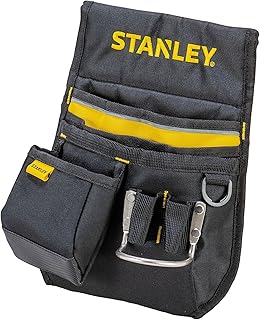


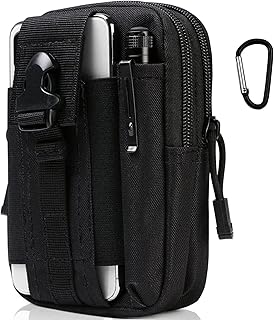





A good belt pouch kit should make everyday tools easier to carry, organise and reach without turning a work belt into an unnecessarily heavy load. The right choice depends on the tools you actually use, the type of work you do, how often you move around a site, and whether you need a simple pouch or a complete modular belt system.
For UK buyers, the most useful comparison is not simply between the number of pockets. Construction quality, belt compatibility, pocket layout, reinforcement, tool retention, comfort and weight can have a much greater effect on whether a pouch remains useful after months of regular work.
Established manufacturers such as STANLEY, DEWALT and MILWAUKEE offer different approaches to belt-mounted storage, from compact single pouches through to padded belts, electrician-focused pouches and larger contractor rigs. Their current UK ranges illustrate why it is worth comparing the complete design rather than choosing solely by brand or pocket count.
A belt pouch kit is a wearable tool-storage system designed to keep frequently used equipment within easy reach. Depending on the design, a kit can consist of a single pouch and belt, several detachable pouches, dedicated holders for items such as tape measures and hammers, or a more comprehensive rig incorporating padding and additional load distribution.
The term can therefore cover products aimed at very different users. A DIY user might only need a compact pouch for a screwdriver, tape measure, pliers and utility knife, whereas a carpenter, electrician, installer or construction professional may need separate compartments for numerous hand tools and consumables.
The best belt pouch kit is consequently the one that matches the working load rather than the one with the largest advertised capacity.
A conventional tool bag is useful when transporting a large collection of equipment between locations. A belt pouch serves a different purpose: it keeps the tools you use repeatedly immediately available while leaving larger equipment elsewhere.
There is, however, a trade-off. The more equipment you load onto a belt, the more noticeable the weight becomes. A belt pouch should therefore complement a toolbox or tool bag rather than automatically replace it.
Pocket quantity is an easy specification to compare, but pocket placement is usually more important. A pouch with fewer, properly positioned compartments can be considerably more practical than one with numerous narrow pockets that are difficult to access.
Look for a mixture of compartment sizes. Long narrow pockets can accommodate screwdrivers, pencils and similar tools, while wider compartments are better suited to pliers, adjustable spanners and other bulkier equipment. Dedicated holders can also prevent commonly used tools from disappearing into the bottom of a general-purpose compartment.
Open pockets provide fast access, but they need sufficient depth and structure to keep tools secure while walking, climbing or bending. Some applications benefit from additional loops, clips, flaps or dedicated holders.
Consider the way you move during work. A pouch that performs perfectly while standing at a bench may be less suitable if you regularly climb ladders, kneel or work overhead.
Do not assume that every pouch will fit every work belt equally well. Check the width and construction of the belt loops, attachment points or mounting system before purchasing.
Compatibility is particularly important with modular systems. A pouch may be designed to attach to a manufacturer's own belt or to a particular style of work belt, while a simple belt-loop pouch may have fewer restrictions.
A properly fitted belt should remain stable without being excessively tight. Look for adequate adjustment range and a fastening system that is appropriate for the expected load.
Some professional systems use wide, padded belts to distribute weight over a larger area. DEWALT, for example, currently lists a padded belt with breathable mesh and a two-pin buckle in its UK range, while MILWAUKEE offers a padded work belt designed around a larger load-bearing system.
Common materials include polyester, nylon, canvas, leather and synthetic reinforced fabrics. Material alone does not determine durability; stitching, reinforcement, rivets, stress-point construction and the shape of the pouch all matter.
For demanding site work, reinforced fabric can provide a useful balance between durability and weight. DEWALT's current Professional Tool Pouch and Professional Nail Pouch, for example, specify 1680-denier fabric, tarpaulin elements, reinforced rivets and double stitching.
A pouch used outdoors inevitably encounters dust, rain, mud and general site debris. A completely waterproof construction is not necessary for every user, but sensible drainage and materials that can be cleaned are useful features.
Some designs incorporate drainage openings at the bottom of a compartment. STANLEY's 9-inch Mini Pouch, for example, lists an eyelet intended for water drainage alongside double-layer fabric and 600-denier fabric construction.
Tool pouches tend to fail at predictable locations: belt attachments, pocket openings, corners, stitching and points where heavy tools repeatedly pull against the fabric.
When comparing products, inspect how these areas are reinforced rather than concentrating only on the headline material specification. Riveted or heavily stitched attachment points can be particularly valuable where a pouch is expected to carry heavier hand tools.
A dedicated hammer holder can be valuable for carpentry, construction and general maintenance work. A tape measure holder is similarly useful because the tape measure is often one of the most frequently accessed items on a work belt.
DEWALT's Professional Tool Pouch and Professional Nail Pouch both include dedicated hammer and tape-related storage, illustrating how trade-specific features can be more useful than simply adding more general pockets.
Structured pockets are easier to access with one hand because the opening tends to remain available. Soft pockets can be lighter and more flexible, and they may accommodate irregularly shaped tools more easily.
For repetitive professional work, structured openings can be particularly useful because they reduce the amount of time spent searching inside a pouch.
Leather is a traditional choice for tool belts because it can offer a robust structure and a distinctive feel. It is particularly associated with carpenter, joinery and general trades equipment.
The disadvantages are that leather can be heavier than some modern fabric alternatives and may require more care. Buyers should also consider whether the pouch will regularly be exposed to prolonged rain or wet working conditions.
Heavy-duty nylon is widely used for professional tool storage because it can combine relatively low weight with good resistance to abrasion. Higher-denier fabrics are often used in products intended for demanding environments.
MILWAUKEE's current UK belt and pouch range includes products using 1680D ballistic nylon, with additional construction features such as riveted seams and integrated handles on selected pouches.
Polyester is another common choice for soft tool storage. As with nylon, the fabric's denier rating should not be considered in isolation. Stitching, lining, reinforcement and the overall pattern can have a major influence on longevity.
Modern pouches may combine several materials rather than relying on one fabric throughout. A rigid or reinforced base, stronger material around tool openings and softer fabric elsewhere can provide a practical compromise between durability, weight and flexibility.
There is no universally correct pocket count. The right number depends on the tools that need to be carried.
Count your normal working tools before shopping. If you regularly carry six items, buying a pouch designed around twenty or more tools may simply encourage unnecessary loading.
Electricians often benefit from a pouch that keeps several slim hand tools visible and separated. Dedicated holders for pliers, screwdrivers, measuring equipment and small accessories can make more sense than deep general-purpose pockets.
MILWAUKEE currently lists an Electricians Pouch in its UK range with integrated belt loops, a solid base, a tape-measure clip, a carry handle and construction using 1680D ballistic nylon.
When comparing electrician-oriented pouches, also consider whether the layout leaves sufficient room for insulated tools and whether the pouch can be positioned comfortably when working in confined areas.
Carpenters often need fast access to a tape measure, pencil, knife, driver, fasteners and hammer. A pouch with a dedicated hammer holder and separate small-item storage can therefore be more practical than a general-purpose bag.
Leather remains a popular material for traditional carpenter-style pouches, while modern fabric systems can reduce weight and introduce additional organisation.
Construction users should prioritise durability, capacity and load distribution. The pouch needs to survive frequent movement and contact with rough surfaces without becoming uncomfortable when fully loaded.
Professional systems from manufacturers such as DEWALT and MILWAUKEE demonstrate the difference between a basic belt pouch and a more comprehensive load-bearing rig. DEWALT's current professional pouches combine multiple pockets with webbing belts, reinforced stress points and structured openings, while MILWAUKEE's contractor rig uses a padded belt and harness intended to distribute weight.
For occasional household work, a compact pouch is normally more sensible than a large professional rig. The priority should be easy storage of a tape measure, screwdrivers, pliers, utility knife and a few frequently used accessories.
A smaller pouch is also easier to store and less likely to become overloaded.
A single pouch is usually the simpler option. It is useful when you already own a suitable belt or only need to carry a small selection of tools.
A complete kit makes more sense when the belt and attachments have been designed to work together. This can provide better weight distribution and a more consistent attachment system, but it may also cost more and introduce more components than a casual user needs.
Modular systems allow pouches and holders to be moved or added according to the job. This can be particularly useful for professionals who perform several types of work.
The main advantage is adaptability. A carpenter might configure the belt differently from an electrician, while a maintenance worker may change the layout depending on whether the job involves fastening, measuring or repair work.
The main disadvantage is complexity. More attachment points and components can increase cost and make the system heavier. Compatibility should also be checked carefully before mixing pouches and belts from different manufacturers.
A tool belt can become uncomfortable even when the individual pouch feels perfectly acceptable in isolation. The combined weight of tools, fasteners and accessories places greater demands on the belt itself.
Look for a belt that remains stable when loaded and does not dig sharply into the waist. Wider and padded belts can spread pressure over a greater area. Breathable sections may also be useful when worn for extended periods.
For heavier loads, consider whether a harness or suspender system can transfer some of the load away from the waist. MILWAUKEE's contractor rig, for example, incorporates a padded four-point harness and padded breathable belt.
Organisation is as important as the pouch itself. Place the tools you use most often where they can be reached without excessive twisting or searching.
A well-organised pouch should allow you to identify where a tool belongs without having to look through every compartment.
A large number of pockets sounds impressive, but unused compartments add bulk without improving productivity. Focus on the actual dimensions and positions of the compartments.
A heavy-duty pouch may be extremely durable but can become tiring once loaded. Compare the pouch's own weight with the equipment you intend to carry.
Even a strong pouch should not automatically be filled to its maximum stated capacity. Carrying unnecessary equipment can reduce comfort and make tools harder to access.
Check belt width, attachment method and intended compatibility before purchasing. This is especially important when building a modular system from different brands.
Tools are not the only things that need storage. Screws, nails, plugs, bits, pencils and other small items can quickly consume the usable capacity of a pouch.
Colour and styling can be useful for visibility and brand preference, but stitching, attachment points, fabric, pocket structure and fastening quality are more relevant to long-term practicality.
When comparing several products, assess them against the same criteria rather than judging each pouch independently.
Brand comparisons are most useful when they focus on design philosophy rather than assuming one manufacturer is automatically best.
STANLEY's UK range includes leather belts, compact pouches and traditional tool-belt storage. Its current catalogue includes the 9-inch Mini Pouch and several leather storage options, making the brand relevant to buyers looking for both compact and more traditional designs.
STANLEY can therefore be worth considering when compact storage or traditional belt-mounted tool organisation is more important than building a large modular rig.
DEWALT currently offers a broad UK selection of tool bags, pouches and belts. Its Professional Tool Pouch and Professional Nail Pouch focus on organised storage, reinforced construction and integrated belt systems, with dedicated holders for common jobsite equipment.
DEWALT is particularly relevant to buyers who want a professional-style pouch with substantial organisation rather than a very small minimalist belt pouch.
MILWAUKEE's UK storage range includes work belts, electrician-focused pouches and contractor rigs. Its current products include 1680D ballistic nylon construction on selected belt and pouch designs, along with reinforced seams and padded load-bearing components on larger systems.
This makes MILWAUKEE particularly relevant for buyers looking for a more comprehensive professional tool-carrying system.
Price should be considered alongside construction, capacity and expected frequency of use. The cheapest pouch may be perfectly adequate for occasional DIY, while a professional who wears a belt every working day may benefit from investing in better ergonomics and more durable construction.
Rather than setting a budget first and choosing the most feature-heavy product within it, identify the essential requirements and then compare products that meet them.
Always check current retailer pricing before purchasing because prices, bundles and availability can change.
Product specifications can reveal important differences that are not obvious from photographs.
Manufacturer specifications should take precedence over assumptions based on product photographs or generic marketplace descriptions.
A specification such as 1680D nylon can indicate a substantial fabric construction, but it does not guarantee that the entire pouch is equally durable. Inspect the supporting details: stitching, rivets, reinforcement, pocket construction and the belt attachment.
Likewise, a stated weight capacity should not be interpreted as a recommendation to carry the maximum load continuously. Your comfort, working position and the distribution of the load remain important.
Where manufacturers provide dimensions, compare them with the physical size of the tools you intend to carry. A pouch can look spacious in product photography while having compartments that are unsuitable for your particular equipment.
Regular cleaning can extend the useful life of a tool pouch. Remove loose dirt rather than allowing abrasive particles to accumulate around seams and pocket openings.
Leather requires different care from synthetic fabric, so avoid applying cleaning or conditioning products unless they are appropriate for the specific material.
A pouch does not necessarily need replacing because it looks worn. Cosmetic marks are normal in working equipment. More important warning signs include damaged belt attachments, loose rivets, failing stitching, torn pocket openings or compartments that no longer retain tools safely.
Pay particular attention to load-bearing points. A small cosmetic tear may be unimportant, whereas damage around the belt attachment can compromise the whole system.
For the strongest overall buying decision, start with the tools rather than the pouch. Lay out everything you expect to carry and separate the items into three groups: essential tools, occasionally required tools and equipment that can remain in a larger toolbox.
Build the belt around the essential group. This prevents the common mistake of purchasing an oversized pouch and then filling it simply because the space exists.
Next, compare belt compatibility and comfort. A well-organised pouch is of limited value if the belt shifts when loaded or becomes uncomfortable during extended use.
Finally, compare construction quality and current specifications. Check the manufacturer's product information and then compare current prices and verified customer feedback from reputable retailers before making a purchase.
A belt pouch kit is particularly useful for tradespeople, maintenance workers, installers, carpenters, electricians, construction workers and DIY users who frequently move between work areas.
It is less useful if most of your work takes place at a fixed bench or if you need to carry large power tools and numerous accessories simultaneously. In those situations, a conventional tool bag, toolbox or modular storage system may be more practical.
Bigger is not automatically better. A large belt system can become cumbersome when only a few tools are required. Users who perform short household repairs may find a compact pouch considerably easier to live with.
The same principle applies to professionals. Carrying only the tools needed for the job can improve mobility and reduce unnecessary weight, particularly when working on ladders or in confined spaces.
There is no single best belt pouch kit for every user. The right option depends on the tools being carried, required capacity, belt compatibility, comfort, working environment and budget. A compact pouch can be better for occasional DIY, while a padded modular rig may be more appropriate for a professional carrying numerous tools throughout the day.
They can be worthwhile when the additional cost provides genuinely useful improvements such as stronger construction, better reinforcement, improved organisation, greater comfort or a more versatile attachment system. For occasional use, a simpler pouch may offer better value.
Neither material is universally better. Leather can provide a traditional, robust construction, while modern nylon and synthetic fabrics can offer a useful combination of durability, flexibility and lower weight. The stitching, reinforcement and overall design should be considered alongside the primary material.
Carry the tools required for the task rather than aiming for a particular number. The ideal load is the smallest practical selection that allows you to work efficiently without repeatedly returning to a toolbox.
Often, but compatibility must be checked. Examine the belt loops or attachment system and compare them with the dimensions and mounting requirements of the pouch. Modular systems may have specific compatibility considerations.
An electrician should generally prioritise organised compartments for commonly used hand tools, secure tool retention, easy access and a layout that works comfortably around the body. Dedicated tape-measure storage and belt attachment points can also be useful.
A carpenter may benefit from dedicated storage for a hammer, tape measure, pencil, knife, screwdrivers and fasteners. The ability to access these items quickly without searching through deep pockets is particularly valuable.
Padding can improve comfort by spreading pressure over a wider area, particularly when the belt carries a substantial load. It is not a substitute for sensible weight distribution, however, and a heavily loaded belt can still become uncomfortable.
That depends on the working environment. Outdoor users may benefit from water-resistant materials, drainage and easy-clean construction, but not every tool pouch needs to be fully waterproof. If wet conditions are expected, check the manufacturer's stated protection rather than assuming a fabric pouch is waterproof.
A tool pouch is the storage component that holds the tools. A tool belt is the wearable support system to which one or more pouches or holders may be attached. Some products combine both into a complete kit.
A modular system offers greater flexibility because components can be rearranged for different jobs. A fixed pouch is generally simpler and can be lighter. Choose modularity when your tool requirements change frequently rather than paying for flexibility you will not use.
Compare the individual system rather than choosing solely by brand. STANLEY offers compact and traditional belt-mounted options, DEWALT has a broad selection of professional pouches and belts, and MILWAUKEE offers electrician-focused pouches alongside more comprehensive padded belt and contractor systems.
Ratings can be useful as one part of the research process, but they should not replace specification checking. Look for patterns in verified customer feedback concerning durability, sizing, comfort, pocket layout and attachment security, then compare those observations with the manufacturer's stated specifications.
Clean it whenever dirt or debris begins interfering with pockets, fasteners or tool access. A quick inspection during routine tool maintenance can also identify damaged stitching or attachment points before they become more serious.
The best belt pouch kit for UK buyers in 2026 is not necessarily the largest, toughest-looking or most expensive option. It is the system that carries the tools you actually need, keeps them organised, remains securely attached to the belt and stays comfortable throughout the working day.
For occasional DIY, simplicity and compact storage are usually more valuable than a large professional rig. For trade work, prioritise reinforcement, tool retention, dedicated holders and comfort. For heavier professional loads, investigate padded belts, modular systems and harness-supported designs rather than simply adding more weight to a basic belt.
Before purchasing, compare the manufacturer's current specifications, confirm compatibility, assess the complete loaded weight and read verified customer feedback. Then compare today's prices from trusted retailers so that the final choice reflects both the product's capabilities and your actual requirements.