

♥ Wishlist
Compare 16 verified Milwaukee Belt Pouch Kit products in United Kingdom. Reviews, ratings, pros, cons and buying advice updated for October 2026.


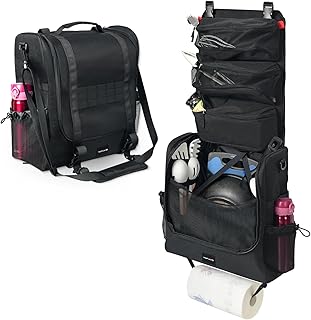


Choosing a Milwaukee belt pouch kit is less about simply finding the pouch with the most pockets and more about matching the storage system to the way you actually work. A good setup should keep frequently used tools immediately accessible without becoming so heavily loaded that the belt becomes uncomfortable or restricts movement.
Milwaukee offers several approaches to wearable tool storage, including electrician-focused belts and pouches, work belts, contractor rigs and larger storage options. The right configuration depends on your trade, the tools you carry every day, how often you move around a site and whether you need a compact belt-only setup or a more comprehensive system.
Before comparing individual models, establish what sort of kit you actually need. A compact pouch can be preferable for short service calls, whereas a belt-and-pouch combination makes more sense when essential hand tools need to remain on you throughout the working day.
The most useful question is not “How many tools can it hold?” but “Which tools do I genuinely need to carry on my body?” Carrying unnecessary equipment adds weight, increases bulk and can make a well-designed pouch less effective.
Write down the tools you use on almost every job. For an electrician, this might include screwdrivers, insulated pliers, cutters, a tape measure, a voltage-testing device and selected accessories. A carpenter may prioritise a tape measure, pencils, knife, square, fasteners and driver bits. A maintenance technician may need a more varied combination of hand tools.
Once the essential list is established, separate the tools into three groups:
The belt pouch should primarily accommodate the first group. Trying to turn a wearable pouch into a complete toolbox is one of the easiest ways to end up with an unnecessarily heavy and uncomfortable setup.
Pocket layout matters because the fastest pouch is the one that allows you to identify and retrieve the correct tool without looking for it repeatedly. Open-top compartments can be convenient for frequently used hand tools, while zipped or enclosed sections can be better for smaller accessories that might otherwise fall out.
Think about the sequence in which you work. Tools used together should ideally be positioned where they can be reached without repeatedly crossing the body or twisting the torso.
Compatibility should be considered before treating a pouch as a standalone purchase. Check the belt-loop arrangement, attachment method, available space and intended belt width. A pouch that physically fits a belt is not necessarily the most stable or comfortable combination once loaded.
This is particularly important when combining products from different manufacturers. Milwaukee, DEWALT, Stanley and other tool-storage brands may use different attachment systems, dimensions and belt designs. Do not assume that two products are interchangeable simply because they are both described as tool pouches or work belts.
Many professional Milwaukee storage products use heavy-duty textile construction, including 1680D ballistic nylon on selected belts, pouches and bags. Denier is a measure associated with the linear mass of fibres used in textile construction, but denier alone does not tell you everything about durability.
For a working tool pouch, examine the complete construction rather than focusing on a single material specification.
A thick fabric can still fail prematurely if the seams, attachment points or hardware are poorly designed. Conversely, a well-constructed pouch does not necessarily need to be excessively rigid to perform effectively.
More pockets are not automatically better. Excessive compartmentalisation can make a pouch awkward when you need to store a mixture of tools with different shapes and sizes.
A useful layout normally combines dedicated spaces with at least some degree of flexibility. Narrow slots can stop screwdrivers and cutters from moving around, while larger compartments can accommodate irregularly shaped tools.
Dedicated slots are particularly useful for long-handled tools. They reduce movement and make it easier to identify the correct tool by touch. However, very narrow slots can become frustrating if your preferred tools have unusually thick handles.
Open pockets provide fast access and are useful for tools that are repeatedly picked up and put down. Their disadvantage is that loose items can be more easily displaced, particularly when bending, climbing or working in awkward positions.
Zipped compartments are useful for small accessories, personal items or components that need additional containment. They are less convenient for tools that you need to retrieve every few minutes.
A secure tape measure attachment can be one of the most useful features on a tool belt because it gives a dedicated location to an item that is frequently removed and replaced. Check that the clip is positioned comfortably for your dominant hand and does not interfere with other tools.
A tool belt can be technically durable and still be the wrong choice if it creates pressure points during a long working day. Comfort should therefore be evaluated alongside storage capacity and material quality.
Padding can reduce pressure from the belt against the waist, particularly when the pouch contains heavy tools. Breathable materials can also be useful when the belt is worn for extended periods or in warm working conditions.
However, more padding does not automatically mean more comfort. The overall shape, adjustment range, tool distribution and the position of the load all affect how the belt feels during movement.
Try to distribute tools rather than concentrating everything on one side. A heavily loaded pouch positioned at one hip can create an uneven load and may become more noticeable when walking, climbing ladders or repeatedly bending.
For larger loads, a rig or suspenders may be more appropriate than simply adding more pouches to a waist belt.
Consider the positions you commonly work in. A belt that feels comfortable while standing may behave differently when kneeling, crouching, climbing or working in confined spaces.
For electricians, installers and maintenance workers, the ability to move freely can be more valuable than carrying every possible tool. A compact setup containing the right tools is often more practical than a fully loaded belt.
An electrician's belt setup should prioritise tools that are genuinely used during electrical installation and maintenance. The exact loadout varies by job and should always reflect the requirements of the task and the relevant safety procedures.
A sensible starting configuration might include dedicated storage for:
Do not use a tool pouch as a substitute for appropriate protective storage for delicate electronic instruments. Multimeters, testers and other sensitive equipment should be stored according to the manufacturer's instructions, particularly when moving between jobs.
Carpenters and joiners often need fast access to measuring, marking, fastening and cutting tools. The ideal belt therefore needs to balance quick retrieval with freedom of movement.
A carpenter's pouch may be configured around a tape measure, pencils, knife, driver accessories, fasteners and selected hand tools. If a cordless drill or impact driver is regularly carried on the body, check the compatibility and load capacity of the relevant holder rather than assuming a general pouch is suitable.
For larger framing or construction tasks, a more substantial rig can make sense because the load is distributed across a wider area. For lighter finishing work, a smaller pouch can be less intrusive.
Plumbing and HVAC work can involve a particularly varied tool selection. Adjustable spanners, pliers, cutters, drivers, measuring tools and specialist equipment may all be required, but carrying every item on the belt is rarely practical.
For these trades, consider a hybrid approach: keep the tools used continuously on the belt and place heavier or specialist equipment in a separate bag. This also makes it easier to change the belt configuration when moving between different types of work.
A tool belt and a tool bag solve different problems, so one should not automatically be considered better than the other.
A belt is particularly effective for repetitive work because it reduces the need to return to a toolbox for every small task. A bag is generally more efficient for transporting a broad selection of equipment from the van to the work area.
A backpack can distribute a larger load across the shoulders and back, while a belt provides faster access to frequently used tools. The better option depends on whether access speed or carrying capacity is the main requirement.
Milwaukee's storage range includes both wearable belt systems and backpacks, making a combination approach possible. A backpack can hold larger tools, spare equipment and personal items, while the belt carries only the tools required for the immediate task.
There is no universal ideal number of tools. The correct load depends on the pouch's construction, the belt's support and the tools themselves.
As a practical principle, begin with the smallest useful load and add tools only when you repeatedly find yourself returning to the main toolbox for them. This approach prevents the common mistake of filling every pocket simply because space is available.
If a pouch becomes uncomfortable after loading, adding more storage is unlikely to solve the underlying problem. Reconsider the tool selection, redistribute the weight or move larger items into a separate bag or storage system.
Large capacity can look attractive when comparing products online, but unused capacity becomes unnecessary weight once the pouch is loaded. Choose according to your normal working load rather than the maximum number of tools you might theoretically carry.
A pouch should be evaluated as part of a belt system. Check the attachment design, belt width and intended configuration before purchasing.
Durability depends on the entire construction. Stitching, reinforcement, hardware, pocket design and attachment points can be just as important as the headline fabric specification.
Dedicated slots can be extremely useful, but they need to accommodate your actual tools. Thick ergonomic handles may not sit comfortably in narrow compartments.
A belt pouch is designed to make essential tools accessible, not necessarily to replace a complete toolbox. Excessive loading can reduce comfort and make movement more difficult.
A professional-looking pouch is not automatically the best pouch for your trade. Prioritise access, fit, durability, organisation and compatibility.
When comparing several options, use the same criteria for each model rather than judging them solely by photographs or the number of pockets.
Product specifications should be treated as a starting point rather than a complete prediction of real-world suitability. A material description tells you what the pouch is made from, but not necessarily how it will behave with your particular tools.
Look for information covering construction, dimensions, belt compatibility, pocket arrangement, hardware, attachment points and included components. If a listing provides a model or article number, record it before comparing retailers so that you are comparing the same product rather than visually similar versions.
Pay particular attention to what is actually included. A photograph may show a complete belt configuration while the product being sold is only one pouch or one component. Always distinguish between the pictured setup and the stated package contents.
Milwaukee uses specific product and model numbers across its storage range. These identifiers are useful when comparing specifications because product names can be shortened, translated or described differently by individual retailers.
When shopping around, compare the model number, included components and specification details rather than relying solely on a product title such as “electrician pouch”, “work belt” or “contractor rig”. This reduces the risk of comparing different configurations that happen to have similar names.
A modular approach can be more economical and practical than attempting to predict every future requirement in a single purchase.
This approach also makes it easier to create different configurations for different jobs. One setup might prioritise electrical installation, while another could be configured for maintenance or general construction.
A contractor rig is worth considering when a conventional waist pouch does not distribute the required load comfortably. Harness-style systems can provide additional support and give the wearer more options for balancing tools around the body.
This can be especially useful for tradespeople who spend long periods moving around a site with a relatively substantial hand-tool load. The trade-off is increased size and complexity compared with a simple belt and pouch.
For light-duty service calls, a full rig may be unnecessary. For demanding site work, however, better weight distribution can be more valuable than maximum compactness.
Milwaukee is not the only established manufacturer of professional tool storage. DEWALT, ToughBuilt, Stanley and CLC also offer tool-storage products aimed at tradespeople. The best choice should be based on the complete system rather than brand recognition alone.
When comparing brands, examine the same fundamentals: belt fit, pouch dimensions, attachment compatibility, material construction, pocket layout, weight, comfort and the availability of complementary storage.
If you already own a substantial collection from one manufacturer, staying within that ecosystem can sometimes simplify organisation. However, compatibility should be confirmed product by product rather than assumed.
Before committing to a particular model, work through a simple inspection process:
Good maintenance can help keep a professional tool pouch functional for longer. The exact cleaning method should follow the manufacturer's instructions, but routine inspection is useful regardless of the material.
Sawdust, plaster dust, metal filings, grit and other jobsite debris can accumulate in pockets and around seams. Empty the pouch regularly and remove loose debris before it becomes embedded in the fabric or interferes with fasteners.
Pay particular attention to belt loops, rivets, stitching, clips, handles and the lower corners of the pouch. These areas experience repeated loading and movement.
A small area of loose stitching can become a larger failure if the pouch continues to carry heavy tools. If a structural component becomes damaged, assess whether the pouch remains safe and suitable for use rather than simply continuing to load it.
Wet storage can contribute to unpleasant odours, staining and deterioration of some materials. Allow equipment to dry appropriately after exposure to rain or moisture, following the manufacturer's care guidance.
Organisation should reflect frequency of use rather than tool category alone. The tool used most often should normally be easier to reach than the tool used once during a typical job.
Consistent organisation can matter as much as pocket count. Once every tool has a predictable location, you spend less time searching and can identify missing equipment more easily at the end of a job.
Look for a small pouch with dedicated storage for the tools you use most frequently. Avoid oversized rigs if your normal workload can be handled with a compact belt configuration.
Prioritise an electrician-specific belt and pouch combination when the pocket arrangement matches your hand tools and measuring equipment. Dedicated tool locations can be more useful than generic high-capacity storage.
Consider a more supportive rig when the number and weight of tools exceed what is comfortable on a simple belt. Weight distribution should be a primary consideration.
A flexible work belt with configurable pouch storage can make more sense when your tool selection changes regularly. Modular storage allows you to adapt the configuration instead of carrying every possible tool.
A compact pouch combined with a larger backpack or tool bag can provide an efficient balance. Carry only the essential tools on your body and keep specialist equipment separately organised.
Value should not be judged by purchase price alone. A lower-cost pouch may be poor value if the layout forces you to carry a second storage solution, while a more expensive system may be worthwhile if it matches your tools and remains useful across many jobs.
Consider the total cost of the setup, including the belt, pouches, suspenders or additional attachments required to achieve the configuration you actually want.
It is also worth considering whether the product solves a genuine problem. If your existing tool bag already provides fast enough access and you rarely need tools on your body, a belt pouch may add complexity without delivering much practical benefit.
There is no single Milwaukee belt pouch kit that is automatically best for every UK tradesperson. The strongest choice is the configuration that provides the right combination of accessibility, comfort, durability and capacity for your specific working routine.
For occasional work, keep the setup compact. For full-day trade work, give comfort and weight distribution greater priority. For demanding site work, consider whether a rig or belt-plus-bag arrangement is more practical than a heavily loaded single pouch.
When comparing current options, verify the exact model number, specification, included components and retailer information before ordering. Product names, configurations and availability can change, so the most useful comparison is always between the exact products currently being offered.
The best Milwaukee belt pouch kit depends on your trade, tool selection and preferred carrying method. An electrician may benefit from an electrician-focused belt and pouch, while a general contractor may prefer a larger and more supportive rig.
Milwaukee produces professional-oriented tool storage designed for jobsite use, but suitability still depends on the specific pouch, its load and how it is used. Check construction details, attachment points and the manufacturer's stated specifications before buying.
Compatibility depends on the physical attachment system, belt dimensions and design. Do not assume cross-brand compatibility. Check the specifications of both products before combining them.
Not necessarily. An electrician belt is advantageous when its layout and features suit electrical work. A general work belt can be more flexible for people whose tool requirements change between jobs.
If you are starting from scratch, a matched configuration can simplify compatibility and fit. If you already have a suitable belt, buying a compatible pouch separately may be more practical.
Carry the tools you use frequently enough to justify having them immediately available. Avoid filling every pocket simply because there is room. Excess weight can reduce comfort and mobility.
1680D ballistic nylon is a substantial textile specification used in some professional tool-storage products. However, durability also depends on stitching, reinforcement, hardware, pocket design and how the pouch is loaded and maintained.
Comfort varies according to the belt design, load, fit and working position. Padded and breathable construction can help, but the best indicator is whether the complete loaded configuration distributes weight appropriately for your body and working routine.
A belt pouch is generally better for immediate access to frequently used tools, while a backpack is better for transporting a larger selection of equipment. Many professionals can benefit from using both rather than treating them as alternatives.
Remove tools that are rarely used, distribute remaining items around the belt and move heavier specialist equipment into a separate bag or toolbox. If the load remains substantial, consider a rig that provides additional support.
Check the exact model number, dimensions, material, attachment method, pocket layout, included components and current retailer specification. Product photographs should not be treated as proof that every visible accessory is included.
It can be worthwhile if having frequently used tools immediately accessible saves time and makes your normal workflow easier. If you rarely need tools on your body, a conventional tool bag or backpack may offer better overall practicality.
A well-chosen Milwaukee belt pouch kit should make your tools easier to reach without turning your waist into a substitute toolbox. The strongest buying decision is therefore the one that matches your trade, tool selection, working environment and tolerance for carrying weight throughout the day.