

♥ Wishlist
Compare 56 verified Milwaukee Chisels and Points products in United Kingdom. Reviews, ratings, pros, cons and buying advice updated for October 2026.












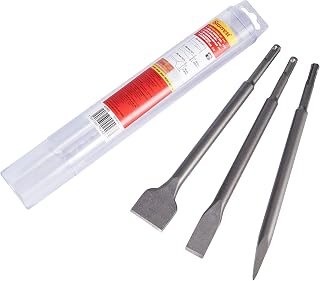





Choosing a Milwaukee chisel is less about finding the longest or most expensive accessory and more about matching the chisel geometry, shank system, working length and cutting profile to the material and task. A pointed chisel that is excellent for initiating cracks in concrete is not automatically the best choice for removing tiles, stripping plaster or creating a narrow channel.
For buyers comparing Milwaukee chisels and points, the first decision should be compatibility. The accessory must match the tool's chuck or toolholder system. Milwaukee produces chiselling accessories for SDS-Plus, SDS-Max and larger hex systems, so the name of the chisel alone is not enough to establish compatibility. Check the power tool manufacturer's specification and the accessory specification before ordering.
The most common buying mistake is concentrating on blade shape while overlooking the shank. A correctly shaped chisel is of little use if its mounting system does not correspond with the hammer.
Chisel geometry determines how impact energy is transferred into the material. Pointed chisels concentrate force into a small contact area, while flat and wide chisels spread the impact over a broader surface. This distinction affects how quickly a material breaks, how controlled the removal is and how much material can be removed in each pass.
A pointed Milwaukee chisel and a flat Milwaukee chisel can both be used for demolition, but they perform different jobs. The pointed profile concentrates impact and is particularly useful when starting a break or penetrating dense material. A flat profile presents a wider working edge and is more appropriate when the objective involves cutting, splitting, scaling or controlled removal across a broader contact area.
For a professional demolition kit, owning both profiles can be more useful than trying to make one accessory perform every task. A point can initiate or accelerate a break, while a flat chisel can then be used for cutting, splitting or clearing the remaining material.
Milwaukee's range includes conventional chisels as well as SLEDGE self-sharpening designs. The distinction matters most to users who perform frequent chiselling and want to reduce interruptions caused by a working tip becoming less effective.
Milwaukee describes its SLEDGE chisels as having self-sharpening tip geometry and designs intended to maintain useful cutting performance for longer. The range includes pointed and flat profiles as well as wider specialist accessories. This does not mean that a SLEDGE chisel is automatically the right purchase for every occasional DIY job. The extra features are most relevant when accessory wear, productivity and repeated demolition work are important purchasing considerations.
For occasional work, a standard Milwaukee chisel can still be the more rational choice if its geometry and dimensions match the task. Buying technology that will rarely be used is not necessarily better value.
Length is an important specification, but longer does not automatically mean better. Milwaukee SDS-Max pointed chisels are available in several lengths, including shorter and substantially longer options. The correct length depends on access, working position, required reach and the demolition hammer being used.
A shorter chisel can be easier to control in confined working areas. It may also be preferable when additional reach is unnecessary. For straightforward breaking close to the operator, excessive length can simply add bulk without providing a useful advantage.
A medium-length accessory can offer a useful compromise between reach and control. This is often the most versatile category for general demolition where the operator needs some working length without moving to an especially long accessory.
Longer chisels can provide additional reach for particular demolition situations. They can be useful where the operator needs to reach further into material or access a working point without positioning the machine as close to the work. However, the increased length should be considered alongside the hammer's specifications and the operator's ability to maintain safe control.
Before selecting a 600 mm or similarly long accessory simply because it appears more versatile, consider whether the extra length will genuinely improve access. For many jobs, a shorter accessory is easier to handle.
Blade width becomes especially important when comparing flat and wide chisels. A narrow cutting profile concentrates the working area, whereas a wider profile can remove more surface material per pass when the application is suitable.
A wider chisel should not be treated as a universal productivity upgrade. If the material is extremely hard and the accessory is being used outside its intended application, a broader profile may not produce the desired result. Match width to the material and the task rather than selecting the largest blade available.
Impact accessories operate under demanding conditions. A chisel repeatedly receives hammer blows while its working end is simultaneously exposed to abrasion, heat and contact with hard aggregate or masonry. Consequently, durability depends on more than simply how thick the accessory looks.
Do not judge durability solely by appearance. A heavy-looking chisel can still be poorly matched to the application, while a correctly engineered accessory can deliver better results without simply being the largest or heaviest option.
Milwaukee is a well-established power-tool and accessory brand, but even within one manufacturer's range there are substantial differences between accessories. A professional buyer should therefore compare the individual product specification rather than assuming that every Milwaukee chisel offers the same performance.
The same principle applies when comparing Milwaukee with brands such as Bosch, DeWalt or Makita. Brand reputation can be useful when assessing the consistency of a product range, but the actual shank, dimensions, application, profile and tool compatibility remain the decisive factors.
Professional users should assess a chisel according to total productivity rather than purchase price alone. An accessory that costs less initially can become less attractive if it wears quickly, requires frequent attention or is poorly suited to the material being removed.
For high-frequency demolition, consistency is particularly important. Having a small selection of task-specific chisels can be more productive than repeatedly forcing a general-purpose point or flat chisel into applications for which it was not designed.
Occasional users should resist the temptation to buy a professional demolition accessory simply because it appears more robust. The correct accessory for a DIY project is the one that matches the hammer and the work, not necessarily the most advanced model in the range.
Before buying, identify exactly what needs to be removed. Removing a few tiles, breaking a concrete step, opening a masonry section and stripping plaster are different tasks. Each can benefit from a different chisel geometry.
A longer chisel is not necessarily more effective. Length should solve a genuine access or reach requirement.
SDS-Plus, SDS-Max and hex accessories are not interchangeable simply because they look similar. Always check the toolholder specification.
A point is excellent for concentrated impact, but it is not a substitute for a wide tile-removal or floor-scraping accessory when surface stripping is the real objective.
The accessory and hammer should be treated as a system. Check the manufacturer's recommendations for the machine, accessory and material before beginning demanding work.
A more advanced chisel can be worthwhile for frequent professional use, but occasional users may gain more from buying the correct conventional profile for the specific job.
A chisel subjected to repeated impact should be inspected regularly. Damage, excessive wear, deformation or an unsuitable working profile can affect both performance and safe operation.
When comparing two or more Milwaukee chisels, use the same criteria for each product. This prevents a common shopping mistake where a buyer compares price on one model, length on another and a feature such as self-sharpening technology on a third without considering whether the products perform the same role.
Milwaukee's SDS-Max pointed chisels are intended for breaking and demolition applications involving materials such as concrete and breeze block. The range includes different lengths, allowing buyers to choose according to access and working requirements.
The important distinction is that a pointed chisel is primarily a penetration and fracture-starting accessory. If the objective changes from breaking dense material to stripping a broad surface, a flat, wide or specialist chisel may become more appropriate.
For buyers comparing several pointed chisels, the most useful specifications are the SDS-Max shank compatibility, overall length, intended application and whether the particular model is a conventional or self-sharpening design.
The SLEDGE range is particularly relevant to buyers who place a premium on accessory life and productivity. Milwaukee states that its SLEDGE chisels use self-sharpening geometry and are designed to remain sharper for longer than standard chisels.
That feature should be considered in context. The value of a self-sharpening chisel increases as usage becomes more frequent. A contractor using a demolition hammer throughout the working week may place considerably more importance on maintaining the working profile than someone completing a single home-improvement project.
When comparing SLEDGE with standard alternatives, consider the expected number of working hours, material hardness, frequency of accessory changes and the cost of downtime. Do not evaluate the purchase solely on the initial shelf price.
Concrete can vary significantly in hardness and aggregate content. A pointed chisel is commonly useful for initiating concentrated breaks, while a flat chisel can help with cutting and removing sections once the material has been weakened.
Masonry can require a different approach from dense reinforced concrete. Excessive impact or an unsuitable accessory can remove more surrounding material than intended. Where controlled removal matters, use an accessory suited to the required level of precision rather than relying exclusively on maximum impact.
Broad surface stripping is generally better suited to a wide or specialist stripping accessory than to a pointed demolition point. The objective is to separate material from the substrate efficiently without concentrating all of the impact into a small area.
Tile removal can benefit from a chisel designed specifically for the task. The profile can help get underneath the tile or coating and direct the impact along the separation point. A general-purpose point may work for breaking material, but it is not necessarily the most efficient choice for controlled surface removal.
Good accessory maintenance is straightforward but should not be ignored. Before and after demanding work, inspect the chisel for visible damage and excessive wear. Keep the accessory clean enough that the shank and working end can be assessed properly.
Do not attempt to modify a chisel to make it fit a different toolholder. The correct accessory should be selected for the machine rather than altered to create compatibility.
Accessory choice is only one part of performance. The hammer setting, working angle, material and operator technique all influence the result. Using excessive force against the machine is not a substitute for selecting the correct chisel.
For demanding demolition, allow the hammer mechanism to perform its intended function rather than applying unnecessary body weight. Maintain a stable working position and use the accessory according to the manufacturer's instructions. Where the material is not responding efficiently, reconsider the chisel profile and application rather than simply increasing physical force.
Not every specification deserves equal attention. For most buyers, the following order provides a sensible starting point:
Specifications such as packaging quantity can also matter for professional buyers. A single chisel may be sensible for occasional work, whereas users consuming accessories regularly may prefer multi-pack purchasing when the product and retailer make that option practical.
A set can be useful when the project involves several different types of removal. Instead of forcing one profile to perform every operation, the operator can switch between pointed, flat and wider accessories as the job changes.
However, a set is not automatically better value than individual chisels. If a buyer only needs one specific profile, purchasing unused accessories simply increases the initial outlay and leaves tools sitting in the toolbox.
Milwaukee is not the only established manufacturer producing demolition and rotary-hammer accessories. Buyers may also encounter Bosch, DeWalt and Makita products covering similar applications.
The best comparison is specification against specification rather than logo against logo. Check whether the competing accessory uses the same shank system, has an equivalent profile and is intended for the same material and machine class. A cheaper accessory is not necessarily better value if its geometry is unsuitable for the task, while a premium accessory is not necessarily the best choice for occasional use.
For a fair comparison, record the following for each product:
Customer reviews can be useful, but they should not replace technical compatibility checks. A positive review from a user working on soft masonry does not necessarily establish that the same chisel is the best choice for heavy concrete demolition.
Look for reviews that clearly identify the tool used, material worked on, frequency of use and type of application. Give more weight to detailed feedback that explains what happened during use than to short comments that simply praise or criticise a product.
Also distinguish between a product problem and an application problem. A review complaining that an accessory did not fit may indicate a compatibility error rather than a manufacturing defect, while reports of unusual deformation or premature wear are more relevant when they are consistent across multiple independent reviews.
Chiselling is a high-impact operation and can produce flying fragments, dust and substantial noise. Use the protective equipment specified for the job and follow the power-tool manufacturer's safety instructions.
Particular care is needed when working on walls, floors and structural materials because chiselling can expose hidden cables, pipes or other services. The appropriate precautions depend on the specific site and material.
A Milwaukee pointed chisel is primarily used for concentrated impact during breaking and demolition work. The pointed geometry directs force into a small area, making it useful for initiating fractures and penetrating hard materials such as concrete and masonry.
No. SDS-Plus and SDS-Max are different toolholder systems. Always select an accessory that corresponds to the chuck or toolholder specified for the hammer.
Neither is universally better. SDS-Max accessories are intended for compatible heavier-duty machines and applications, while SDS-Plus accessories are designed around the SDS-Plus system. The correct choice depends on the hammer, material and job.
A pointed chisel concentrates impact into a small contact area and is particularly useful for penetration and breaking. A flat chisel has a wider working edge and is better suited to cutting, splitting and broader controlled removal.
They can be particularly attractive for frequent users because the SLEDGE range incorporates self-sharpening geometry and is designed to maintain the working profile for longer. For occasional users, a conventional chisel may provide a more appropriate balance between features and intended usage.
Choose the shortest length that provides adequate access for the job while remaining compatible with the hammer and intended application. Longer chisels can provide additional reach, but they are not automatically more productive.
It can be used for some breaking work associated with tile removal, but a dedicated tile-removal or wider stripping profile may be more appropriate when the objective is efficient surface removal and controlled separation.
For broad plaster stripping, a wider accessory is generally more aligned with the task than a narrow pointed profile. The exact choice should still be based on the material, hammer and manufacturer's stated application.
There is no universal replacement interval. Wear depends on the material, impact intensity, frequency of use and accessory design. Inspect the working end and shank regularly and replace an accessory when it becomes damaged or unsuitable for safe and effective use.
Do not assume that every chisel should be sharpened in the same way. Some Milwaukee designs incorporate specific self-sharpening geometry, while conventional accessories have their own maintenance requirements. Follow the manufacturer's instructions for the exact accessory rather than applying a generic sharpening method.
Not necessarily. Frequent professional users can benefit more from durability and productivity-oriented features, whereas occasional DIY users may be better served by a correctly matched conventional chisel.
Start with compatibility, then compare application, length and construction. If two products are otherwise similar, consider whether a longer accessory genuinely provides useful reach or whether a self-sharpening design offers meaningful benefits for your expected frequency of use.
Check the exact model, shank system, overall dimensions, intended application, pack quantity and current manufacturer specification. Then compare the same details with the specification of your hammer. Prices and availability can change, so verify those details with the retailer immediately before purchase.
Before choosing a Milwaukee chisel or point, run through this checklist rather than buying solely from a product photograph or headline description.
The best Milwaukee chisel is the one that matches the hammer, material and removal method rather than simply the one with the highest specification or longest working length. For concentrated concrete and masonry breaking, a pointed chisel is a logical starting point; for cutting and controlled breaking, a flat profile can be more suitable; and for broad surface stripping, specialist wide or tile-removal designs deserve consideration.
Buyers carrying out frequent demolition should also consider Milwaukee's SLEDGE self-sharpening range where its longer-life and productivity features align with their workload. Occasional users can often make a more economical decision by prioritising compatibility, correct geometry and the dimensions required for the specific project.
Before purchasing, compare the exact accessory specification with your hammer, check the current manufacturer's information and review several trusted retailers for today's price and availability. That approach is more reliable than choosing a chisel on brand recognition or appearance alone.