

♥ Wishlist
Compare 29 verified DeWalt Oscillating Blades products in United Kingdom. Reviews, ratings, pros, cons and buying advice updated for October 2026.


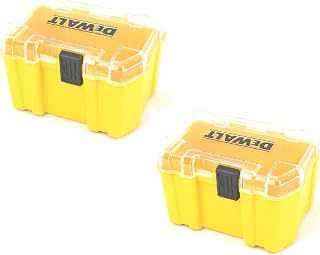


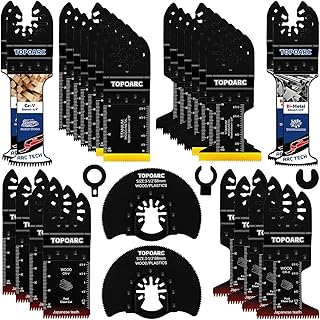


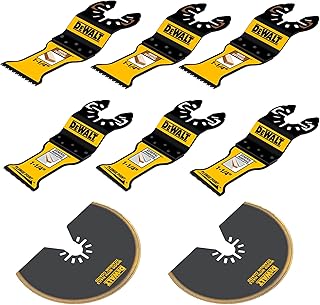


Choosing an oscillating blade is less about finding a single universally “best” blade and more about matching the blade construction, tooth pattern, cutting geometry and mounting system to the material and job. A blade that performs well on timber may be a poor choice for hardened fixings, while a carbide-tipped blade designed for abrasive materials can be unnecessarily expensive for routine wood cutting.
For buyers comparing DeWALT oscillating blades in the UK, the most useful approach is therefore to look beyond pack size and headline descriptions. Consider what you actually intend to cut, how frequently you will use the blade, whether clean cuts or maximum durability matter more, and whether the blade is compatible with your particular oscillating multi-tool.
DEWALT is one of several established power-tool brands producing oscillating accessories, with Bosch, Makita, Milwaukee and FEIN also offering blades and related accessories. Comparing the technical specification of each blade is more meaningful than assuming that the brand name alone determines suitability.
An oscillating blade is an accessory fitted to an oscillating multi-tool for controlled cutting, scraping or other specialist work. Unlike a conventional circular saw blade, the accessory moves through a small oscillating arc rather than continuously rotating. This makes the tool particularly useful where access is restricted and a conventional saw cannot be positioned effectively.
The compact cutting action makes oscillating tools useful for jobs such as cutting timber, trimming door frames, shortening plastic components, removing damaged fixings, cutting through certain metal sections, making plunge cuts and working close to finished surfaces.
The blade is only one part of the system. Performance is influenced by the tool's oscillation characteristics, motor power, speed setting, material hardness, cutting pressure, blade geometry and the condition of the accessory. A premium blade cannot compensate completely for an unsuitable speed, excessive pressure or the wrong cutting material.
The quickest way to narrow down your options is to answer five questions before buying:
These questions are more useful than choosing purely by price or the number of blades included in a pack. A larger assortment can be good value when it contains the blade types you actually need, but an inexpensive multi-pack is not necessarily economical if several accessories are unsuitable for your applications.
Material compatibility should be the first consideration. Oscillating blades are available in different grades and constructions because wood, plastic, plasterboard, mild steel, stainless steel, grout and other materials place very different demands on the cutting edge.
For general timber work, a high-carbon or high-speed cutting design may be appropriate depending on the material and application. For timber containing nails or other embedded metal, a bi-metal construction can be more appropriate than a blade intended exclusively for clean wood.
For particularly abrasive applications, carbide-equipped blades can offer a different balance between cutting performance and durability. They are generally more specialised than ordinary wood-cutting blades, so buying a carbide accessory simply because it sounds more durable is not always the best-value decision.
The material from which the blade is made has a major influence on its intended use.
Do not treat these categories as interchangeable. The correct choice depends on both the blade specification and the material manufacturer recommends it for.
Tooth design is another important factor that is often overlooked when comparing oscillating blades. Two blades of similar dimensions can behave differently because of their tooth geometry, spacing and cutting profile.
Fine-tooth blades generally favour controlled cutting and can be useful where a smoother cut is more important than maximum material removal. They can be appropriate for certain timber, plastics and thinner materials, subject to the manufacturer's intended application.
The advantage is not simply that more teeth automatically produce a better finish. Fine teeth can also reduce the size of each individual cutting action, but the result depends on blade geometry, tool speed and the material itself.
Coarser teeth are designed to remove material more aggressively. They can be useful when cutting timber quickly or when the finish of the cut is less important than productivity.
There is a trade-off. A coarse blade can leave a rougher surface, particularly if the tool is moved too quickly or excessive pressure is applied. For visible finish carpentry, a more controlled blade may be preferable.
Japanese-style oscillating blades are associated with rapid timber cutting and can be useful for plunge cuts and other woodworking applications. Their distinctive tooth geometry is intended to remove wood efficiently, but suitability still depends on the timber, thickness and required finish.
Blade dimensions matter just as much as the material from which the accessory is made.
A wider blade can provide a broader cutting path and may be useful where stability and controlled cutting are important. A narrower blade can be easier to manoeuvre in restricted spaces and may be better suited to detailed work.
Blade length also affects practical cutting depth. A long blade can provide additional reach, but more exposed blade does not automatically mean better control. For confined work, an excessively long blade can make accurate positioning more difficult.
Always distinguish between the overall blade length and the effective cutting depth. Manufacturers may describe dimensions differently, so compare the technical specification rather than relying solely on photographs.
Although many oscillating blades can perform several tasks, certain shapes are particularly suited to specific cutting techniques.
A plunge cut starts within the surface rather than from an exposed edge. This is one of the most useful capabilities of an oscillating multi-tool because the blade can be positioned directly over the intended opening.
Plunge cutting is commonly used for tasks such as creating openings in timber, trimming sections of flooring, cutting into plasterboard and modifying fitted components. A blade with a suitable cutting profile and sufficient depth is important.
When making a plunge cut, begin carefully and allow the cutting edge to establish the opening rather than forcing the blade into the material. Excessive pressure can increase heat, vibration and premature tooth wear.
Flush cutting is useful when a protruding component needs to be trimmed level with an adjacent surface. Examples can include cutting dowels, trimming timber, shortening pipes in suitable materials or removing protruding fixings where the blade specification permits it.
A blade with a suitable flat profile can make this type of work easier because the body of the blade can be positioned closer to the surface.
Bi-metal blades are particularly relevant to buyers who do not work exclusively with clean timber. Renovation and repair work can involve hidden nails, screws, brackets and other metal components that are not always visible before cutting begins.
A blade intended only for timber can be damaged quickly when it encounters metal. A bi-metal accessory may offer a more appropriate solution for mixed-material cutting, but it should still be used within the manufacturer's stated application limits.
If most of your work involves reclaimed timber, renovation projects or dismantling, it can make sense to keep both dedicated wood blades and bi-metal blades available. The dedicated wood blade can be used when the material is known to be clean, while the more versatile blade can be reserved for uncertain or mixed-material situations.
Carbide blades are designed around the hardness and wear resistance of carbide cutting material. They occupy a more specialist position than standard wood-cutting accessories.
The main reason to consider carbide is not simply that it is “stronger”. The relevant question is whether the material being cut creates the type of wear for which carbide is intended.
For demanding applications, carbide can be useful where conventional cutting edges would lose effectiveness quickly. However, a specialist carbide blade can be unnecessary for ordinary timber trimming. Buyers should therefore match the accessory to the workload rather than automatically selecting the most advanced construction.
Compatibility is one of the most important checks to make before purchasing any oscillating blade. Oscillating multi-tools use different mounting arrangements, and not every blade is automatically compatible with every tool.
DEWALT offers oscillating accessories for its tool ecosystem, while brands such as Bosch, Makita, Milwaukee and FEIN also produce accessories designed around their respective systems and compatibility requirements.
Some accessories are marketed as having broad or universal compatibility, but the wording should not replace checking the manufacturer's compatibility information. The important details include the tool model, mounting interface and any limitations specified for that particular accessory.
Before ordering, check:
This simple check can prevent one of the most common buying mistakes: purchasing a high-quality blade that cannot be fitted directly to the tool.
Blade thickness affects how the accessory behaves under load. A thicker blade can provide greater rigidity, while a thinner blade may be useful where a narrower kerf or more delicate cutting action is desirable.
There is no universally superior thickness. The best choice depends on whether the job prioritises rigidity, precision, speed, access or material removal.
For heavy cutting, a rigid accessory can feel more controlled. For delicate trimming, a thinner cutting profile may provide advantages. However, very aggressive side loading should be avoided regardless of blade thickness because oscillating blades are designed primarily for cutting in their intended direction, not for use as pry bars.
Timber is one of the most common materials cut with oscillating multi-tools, but “wood” covers a wide range of applications.
For expensive finished surfaces, consider where the blade will enter the material and whether the cutting action could cause splintering. In many situations, protecting the visible surface and practising on scrap material can improve the final result more than simply changing blade brands.
Metal cutting requires considerably more care when selecting an oscillating accessory. Mild steel, thin sheet metal, stainless steel and other alloys do not behave identically.
A blade designed for wood should not be assumed to be suitable for metal simply because it physically fits the tool. Metal-cutting blades have tooth geometries and materials intended for the greater resistance encountered during metal cutting.
Where metal is involved, consult the blade manufacturer's stated material applications and avoid exceeding the recommended cutting conditions. If the material is particularly thick, hardened or structurally significant, an oscillating multi-tool may not be the appropriate tool for the task at all.
Plastic can appear easy to cut, but the wrong blade or excessive speed can generate heat and cause melting rather than clean cutting.
A suitable fine-tooth accessory may provide better control for certain plastics, while the correct speed setting can be equally important. Always consider the specific plastic because PVC, acrylic, ABS and other polymers have different characteristics.
When working on visible plastic components, make a test cut on an offcut whenever possible. This helps establish whether the selected blade produces melting, chipping, tearing or an acceptable finish.
Oscillating tools are frequently used for controlled renovation work because their compact blade movement allows access around existing installations. However, building materials can be abrasive, and the correct blade type is important.
Before cutting into a wall, floor or ceiling, identify concealed services and structural elements. An oscillating tool's compact size should never be mistaken for an indication that the area is safe to cut without inspection.
For specialist building materials, use only an accessory specifically described by the manufacturer as suitable for that material. Dust generated by cutting can also be a consideration, so appropriate respiratory and eye protection should be used where required by the material and working environment.
DIY users often benefit from a small, carefully selected collection rather than a large assortment containing many overlapping accessories.
A practical starting selection might include:
This approach gives broader practical coverage while avoiding the common mistake of buying a large pack based solely on the number printed on the packaging.
Multi-packs can offer useful variety, but the number of accessories is only one part of the value proposition.
When comparing a 5-piece, 10-piece or larger assortment, examine the actual blade types included. Two packs containing the same number of blades can have completely different practical value if one contains several specialist accessories you rarely use.
Look for meaningful variety in:
For occasional DIY use, an assortment may be more convenient. For professional or frequent use, buying individual blades according to actual workload can make more sense because the selection can be tailored to the jobs performed most often.
Tooth count is not a complete measure of performance. Tooth geometry, blade material, thickness and intended application all affect how an accessory behaves.
Physical appearance can be misleading. Always confirm the mounting interface and stated compatibility before buying.
A premium construction is valuable when its characteristics solve a real problem. It is not automatically the best option for routine cutting.
Even a brief encounter with a nail or screw can damage an unsuitable wood-cutting blade. If the material may contain metal, choose an accessory intended for that mixed application.
More pressure does not necessarily mean faster cutting. Excessive force can reduce control, increase heat and accelerate blade wear.
A worn blade can become less efficient and may encourage the operator to push harder. Replacing an exhausted accessory can restore cutting performance and improve control.
There is no single replacement interval because blade life depends heavily on the material, cutting technique, tool settings and frequency of use.
Instead of relying on a fixed number of cuts, watch for changes in performance.
Damage should not be ignored simply because the blade still cuts. A compromised accessory can make controlled work more difficult and may be unsuitable for further use.
Good technique can make a significant difference to accessory life.
Blade life is also influenced by cutting technique. A professional who uses the correct accessory with controlled pressure may achieve considerably better practical value than someone who buys a more expensive blade but uses it incorrectly.
Modern oscillating multi-tools commonly provide variable speed control, but the highest available setting is not automatically the best choice.
Different materials respond differently to cutting speed. Softer materials may tolerate faster cutting, while some plastics can become problematic if excessive heat is generated. Metal cutting can also require a more controlled approach.
Use the blade manufacturer's guidance alongside the tool manufacturer's recommendations. If there is uncertainty, start conservatively and assess the cutting behaviour rather than immediately selecting maximum speed.
A good blade can still produce poor results if the cutting technique is unsuitable.
Before cutting, secure the workpiece wherever practical. Mark the intended line clearly and position the tool so that the blade has sufficient access. Start the cut with controlled movement and avoid forcing the accessory through resistance.
For plunge cuts, establish the opening gradually. For flush cuts, keep the blade aligned with the surface rather than using excessive leverage. For long cuts, periodically reassess the blade position and cutting behaviour rather than concentrating solely on speed.
Brand comparison is useful, but it should focus on the specific accessory rather than assuming every blade from one manufacturer is better than every blade from another.
The most useful comparison is therefore not “Which brand is best?” but “Which blade has the right construction and interface for my tool and application?”
A professional tradesperson and an occasional DIY user can reasonably choose different blades for the same task.
For professional users, durability, repeatable performance, compatibility and the cost per useful cut can be more important than the purchase price of an individual blade. A blade that lasts longer and maintains performance under frequent use can justify a higher initial cost if the application genuinely benefits from it.
For occasional users, versatility and availability may matter more. A small assortment covering common materials can be more practical than maintaining a large inventory of specialist accessories.
The cheapest blade is not necessarily the least expensive option in practical terms. Consider how much useful cutting the accessory provides before performance falls below an acceptable level.
A useful comparison includes:
For buyers who use oscillating tools frequently, cost per useful working session can be a more meaningful measure than cost per blade.
When comparing several options, create a short specification checklist rather than relying on marketing language.
Oscillating multi-tools are compact and comparatively easy to control, but their accessories are still cutting tools capable of causing serious injury.
Use the safety equipment appropriate to the job, including eye protection where required. Consider hearing and respiratory protection according to the working environment and material being cut.
Secure loose workpieces and keep hands away from the cutting path. Disconnect or otherwise safely isolate the tool before changing accessories, following the procedure specified by the tool manufacturer.
Particular caution is required before cutting into walls, floors, ceilings, cabinetry or other installed structures. Hidden electrical cables, plumbing, structural components and other services may be present. The convenience of an oscillating tool should never replace proper inspection of the work area.
Blades should be stored so that cutting edges are protected from accidental contact and damage. Keeping accessories organised by application can also reduce the temptation to use an unsuitable blade simply because it is immediately available.
Separate wood, metal, mixed-material and specialist accessories where practical. Before fitting a blade, inspect it for damaged teeth, distortion, excessive wear or other visible problems.
Do not attempt to restore a damaged accessory by grinding or modifying it unless the manufacturer specifically provides an appropriate maintenance procedure. Cutting accessories are engineered components, and altering their geometry can change how they behave in use.
Not necessarily. Compatibility depends on the particular blade mounting system and oscillating tool. Check the accessory specification against the exact tool model before purchasing.
There is no single best blade for every type of wood. General-purpose timber cutting, fast rough cutting, fine trimming and plunge cutting can all favour different blade designs. Select the accessory according to the timber, cut type and desired finish.
A blade specifically intended for mixed wood-and-metal cutting is generally more appropriate than a blade designed solely for clean timber. Bi-metal construction is commonly associated with this type of application, but the manufacturer's stated material compatibility should always take priority.
Carbide blades are better suited to some demanding or abrasive applications, but they are not automatically the best choice for every task. For ordinary timber work, a suitable conventional blade may provide all the performance required.
Yes, provided the specific blade is designed for the type of metal and the application is within the manufacturer's recommendations. A wood-cutting blade should not be used for metal simply because it fits the tool.
Yes, with an appropriate accessory and suitable technique. Plastic can generate heat during cutting, so blade selection and tool speed are important. Testing the setup on scrap material can help avoid melting or damaging a finished component.
Blade life varies substantially. The material being cut, blade construction, tool speed, cutting pressure and frequency of use all affect service life. Rather than relying on a fixed number of cuts, replace the blade when wear or declining performance makes continued use unsuitable.
A worn blade is one possibility, but the wrong accessory, unsuitable speed, excessive pressure, poor positioning or a particularly hard material can also reduce cutting performance. Check the blade specification and tool settings before assuming that the accessory itself is defective.
Heat can result from friction, prolonged cutting, excessive pressure, an unsuitable blade or an inappropriate speed setting. Allowing the accessory to cut at its intended rate rather than forcing it can help manage heat.
A larger set can be useful if it contains a useful spread of blade types. However, the number of pieces should not be the primary buying criterion. Compare the actual materials, tooth patterns, dimensions and compatibility of the accessories included.
It can be particularly useful for renovation, demolition and other work where timber may contain nails or other metal. If you only cut clean timber, a dedicated wood blade may be more appropriate for many tasks.
Use a blade designed for the material and required finish, secure the workpiece, select an appropriate speed and avoid forcing the tool. For visible timber or other finished materials, practising on an offcut can help establish the best technique before making the final cut.
For buyers comparing the best DeWALT oscillating blades, the following framework provides a straightforward way to narrow the choice.
The best DeWALT oscillating blade is ultimately the one that matches the tool, material and cutting task rather than the one with the most impressive-sounding specification.
Before making a purchase, verify compatibility first. Then identify the materials you cut most frequently, decide whether you value speed, precision or durability, and select the blade construction accordingly. If renovation work is common, mixed-material capability can be particularly useful. If most work involves clean timber, dedicated wood-cutting accessories can provide a more focused solution.
When comparing products, read the complete specification rather than relying on the product name alone. Check the exact pack contents, blade dimensions, construction, intended materials and mounting compatibility. It is also sensible to compare current retailer information and verified customer feedback because pack contents, product ranges and availability can change.
For buyers building an oscillating-tool accessory collection from scratch, a small selection of genuinely useful blade types is usually more practical than purchasing the largest assortment available. For experienced users, keeping several specialised accessories available can reduce interruptions and ensure that the blade matches the job.
Most importantly, treat the blade as a consumable cutting component rather than something that must be forced to finish every job. Using the correct accessory, maintaining sensible cutting pressure and replacing worn or damaged blades can improve control, cutting quality and overall value.
When shopping for DeWALT oscillating blades in the UK, start with compatibility and intended material, then compare construction, tooth design, dimensions and application. Wood, metal, plastic and mixed-material work each present different requirements, while plunge cutting and flush cutting can also influence the most suitable blade profile.
There is no single accessory that is ideal for every job. The strongest buying decision is one based on the actual work you perform, the tool you already own and the performance characteristics that matter most to you. Compare specifications carefully, avoid buying solely on pack size or brand recognition, and check current retailer information before making a final purchase.