

♥ Wishlist
Compare 37 verified Dewalt Hole Saw Sets products in United Kingdom. Reviews, ratings, pros, cons and buying advice updated for October 2026.

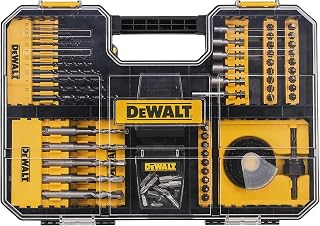
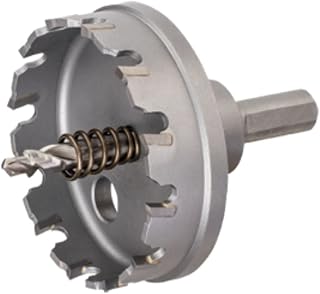


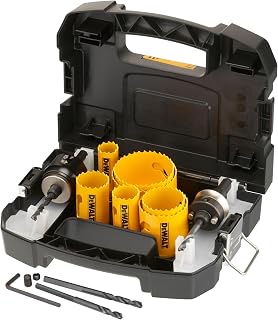


Choosing a DeWalt hole saw set is not simply a matter of counting how many hole saws are included in the case. The useful value of a set depends on the cutting sizes supplied, the type of material the hole saws are designed to cut, the arbor system, the quality of the pilot drill, the tooth construction and how easily the components can be changed when moving between hole sizes.
For occasional DIY work, a compact set covering common diameters may be more practical than a large professional kit containing sizes that are rarely used. For electricians, plumbers, installers, joiners and other tradespeople, however, the priorities can be different. Faster cutting, reduced vibration, dependable arbors, replaceable pilot drills and a wider selection of diameters can justify choosing a more comprehensive system.
DeWalt hole saw products should therefore be compared by specification and intended application rather than by the number printed on the outside of the case. A smaller set with the right sizes can be considerably more useful than a larger collection containing gaps in the diameters you actually need.
Hole saw systems are generally built around three main components: the hole saw itself, an arbor and a pilot drill. The hole saw performs the cutting, the arbor connects the assembly to the drill and the pilot drill helps position and stabilise the cutter at the start of the cut.
Different DeWalt sets can therefore offer noticeably different working characteristics even when their overall appearance is similar. Before comparing one kit with another, check the individual components rather than relying on the set name alone.
The diameter range is one of the most important specifications because it determines which cable openings, pipe penetrations, fittings and other circular holes you can produce without purchasing additional cutters.
Think about the sizes you use most frequently rather than automatically selecting the kit with the greatest number of pieces. If your work commonly involves electrical boxes, cable entry points or plumbing installations, identify the required diameters first and then find a set that covers them.
A useful set should provide practical coverage without creating unnecessary duplication. It is also worth checking whether the stated piece count includes arbors, pilot drills, adaptors or storage components. A set advertised as containing a certain number of pieces does not necessarily contain that many different hole saw diameters.
The tooth design has a direct influence on how a hole saw behaves in different materials. Hole saws intended for wood are not automatically suitable for metal, while cutters designed for harder materials may have different cutting characteristics from general-purpose models.
When comparing DeWalt hole saw sets, establish which materials the manufacturer specifies for the particular cutter. Depending on the product, applications can include timber, plywood, plastics, plasterboard, composite materials or selected metals. Do not assume that a hole saw is suitable for every material simply because it fits the same arbor.
For metalworking, the material specification becomes especially important. Thin sheet metal and thicker steel can place different demands on a hole saw, and the appropriate cutting method can also depend on the drill, cutting speed, lubrication and workpiece thickness.
The arbor is often overlooked when shoppers compare hole saw sets, yet it is central to the system. It transfers rotation from the drill to the cutter and holds the pilot drill in position.
Check which arbor sizes are included, which hole saw diameters they support and whether the system allows rapid changes between cutters. If a kit contains more than one arbor, understand why. Smaller and larger cutters can have different mounting requirements, and a professional set may be designed around a combination of arbor arrangements rather than one universal component.
Compatibility is particularly important if you already own DeWalt hole saws or cutters from another compatible system. Before assuming that components can be mixed, check the manufacturer's specifications for thread, mounting and diameter compatibility.
The pilot drill creates the initial hole that guides the hole saw. A sharp, appropriately specified pilot drill can make starting a cut easier and help keep the cutter aligned.
Look at whether replacement pilot drills are available and whether the design permits straightforward replacement. This can matter more over the long term than the appearance of the storage case because pilot drills are consumable cutting components and can eventually become blunt or damaged.
Bi-metal hole saws are widely used where a balance of cutting performance, durability and versatility is required. Their construction combines different metals to provide a cutting edge suited to demanding applications while retaining a more resilient body.
For buyers comparing hole saw sets, bi-metal construction can be particularly relevant when the kit will be used across several materials or in professional installation work. However, construction alone should not be treated as proof that a particular cutter is suitable for every application.
Always check the specified materials, recommended operating conditions and limitations for the exact hole saw. Two cutters with similar-looking teeth can have substantially different intended uses.
For carpentry, joinery, renovation and general DIY, the priorities are often different from those of metalworking. Clean entry, manageable cutting resistance and the ability to produce commonly required diameters can be more important than extreme metal-cutting capability.
Plasterboard can also require a different approach from solid timber. The material is comparatively easy to penetrate, but excessive pressure or poor technique can cause unwanted damage around the opening. A suitable hole saw should be selected according to the manufacturer's stated application rather than simply because its diameter is correct.
Plastic presents another consideration. Depending on the type and thickness of plastic, heat generated during cutting can influence the quality of the opening. Appropriate speed, controlled pressure and a cutter intended for the material can help reduce the likelihood of melting or rough edges.
Metal cutting places greater demands on the hole saw, arbor, drill and operator. Before buying a set for metalwork, examine the manufacturer's material recommendations carefully.
Consider the type of metal you expect to cut, the thickness of the material, the frequency of use and whether cutting fluid or another form of lubrication is recommended. The correct cutting speed is also important because excessive speed can generate heat and accelerate tooth wear.
For repeated professional work, the ability to purchase replacement cutters individually can be more valuable than simply choosing the largest initial set. A commonly used diameter may wear substantially faster than sizes that are only used occasionally, so a replaceable component strategy can reduce unnecessary replacement of otherwise serviceable equipment.
When comparing DeWalt hole saw sets, record the following specifications before making a decision:
A high-quality hole saw set cannot compensate for an unsuitable drill. Before buying, consider the drill you intend to use and whether its chuck, power output and operating modes are appropriate for the cutting work.
Check the arbor's connection with your drill chuck or tool interface. If you use a cordless drill, consider the battery platform and whether the drill has sufficient capacity for the type and diameter of holes you expect to cut. Larger hole saws generally place more load on the drill than smaller cutters, particularly in dense materials.
A drill with adjustable speed can be advantageous because different materials and hole saw sizes may call for different operating conditions. Follow the manufacturer's instructions rather than assuming that maximum drill speed will always produce the fastest or cleanest result.
One of the most common buying mistakes is choosing a set because it contains more pieces. The actual usefulness of the kit depends on whether those pieces correspond to the holes you need to make.
Before buying, make a short list of the diameters required for your typical projects. For electrical work, consider the openings needed for cable routes, fittings and boxes. For plumbing, consider the external dimensions and clearance requirements associated with the pipework and fittings. For woodworking, think about the hardware, cable management components or ventilation fittings that need to pass through the finished opening.
Also distinguish between the diameter of the hole saw and the size of the object intended to pass through the hole. The required opening is not always identical to the nominal size of the component, so verify the installation specification before cutting.
A large kit can appear to offer better value, but unused diameters do not improve the result of a job. A carefully selected smaller set may be the better choice if it contains every size you routinely need.
Never assume that every cutter in a multi-purpose-looking set is suitable for every material. Confirm the manufacturer's intended applications for the specific hole saw.
Some buyers concentrate on cutter diameter and overlook the arbor. If the required arbor is missing or incompatible with the drill, the hole saw cannot be used as intended.
Tooth configuration is a design choice rather than a simple quality ranking. Different tooth arrangements can be optimised for different materials and cutting conditions.
Professional users should consider what happens when a pilot drill or frequently used hole saw eventually wears. A system supported by individually replaceable components can be more practical than replacing a complete set whenever one part reaches the end of its useful life.
Hole saw performance is influenced by cutting speed, material, cutter diameter, pressure and heat. Faster is not necessarily better. Follow the manufacturer's guidance for the particular cutter and material.
DeWalt is not the only established name in hole saw accessories. Depending on the application, buyers may also encounter ranges from Bosch, Milwaukee, Makita, Lenox and Starrett. The correct comparison should focus on the specifications of the individual system rather than assuming one brand is universally superior.
Compare tooth construction, intended materials, diameter selection, arbor design, replacement components and the quality of the storage system. If two sets cost different amounts, determine whether the difference reflects additional useful diameters, more capable cutters, additional arbors or simply a larger accessory count.
For professional users, compatibility with tools and accessories already owned can also influence the decision. A technically excellent set may be less convenient if it requires a completely different arbor arrangement from the system used elsewhere in the workshop.
When comparing DeWalt and Bosch, avoid judging the kits purely by brand reputation. Look at the exact product specifications, because both manufacturers offer different hole saw products intended for different applications.
The most useful comparison is normally cutter construction, material compatibility, included diameters, arbor arrangement and replacement-part availability. For occasional DIY work, the most economical set with the correct sizes may be sufficient. For frequent professional use, durability, changeover convenience and component availability may carry greater weight.
Milwaukee is another major tool-accessory brand that may appear in comparisons with DeWalt. When evaluating the two, compare equivalent products rather than one manufacturer's compact DIY-oriented kit against another manufacturer's professional system.
Check the individual hole saw specifications, arbor system, tooth design, intended materials and available diameters. If you already use one brand's accessory ecosystem, consider whether its arbor and replacement components fit your existing workflow.
Makita hole saw accessories can also be considered when building a broader workshop or trade-tool setup. As with any brand comparison, the exact model matters more than the logo on the case.
Compare the sizes that are actually included, the materials they are intended to cut and whether the system provides replacement pilot drills and other components. The best choice is the set that matches the work rather than necessarily the brand with the largest accessory range.
A professional user may prioritise speed of operation, durability, component replacement and a broad selection of frequently used sizes. A DIY user may place greater emphasis on versatility, storage, affordability and ease of use.
Neither approach is inherently better. Buying a professional-grade system for a single renovation project can result in paying for capabilities that are unlikely to be used again. Conversely, a basic set can become frustrating for a tradesperson who needs to cut holes regularly throughout the working week.
Use frequency is therefore an important buying criterion. Estimate how often the hole saws will be used, which materials will be cut and whether downtime caused by changing or replacing components would be significant.
Diameter is not the only dimension to consider. The depth of the hole saw and the thickness of the material can determine whether a particular cutter is appropriate.
For thin sheet material, the primary concern may be tooth suitability and controlled cutting. For thicker timber or composite materials, cutting depth and the ability to clear material from inside the cup become more important.
Always check the manufacturer's specified cutting depth and do not assume that a hole saw can safely cut through any thickness simply because the diameter is correct.
Accurate hole cutting begins before the drill is switched on. Mark the centre carefully and make sure the workpiece is adequately supported. The pilot drill should engage the intended centre point rather than being allowed to wander across the surface.
Keep the drill aligned with the workpiece and apply controlled pressure. Excessive force can increase heat and place unnecessary stress on the cutter and drill. Allow the teeth to perform the cutting rather than attempting to force the hole saw through the material.
For larger holes, stability becomes increasingly important. Secure the workpiece where possible and consider the consequences of the hole saw breaking through the opposite side. Supporting the material and controlling the final stage of the cut can help reduce damage.
Heat is an important consideration when using hole saws, particularly in metal. Excessive heat can accelerate wear and may affect the cutting edge or workpiece.
Use the cutting speed recommended for the specific application and avoid applying excessive pressure. Where the manufacturer specifies cutting fluid or lubrication, use it appropriately. Clear accumulated material when necessary and allow the cutter to operate within its intended conditions.
For timber and other materials, efficient chip clearance can also influence cutting behaviour. If material accumulates inside the cup, stop and clear it safely rather than continuing to force the cutter.
Good maintenance can extend the useful life of a hole saw set and make it easier to identify worn components before the next job.
A hole saw should be inspected rather than replaced according to an arbitrary calendar. Wear depends heavily on the materials cut, cutting technique, frequency of use and operating conditions.
Signs that a cutter may need replacing include visibly damaged teeth, substantially reduced cutting performance, excessive heat generation under otherwise appropriate conditions, irregular cutting or deterioration that prevents the cutter from producing the required result safely and accurately.
A pilot drill can often need attention before the main hole saw does. If the pilot drill is blunt, damaged or no longer provides reliable guidance, replacing the appropriate component may restore the usefulness of the assembly without replacing every part of the set.
A hole saw set is only convenient if the components can be identified and retrieved easily. A well-organised case can prevent cutters from becoming mixed together and makes it easier to see whether a particular diameter is available before starting a job.
When assessing storage, consider whether each cutter has a defined position, whether the arbors and pilot drills are kept securely and whether the case is practical for your working environment. Tradespeople who transport tools regularly may value compact storage, while a workshop user may care more about visibility and quick access.
Electricians often need accurately sized openings for cables, conduit, boxes, fittings and cable-management components. In this situation, the most useful set is usually the one that covers the diameters required by the installations being undertaken.
Consider the materials encountered on typical jobs, including timber, plasterboard, plastics and selected sheet materials. Check the manufacturer's application guidance for each cutter and make sure the arbor system is compatible with the drill used for installation work.
Because some diameters may be used much more frequently than others, replacement availability is also worth considering when selecting a long-term system.
Plumbing installations can require holes through timber, panels, plasterboard and other building materials. The correct diameter should be based on the actual installation requirement rather than simply matching the nominal size of a pipe.
Where a pipe, sleeve or fitting needs clearance, measure the required opening and follow the installation specification. Cutting a hole that is too small can damage the material during installation, while an unnecessarily large opening can reduce available support or leave an untidy finish.
Woodworkers and joiners should consider the type of timber and board materials they routinely use. Softwood, hardwood, plywood, MDF and coated boards can behave differently during cutting, so the manufacturer's stated application should take priority.
Clean edges may be particularly important for visible work. Good marking, secure workholding, appropriate cutting speed and a sharp cutter all contribute to the final result. When appearance matters, test the technique on scrap material before cutting the finished component.
For general household work, versatility is often more valuable than a highly specialised cutter range. Start by identifying the projects you are likely to undertake and choose a diameter selection that covers those tasks.
A compact set can be a sensible option for occasional users, particularly when storage space is limited. If you regularly work on renovations or maintenance projects, a broader range may offer better long-term flexibility.
The cheapest hole saw set is not automatically the best-value option, and the most expensive kit is not automatically the best choice either. Value should be considered in relation to the amount of useful equipment supplied and how well it matches your work.
Compare the number of genuinely useful hole saw sizes rather than the headline piece count. Then consider cutter construction, arbor quality, pilot drill replacement, storage and the availability of individual replacement components.
For frequent users, the cost of replacing complete kits can become more important than the initial purchase price. A system that allows individual worn cutters or pilot drills to be replaced may offer a more practical ownership proposition.
Product listings can contain a mixture of technical information, application descriptions and accessory counts. Separate these into three categories when comparing products: what is included, what the components are designed to cut and how the components connect to your existing tools.
Do not treat a marketing description as a substitute for the manufacturer's technical specification. If a particular capability is important to your project, verify it against the exact product information before buying.
This is particularly important where a listing uses broad phrases such as multi-purpose, professional or heavy-duty. Such descriptions do not by themselves establish suitability for a specific material or cutting task.
Hole saws are cutting accessories and should be used according to the manufacturer's instructions and the requirements of the drill being used. Wear appropriate eye protection and other protective equipment required for the material and working environment.
Secure the workpiece and keep hands away from the rotating cutter. Be aware of hidden electrical cables, pipes, structural components and other obstructions before drilling into walls, floors, ceilings or enclosed structures.
Allow the cutter to stop completely before removing it from the workpiece or clearing material. Never attempt to handle a rotating or recently cutting assembly as though it were a stationary hand tool.
A good all-round set should cover the hole sizes you are most likely to need, use cutters appropriate for your common materials and provide an arbor arrangement that works with your drill. It should also be practical to store and maintain.
There is no universal specification that makes one set the best choice for every buyer. A tradesperson cutting holes every day may reasonably prioritise durability and replacement components, whereas an occasional DIY user may prefer a smaller and simpler selection.
The strongest buying decision is therefore one based on application. Identify the work first, then compare the hole saw systems that satisfy those requirements.
If two DeWalt sets appear similar, use a specification-led comparison rather than choosing the one with the more prominent marketing claims.
The best DeWalt hole saw set depends on the materials, hole diameters and frequency of use. A professional user may need a wider selection and replaceable components, while an occasional DIY user may be better served by a compact set covering the most useful sizes.
Some DeWalt hole saws are designed for metal applications, but suitability depends on the exact cutter. Check the manufacturer's stated material compatibility rather than assuming every DeWalt hole saw is suitable for metal.
Hole saws designed for wood can be useful for applications such as cable openings, fittings and other circular penetrations. Check the exact product specification because not every hole saw is intended for the same materials.
The contents vary by set. Check the individual product specification to determine which arbor or arbors are supplied and whether the required pilot drill is included.
Depending on the arbor system, one arbor may support multiple hole saw sizes. Compatibility should always be confirmed against the manufacturer's specifications for the particular arbor and cutter.
No. A larger set is only more useful if the additional diameters and components are relevant to your work. A smaller set containing the sizes you actually need can be the more sensible choice.
There is no single useful lifespan because wear varies according to material, cutting frequency, speed, pressure, lubrication and technique. Inspect the teeth and cutting performance rather than relying on a fixed number of holes.
A complete set can make sense when you need several different diameters. Individual cutters may be more economical when only one or two specific sizes are required or when replacing heavily used components from an existing system.
Choose the diameter according to the required finished opening. Measure the component that needs to pass through the hole and account for any clearance or installation requirements before selecting the cutter.
Hole saws can be used with suitable cordless drills where the drill and arbor are appropriate for the cutter. Larger diameters can place substantial load on a drill, so follow the tool and accessory manufacturer's operating guidance.
Heat can result from excessive speed, excessive pressure, unsuitable cutting conditions, friction, poor chip clearance or cutting a material that is not appropriate for the particular hole saw. Check the manufacturer's recommended operating conditions and allow the cutter to work at an appropriate speed.
A slow cut can be caused by a worn cutter, unsuitable material, incorrect operating speed, excessive pressure, poor chip clearance or an unsuitable drill. Inspect the cutter and review the manufacturer's guidance before continuing.
Use lubrication or cutting fluid when the manufacturer recommends it for the particular cutter and material. The correct product and application method depend on the cutting system and workpiece.
Mark the centre accurately, secure the workpiece, keep the drill aligned and use controlled pressure. A sharp pilot drill and correctly maintained hole saw also help maintain predictable cutting behaviour.
The most reliable way to choose a DeWalt hole saw set is to work backwards from the job. Establish the materials you need to cut, list the hole diameters required, confirm the cutting depth, check the arbor and drill compatibility, and then compare the construction and replacement options.
Do not let the number of pieces become the deciding factor. A well-matched set with the right cutters can be more useful than a larger kit containing sizes or components that will rarely leave the case.
For occasional DIY projects, prioritise useful sizes, straightforward compatibility and sensible storage. For regular trade work, place greater emphasis on cutter durability, arbor performance, replacement components and the efficiency of changing between sizes.
Before purchasing, check the latest specifications for the exact DeWalt set under consideration and compare them with equivalent products from established manufacturers such as Bosch, Milwaukee, Makita, Lenox and Starrett. Product contents and specifications can vary between individual kits, so the exact model information should always take precedence over a general brand assumption.
The strongest hole saw purchase is rarely the one with the longest list of accessories. It is the one that provides the right cutting diameters, appropriate material compatibility and a practical arbor system for the work you actually perform.
For a long-term purchase, think beyond the first project. Consider which components are likely to wear first, whether replacements can be obtained individually and whether the set will remain useful as your projects change. That approach makes it easier to compare DeWalt hole saw sets on meaningful criteria rather than superficial piece counts.
As with any cutting accessory, always verify the current manufacturer specification for the exact product before purchase and use. Product contents, compatibility and recommended applications can differ between individual models and may change over time.