

♥ Wishlist
Compare 34 verified Dewalt Hole Saw products in United Kingdom. Reviews, ratings, pros, cons and buying advice updated for October 2026.


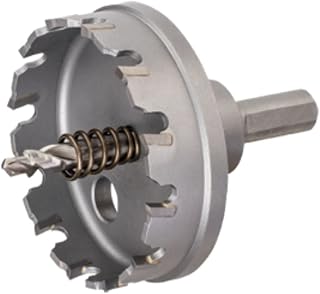


Choosing a DEWALT hole saw is not simply a matter of selecting the diameter that matches the hole you need to cut. The material being drilled, thickness of the workpiece, frequency of use, required finish, available drill, arbor compatibility and expected cutting life all affect which hole saw is the sensible choice.
DEWALT's current UK hole saw range includes conventional HSS bi-metal models, EXTREME bi-metal hole saws and EXTREME multi-material carbide hole saws. That distinction matters because the cutting technology is intended for different working conditions. A bi-metal saw can be a strong all-round choice for common wood, metal and plastic work, while a carbide multi-material model is aimed at applications where aggressive cutting across tougher or mixed materials is more important.
The most important buying decision is the material. A hole saw selected primarily for timber does not automatically become the best option for sheet steel, stainless steel, laminate, plasterboard or nail-embedded construction timber.
Bi-metal and carbide hole saws should not be treated as interchangeable technologies. Their differences affect cutting behaviour, suitable applications and the type of user who is likely to benefit from each.
A bi-metal hole saw combines a steel body with a high-speed steel cutting section. DEWALT's HSS bi-metal models are specified for materials including steel, aluminium, brass, copper, zinc, tin, wood, plasterboard and plastics. Their published design features include hardened teeth, chip-ejection characteristics and a double-tooth design intended to improve concentricity and cutting precision.
For general-purpose workshop, maintenance and installation work, this versatility can make a bi-metal hole saw a practical starting point. It is particularly attractive when the user does not want to maintain a completely separate hole-saw system for every material.
DEWALT's EXTREME bi-metal range adds design features intended to improve cutting performance and plug removal. Current UK listings describe patented tooth forms designed to optimise chip removal, a large continuous slot intended to make plug ejection easier, and an HSS cutting edge for wood, metal and plastic. Certain models are also described as having a deeper design for cutting thicker material in one pass.
Some EXTREME bi-metal listings also state a longer-life claim compared with an earlier generation of DEWALT bi-metal hole saws. That is a manufacturer claim rather than an independent test result, so it should be interpreted as comparative product information rather than a guarantee of how many holes an individual saw will cut in a particular material.
Carbide changes the intended use case. DEWALT's EXTREME multi-material carbide models use large carbide cutting elements and an aggressive tooth design, with the manufacturer positioning them for fast rough-in applications and nail-embedded wood.
This type of saw can make sense when the job involves demanding construction materials or mixed substrates and productivity matters. However, the most expensive cutting technology is not automatically the best choice for every hole. For occasional clean holes in ordinary timber or sheet material, a suitable bi-metal saw may be the more proportionate purchase.
Hole-saw diameter should be chosen from the required finished opening, not from the size of the fitting's outer packaging or the approximate diameter of an existing hole.
Before purchasing, measure the component that needs to pass through the opening and allow for the manufacturer's recommended clearance. This is especially important for pipework, cable glands, ventilation components, plumbing fittings and electrical accessories, where a few millimetres can affect whether the installation is practical.
DEWALT's UK range spans a broad selection of diameters. Current examples include 21 mm, 22 mm, 37 mm, 44 mm, 46 mm, 95 mm, 114 mm, 140 mm, 177 mm and 210 mm bi-metal models, alongside numerous other sizes and carbide options. The exact range can change, so check the specification for the individual model before purchasing.
Diameter tells you how wide the hole will be; cutting depth tells you whether the saw can actually pass through the material.
This distinction becomes important with timber, laminated boards, multiple layers of material and thicker construction products. A hole saw may have the correct diameter but still be inconvenient if its effective cutting depth is insufficient for the job.
DEWALT's EXTREME bi-metal specifications for several models list a 47 mm cutting depth, while the manufacturer also describes certain deeper saw designs as being capable of cutting up to 44 mm of material in one pass. Individual models differ, so the specification of the exact diameter should always be checked rather than assuming every saw in a range has identical dimensions.
One-pass cutting can save time and reduce the need to work from both sides of a board. It can also be useful when the rear face of the material is difficult to access or when alignment between two separately drilled openings would be problematic.
However, deeper cutting is not a substitute for good technique. Thick material increases the amount of material being removed, which can increase resistance, heat and the amount of waste produced inside the saw.
A hole saw is only one part of a complete cutting system. The arbor, pilot drill and drill itself all contribute to the result.
The arbor holds the hole saw and provides the connection to the drill. The pilot drill helps establish the centre of the opening and keeps the saw positioned during the initial cut. If the arbor, thread or pilot arrangement is unsuitable, even a high-quality hole saw can perform poorly.
Do not assume that every DEWALT hole saw includes an arbor or pilot drill. Current DEWALT listings show individual hole saws being sold separately, and at least some EXTREME models explicitly specify that a pilot drill is not included.
This check is particularly important when buying a single replacement hole saw rather than a complete kit.
The cutting teeth are the working part of the hole saw, so tooth shape is more significant than simply counting the number of teeth around the circumference.
Tooth geometry influences how aggressively the saw enters the material, how efficiently chips leave the cutting area, how much heat is generated and how easily the saw can maintain a controlled cut.
DEWALT's conventional HSS bi-metal models use a hardened tooth design and double-tooth arrangement, while the EXTREME bi-metal range uses patented tooth forms intended to optimise chip removal. These are useful specifications to consider when comparing two apparently similar saws.
A very aggressive cutting profile can be beneficial when speed is the priority, but the best tooth arrangement depends on the application. For delicate materials or situations where edge quality matters, controllability may be more valuable than maximum aggression.
For rough construction openings, on the other hand, speed and resistance to demanding material may carry greater weight than achieving a highly finished edge.
Anyone who uses hole saws regularly knows that cutting the hole is only half the job. Removing the circular plug can be surprisingly frustrating, particularly when the material is thick or the plug becomes tightly lodged inside the saw.
DEWALT's EXTREME bi-metal hole saws use a large continuous slot intended to provide leverage for easier plug ejection. Current product specifications also identify plug ejection as a feature on several models.
This feature deserves more attention in commercial comparisons because a saw that cuts well but makes every plug difficult to remove can slow down repetitive work.
A large hole saw places considerably different demands on a drill than a small hole saw. As diameter increases, the cutting circumference and amount of material removed increase, and maintaining a controlled cut becomes more important.
Before using a large hole saw, consider the drill's chuck capacity, power, speed control, side-handle provision and overall suitability for the cutting task. The hole saw should be used with the tool and operating conditions specified by the manufacturer.
Hole saws should not simply be operated at the highest available drill speed. Appropriate cutting speed depends on the saw diameter and material, and excessive speed can increase heat and accelerate wear.
Controlled pressure is equally important. Forcing the saw aggressively can overload the drill, produce excessive heat, reduce tooth life and make the cut harder to control.
High-speed steel is commonly associated with cutting performance and wear resistance in demanding drilling applications. In a bi-metal hole saw, the cutting portion is combined with a different steel structure to balance cutting performance and overall durability.
Bi-metal construction is attractive for users who want one hole-saw family capable of handling a broad range of ordinary workshop and installation materials. DEWALT's HSS bi-metal models are explicitly listed for multiple materials including metals, wood, plasterboard and plastics.
Carbide is particularly relevant when the cutting conditions become more demanding. DEWALT's EXTREME multi-material carbide products are positioned around fast rough-in work and nail-embedded wood, illustrating that their purpose is not merely to provide a premium alternative to every bi-metal saw.
For occasional DIY work, prioritise versatility, the exact sizes required and straightforward compatibility over buying the most advanced cutting technology available.
A conventional HSS bi-metal model can be a sensible option when the work includes ordinary timber, plastics and lighter metal applications, provided the individual saw is specified for the material being cut.
Tradespeople carrying out repeated penetrations may place greater value on cutting speed, tooth durability, plug removal and a broad selection of compatible diameters.
Here, an EXTREME bi-metal system can become more compelling, particularly when the job involves a mixture of wood, metal and plastic and when deeper cutting or easier plug removal can save time.
Where rough-in work involves challenging or mixed construction materials, including nail-embedded wood, an EXTREME multi-material carbide hole saw deserves consideration. The carbide design is specifically marketed for this type of demanding application.
For large holes, do not choose purely on price. Pay attention to cutting depth, tool compatibility, arbor requirements, plug ejection and the material specification.
DEWALT's range includes large bi-metal hole saws such as 140 mm, 177 mm and 210 mm examples, demonstrating that large-diameter cutting is supported across the range. The 210 mm model, for example, is listed with a 47 mm cutting depth and a plug-ejection feature.
When two models appear similar, compare them using the following criteria rather than relying on the product name alone.
A complete hole-saw set can appear to offer better value because it provides several diameters in one purchase. However, the number of pieces is not the same thing as usefulness.
If you repeatedly use only two or three diameters, a smaller collection of individual saws may be more practical. Conversely, installers who regularly encounter different pipe, cable and fitting sizes may benefit from having a wider selection immediately available.
The correct hole diameter should be based on the installation requirement. Measure the component and check its installation instructions rather than guessing.
Multi-material claims should still be read alongside the detailed product specification. A hole saw designed for wood, metal and plastic is not automatically appropriate for every type, thickness or condition of those materials.
A diameter can be correct while the saw is still unsuitable for a thick workpiece. Always compare the material thickness with the manufacturer's cutting-depth specification.
A replacement hole saw may not include the arbor required to use it. Check what is already in your toolbox before ordering.
Individual product listings can differ. Some DEWALT hole saws are supplied as the saw only, and at least some current EXTREME models specify that pilot drills are not included.
Carbide technology can be valuable in demanding applications, but paying for specialist capability that you never use may not improve the outcome of routine work.
If you are making dozens of holes, waste-plug removal becomes a productivity issue. Features intended to simplify ejection can therefore be more useful than a small difference in headline cutting speed.
Statements such as longer life, faster cutting or increased durability are useful specifications, but they should not be interpreted as universal performance guarantees. Actual service life depends on material, thickness, drilling technique, speed, pressure, heat and frequency of use.
Accurate marking reduces the likelihood of an incorrectly positioned hole. Where appearance and fit matter, spend more time setting out the opening before starting the drill.
The material should be adequately supported and secured. Movement during cutting can enlarge the opening, damage the workpiece or create an unstable drilling situation.
The initial engagement is important because the pilot drill and cutting teeth establish the position of the hole. Excessive pressure at this stage can make the saw wander or produce an uneven start.
Forcing a hole saw is rarely a substitute for appropriate cutting conditions. Use controlled pressure and the manufacturer's recommended operating guidance for the particular material and saw.
Heat is an important consideration when cutting metal and other materials where friction can rapidly raise the temperature. Excessive heat can accelerate wear and may affect the workpiece.
Efficient chip evacuation helps the cutting edge continue working rather than repeatedly grinding through accumulated debris. DEWALT specifically highlights chip ejection and tooth geometry in its bi-metal product descriptions.
A good hole saw should be treated as a cutting tool rather than a disposable accessory. Correct storage, cleaning and inspection can help preserve its usefulness.
There is no single number of holes that determines when a hole saw should be replaced. Wear depends heavily on what it has been cutting and how it has been used.
Replacement becomes sensible when cutting performance has deteriorated substantially, teeth are damaged or uneven, the saw no longer produces an acceptable opening, or the arbor and cutting components can no longer be used safely and correctly.
When comparing individual product pages, the following specification fields are particularly useful:
These details can reveal differences that are not obvious from a product title. For example, DEWALT's UK listings provide detailed specification information for individual models rather than treating every hole saw in a range as identical.
The most important specification depends on the job. There is no universal ranking that makes one model the best in every situation.
DEWALT is not the only established manufacturer in the hole-saw market. Depending on the application, buyers may also encounter ranges from Bosch Professional, Milwaukee, Makita, Lenox and Starrett.
The sensible comparison is not simply brand against brand. Compare the actual diameter, cutting material, tooth design, cutting depth, arbor system, stated material compatibility and replacement-component availability.
Both brands offer extensive professional accessory ranges. When comparing equivalent hole saws, focus on the specific cutting technology and application rather than assuming one manufacturer is automatically better.
Milwaukee is another major professional power-tool and accessory brand. A useful comparison should examine individual hole-saw construction, tooth geometry, arbor compatibility and the materials each model is intended to cut.
Makita also offers accessories intended for professional drilling and cutting applications. For users already invested in a particular arbor or accessory ecosystem, compatibility can be more important than a small difference in the advertised feature list.
Lenox has a long-standing presence in cutting tools and hole saws. Buyers comparing Lenox and DEWALT should look at the exact tooth construction, material compatibility, cutting depth and expected application rather than relying on brand reputation alone.
Starrett is well known for precision cutting and measurement tools. Its hole-saw products may appeal to users whose priorities differ from those of a construction-focused buyer. Again, the individual specification and intended application should decide the comparison.
When shopping for a DEWALT hole saw in the UK, compare the exact product code rather than relying solely on a generic description such as “DEWALT bi-metal hole saw”. Different diameters can have different specifications, and ranges can contain multiple generations or technologies.
Check the current manufacturer specification, then compare the exact model with trusted retailers before buying. Pay attention to the supplied components, current price, availability, delivery terms and retailer return conditions because these commercial details can change independently of the cutting-tool specification.
DEWALT assigns individual product codes to its hole saws. Current UK examples include DT83029-QZ for a 29 mm HSS bi-metal model, DT83076-QZ for a 76 mm HSS bi-metal model, DT90310-QZ for a 37 mm EXTREME bi-metal model and DT90342-QZ for a 114 mm EXTREME bi-metal model.
Using the exact product code when comparing specifications reduces the chance of confusing two visually similar products with different diameters or cutting technologies.
Hole saws are rotating cutting accessories and should be treated accordingly. Read and follow the instructions supplied with the hole saw and drill, wear appropriate personal protective equipment and secure the workpiece before cutting.
For professional installations, the hole-saw choice should also take account of the specific requirements of the job, applicable workplace procedures and the manufacturer's instructions.
There is no single best DEWALT hole saw for every application. The best choice depends on diameter, material, thickness, frequency of use and whether you need conventional bi-metal, EXTREME bi-metal or carbide cutting technology.
DEWALT sells HSS bi-metal and EXTREME bi-metal hole saws specified for metal applications. Individual models should still be checked for the particular metal and cutting conditions involved.
Yes. DEWALT lists several bi-metal and EXTREME bi-metal hole saws for wood applications. Certain EXTREME carbide models are also positioned for demanding construction applications such as nail-embedded wood.
The EXTREME range incorporates different design features, including patented tooth forms and a large continuous slot intended to assist plug removal. Some EXTREME models are also described as having deeper cutting capability. The exact specifications vary by diameter.
Not all EXTREME hole saws are carbide. DEWALT has an EXTREME bi-metal range as well as an EXTREME multi-material carbide range. Check the exact product name and specification before buying.
Not necessarily. Individual hole saws can be sold separately, so check the supplied-items section for the exact product. Do not assume that purchasing a hole saw automatically provides every component required to mount it to a drill.
It depends on the product. Current DEWALT listings show that some individual EXTREME hole saws do not include a pilot drill, so the exact product specification should be checked before ordering.
Choose the diameter according to the pipe, fitting and installation requirement rather than the nominal pipe size alone. Nominal pipe dimensions do not always correspond directly to the outside diameter, so measure the component or consult its technical specification before selecting the hole saw.
Yes, provided the particular saw has sufficient cutting depth and is specified for the material. Some DEWALT EXTREME bi-metal models have a deeper design intended to cut thicker material in one pass, with certain models listed at a 47 mm cutting depth.
Larger hole saws generally place greater demands on the drill, arbor and operator because more material is removed and the cutting action produces greater resistance. Tool compatibility and controlled technique therefore become increasingly important as diameter increases.
Buy a set if you regularly need several different diameters. Individual saws can be more economical when you repeatedly use only one or two sizes or when you need a specialist cutting technology for a particular job.
They can be worthwhile when their specialist capabilities match the application, particularly demanding rough-in work and nail-embedded wood. For straightforward jobs, however, the additional capability may not provide enough practical benefit to justify choosing carbide over a suitable bi-metal saw.
There is no universal service-life figure. Durability depends on the material, thickness, diameter, cutting speed, pressure, heat, frequency of use and technique. Manufacturer life claims should be regarded as product-specific comparative information rather than a guaranteed number of holes.
The strongest DEWALT hole-saw choice is the one that matches the actual job rather than the one with the longest feature list. For general-purpose cutting, HSS bi-metal technology provides broad material compatibility across the manufacturer's range. For users carrying out frequent or demanding work, EXTREME bi-metal models add design features focused on cutting efficiency, chip removal, plug ejection and durability. For particularly demanding rough-in applications, DEWALT's EXTREME multi-material carbide range provides a different cutting approach.
Before committing to a purchase, compare the exact diameter, material specification, cutting depth, arbor arrangement and supplied components. A carefully matched 30 mm or 44 mm hole saw can be a better purchase than a larger premium model if that is the size and application your work actually requires. Likewise, paying more for carbide only makes sense when the additional capability solves a real problem.
For the most reliable comparison, identify the job first, shortlist the appropriate DEWALT models, check the manufacturer's current specification for each exact product code, then compare current retailer prices, availability and verified customer feedback. This approach is more useful than choosing solely on brand name, headline claims or the number of pieces included in a kit.