

♥ Wishlist
Compare 46 verified Makita Hole Saw Sets products in United Kingdom. Reviews, ratings, pros, cons and buying advice updated for October 2026.


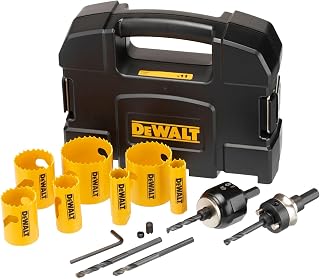


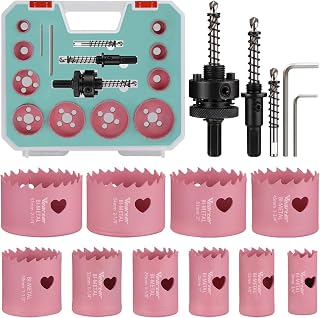


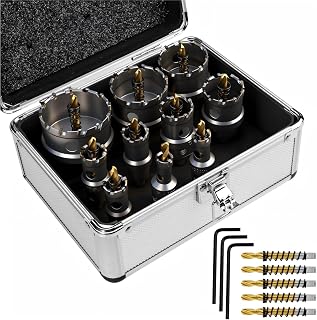


Choosing a Makita hole saw set is less about buying the kit with the largest number of pieces and more about matching the cutting system to the holes, materials and drilling equipment you actually use. A compact bi-metal set can be a better choice for an electrician who repeatedly makes service holes in sheet metal, whereas a plumber may benefit more from a set whose diameter range corresponds closely with common pipe and fitting requirements.
Before comparing individual sets, establish three things: the diameter of the holes you need, the materials you expect to cut and the type of drill or driver that will power the hole saw. These factors determine whether a particular Makita set is genuinely suitable rather than simply appearing attractive because it contains more accessories.
Hole saw sizes are normally specified by the outside diameter of the finished cut. The most useful set is therefore the one containing the sizes you regularly encounter. An electrician working around cable entries, conduit and electrical boxes may favour a different range from a plumber working around pipework and fittings.
For example, the Makita D-47123 electricians kit is listed with 16mm, 20mm, 25mm, 32mm, 40mm and 51mm hole saws, together with two arbors. The Makita D-47117 plumbers kit uses a different diameter selection: 19mm, 22mm, 29mm, 38mm, 44mm and 57mm. That difference illustrates an important buying principle: a specialist set can be more useful than a larger general-purpose assortment if its sizes correspond to your work.
Do not assume that two sets with the same number of pieces offer equivalent value. Count the actual cutting diameters separately from arbors, pilot drills and storage accessories. A set advertised as eight pieces may contain six hole saws plus two arbors, for example.
Material compatibility should be checked before purchase rather than inferred from the Makita name alone. Hole saws designed for multi-material work can cover several common applications, but specialised materials may require a different tooth design or cutting technology.
Makita's UK-listed bi-metal electricians and plumbers kits are described as suitable for materials including steel, aluminium, copper, brass, wood and plastic. That broad compatibility is useful for mixed trade work, but it should not be interpreted as meaning every hole saw is equally suitable for every material or thickness.
The cutting material is one of the most important specifications when comparing hole saw sets. Three categories commonly encountered in professional and serious DIY ranges are bi-metal, tungsten carbide tipped and diamond-type hole saws. They are not interchangeable solutions.
Bi-metal hole saws are a versatile option for many general-purpose applications. Makita's bi-metal range uses a vari-pitch tooth configuration, and UK retailers list the electricians and plumbers kits for multi-material cutting.
A vari-pitch tooth arrangement can help the saw deal with interrupted cutting and different material characteristics, but cutting performance still depends on correct speed, pressure, material thickness and the condition of the teeth.
For an electrician, plumber, maintenance worker or general workshop user who needs several different diameters for common materials, a Makita bi-metal kit can therefore make practical sense. The key is to select the diameter range and application-specific kit rather than assuming that every bi-metal set has the same contents.
TCT hole saws occupy a different part of the market. Tungsten carbide tipped teeth are used on hole saws intended for materials where a conventional bi-metal design may not be the most appropriate solution. Makita also has TCT hole saw sets listed in the UK market, including sets intended for materials such as brick, plasterboard, plastics, melamine, hardwood, chipboard and MDF.
Because TCT and bi-metal hole saws have different cutting characteristics, choosing between them should begin with the substrate rather than the number of pieces in the case. If the job involves masonry or abrasive board materials, investigate the specific manufacturer's application guidance before selecting a general-purpose metal-cutting kit.
Diamond hole saws are another specialist category. They are associated with applications where an abrasive cutting edge is required, rather than the conventional toothed construction found on a standard bi-metal saw.
Makita has also offered diamond hole saw kits, so buyers should check the exact model and stated application rather than treating the term “Makita hole saw set” as a single product type.
The arbor is the connection between the drill and the hole saw. It commonly incorporates the pilot drill and provides the mounting system that allows the cutting cup to rotate concentrically.
This is an area where inexperienced buyers can overlook compatibility. A set may contain excellent hole saws but still be inconvenient if the arbor does not suit the drill chuck, required hole sizes or the manufacturer's mounting system.
Look at the arbor specification rather than assuming that a hole saw kit will fit every drill. Some Makita kits are supplied with hex-shank arbors, while other systems use different mounting arrangements.
For example, the Makita D-47123 kit is listed by UK retailers as using a hex shank and as fitting a chuck of 10mm or larger. The exact specification should always be checked against the particular kit being considered because Makita produces multiple hole saw systems.
This is especially important when using a quick-change system, a compact drill, an impact-capable tool or a drill with a chuck that has a limited capacity. The arbor specification takes precedence over assumptions based on the brand of the drill.
Several Makita trade-oriented sets include two arbors. This is not simply packaging filler. Multiple arbors can make a kit more convenient when different hole saw diameters or cutting configurations are used regularly.
It can also reduce the amount of disassembly required when moving between common sizes. For tradespeople working through multiple holes in succession, setup time can matter almost as much as the nominal cutting speed.
The difference between trade-specific kits is one of the most useful considerations when comparing Makita hole saw sets.
An electricians' kit is generally built around diameters useful for electrical installation work. The Makita D-47123, for instance, is listed with six hole saws covering 16mm to 51mm, plus two arbors and a storage case.
A larger electricians' assortment can be worthwhile where several conduit, cable-entry or installation diameters are encountered. However, buying a larger set only makes sense if the additional sizes will actually be used.
Plumbers' kits use a different diameter selection. The Makita D-47117 is listed with six hole saws ranging from 19mm to 57mm, plus two arbors and a case.
This type of set may be more logical for pipework and plumbing installation because the included diameters have been selected around that trade's typical requirements. As always, verify the required finished-hole diameter for the fitting or installation rather than selecting a size solely because it appears in a trade-labelled kit.
A common buying mistake is assuming that more pieces automatically mean better value. In reality, a small set can be the more economical choice if it contains the three or four diameters you use repeatedly.
Larger sets become more attractive when your work is varied. A maintenance professional, workshop user or multi-trade contractor may benefit from having a broader range available without repeatedly buying individual hole saws.
When comparing Makita with alternatives from brands such as Bosch, DEWALT, Milwaukee, Evolution, Starrett or other established accessory manufacturers, focus on specifications rather than brand reputation alone.
Tooth geometry influences how a hole saw enters and progresses through a material. Vari-pitch designs are common in professional bi-metal systems, while specialist cutting systems may use substantially different tooth or abrasive arrangements.
Record the exact diameters supplied. Do not compare a kit's piece count without checking what those pieces represent.
Check how many arbors are included, which hole saw sizes they support and whether the shank suits your drill or driver.
The pilot drill helps locate the hole saw and establish the initial cut. Its condition can therefore affect starting accuracy and overall usability. Replacement compatibility is worth checking if the set will be used frequently.
A fitted case is more than a convenience for professional users. It can make it easier to identify missing sizes, protect cutting components during transport and keep arbors and pilot drills together.
Before committing to a particular system, investigate whether individual hole saws, arbors and pilot drills can be obtained separately. A set is more useful over the long term when worn or damaged components do not require replacement of the entire assortment.
Price per piece is a poor standalone measure because the pieces in a hole saw kit do not all have the same function. A better comparison is the cost of the cutting diameters you genuinely need, together with the arbor system and storage accessories supplied.
When checking current UK pricing, compare the same model number across reputable retailers and check whether the listed price includes VAT. Prices, stock levels and retailer promotions can change, so a price seen during one search should not be treated as a permanent market value.
It is also worth comparing a complete kit against buying individual hole saws. If you need only two sizes, a complete professional set may not represent the best use of your budget. Conversely, if you need five or six diameters, buying individual components can quickly become less attractive.
An eight-piece kit is not necessarily more useful than a six-piece kit. Some of the pieces may be arbors or other accessories rather than additional cutting diameters.
Using a general-purpose bi-metal hole saw where a specialist TCT or diamond system is required can result in poor cutting performance and premature wear. Always check the manufacturer's stated applications.
Measure the required opening and account for the specification of the fitting, cable entry, pipe or component being installed. A hole saw should be selected according to the finished opening required, not simply the approximate size of the object passing through it.
Before ordering, check the drill chuck capacity, arbor shank and mounting arrangement. This is particularly important when moving between different hole saw systems.
Makita sells multiple hole saw families and trade-oriented kits. Model numbers matter. Two products may both be described as Makita hole saw sets while having different diameters, cutting materials, arbor systems and intended applications.
Hole saw teeth and pilot drills are consumable cutting components. If the kit is intended for regular trade use, check the replacement ecosystem before purchase.
Correct technique can have a substantial effect on the working life of a hole saw. The exact drilling procedure should follow the manufacturer's instructions, particularly when cutting metals or other materials where speed and lubrication requirements differ.
A hole saw cuts a large circular opening, so an inaccurate starting point becomes much more noticeable than it would with a conventional drill bit. Mark the centre carefully and position the pilot drill accurately before applying sustained cutting pressure.
Do not assume that maximum drill speed produces the fastest result. Hole saws remove a relatively large amount of material, and excessive speed can generate unnecessary heat and accelerate wear. Follow the manufacturer's guidance for the material being cut.
Heavy pressure is not automatically productive. If the saw is struggling, investigate the speed, material, cutting depth, tooth condition and drill capability rather than simply pushing harder.
Material trapped inside the hole saw can interfere with cutting and make the saw harder to control. Some hole saw designs incorporate openings or slots intended to aid debris removal. Take advantage of the design rather than allowing waste material to accumulate unnecessarily.
Hole saws are cutting accessories capable of generating significant torque and heat. Use appropriate eye protection and follow the safety instructions supplied with the drill, hole saw and material being cut.
Secure the workpiece properly rather than relying on hand pressure to prevent movement. Before drilling, consider what is behind the surface, particularly when working on walls, ceilings, panels or installed structures. Hidden electrical cables, pipes and other services can create serious hazards.
When drilling metal, be aware that the workpiece and cutting accessory can become hot. When working with timber or other materials, control dust and debris in accordance with the relevant safety guidance for the material and workplace.
Remove accumulated debris after use and inspect the cutting edge. Cleaning makes it easier to identify damaged or excessively worn teeth before the next job.
A worn pilot drill can make starting less predictable and may affect the stability of the hole saw. Inspect it alongside the main cutting cup rather than treating it as an insignificant accessory.
Do not continue using a hole saw if teeth are visibly damaged in a way that could compromise safe operation or cutting performance. Replacement of the affected component is preferable to trying to compensate with excessive pressure.
Return each diameter and arbor to its designated position after use. A case is most useful when it provides a reliable inventory of the kit, making it immediately apparent if a commonly used size is missing.
There is no single best Makita hole saw set for every user. The most suitable option depends on the work involved.
Makita is not the only established manufacturer worth considering. Bosch, DEWALT, Milwaukee, Starrett, Evolution and other specialist accessory brands produce competing hole saw systems. The strongest comparison is specification-led rather than based solely on the name printed on the case.
This approach is more useful than asking which brand is universally “best”. A professional who already owns a particular arbor system may reasonably prioritise compatibility, while another buyer may place greater importance on a specialist diameter range.
Product listings can contain several identifiers, including a Makita model or manufacturer reference, retailer product code and barcode information. These should not be treated as interchangeable.
When comparing listings, use the manufacturer's model or reference as the primary identification point and then verify the complete contents. Check the number of hole saws, diameters, arbors, pilot drills, case and stated material applications.
This is particularly important because retailers can use shortened product names such as “electricians hole saw kit” or “plumbers hole saw kit”. The description may look similar across different generations or configurations even when the included diameters differ.
Some Makita bi-metal hole saw sets are specifically listed for cutting metals including steel, aluminium, copper and brass. Suitability depends on the particular model and the material being cut, so always check the specification for the exact set.
Several Makita bi-metal sets are listed for wood as well as metals and plastics. However, the best choice depends on the type and thickness of timber and the required finish. Specialist wood-cutting systems can be preferable for particular applications.
Choose the diameter that corresponds to the finished opening required for your application. If you regularly make several different sizes of hole, compare a set containing those specific diameters rather than selecting purely by piece count.
The principal difference is the selection of cutting diameters. Makita's electricians' and plumbers' kits are configured around different trade applications, so the most appropriate choice depends on the holes you routinely need to make.
Many complete Makita kits include arbors, but the exact number varies by model. Some commonly listed eight-piece trade kits contain six hole saws and two arbors. Always check the contents of the exact model before buying.
Compatibility depends on the arbor and shank specification rather than simply the drill brand. A Makita hole saw system can be usable with another manufacturer's drill when the relevant chuck and arbor requirements are satisfied, but the exact specifications should be checked first.
No. A larger set offers more diameter choices, but unused sizes add little practical value. For occasional DIY work, a smaller set containing the required sizes may be the more sensible purchase. For varied professional work, broader coverage can justify the additional components.
There is no single reliable lifespan because wear varies according to material, thickness, drilling technique, speed, pressure, frequency of use and maintenance. Rather than relying on a fixed number of holes, inspect the teeth and cutting behaviour and replace components when they are excessively worn or damaged.
Neither is universally better. Bi-metal systems are versatile for many common applications, while TCT systems are designed for particular materials and cutting requirements. The correct choice should be based on the substrate and the manufacturer's stated application.
A set is usually more convenient when you need several diameters. Individual hole saws can make more sense when you only require one or two sizes or when you are replacing specific worn components. Compare the total cost of the sizes you actually need rather than the headline price alone.
Before choosing a Makita hole saw set, work through this short checklist:
A useful independent buying guide should distinguish between specifications that look impressive on a product listing and features that genuinely affect day-to-day use. For Makita hole saw sets, that means looking beyond the number of pieces and examining diameter coverage, cutting technology, intended materials, arbor compatibility, trade application and replacement options.
Product descriptions, specifications and availability can change, so buyers should verify the current information for the exact model before purchase. Customer reviews can provide useful insight into long-term ownership and practical usability, but they should be considered alongside manufacturer specifications rather than used as a substitute for them.
The best choice is ultimately the set that covers your required hole sizes, matches the materials you need to cut and works correctly with your drilling equipment. A carefully matched six-piece kit can be a better purchase than a larger assortment containing sizes you will rarely use.