

♥ Wishlist
Compare 68 verified Router Accessories for Precise Woodworking & Routing products in United Kingdom. Reviews, ratings, pros, cons and buying advice updated for October 2026.
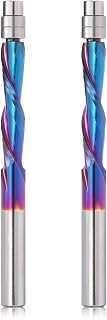


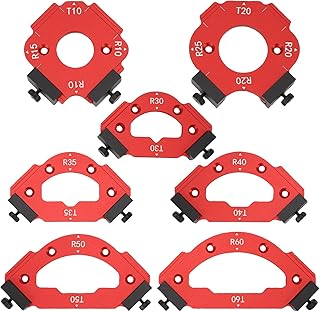


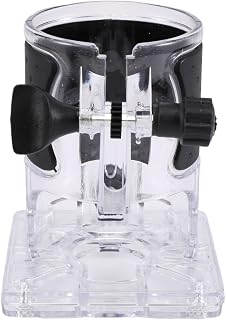


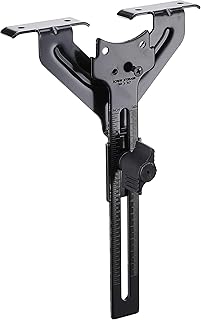


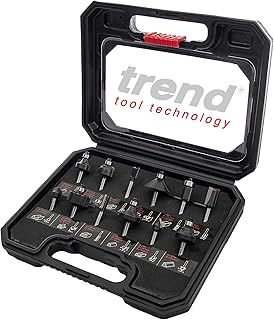





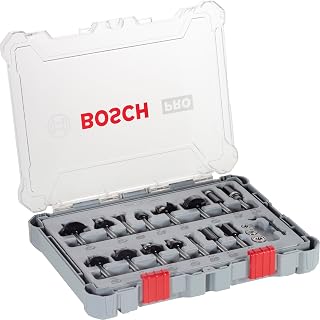


Choosing router accessories is less about buying the largest collection of add-ons and more about matching each accessory to the router, material, operation and level of accuracy required. A useful accessory should either improve control, increase repeatability, make a particular cut possible, improve dust management or reduce the amount of time needed to set up a job.
Before buying, identify the type of routing you actually do. Edge profiling, grooving, mortising, template routing, joinery and work on a router table can require very different accessories. A compact trim router may benefit most from suitable guide accessories and smaller cutters, whereas a full-size plunge router can make better use of longer guides, template systems, dust extraction arrangements and more substantial workholding.
Compatibility should come before brand preference. Check the router manufacturer's specifications for the relevant collet size, spindle arrangement, maximum cutter diameter, compatible guide bushes and approved accessories. An accessory that appears physically similar is not necessarily compatible with a particular router.
The first step is to identify the exact router model rather than simply the manufacturer. Bosch, DeWalt, Makita, Trend, Triton, Festool and other established woodworking brands can use different mounting systems, guide arrangements and accessory standards across their ranges.
A common buying mistake is selecting an accessory because it looks useful rather than because it solves a particular routing problem. A template guide is valuable when repeatable template work is required, but it adds little benefit to someone who mainly rounds over exposed board edges. Likewise, a router table can be extremely useful for controlled edge work and repeated operations but may be unnecessary for occasional hand-held routing.
Think in terms of the operation first and the accessory second. If the objective is a clean, repeatable groove, the priority is controlled guidance and an appropriate cutter. If the objective is to produce identical components, template or jig accessories may provide more value than buying a wider selection of decorative cutters.
Router bits are arguably the most important accessories because the cutter determines the profile, groove, joint or edge being produced. Cutter selection affects the quality of the finished surface, the amount of material removed, the required feed rate and the demands placed on the router.
Common cutter types include straight bits, flush-trim bits, pattern bits, round-over bits, chamfer bits, cove cutters, rabbeting cutters, V-groove bits and specialised jointing cutters. The right choice depends on the intended cut rather than simply the shape of the cutter.
Many woodworking router cutters use tungsten carbide cutting edges because carbide provides the hardness needed for cutting timber and board materials. Some specialist cutters use different constructions or replaceable cutting systems, but the important buying consideration is the quality and suitability of the cutting edge for the material being worked.
For occasional DIY work, a modest selection of reputable cutters can be more useful than a large inexpensive set containing profiles that are rarely used. For frequent woodworking, consistency between cutters, reliable shank dimensions and the ability to obtain replacement or specialist profiles can become more important.
Do not choose a router bit solely because its profile matches the job. The shank must also match the router's collet. UK users will encounter routers and cutters using different imperial and metric dimensions, so the nominal size needs to be checked rather than assumed.
A cutter should be seated correctly in the collet according to the router and cutter manufacturer's instructions. Never attempt to make an incompatible shank fit by force or by using an improvised solution. The collet, nut and cutter should all be appropriate for the router and intended application.
Guide bushes, also called template guides, allow a router to follow a template or jig while maintaining a controlled relationship between the cutter and the template edge. They are particularly useful when producing repeated shapes, apertures, recesses and other cuts where consistency matters.
The important specification is not simply the guide bush diameter. The relationship between the outside diameter of the guide bush and the diameter of the cutter determines the offset between the template and finished cut. This offset must be accounted for when designing or selecting a template.
A poorly centred guide bush can introduce unwanted inaccuracies. If precise template routing is important, centring and secure mounting deserve as much attention as the nominal bush diameter.
An edge guide provides a physical reference against an existing straight edge. It can make grooves, rebates and parallel cuts considerably easier to control, particularly when working away from the edge of a board or when a repeatable distance needs to be maintained.
When comparing edge guides, look beyond the basic presence of a fence. Useful considerations include adjustment range, rigidity, ease of locking, contact surface, visibility around the cutter and the ability to maintain the setting during a long routing operation.
An edge guide is generally most useful when the required cut is defined by a straight reference. A template becomes more appropriate when the route needs to follow a specific shape, such as a curved outline or a repeated aperture.
For straight joinery operations, an accurately positioned guide can be faster to set up than a custom template. For repeated irregular shapes, a template can offer better consistency.
Moving a router from hand-held use to a router table changes how the tool is controlled. Instead of moving the router across the workpiece, the workpiece is guided across a stationary cutter. This can be particularly useful for edge profiles, repeated components and operations where maintaining a consistent relationship with a fence is important.
A router table is not automatically the best choice for every task. Large workpieces can be awkward to manoeuvre, while certain operations are easier to perform with a plunge router directly on the workpiece. The choice should therefore be based on the job, available workspace and required control.
Before buying a table, mounting plate or lift system, verify the exact router compatibility. Important details can include mounting-hole patterns, router body diameter, available adjustment, plate dimensions and whether the intended router is suitable for table mounting.
Router lifts can provide convenient above-table height adjustment on compatible systems, but compatibility and mechanical security are essential. A lift designed around one router configuration should not be assumed to work with another simply because the overall dimensions appear similar.
Dust management is one of the most useful areas in which a router accessory can improve a workshop. Routing can generate a considerable amount of fine wood dust and chips, particularly when cutting MDF, plywood and other engineered boards.
A suitable dust extraction arrangement can help keep the work area clearer and reduce the amount of airborne and settled dust. It can also improve visibility around the cutting area, although extraction should never be treated as a substitute for appropriate respiratory and workshop safety measures.
Dust extraction accessories should be assessed as a complete system. Check the router's extraction outlet, the hose connection, the adapter dimensions and the extraction equipment being used. An adapter that technically fits may still provide a poor connection if it reduces airflow excessively or interferes with the router base.
Brands such as Festool, Makita, Bosch, DeWalt and Trend offer different approaches to dust extraction and accessories, but compatibility should always be checked against the exact tool and extraction system.
The collet is a critical connection between the router spindle and cutter shank. It should not be treated as an interchangeable cosmetic component. A clean, correctly maintained collet is important for secure cutter retention and consistent operation.
Replacement collets should match the router model and manufacturer's specification. Avoid treating an inexpensive substitute as equivalent simply because the external dimensions appear similar.
Cleaning and inspection should follow the router manufacturer's maintenance instructions. Damaged or questionable components should be replaced with appropriate parts rather than improvised alternatives.
A well-designed jig can turn a general-purpose router into a highly repeatable woodworking system. Commercial jigs are available for particular tasks, while many experienced woodworkers make simple jigs from stable sheet material or timber.
The value of a jig comes from repeatability. If several components need the same recess, mortise, aperture or profile, a properly secured jig can reduce measuring errors and make subsequent pieces easier to reproduce.
A jig should be treated as part of the routing setup rather than as an accessory that can be loosely positioned. Small movements can translate into noticeable errors, particularly when making joints or repeated components.
Material choice matters because accessories are exposed to vibration, repeated adjustment and contact with the workpiece. A rigid guide made from unsuitable or poorly supported material can flex when pressure is applied, undermining the accuracy that the accessory is supposed to provide.
Aluminium and steel are common choices for components that require rigidity and dimensional stability. Aluminium can offer a useful balance between stiffness and weight, while steel may be used where additional strength or resistance to wear is required.
For guide components, mounting plates and fences, inspect the quality of the machined surfaces, adjustment mechanism and locking hardware rather than judging quality from material alone.
Engineering plastics and other polymers can be entirely appropriate for router accessories, especially where low weight, smooth contact and resistance to minor impacts are useful. A polymer guide is not automatically inferior to a metal one.
The more relevant questions are whether the component remains rigid under normal use, whether the mounting system is secure and whether the material is suitable for the intended environment.
Simple shop-made jigs can be highly effective, but their material needs to remain sufficiently stable for the intended accuracy. Plywood is often useful for workshop fixtures because of its layered construction, while unsuitable or poorly supported sheet material can flex or change shape.
For rounding, chamfering and decorative edge work, prioritise appropriate profile cutters, stable support and good visibility. A bearing-guided cutter can simplify some edge operations, while an edge guide or fence can be useful where the cut needs to be positioned from a reference edge.
Joinery places greater emphasis on repeatability and dimensional accuracy. Straight cutters, guide systems, templates, edge guides and dedicated jigs can all be valuable depending on the joint being produced.
When buying accessories for joinery, prioritise adjustment accuracy and rigidity over the number of components included in a kit.
Template routing benefits from guide bushes, pattern or flush-trim cutters and accurately made templates. The cutter and guide system must be considered together because the geometry of the guide determines the path followed by the router.
When multiple components need to be identical, accessories that improve repeatability can save more time than a larger selection of cutting profiles. Router tables, fences, templates, stops and purpose-built jigs may be more valuable than buying numerous cutters that perform similar operations.
Accessory kits can appear attractive because they provide multiple components in one purchase, but the number of pieces is not necessarily a measure of value. A kit containing ten rarely used profiles may be less useful than three well-chosen cutters and a reliable guide accessory.
Before buying a set, identify which pieces you will actually use. Also check whether the set contains compatible shank sizes, whether the supplied accessories fit your router and whether the components can be replaced individually when they eventually wear.
The same brand name does not guarantee compatibility. Router accessories can differ between compact, fixed-base, plunge and table-oriented models. Always check the manufacturer's compatibility information for the exact tool.
The cheapest accessory is not necessarily the most economical choice if it introduces excessive adjustment, poor fit or premature wear. Conversely, the most expensive accessory is not automatically the best option for occasional DIY use.
Assess the accessory according to the precision, frequency and demands of the work you actually perform.
A large cutter set can encourage buyers to focus on quantity rather than usefulness. A smaller collection of common, suitable cutters is often easier to maintain and store.
Larger cutters can have different operating requirements from smaller cutters. The router's permitted cutter diameter, speed settings and manufacturer's instructions should always be followed.
Router cutters benefit from being protected from knocks, moisture and contamination. A suitable storage system can also make it easier to inspect cutting edges before use.
Guides, fences, plates and templates should be properly secured before routing. An accessory that shifts during a cut can affect both the workpiece and the safety of the operation.
When comparing two apparently similar accessories, focus on measurable and practical differences rather than marketing language. The following criteria are useful for commercial comparison and workshop planning.
Specifications are most useful when they answer a real compatibility or performance question. For router accessories, the following details can be particularly important:
Do not confuse a specification with a guarantee of performance in every application. The same cutter or guide can behave differently depending on the router, workpiece, feed rate, setup and operator technique.
Material choice affects accessory selection because different materials place different demands on cutters and dust extraction. MDF can produce fine dust and can be abrasive to cutting edges. Plywood may have alternating grain directions and adhesive layers. Hardwood can require careful cutter selection and controlled feed. Softwood can be easier to cut but may still present problems with resin, tear-out or changing grain direction.
Rather than choosing an accessory solely according to the material name, consider the type of cut, cutter geometry, required finish and number of passes. A clean result often depends on using an appropriate cutter and sensible cutting technique rather than simply buying a more expensive accessory.
Tear-out occurs when fibres are removed unpredictably rather than being cleanly cut. It can be particularly noticeable around corners, cross-grain areas and changes in grain direction.
Accessories such as fences, guides and templates can improve control, but they cannot compensate for a damaged cutter or unsuitable routing technique.
Regular maintenance helps preserve accuracy and can make accessories easier to use. Dust and resin can accumulate around adjustment mechanisms, bearings, guide surfaces and mounting components.
Inspect cutters before use. Look for chipped carbide, damaged bearings, corrosion, contamination and other visible defects. Clean cutters according to the manufacturer's recommendations and store them so that cutting edges cannot strike other tools.
Keep guide surfaces clean and inspect locking mechanisms periodically. Dust trapped between a guide and mounting surface can affect positioning, while worn or damaged hardware can make accurate adjustment difficult.
Keep the table surface clean and check that the mounting plate, fence and adjustment mechanisms remain secure. If a router lift or above-table adjustment system is used, follow the manufacturer's maintenance and compatibility instructions.
Safety should be considered before an accessory is purchased, not after it has been installed. The accessory must be appropriate for the router, cutter and intended operation.
Particular care is required when using router tables because the cutter is exposed above the table surface and the workpiece is moved towards it. Follow the safety instructions supplied with the router table, router and any associated accessories.
Established woodworking brands can be useful starting points when comparing compatibility, replacement parts and accessory ecosystems. Brands commonly encountered in the UK market include Bosch, DeWalt, Makita, Trend, Triton and Festool.
Brand familiarity should not replace specification checking. A premium brand accessory may be unnecessary for a simple occasional task, while a specialist accessory from an established manufacturer can make sense where precision, compatibility or repeated workshop use matters.
Bosch has a broad range of power-tool accessories and router equipment. When comparing Bosch accessories, check the exact router family and model because accessory compatibility can vary across tool ranges.
DeWalt offers router-related accessories across its woodworking tool range. Buyers should verify the specific router model and the intended mounting or guide system before purchasing an accessory.
Makita produces routers and associated accessories covering different woodworking applications. Model-specific compatibility is particularly important when comparing bases, guides, extraction components and other fitted accessories.
Trend is well established in the UK woodworking market and is particularly associated with router cutters, guide bushes, templates, jigs and other routing accessories. Its broad accessory ecosystem can be useful when a project requires more specialised routing equipment.
Triton offers woodworking tools and workshop equipment, including router-oriented products. Its accessories should be assessed against the exact tool configuration and intended workshop setup.
Festool is known for integrated woodworking systems covering routers, dust extraction and accessories. Buyers considering its ecosystem should still compare the complete cost and compatibility of the required components rather than assuming that every accessory is necessary.
Customer reviews can provide useful information that is difficult to capture in a specification sheet, but they should be interpreted carefully. The most useful reviews explain how an accessory was used and identify a specific strength or limitation.
Look for repeated comments about fit, rigidity, adjustment, durability, compatibility and ease of installation. Give less weight to reviews that simply state that a product is excellent or poor without explaining why.
Always separate customer opinion from manufacturer specifications. Reviews can reveal practical experiences, but they should not be treated as a substitute for the official compatibility information.
There is no single budget that suits every router user. The appropriate spend depends on how frequently the router is used, how demanding the work is and whether accuracy or convenience is particularly important.
For occasional DIY work, prioritising a small number of versatile accessories can keep costs under control. A homeowner may gain more from a suitable straight cutter, round-over cutter, edge guide and dust-management solution than from purchasing a large professional accessory system.
For frequent woodworking, the calculation changes. Better adjustment systems, more precise guides, reliable cutters and compatible extraction equipment can save setup time and reduce frustration over many projects.
A beginner does not necessarily need a large accessory collection. A sensible starting setup should cover common operations while allowing the user to learn how the router behaves.
Once these basics are understood, additional cutters and specialist jigs can be purchased according to actual project requirements.
Experienced users often benefit more from precision and workflow improvements than from basic accessories. Depending on the workshop, useful upgrades may include a broader cutter selection, dedicated templates, specialist jointing accessories, router-table equipment, improved extraction connections and more precise adjustment systems.
The most useful upgrade is usually the one that removes a recurring limitation. If setup time is the problem, consider a repeatable guide or jig. If dust is the problem, improve extraction. If edge profiles are the main work, invest in appropriate quality cutters. If repeated components are being produced, concentrate on templates, stops and accurate workholding.
Compact routers are convenient for trimming, light edge profiling and smaller projects, but their accessory requirements can differ from those of larger plunge routers. Weight, visibility and base dimensions can become particularly important.
When choosing accessories for a compact router, avoid adding excessive weight or bulky attachments that make the tool difficult to control. Check the manufacturer's guidance on compatible cutter sizes and accessories, particularly where the router has a smaller motor or compact base.
Plunge routers are well suited to operations where the cutter needs to enter the workpiece at a controlled location. Suitable guide systems and templates can make them particularly versatile for grooves, recesses, mortises and pattern work.
The plunge mechanism itself should move smoothly and consistently. Accessories should not interfere with plunge travel, depth adjustment, visibility or the ability to maintain stable contact with the workpiece.
Rather than purchasing everything at once, build the collection around the work you actually undertake.
This approach avoids paying for accessories that remain unused and makes it easier to identify which additions genuinely improve the workshop.
The most useful accessories depend on the type of routing being undertaken. For many users, practical essentials include suitable router bits, an edge or parallel guide, appropriate dust extraction and secure workholding. Template routing can make guide bushes and templates particularly valuable, while frequent table work may justify a router table and compatible accessories.
No. Router bits must be compatible with the router's collet and must also be suitable for the intended operation. Cutter diameter, shank size, cutting length and the router manufacturer's operating limits should all be checked before use.
No. Guide bush mounting systems vary. Some routers use specific base arrangements or accessory plates, so the guide bush should be checked against the exact router model and mounting system.
A router table can be worthwhile when repeated edge work, profiling or fence-guided operations form a significant part of your projects. It is less essential for users who mainly perform hand-held plunge routing or occasional trimming. Workspace, router compatibility and the type of work should all be considered.
Not necessarily. A router lift can provide convenient above-table adjustment on compatible setups, but it is an additional system rather than an essential accessory for every router user. Check compatibility with the router, mounting plate and table before considering one.
Not automatically. Price should be considered alongside cutter construction, suitability, accuracy, intended frequency of use and the material being routed. A reputable, appropriately specified cutter is generally more useful than simply selecting the most expensive option.
There is no fixed number. A small selection of commonly used profiles can cover many beginner projects. Building the collection around actual projects is usually more practical than buying a large assortment immediately.
A straight bit is commonly used for cutting grooves, dados and recesses, subject to the cutter and router setup. A flush-trim or pattern-style cutter incorporates a bearing or guiding arrangement so the cutter can follow an existing edge or template. The exact configuration should be selected for the intended operation.
Cutter diameter affects the cutting operation, the amount of material removed and the operating requirements of the router. Larger cutters can have different speed and handling requirements, so the manufacturer's limits should always be followed.
Sometimes, but compatibility must be established rather than assumed. Some accessories use broadly compatible dimensions, while others depend on a particular mounting pattern, base, collet, extraction connection or router model.
Check the exact model compatibility, dimensions, material, mounting method, operating limits, included components and manufacturer's documentation. Compare those details with your existing router rather than relying solely on the product title or photograph.
There is no universal replacement interval. Replacement depends on wear, damage, frequency of use, material being cut and the specific accessory. Cutters should be inspected before use, while guides, bearings, collets and other components should be replaced if they become damaged or no longer function correctly.
Store cutters so that their cutting edges are protected from impact and moisture. A dedicated case, rack or suitable storage system can prevent cutters from knocking against each other and makes it easier to identify damaged or worn components.
Only when the set contains accessories that genuinely match your router and planned projects. Individual purchases can be better when you need specific cutter profiles, guide sizes or specialist components.
Many accessories can be used with different timber types, but the appropriate cutter, feed technique, cutting depth and router settings depend on the material and operation. Engineered boards can also place different demands on cutters and dust extraction.
The strongest router accessory buying decision is rarely the one with the longest specification list. It is the accessory that fits the router correctly, performs the required operation reliably and makes the work easier to control.
For a first purchase, prioritise versatile accessories that solve common problems. For an established workshop, look for accessories that improve repeatability or remove a specific bottleneck. For specialist woodworking, pay closer attention to cutter geometry, guide dimensions, adjustment mechanisms and system compatibility.
Before making a purchase, compare the manufacturer's specifications with your router model, consider the materials and operations involved, and read detailed verified customer reviews for practical feedback. Checking today's price and availability from trusted retailers is also sensible because accessory ranges and stock can change throughout the year.
The best router accessory setup is ultimately the one that complements the router you own and the work you actually do. Buying fewer, better-matched accessories can provide greater practical value than accumulating a large collection of incompatible or rarely used equipment.